
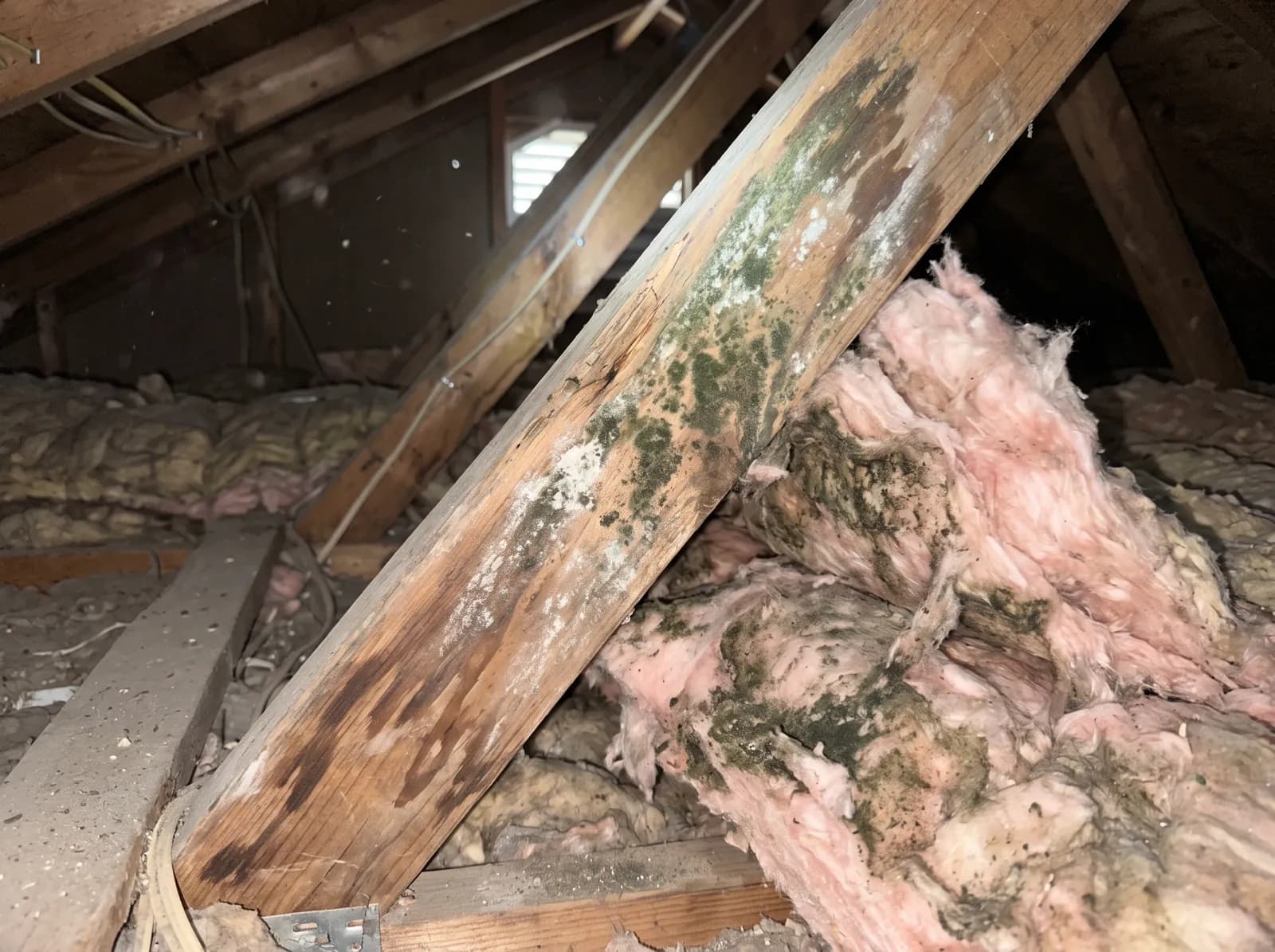
Mold is a type of fungus that grows in multicellular filaments called hyphae and reproduces by releasing microscopic spores into the air. Mold develops on organic surfaces exposed to moisture, including drywall, wood, carpet, and insulation, and it can begin colonizing within 24 to 48 hours of water exposure. This guide explains what mold is, how to identify it by color, which types pose health risks, and how professional remediation differs from DIY removal.
What Is Mold?
Mold is a fungus that grows in thread-like structures called hyphae and spreads through airborne spores that are invisible to the naked eye. Mold spores exist almost everywhere, indoors and outdoors, and develop into visible colonies only when they land on a damp surface with an available food source.
Mold requires four conditions to establish a colony: a mold spore, an organic food source, oxygen, and moisture. Drywall paper, wood framing, ceiling tiles, carpet backing, and insulation all provide the cellulose or organic material that mold consumes. Without sustained moisture, spores remain dormant and do not develop into active growth.
Indoor mold growth typically follows a water event such as a roof leak, a plumbing failure, or prolonged high humidity. Visible mold, the fuzzy or discolored patches on a wall, ceiling, or window frame, represents only part of a colony. Mold frequently grows behind drywall, under flooring, and inside HVAC ductwork before it becomes visible on an exposed surface, so a small visible patch can indicate a larger hidden problem.
Mold vs. Mildew vs. Fungus: What's the Difference?
Mold and mildew are both fungi, but they differ in growth pattern, appearance, and the surfaces they typically affect. Mildew grows as a flat, powdery surface layer, while mold grows as raised, often fuzzy or slimy colonies that penetrate the material beneath them.
Mold vs. Mildew
Mold penetrates the surface it grows on, while mildew remains on top of the surface and does not root into the underlying material. Mildew commonly appears as a white, gray, or yellow powdery patch on damp surfaces such as shower tile, fabric, or paper, and it is generally easier to remove with a surface cleaner. Mold appears fuzzy, slimy, or raised and ranges in color from black and green to pink and orange, and because it penetrates porous materials like drywall and wood, surface cleaning alone typically does not remove the underlying colony.
Mold vs. Fungus
Mold is one category within the broader kingdom Fungi, which also includes yeasts, mushrooms, and mildew. Fungus is the overarching biological classification for organisms that reproduce through spores and obtain nutrients by breaking down organic material, while mold specifically refers to fungi that grow as multicellular filamentous colonies. Yeast, by comparison, is a single-celled fungus that does not form the visible filament networks characteristic of mold. Every mold is a fungus, but not every fungus is mold.
What Are the Different Types of Mold by Color?
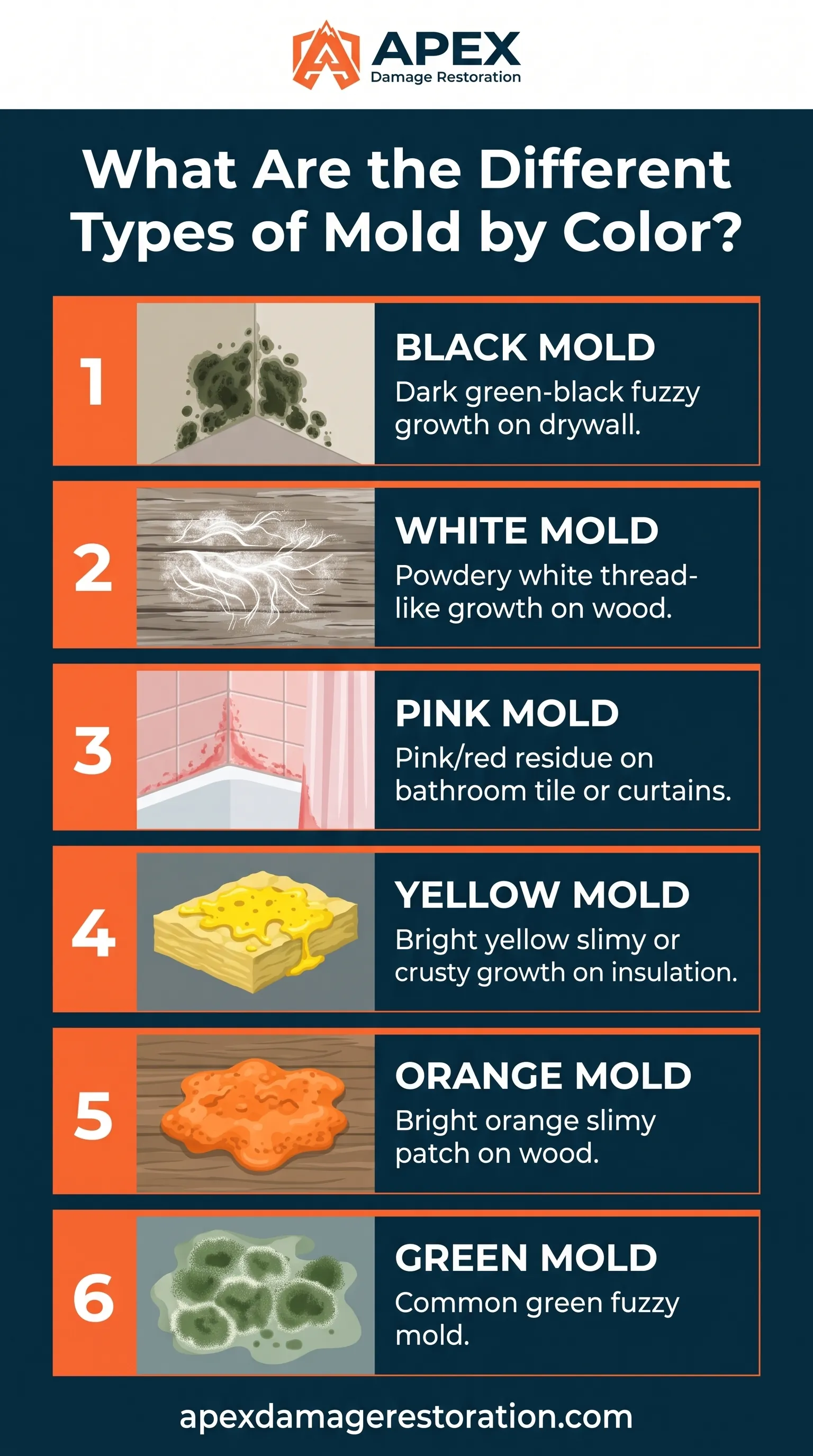
Mold appears in black, white, pink, yellow, orange, and green depending on the species and the surface it colonizes, and color alone does not indicate how dangerous a mold is. Identifying mold by color offers a starting point for recognition, but confirming the species and assessing health risk requires laboratory testing rather than visual inspection.
Black Mold
Black mold refers to fungal growth with a dark green-black or charcoal appearance, most commonly associated with the species Stachybotrys chartarum. Black mold typically develops on materials with high cellulose content and chronic moisture exposure, including water-damaged drywall, wood framing, and paper-backed insulation. Stachybotrys chartarum is capable of producing mycotoxins under certain moisture and temperature conditions, which is why black mold receives more scrutiny than many other mold colors, though not every black-colored mold colony is Stachybotrys.
White Mold
White mold appears as a thread-like or powdery white growth and commonly develops on wood, drywall, and in crawl spaces or basements with elevated humidity. White mold is often mistaken for efflorescence, a harmless mineral deposit that forms on concrete and masonry as moisture evaporates, so distinguishing between the two typically requires a closer inspection or lab sample. Common white mold genera include Aspergillus and Penicillium, both of which can trigger allergic or respiratory symptoms in sensitive individuals.
Pink Mold
Pink mold is frequently not a true mold but a bacterial growth called Serratia marcescens, which produces a pink or reddish pigment and commonly appears in bathrooms on shower tile, grout, and shower curtains. True pink-colored mold species also exist and typically develop in high-moisture areas such as wood, wallpaper, and window sills. Regardless of whether the growth is bacterial or fungal, pink residue in a consistently damp bathroom environment indicates a moisture problem that should be addressed.
Yellow Mold
Yellow mold appears as a bright yellow, slimy, or crusty growth and commonly develops on wood framing, drywall, and insulation exposed to sustained moisture. Yellow mold is often associated with the genus Aspergillus, though the color can also result from Serpula lacrymans, a wood-decay fungus that damages structural timber. Yellow mold in a crawl space or attic frequently signals an active moisture intrusion rather than residual dampness from a past event.
Orange Mold
Orange mold appears as a bright orange, slimy patch and commonly grows on wood, in gutters, and in damp outdoor mulch, though it also develops indoors in consistently wet areas such as under sinks or around window frames. Orange mold is associated with genera including Fuligo and certain Aspergillus species. Like other mold colors, orange growth indicates active moisture and requires the same identification and remediation approach as mold of any other color.
Which Types of Mold Are Dangerous?
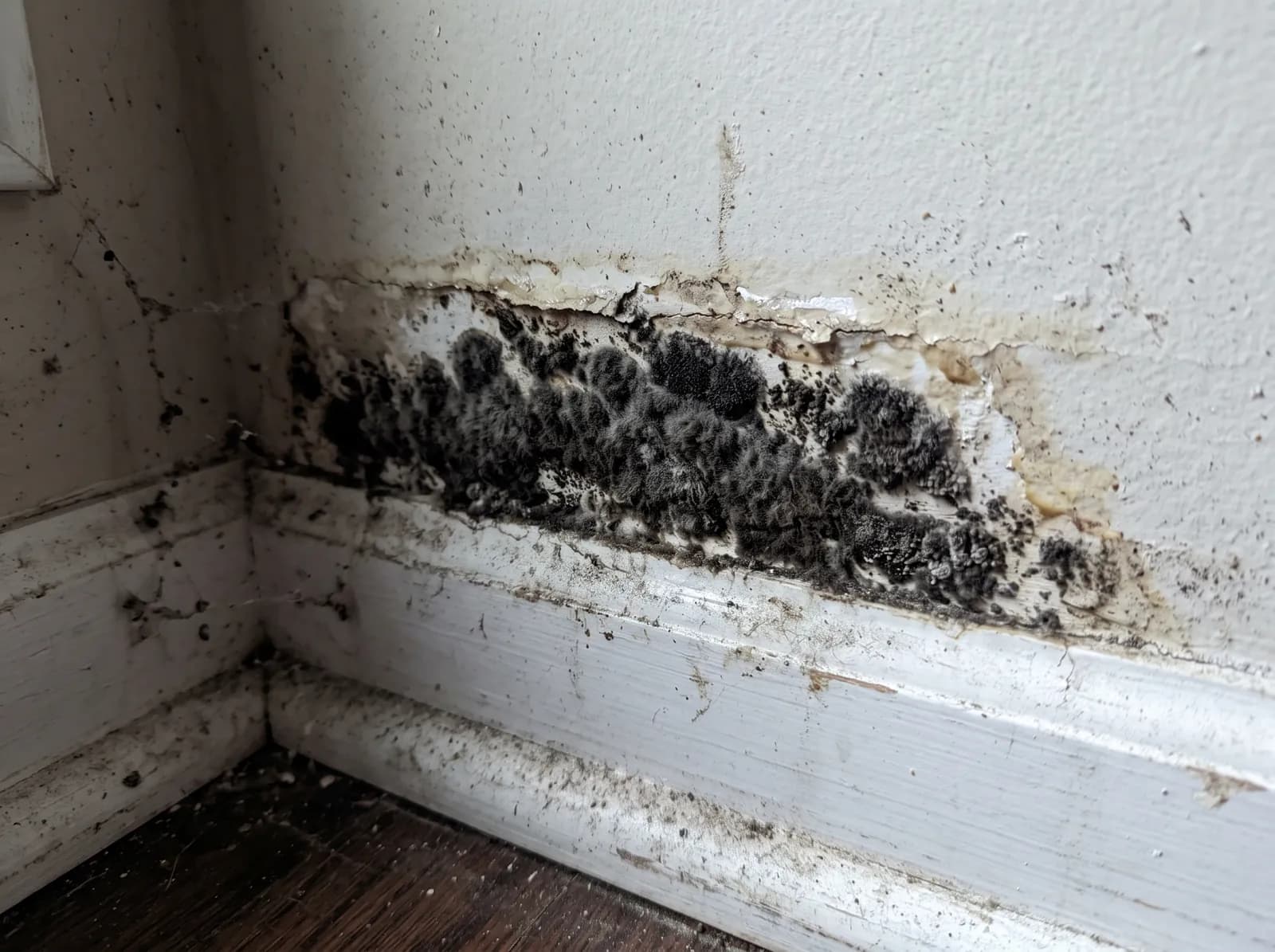
The most dangerous mold types are toxigenic and pathogenic species, including Stachybotrys chartarum, Aspergillus, and Fusarium, which produce harmful mycotoxins or cause infections in exposed individuals. Mold danger depends on the species present and an individual's sensitivity, not on the mold's color.
Categories of Dangerous Molds
- Toxigenic molds: Produce mycotoxins, chemical compounds that can harm humans and animals through inhalation, skin contact, or ingestion.
- Pathogenic molds: Cause infections rather than toxic reactions, posing the greatest risk to people with weakened immune systems, infants, and older adults.
- Allergenic molds: Generally pose little risk to healthy adults but trigger allergic reactions and asthma symptoms in sensitive individuals.
Most Dangerous Mold Species
- Stachybotrys chartarum (black mold): A greenish-black, slimy-textured mold that grows on chronically wet drywall and wood, producing mycotoxins linked to respiratory problems and fatigue.
- Aspergillus: A fast-growing mold common in damp basements and insulation; certain species produce aflatoxins, mycotoxins associated with serious illness.
- Fusarium: Found in damp areas of the home and on plants, capable of causing eye infections, skin irritation, and more severe illness in people with weakened immunity.
- Penicillium: A fuzzy blue, green, or white mold that, while common, includes species that release airborne allergens and mycotoxins capable of aggravating asthma.
Mold Toxicity and Poisoning Symptoms
Mold toxicity refers to the health effects caused by exposure to mycotoxins, chemical compounds that certain mold species produce under specific environmental conditions. Common symptoms of mold exposure include coughing, wheezing, nasal congestion, throat irritation, eye irritation, headaches, and skin irritation. Individuals with asthma, allergies, or compromised immune systems, along with children and older adults, face a higher risk of pronounced symptoms from mold exposure than the general population.
The Centers for Disease Control and Prevention notes that some individuals experience more severe reactions, such as fever or shortness of breath, particularly with heavy or prolonged mold exposure.
Black Mold Poisoning
Black mold poisoning describes the set of symptoms linked to exposure to Stachybotrys chartarum and its mycotoxins, and it presents through respiratory, neurological, and skin-related symptoms. Reported symptoms include chronic coughing, sinus congestion, fatigue, headaches, and skin rashes, with some individuals reporting difficulty concentrating during prolonged exposure. Research on mycotoxin exposure in home environments remains an active area of study, and the severity of symptoms varies significantly based on exposure duration, concentration, and individual sensitivity.
How to Tell If a Mold Is Toxic
Visual inspection cannot confirm whether a mold colony is toxic, since color and appearance do not reliably indicate species. Laboratory testing of a physical sample or an air sample is the only method that confirms mold species and mycotoxin presence. A musty odor, worsening allergy or respiratory symptoms while at home, and visible growth following a water event are practical indicators that warrant professional inspection, even without a confirmed species identification.
What Is Mold Remediation?
Mold remediation is the professional process of removing mold contamination from a structure and correcting the moisture source that allowed the mold to grow. Remediation follows established containment and removal protocols, most commonly the ANSI/IICRC S520 standard, to prevent spores from spreading to unaffected areas during the cleanup process.
A standard remediation project follows several stages: inspection and moisture mapping, containment of the affected area with plastic sheeting and negative air pressure, HEPA air filtration to capture airborne spores, removal of contaminated porous materials such as drywall and insulation, antimicrobial treatment of remaining structural surfaces, and correction of the underlying moisture source.
Post-remediation verification, which may include a visual inspection or air-quality clearance test, confirms that mold levels have returned to a normal, acceptable range before the area is considered restored. Remediation differs from simple surface cleaning because it addresses both the visible colony and the moisture condition that caused it, reducing the likelihood of regrowth.
How Much Does Mold Remediation Cost?
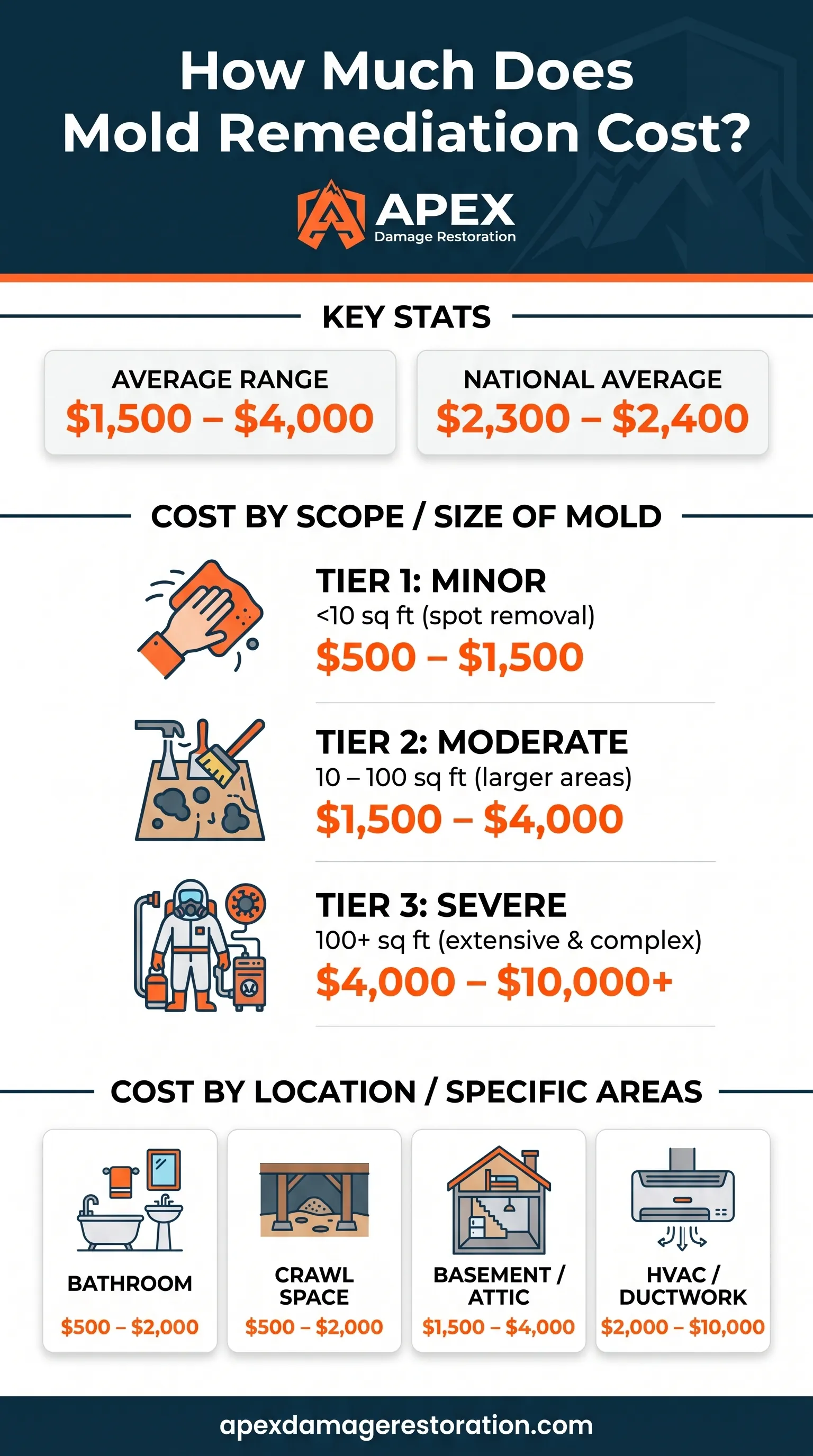
Professional mold remediation in Colorado typically costs $1,500 to $4,000, with a national average of $2,300 to $2,400 for a standard mid-sized project. Minor surface infestations can cost as little as $500, while severe cases involving structural rebuilds or HVAC contamination can exceed $10,000.
Cost by Project Scope
Colorado remediation companies generally price visible surface mold at $10 to $25 per square foot, a rate that increases to $15 to $30 per square foot when mold is hidden behind drywall or inside wall framing.
- Minor (under 10 sq. ft.): $500 to $1,500, localized, easily accessible areas such as a shower enclosure or small drywall patch.
- Moderate (10 to 100 sq. ft.): $1,500 to $4,000, typically covers a full room, basement, or crawl space.
- Severe (100+ sq. ft. or whole-house): $4,000 to $10,000, or up to $30,000 for whole-house remediation following major water intrusion.
Cost by Location in the Home
The following table compares typical Colorado remediation costs by where the mold is growing, since accessibility and containment requirements vary significantly by location.
| Location | Typical Cost Range | Key Pricing Factor |
|---|---|---|
| Bathroom | $500 – $2,000 | Higher when mold has reached behind tile, a vanity, or a tub |
| Crawl Space | $500 – $2,000 | Confined workspace increases setup and labor time despite the space's smaller footprint |
| Basement / Attic | $1,500 – $4,000 | Often tied to foundation leaks or roof failure |
| HVAC / Air Ducts | $2,000 – $10,000 | Requires specialized system-wide containment |
| Drywall & Walls | $1,000 – $20,000 | Depends heavily on whether structural framing is compromised |
Additional Costs to Expect
- Initial inspection and testing: $250 to $350 for standard sampling, or $450 to $800 for comprehensive lab analysis confirming the mold species and the extent of hidden airborne spores.
- Post-remediation verification: An independent air-quality clearance test confirming the space meets safety standards, typically billed as a separate line item from the initial estimate.
- Drywall and flooring repair: Reconstruction cost to replace materials removed during remediation, ranging from a small drywall patch to full wall replacement depending on the extent of demolition.
- Moisture-source repair: Repairing the leaking roof, broken pipe, or other moisture source needed to prevent regrowth, with cost depending on the scope of the underlying repair.
DIY Mold Removal vs. Professional Remediation
DIY mold removal is appropriate for small, surface-level growth, while professional remediation is necessary for larger colonies, hidden growth, or mold linked to a significant water event. The U.S. Environmental Protection Agency states that homeowners can generally handle mold contamination covering less than 10 square feet, an area roughly the size of a 3-foot by 3-foot patch, using household cleaning methods and basic protective equipment.
When DIY Mold Removal Is Safe
DIY mold removal is appropriate when the affected area is smaller than 10 square feet, the growth is on a non-porous surface such as tile or glass, and the mold is not linked to sewage contamination or a major water intrusion. A person removing small-scale mold should wear gloves, an N95 respirator, and eye protection, and should clean the surface with a detergent solution rather than bleach on porous materials, since bleach does not penetrate materials like drywall or wood and can leave the underlying mold structure intact. Ventilating the area during and after cleaning reduces spore concentration in the air.
When to Call a Professional Remediation Company
Professional remediation becomes necessary when the affected area exceeds 10 square feet, when mold has developed inside wall cavities, HVAC ductwork, or other hidden spaces, or when the growth follows flooding, sewage backup, or a prolonged undetected leak. A professional remediation company has access to moisture meters, thermal imaging, and negative air containment equipment that identify and control hidden mold spread beyond what a visual inspection can detect. Occupants with respiratory conditions, compromised immune systems, or infants in the household warrant professional remediation even for smaller affected areas, since disturbing mold during removal temporarily increases airborne spore concentration.
What Causes Mold Growth in a Home?
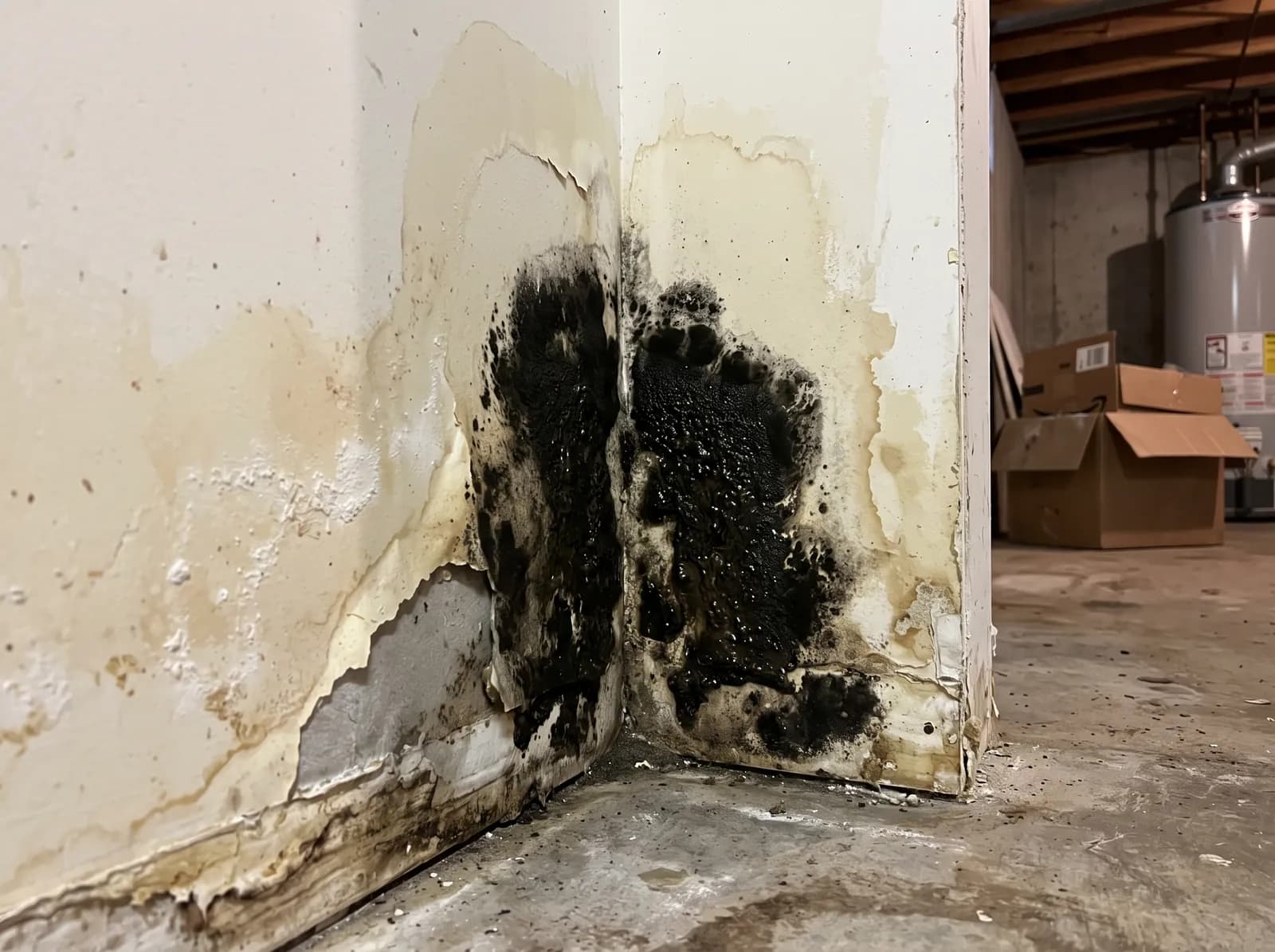
Mold growth in a home results primarily from excess moisture combined with an organic food source and inadequate ventilation. A burst pipe, a failed appliance supply line, or an undetected slow leak behind a wall creates the damp conditions mold needs to establish a colony within one to two days of water exposure.
Main Causes of Indoor Moisture
- Water leaks: Slow plumbing leaks, roof leaks, or seepage around windows saturate drywall, wood, and other building materials.
- High humidity: Indoor relative humidity above 60%, often driven by cooking, showering, or seasonal weather, creates conditions favorable to mold growth.
- Condensation: Water droplets form when warm, moist air contacts cold surfaces such as exterior walls, windows, or uninsulated pipes.
- Poor ventilation: Bathrooms, kitchens, and laundry rooms without adequate exhaust fans trap humidity indoors instead of releasing it outside.
- Flooding: Major water events leave carpets, subfloors, and walls wet if the materials are not dried within 24 to 48 hours.
- Everyday habits: Long hot showers, unvented clothes dryers, indoor clothes drying, and overwatered houseplants add measurable moisture to indoor air.
What Mold Needs to Thrive
- Mold spores: Microscopic spores are present in both outdoor and indoor air at nearly all times.
- Food source: Mold consumes organic, carbon-based materials commonly found in homes, including wood, drywall paper, and carpet backing.
- Time: Given sufficient moisture and warmth, mold can begin colonizing within 24 to 48 hours of exposure.
Basements and crawl spaces are particularly susceptible to mold because they combine limited airflow with groundwater seepage and higher ambient humidity than the rest of the home. Because water intrusion is the underlying trigger in nearly all indoor mold cases, addressing signs of water damage promptly is one of the most effective ways to prevent mold from developing in the first place.
How to Prevent Mold From Returning?
Preventing mold recurrence requires controlling indoor humidity and addressing moisture sources before they allow spores to establish a new colony. Maintaining indoor relative humidity below 50 percent, using exhaust fans in bathrooms and kitchens, and running a dehumidifier in basements or crawl spaces limit the ambient moisture mold needs to grow. Repairing plumbing leaks and roof damage promptly, rather than allowing water intrusion to persist, removes the primary trigger behind most residential mold cases. Routine inspection of moisture-prone areas, under sinks, around window frames, in crawl spaces, and near appliance supply lines, allows small leaks to be caught before they create the sustained dampness mold requires to spread.
Mold Growing in Your Property? Get a Same-Day Inspection Today!
Mold spreads fastest in the first 48 hours after water exposure, so a delayed inspection often means a small patch becomes a wall-cavity or HVAC problem. Apex Damage Restoration is a family-owned, IICRC-certified mold remediation team serving Denver and the surrounding metro area, and every project follows the ANSI/IICRC S520 standard from initial moisture inspection through post-remediation air-quality verification.
Call Apex Damage Restoration today for same-day mold removal & remediation, or request a free quote online to get a clear scope and cost before any work begins. Our technicians identify the moisture source, contain the affected area, and confirm your home is safe, not just mold-free on the surface.
Need Emergency Restoration Help Today?
Call Apex Damage Restoration now for fast priority dispatch across Aurora, CO, a written estimate before work begins, and direct insurance claims assistance.