

Emergency Mold Removal & Remediation Services Arvada, CO
Apex Damage Restoration removes and remediates mold in Arvada, CO, homes and businesses using IICRC S520-certified inspection, containment, and clearance testing procedures. Arvada's mix of older foothill-adjacent construction and newer developments along Ralston Creek creates frequent moisture intrusion in basements, crawl spaces, and attics, conditions that allow mold colonization within 24 to 48 hours of sustained water exposure.
Professional mold remediation in Arvada costs an average of $2,056, with final pricing determined by the contaminated square footage and its location within the property. Apex Damage Restoration provides 24/7 emergency response, rapid on-site arrival, and HEPA air filtration with structural drying technology to address active mold contamination and the moisture source responsible for it.
Residential & Commercial Mold Removal and Remediation Services
Apex Damage Restoration provides IICRC S520-certified mold removal and remediation services to homeowners and business owners throughout Arvada, CO. Our crews respond to bathroom leaks, crawl space moisture, basement seepage, and attic mold caused by roof intrusion or poor ventilation. Every project includes moisture-source identification, containment, contaminated material removal, HEPA air filtration, and post-remediation clearance testing. Colorado has no statewide mold-contractor licensing requirement, so Apex Damage Restoration follows IICRC S520 protocols to standardize inspection, containment, and clearance procedures across every Arvada property.
What Does Our Arvada Mold Remediation Service Include?
Our Arvada mold remediation service includes inspection, removal, containment, and clearance testing performed as a single coordinated process. Each stage addresses a specific requirement of the IICRC S520 standard for professional mold remediation.
Mold Inspection and Mold Testing
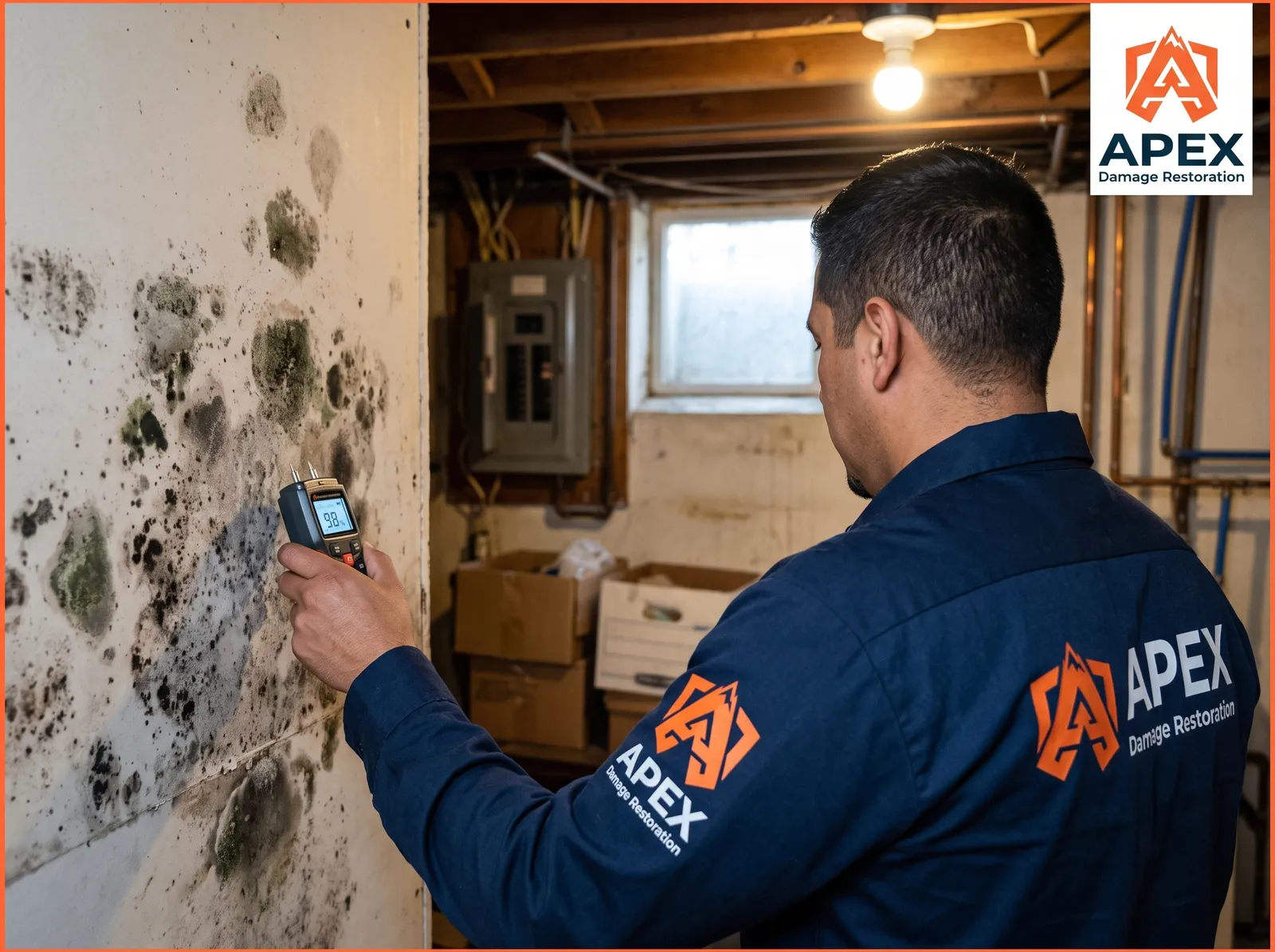
Mold inspection identifies the extent of contamination and its underlying moisture source before removal begins. A technician performs a visual assessment, uses moisture meters on affected framing and drywall, and collects surface or air samples when the contamination type or extent is unclear. Independent, third-party lab analysis confirms mold species and spore concentration, which determines the required containment level and personal protective equipment for the removal phase.
Mold Removal and Surface Treatment
Mold removal eliminates visible colonization from surfaces and porous materials through physical removal, HEPA vacuuming, and antimicrobial treatment. Non-porous surfaces such as tile, glass, and metal receive cleaning and antimicrobial application. Porous materials with established colonization, including drywall, insulation, and carpet padding, require removal because cleaning alone cannot eliminate mold growth within the material structure.
Post Mold Remediation Testing and Clearance
Post-remediation testing verifies that spore counts in the treated area have returned to a normal ambient range before the space is cleared for reoccupation. An independent inspector, separate from the remediation crew, collects air and surface samples after cleaning and drying are complete. Clearance testing provides documentation for insurance claims and confirms the remediation met the project scope.
Containment and Air Filtration Setup
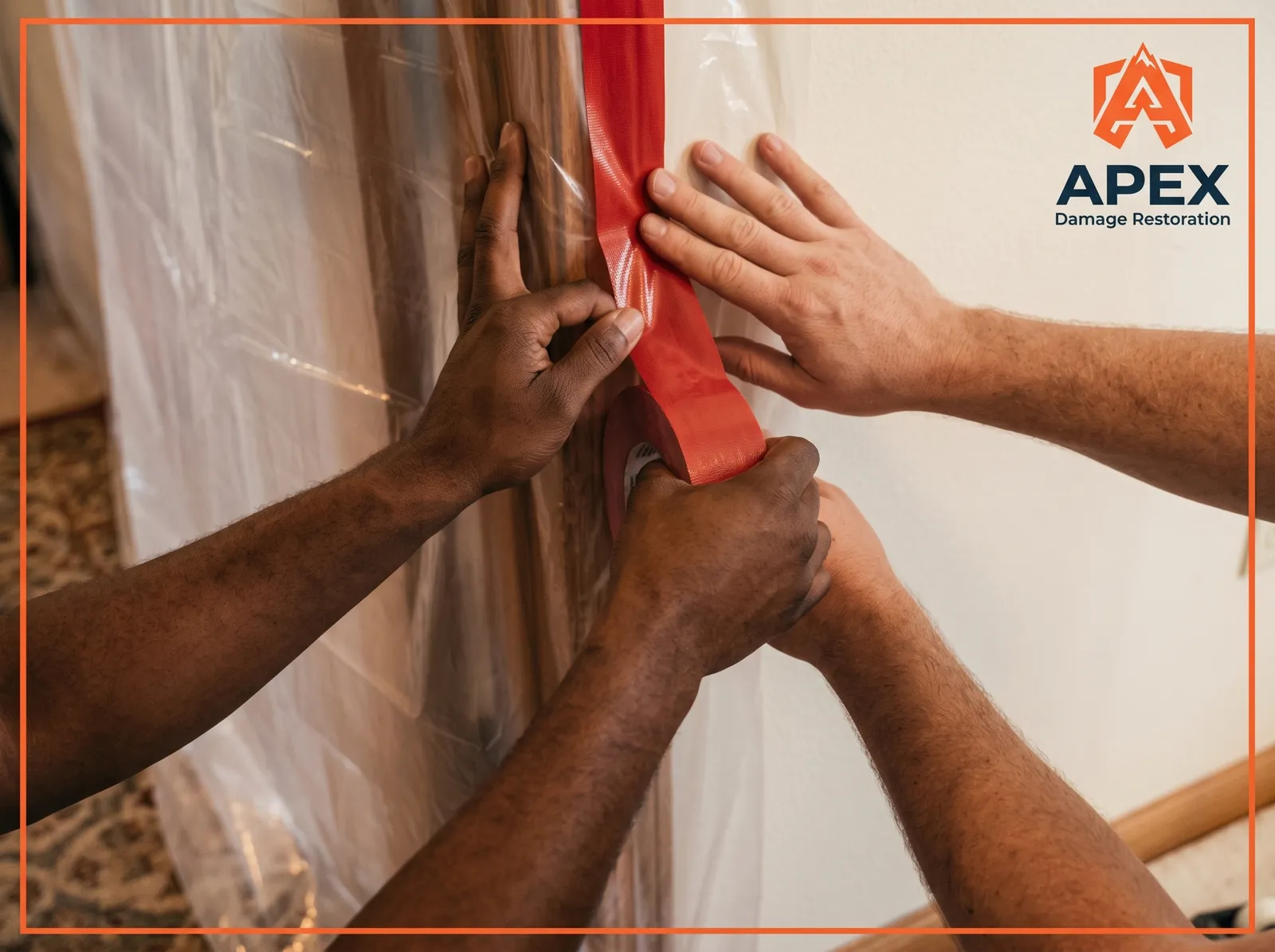
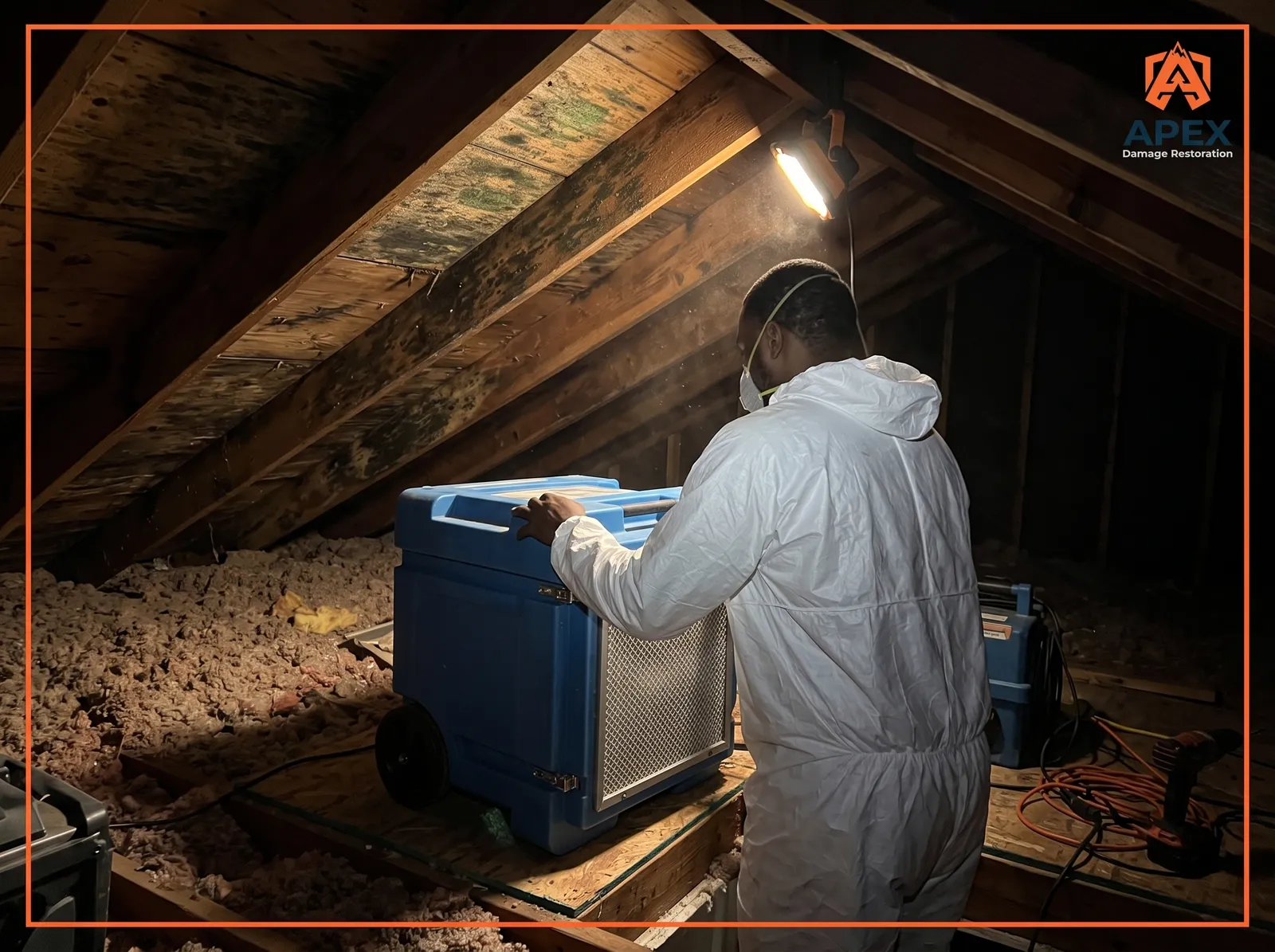
Containment isolates the contaminated area to prevent spore migration into unaffected rooms during removal work. Technicians install physical barriers using polyethylene sheeting and seal HVAC vents within the work zone. HEPA air scrubbers maintain negative air pressure inside the containment area, filtering airborne spores before they can spread through the property.
How Our Mold Removal & Remediation Process Works
Our mold removal and remediation process follows six sequential stages, from initial assessment through final clearance, matching IICRC S520 protocols for residential and commercial properties.
Mold Assessment & Moisture Source Identification
The process begins with a full property assessment that locates all visible mold growth and identifies the moisture source responsible for the contamination. A technician traces water intrusion to its origin, such as a roof leak, plumbing failure, or foundation seepage, because remediation performed without correcting the moisture source results in regrowth.
Containment & Negative Air Pressure Setup
Technicians establish physical containment barriers and negative air pressure before disturbing any contaminated material. This step confines airborne spores to the work area and protects unaffected rooms, occupants, and HVAC systems from cross-contamination during removal.
Removal of Contaminated Materials
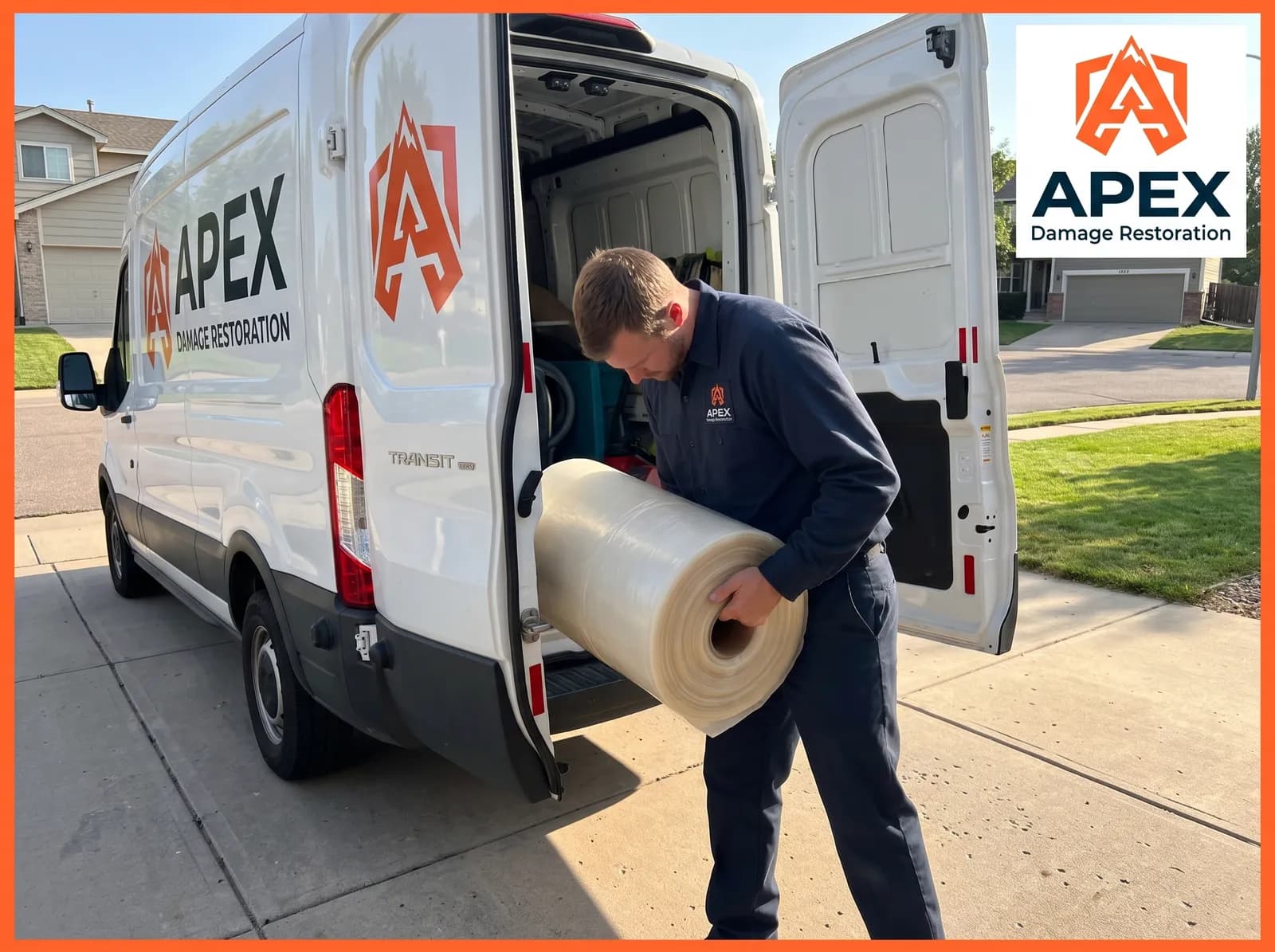
Crews remove porous materials that show visible mold growth, including drywall, carpet, insulation, and affected framing where structural colonization has occurred. Removed materials are bagged inside the containment area and transported out of the property in sealed containers to prevent spore release.
Cleaning and Drying
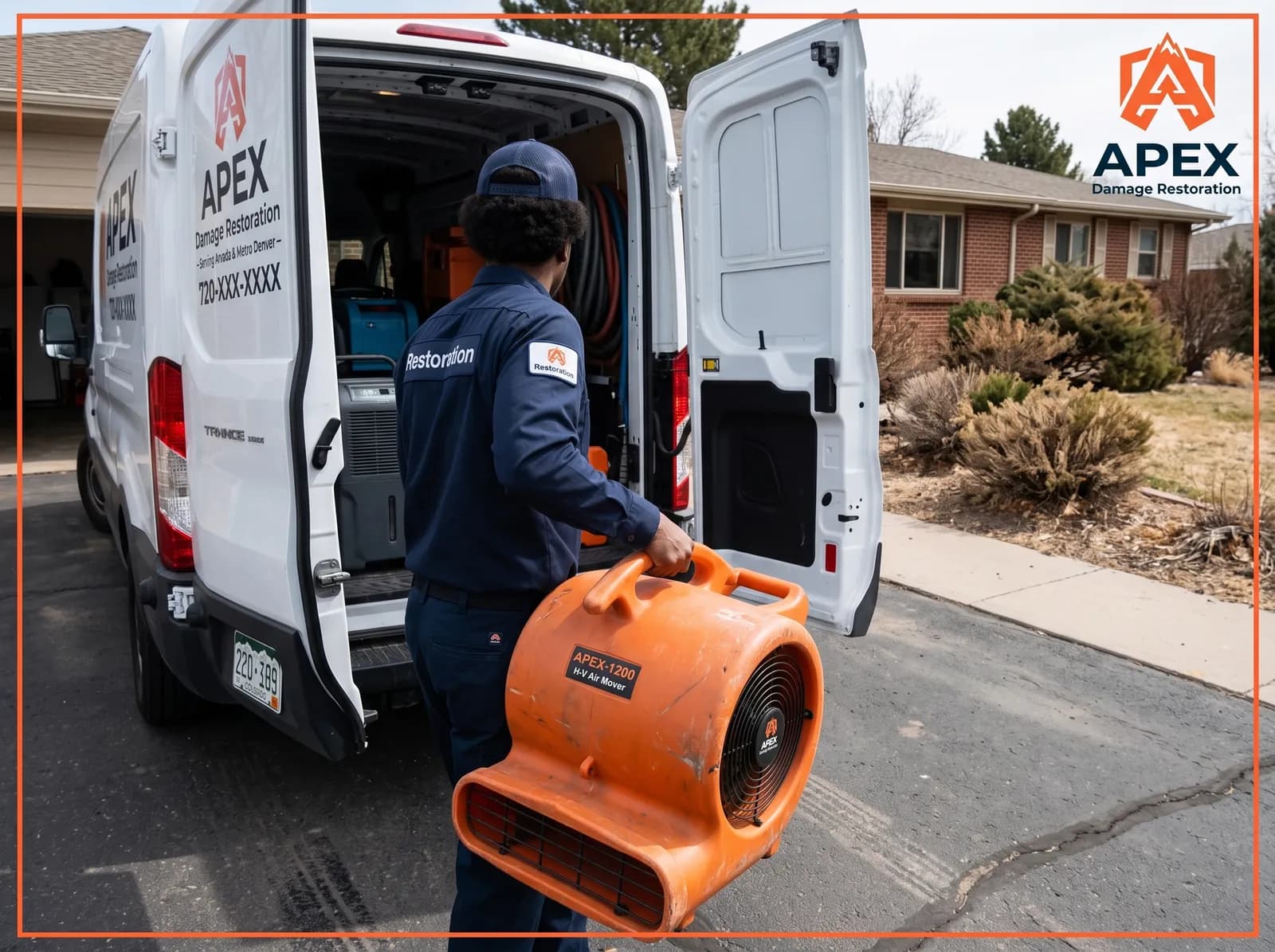
Remaining surfaces receive HEPA vacuuming, antimicrobial cleaning, and mechanical drying using air movers and dehumidifiers. Drying continues until moisture meter readings confirm the affected materials have returned to a normal moisture range, which prevents residual dampness from supporting new growth.
Post-Remediation Testing
An independent inspector collects air and surface samples after cleaning and drying to confirm the treated area meets clearance standards. This testing step is performed separately from the removal crew to maintain an unbiased result.
Restoration and Clearance
The final stage restores removed materials, such as drywall, flooring, and trim, and issues a clearance certificate confirming the property is safe for reoccupation. Restoration work matches the original structure's materials and finish where feasible.
How Much Does Mold Remediation Cost in Arvada, CO?
Professional mold remediation in Arvada, CO, costs between $1,100 and $3,100, with local homeowners paying an average of $2,056. Minor, localized cleanup can start as low as $375, while severe infestations involving structural damage or specialized equipment scale up to $5,000–$15,000. Contractors typically charge $10 to $25 per square foot for labor and disposal, so final cost depends heavily on the contaminated square footage and its location within the property.
Pricing by Contamination Severity
Apex Damage Restoration scopes every Arvada project against three severity tiers, based on the affected square footage and the extraction work each tier requires.
| Severity Tier | Cost Range | Typical Scope |
|---|---|---|
| Minor / Localized | Starting around $375 | Small, isolated growth requiring minimal containment |
| Standard | $1,100 – $3,100 (avg. $2,056) | Most residential remediation projects |
| Severe / Structural | $5,000 – $15,000 | Widespread contamination requiring specialized equipment and structural repair |
Pricing by Room or Area of Your Property
The room or area where mold develops determines the containment setup and labor required, which shifts the average cost by location. The table below compares Arvada cost ranges by area of the home.
| Location | Average Remediation Cost |
|---|---|
| Bathroom | $500 – $1,500 |
| Crawl Space | $500 – $2,600 |
| Basement / Attic | $1,000 – $4,000 |
| Drywall & Structural Walls | $1,000 – $20,000, depending on framing damage |
| HVAC System & Air Ducts | $3,000 – $10,000 |
| Whole-House Remediation | $10,000 – $30,000+ |
Common Types of Mold Found in Arvada Homes and Businesses
Arvada properties most commonly develop black mold, white mold, and green mold, each associated with distinct moisture conditions and health considerations.
Black Mold
- Scientific classification: commonly refers to Stachybotrys chartarum, though other dark-pigmented species also appear in homes.
- Growth conditions: develops on materials with prolonged water saturation, including drywall, wood framing, and insulation.
- Health considerations: the CDC notes that mold exposure can trigger allergic reactions, respiratory irritation, and asthma symptoms in sensitive individuals.
- Common Arvada sources: basement flooding, slow plumbing leaks, and crawl space moisture from seasonal groundwater shifts.
White Mold
- Appearance: presents as a powdery or thread-like white growth, often mistaken for efflorescence on concrete surfaces.
- Growth conditions: thrives on wood, paper-based materials, and fabric in areas with moderate, sustained humidity.
- Health considerations: shares allergenic properties with other household mold species and can degrade the structural integrity of wood over time.
- Common Arvada sources: attic framing with inadequate ventilation and crawl spaces with elevated humidity.
Green Mold
- Appearance: ranges from bright green to dark olive, frequently found on decaying organic material and food sources.
- Growth conditions: colonizes damp wood, wallpaper, and carpet padding within 24 to 48 hours of sustained moisture exposure.
- Health considerations: certain green mold species produce allergens and irritants that affect indoor air quality.
- Common Arvada sources: window sill condensation, HVAC drain pan overflow, and post-leak carpet padding.
Mold Remediation by Area of the Property
Mold remediation requirements change by area of the property because each space has distinct moisture sources, materials, and accessibility constraints.
Bathrooms & Kitchens
Bathroom and kitchen mold typically develops around fixtures, cabinetry, and ventilation points where water use is frequent. Common sources include shower and tub grout failure, under-sink supply line leaks, and exhaust fans that vent inadequately. Remediation in these spaces often involves removing affected caulking, cabinet bases, and drywall sections near plumbing fixtures.
Basements & Crawl Spaces
Basement and crawl space mold in Arvada frequently results from seasonal groundwater and poorly graded soil directing water toward the foundation. Inadequate vapor barriers, insufficient crawl space ventilation, and foundation cracks allow moisture to migrate into framing and insulation. Remediation addresses both surface contamination and the underlying moisture intrusion point to prevent regrowth.
Attics & Roofs
Attic mold develops from roof leaks, ice dam damage, or bathroom exhaust fans that vent into the attic space instead of outdoors. Insufficient roof and soffit ventilation traps humid air against the roof deck, creating conditions for sustained mold growth on sheathing and rafters. Remediation includes contaminated sheathing removal and, when required, ventilation corrections to prevent recurrence.
Living Areas & Bedrooms
Mold in living areas and bedrooms commonly follows window condensation, exterior wall leaks, or undetected plumbing failures inside interior walls. Drywall, baseboards, and carpet padding are the materials most frequently affected. Remediation in occupied living spaces requires containment that limits disruption to furniture and daily use of the home.
HVAC and Air Ducts
HVAC and duct mold spreads spores throughout a property's entire conditioned airspace, making it one of the most consequential contamination locations. Condensation inside ductwork, a clogged drain pan, or a contaminated evaporator coil allows mold to colonize and circulate through supply vents. Remediation requires duct cleaning, coil treatment, and confirmation that the HVAC system is not redistributing spores after service.
Our Arvada Mold Removal & Remediation Projects
Apex Damage Restoration has completed mold remediation projects throughout Arvada, including basement remediation following foundation seepage, attic mold removal after roof leaks, and full-property HVAC decontamination for commercial properties. Each project follows IICRC S520 protocols from initial inspection through post-remediation clearance testing.
Isolating contaminated zones with polyethylene barriers to prevent cross-contamination.
Apex Damage Restoration Serves in Arvada, CO & Surrounding Areas
Apex Damage Restoration provides mold removal and remediation services to Arvada and the surrounding Denver Metro communities, including Aurora, Lakewood, Westminster, Commerce City, Thornton, Centennial, Littleton, and Englewood, CO. Our 24/7 emergency response covers residential and commercial properties across the greater Denver metro area.
Our Arvada Homeowner Testimonials
For mold removal and remediation in Arvada, CO, homeowners and property owners turn to Apex Damage Restoration. With 260+ commercial and residential properties restored and remediated across Arvada, CO & the Denver metro area, our team handles mold contamination and related property damage with professional remediation services.
"We discovered black mold in our crawl space after a slow foundation leak. Apex set up negative air containment and HEPA filtration, removed the mold safely, and provided full clearance test documentation."
"Thorough and certified mold remediation. The team was prompt, used antimicrobial fogging, and got rid of all musty odors. Passed our independent air quality inspection on the first try!"
"Apex handled mold cleanup behind our drywall after a hidden bathroom leak. Honest pricing, compassionate crew, and they took care of our insurance paperwork seamlessly."
FAQs: Mold Removal & Remediation Arvada, CO
Choose a Local Arvada
Mold Remediation Company Today!
Apex Damage Restoration provides IICRC S520-certified mold removal and remediation services to Arvada homeowners and businesses, with 24/7 emergency response and rapid on-site arrival. Our process includes HEPA air filtration, structural drying technology, and post-remediation clearance testing to confirm your property is safe for reoccupation. Contact Apex Damage Restoration for a mold inspection in Arvada or throughout the Denver Metro area.