
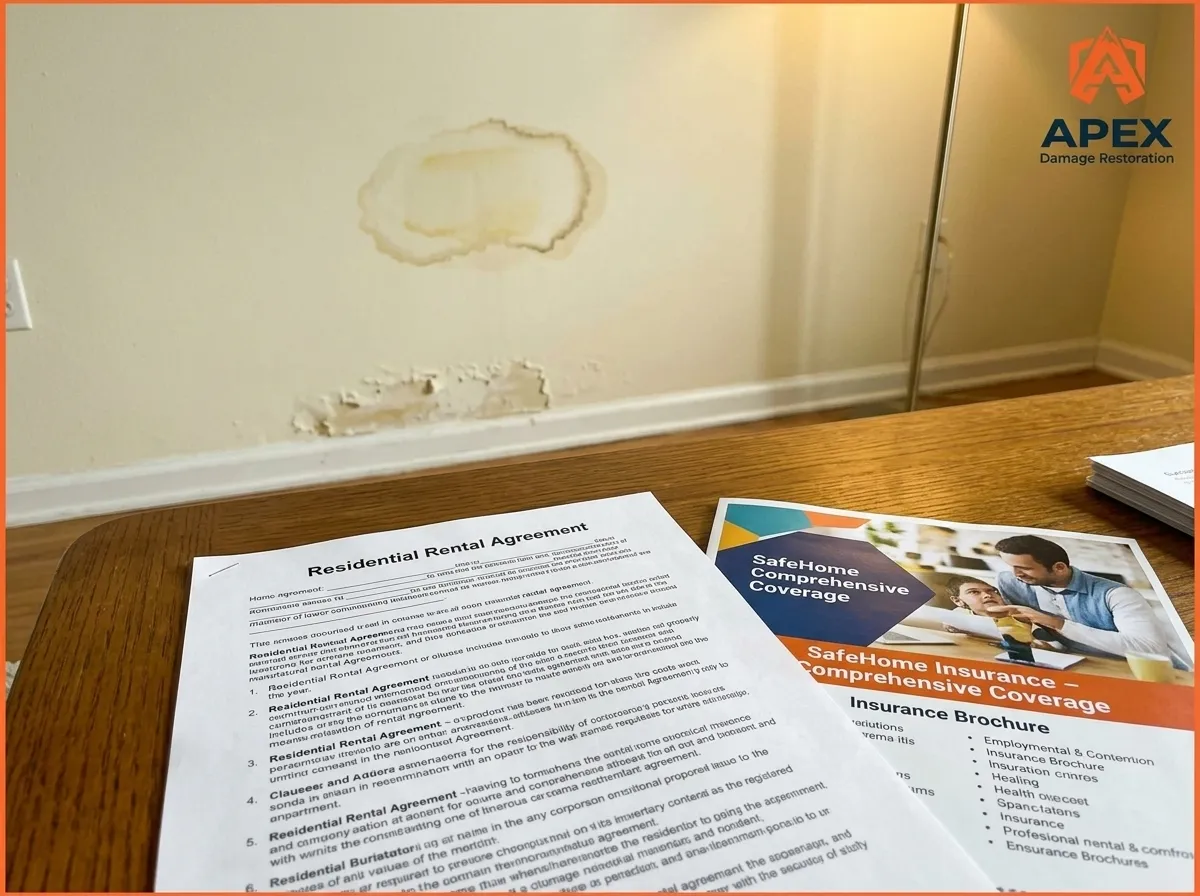
Renters insurance covers mold damage when the mold results from a sudden, covered peril, such as a burst pipe, an appliance leak, or water used to fight a fire. Renters insurance does not cover mold caused by gradual leaks, humidity, poor ventilation, or neglect. Most policies also cap mold-related payouts at a lower sub-limit than standard personal property coverage.
What Is Renters Insurance?
Renters insurance is a policy that protects a tenant's personal property, liability, and living expenses inside a rented home or apartment. Insurers classify this coverage as an HO-4 policy, the standard form used for tenants who do not own the structure they occupy.
An HO-4 policy typically includes three coverage types. Personal property coverage reimburses the tenant for belongings damaged or destroyed by a covered peril. Liability coverage pays for injuries or property damage the tenant causes to another person. Additional living expenses coverage, sometimes called loss-of-use coverage, pays for temporary housing and related costs when a covered loss makes the rented unit uninhabitable.
Renters insurance does not cover the building itself. The landlord's own property insurance policy covers the structure, including the walls, roof, flooring, and built-in systems such as plumbing and HVAC.
How Renters Insurance Differs From Homeowners Insurance
Renters insurance and homeowners insurance cover different property interests. A homeowners policy, typically an HO-3 policy, covers the dwelling structure, attached fixtures, personal belongings, and liability for the property owner. Renters insurance covers only personal belongings, liability, and additional living expenses, since the tenant does not own the dwelling.
This distinction directly affects mold coverage. A homeowner's HO-3 policy may pay to repair mold-damaged drywall, subflooring, or framing when the mold results from a covered peril. A tenant's HO-4 policy does not extend to structural repairs; it reimburses only the tenant's damaged personal property and, when applicable, additional living expenses during displacement.
Renters insurance also costs less than homeowners insurance because it excludes dwelling coverage. Insurers calculate renters insurance premiums based on the value of personal property, the liability limit selected, and the property's location, rather than the cost to rebuild a structure.
When Does Renters Insurance Cover Mold Damage?
Renters insurance covers mold damage that develops as a direct result of a peril already listed in the policy. A standard renters policy (HO-4) pays for personal property losses caused by named perils, including fire, wind, and specific types of water damage. Mold that forms because one of these named perils created excess moisture typically qualifies for coverage, subject to the policy's mold sub-limit.
Burst Pipes and Appliance Leaks
A burst pipe or a failed appliance supply line is a sudden and accidental discharge of water, and renters insurance covers mold that grows from this type of event. A washing machine hose that ruptures, a dishwasher line that fails, or a frozen pipe that cracks all qualify as sudden water damage under a standard policy. The insurer treats the resulting mold as a consequence of the covered peril rather than a separate, excluded condition. Coverage applies only when the tenant reports the leak and begins drying the area promptly, since delayed action can shift the loss into the "preventable" category insurers exclude.
Water Used to Fight a Fire
Renters insurance covers mold that develops after firefighters use water to extinguish a fire in the building. Fire suppression water can soak carpet, drywall, and furniture in units that never burned, creating conditions for mold growth within 24 to 48 hours. Because fire is a named peril on nearly every renters policy, the water damage and any resulting mold fall under the same claim.
Water Damage From an Upstairs Unit
Renters insurance covers mold caused by water that enters a unit from a neighboring apartment, provided the source event is sudden and accidental. A burst pipe, an overflowing bathtub, or a failed water heater in the unit above creates a covered loss for the tenant below when the water damages personal belongings and mold follows. The tenant's own renters policy responds to the personal property loss, while the upstairs tenant's liability coverage or the landlord's policy may address structural repairs, depending on fault and lease terms.
When Renters Insurance Does Not Cover Mold Damage?
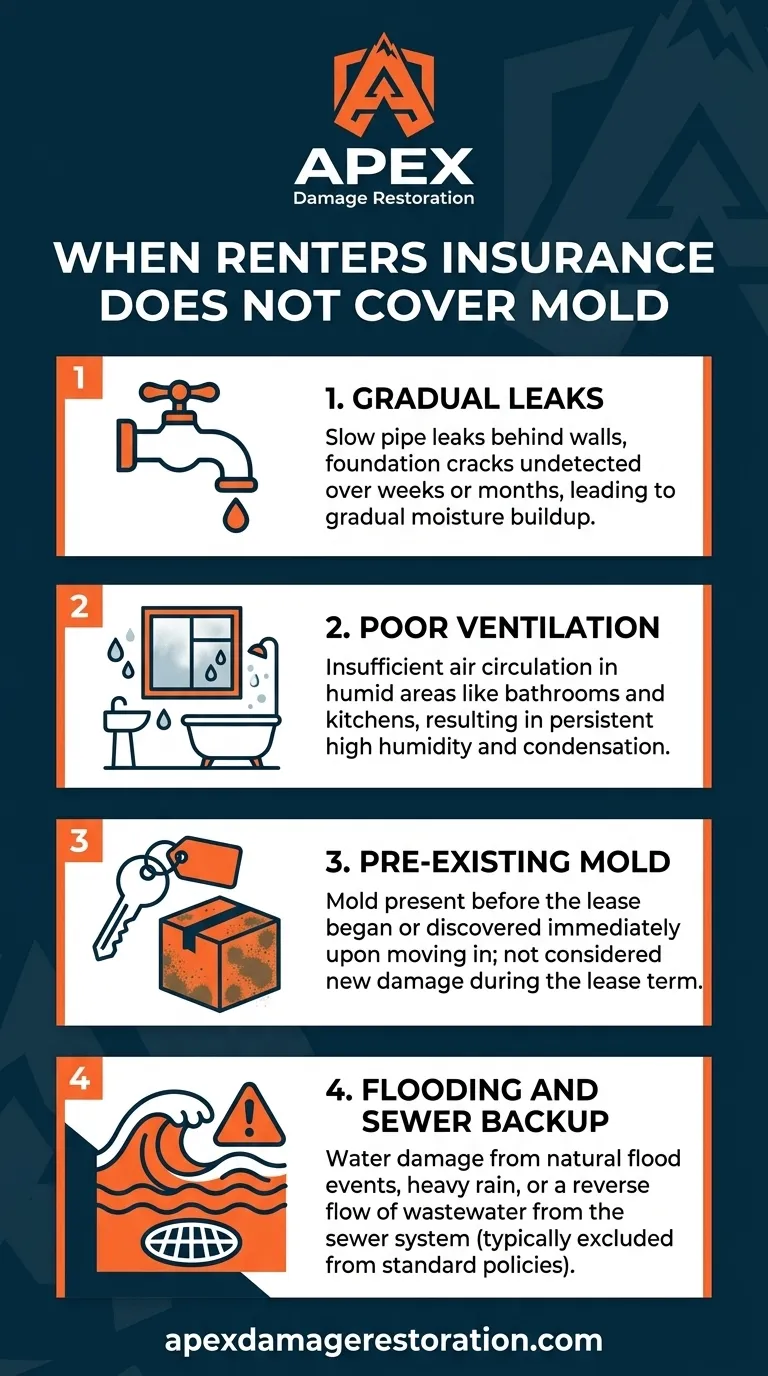
Renters insurance does not cover mold that results from gradual moisture, poor maintenance, humidity, or conditions that existed before the policy began. Insurers classify these causes as preventable or pre-existing, which places them outside standard named-peril coverage.
Gradual Leaks and Long-Term Moisture
Renters insurance excludes mold caused by a slow, ongoing leak that develops over weeks or months. A dripping faucet, a slowly leaking pipe under a sink, or condensation around a window frame allows moisture to accumulate gradually, and insurers treat this pattern as a maintenance issue rather than a sudden accident. Underwriters expect tenants and landlords to identify and correct gradual leaks before they cause secondary damage, so a claim tied to long-term moisture is unlikely to succeed even when mold growth is extensive.
Poor Ventilation or Humidity Buildup
Renters insurance excludes mold that grows from high indoor humidity or inadequate ventilation. Bathrooms without exhaust fans, basements with limited airflow, and units in humid climates can sustain the moisture levels mold needs to establish within 24 to 48 hours, according to the U.S. Environmental Protection Agency. Because no sudden, named peril triggers this type of mold growth, it falls outside standard coverage regardless of the resulting damage.
Mold That Existed Before You Moved In
Renters insurance excludes mold that was present in the unit before the tenant's policy took effect. Insurers require a loss to occur during the active policy period, so pre-existing mold is treated as a condition the landlord is responsible for addressing rather than an insurable event. A tenant who discovers mold shortly after moving in should document the condition and report it to the landlord rather than file a renters insurance claim.
Flooding and Sewer Backup (Separate Policies Required)
Renters insurance excludes mold caused by flooding or sewer backup unless the tenant purchased a separate endorsement or policy. Standard renters policies exclude flood damage entirely; tenants need a policy through the National Flood Insurance Program or a private flood carrier for that peril. Sewer and drain backup is a separate optional endorsement that many renters insurers offer for an added premium. Without these add-ons, mold that follows a flood or a sewer backup is not a covered loss.
How Much Renters Insurance Pays for Mold Claims?
Renters insurance pays for a covered mold claim up to the policy's personal property limit, minus any applicable mold sub-limit. Insurers commonly apply a reduced sub-limit specifically to mold, fungus, and wet rot losses, even when the underlying cause is fully covered.
This sub-limit exists separately from the policy's overall personal property limit and from any per-item limits that apply to specific belongings. A claim that involves both mold-damaged items and non-mold water-damaged items is split between the two limits during adjustment, since only the mold-affected portion is subject to the reduced cap.
Insurers also apply the mold sub-limit regardless of how much coverage the tenant carries elsewhere in the policy. A higher personal property limit increases the amount available for non-mold losses, but it does not raise the separate mold sub-limit unless the tenant purchases additional mold coverage as an endorsement.
Personal Property Sub-Limits for Mold
Renters insurance policies commonly cap mold-related claims at a lower dollar amount than the policy's overall personal property limit, often in the range of $1,000 to $5,000 depending on the carrier and state. This sub-limit applies to the cost of replacing mold-damaged belongings and, in some policies, remediation-related expenses, even when the triggering event, such as a burst pipe, is fully covered. A renter with a $30,000 personal property limit may still recover only the mold sub-limit amount for items damaged specifically by mold growth, while unaffected water-damaged items are reimbursed under the standard limit. Review the policy's declarations page or contact the insurer directly to confirm the exact sub-limit that applies.
Does Renters Insurance Cover Mold Remediation Costs?
Renters insurance coverage for mold remediation depends on whether the policy treats remediation as part of the personal property claim or as a separate expense. Some insurers apply the mold sub-limit to remediation charges, such as professional mold removal and air quality testing tied to the tenant's damaged belongings. Other insurers exclude remediation costs entirely, since remediation of the unit itself is typically the landlord's responsibility under the property insurance policy. A tenant should ask the insurer directly whether remediation costs count against the personal property sub-limit or fall outside the policy.
Does Additional Living Expenses Coverage Apply to Mold Claims?
Additional living expenses coverage applies to a mold claim when active mold growth makes the rented unit uninhabitable and the mold traces back to a covered peril. This coverage pays for temporary housing, increased food costs, and related expenses while the landlord completes repairs. Additional living expenses coverage operates under its own policy limit, separate from the personal property and mold sub-limits, so a displacement caused by mold does not reduce the amount available for damaged belongings.
Does Renters Insurance Cover Mold Inspections?
Renters insurance does not typically cover the cost of a standalone mold inspection unless the inspection is required to document an active, covered claim. Insurers may reimburse an inspection or testing fee when it supports a claim tied to a covered peril, such as confirming the extent of mold growth after a burst pipe. A tenant who wants a mold inspection out of general concern, without a related claim in progress, generally pays for that inspection independently.
Tenant or Landlord? Who's Responsible For Mold Damage?
A tenant's renters insurance and a landlord's property insurance cover different parts of a mold loss. Determining responsibility depends on which party's property was affected and what caused the moisture that led to mold growth.
Tenant responsibility. A tenant's renters insurance covers the tenant's personal belongings and, in some policies, additional living expenses if mold makes the unit uninhabitable. A tenant carries the following responsibilities when mold appears in a rented unit:
- Report any leak, water intrusion, or visible mold to the landlord in writing as soon as you discover it.
- File a renters insurance claim for damaged personal property when the mold traces to a covered peril.
- Maintain reasonable ventilation and cleanliness in the unit to avoid contributing to gradual mold conditions.
- Keep copies of all communication with the landlord regarding reported moisture or mold issues.
Landlord responsibility. The landlord's property insurance and legal responsibilities cover the building's structure, including walls, flooring, and HVAC systems. A landlord carries the following responsibilities related to mold in a rented unit:
- Maintain habitable conditions under state and local landlord-tenant law, which generally includes addressing mold caused by structural issues.
- Repair the underlying cause of water intrusion, such as a roof leak or plumbing failure, within a reasonable timeframe after notice.
- Arrange or approve professional mold remediation for the building structure when mold results from a maintenance failure.
- Respond to a tenant's written mold report, since landlord negligence in addressing a reported leak can affect both the landlord's liability and the tenant's ability to pursue a claim.
A tenant who reports mold caused by a maintenance issue should notify the landlord in writing rather than verbally, since written notice creates a documented record that both the landlord's insurer and the tenant's insurer may request during claim review.
How to File a Renters Insurance Claim for Mold Damage?
File a renters insurance claim for mold damage by documenting the mold and the triggering event, reporting the loss to both the landlord and the insurer promptly, and providing the evidence the insurer requests to evaluate the claim.
Document the Mold and Report It Immediately
Document mold damage by photographing the affected area, the source of the water intrusion, and any damaged belongings before cleanup begins. Report the mold to the landlord and the insurance company as soon as it is discovered, since most policies require prompt notice and insurers may deny claims reported after extended delay. Keep a written record of the report date and the landlord's response, particularly if the landlord delays repairs.
Get an Inspection or Estimate Before Remediation
Request an inspection or repair estimate before remediation begins whenever the insurer requires evidence of the mold's extent. An adjuster or a licensed mold remediation company can document the affected square footage, the materials involved, and the source of moisture. Completing remediation before the insurer inspects the loss can limit the insurer's ability to verify the claim, so a tenant should confirm the insurer's documentation requirements before hiring a remediation company.
What Your Insurer Will Ask For
An insurer evaluating a mold claim typically requests:
- Cause documentation: Photos or records showing the source of the water intrusion, such as a burst pipe or appliance failure.
- Timeline: The date the leak or water event occurred and the date it was reported.
- Damaged item list: An inventory of affected personal property with estimated replacement value.
- Remediation records: Receipts or reports from a mold remediation company, when remediation has occurred.
- Landlord correspondence: Written communication showing the landlord was notified, when the mold relates to a building maintenance issue.
Insurers use this documentation to confirm the mold resulted from a covered peril rather than a gradual or pre-existing condition.
Wait for the Insurer's Coverage Decision
An insurer reviews the submitted documentation and issues a coverage decision that either approves the claim, denies it, or requests additional evidence. Adjusters compare the reported cause of loss against the policy's covered perils and exclusions before determining whether the mold sub-limit applies. A tenant who disagrees with a denial can request a written explanation of the decision and ask the insurer which policy provision supports it.
Complete Remediation and Submit Final Documentation
Complete mold remediation only after the insurer authorizes the claim or confirms the documentation requirements have been met. Submit final receipts, remediation reports, and replacement costs for damaged belongings to close out the claim. Retaining copies of all submitted documents protects the tenant if the insurer requests additional information before issuing payment.
Signs You May Have a Mold Problem
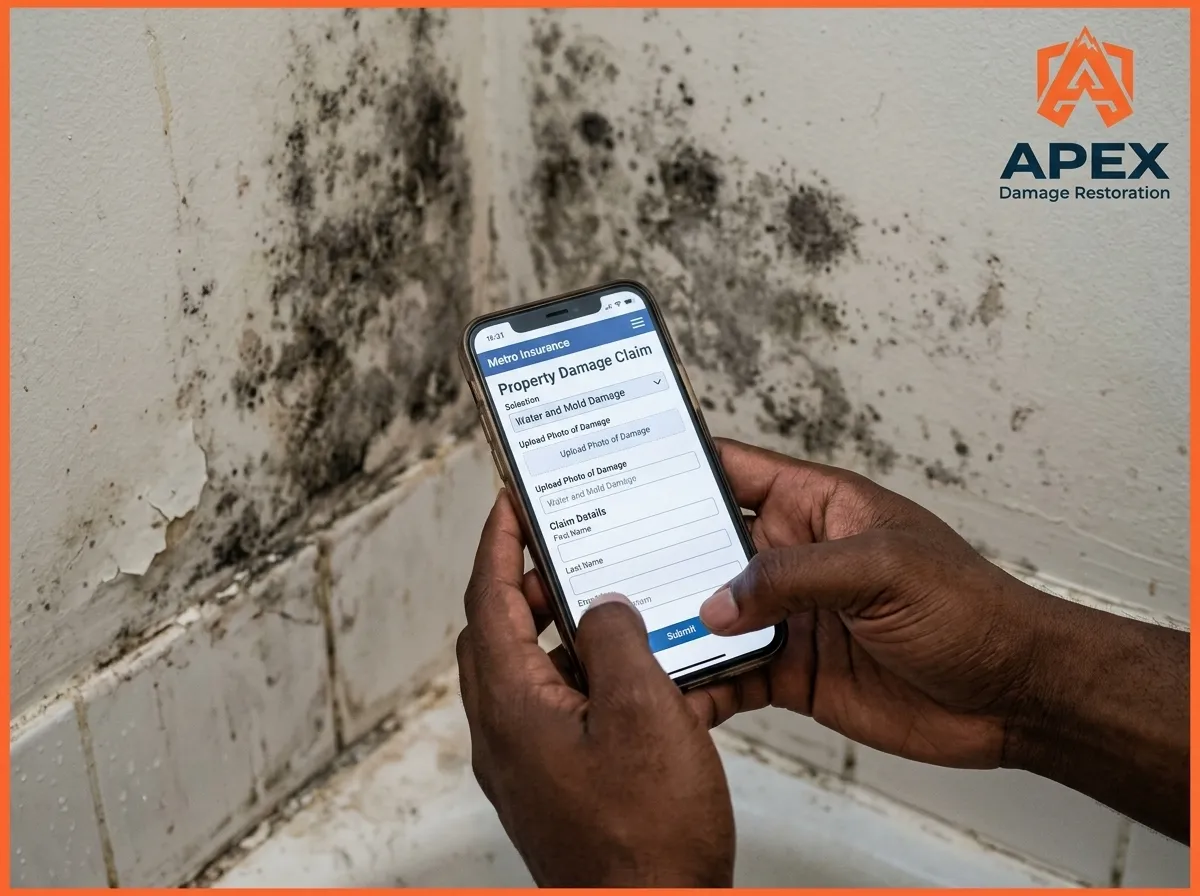
Common signs of a mold problem include a persistent musty odor, visible discoloration on walls or ceilings, peeling or bubbling paint, and increased allergy or respiratory symptoms while at home. Mold often grows in bathrooms, under sinks, around windows, and in basements, since these areas retain moisture longer than the rest of a unit. A tenant who notices these signs should inspect for an active water source, since identifying the cause determines whether a renters insurance claim is possible or whether the landlord is responsible for repairs.
Does Renters Insurance Cover Mold or Pest Damage?
Renters insurance treats mold and pest damage as separate categories with different coverage rules. Mold coverage depends on whether a sudden, named peril caused the moisture, as outlined above. Pest damage, including infestations from rodents, insects, or termites, is generally excluded from renters insurance regardless of cause, since insurers classify pest control as an ongoing maintenance responsibility rather than an insurable event. A tenant dealing with both mold and pests should file separate reports with the landlord, since the pest issue will not qualify for a renters insurance claim even if the mold does.
How to Prevent Mold and Protect Your Claim?
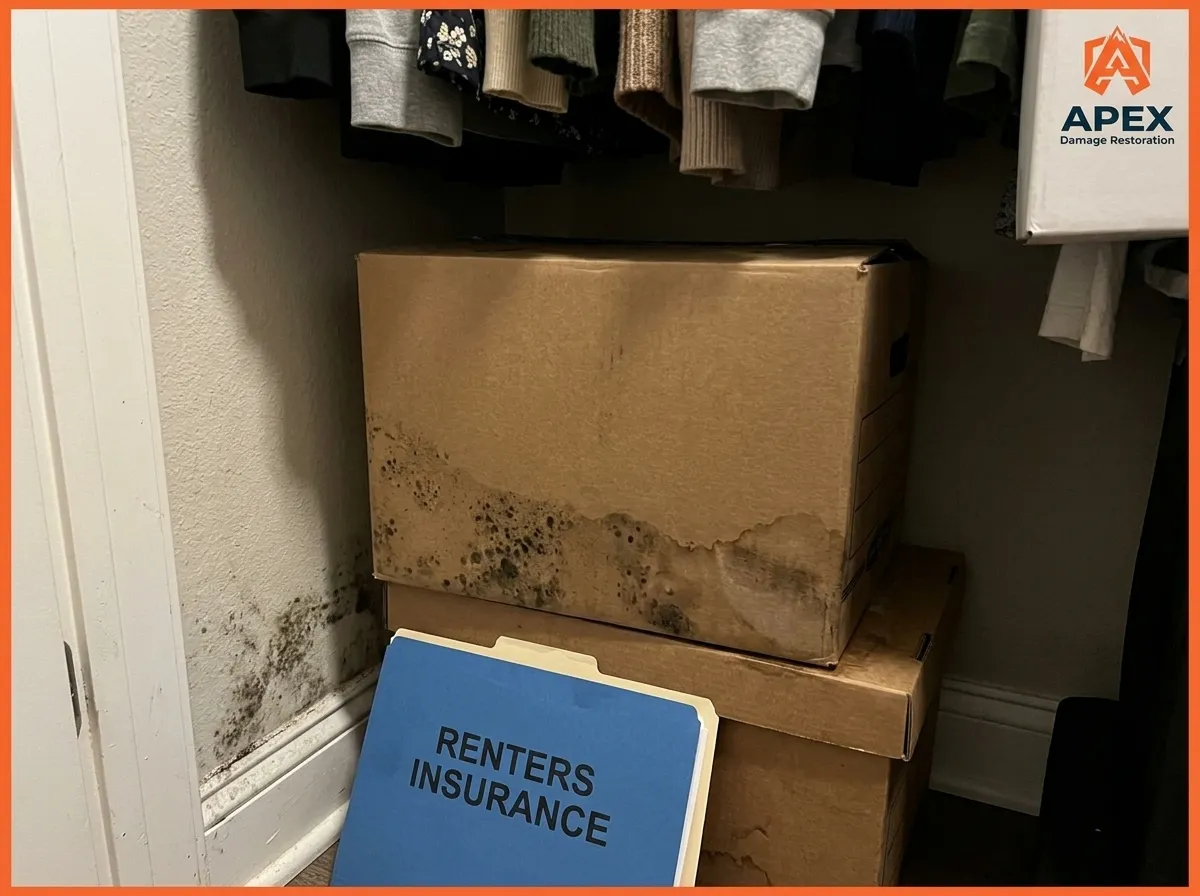
Preventing mold and preserving future claim eligibility depends on early leak detection and consistent documentation.
- Report leaks immediately. Notify the landlord in writing the same day a leak or water intrusion is discovered.
- Control indoor humidity. Use exhaust fans in bathrooms and kitchens, and run a dehumidifier in rooms with limited airflow.
- Inspect moisture-prone areas monthly. Check under sinks, around window frames, and near appliance connections for early signs of water intrusion.
- Dry wet materials within 24 to 48 hours. Remove standing water and dry affected carpet or drywall before mold has time to establish, consistent with EPA guidance.
- Keep records of every report and repair. Save copies of maintenance requests, landlord responses, and repair dates to support a future claim if mold develops.
Frequently Asked Questions
Need Emergency Restoration Help Today?
Call Apex Damage Restoration now for fast priority dispatch across Aurora, CO, a written estimate before work begins, and direct insurance claims assistance.