
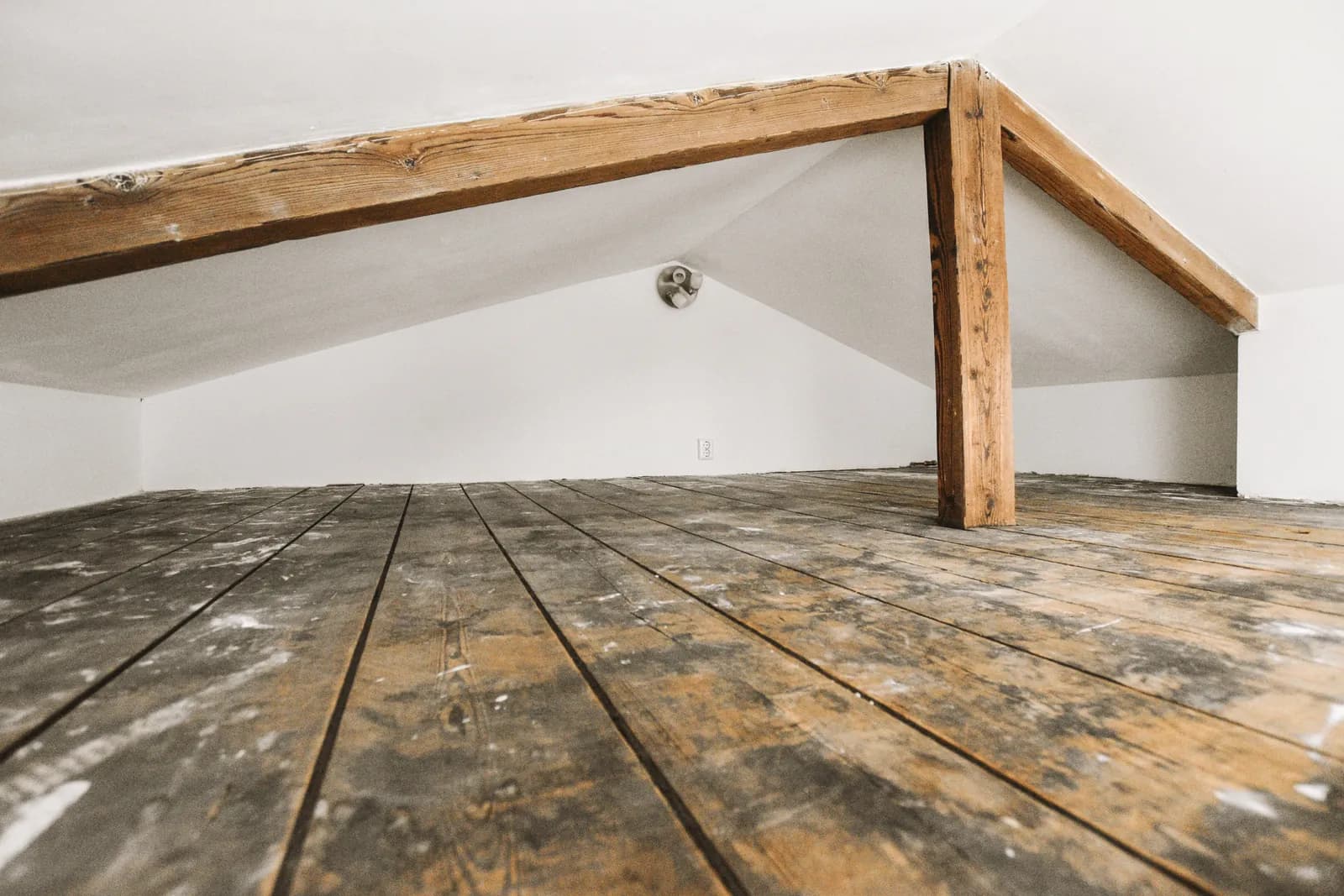
Water damage on hardwood floors ranges from minor surface discoloration to structural buckling that requires full board replacement. Homeowners and businesses can identify the severity of the damage by examining board shape, finish condition, and odor, then apply the repair method that matches that severity. Early identification limits the damage to a few boards and reduces the risk of moisture reaching the subfloor, where it can cause mold growth and higher repair costs.
Does Water Damage Hardwood Floors?
Water damages hardwood floors by penetrating the wood fibers, causing them to swell, warp, and lose structural integrity. Wood is a porous material, and it absorbs moisture through its surface, seams, and end grain whenever it contacts standing water, high humidity, or a leak. This absorption disrupts the wood's natural moisture balance and triggers physical changes such as cupping, buckling, and discoloration.
The severity of water damage depends on the water category classification of the source. Clean water from a supply line causes different damage than contaminated water from a sewage backup, which introduces bacteria and contaminants into the wood and subfloor. Prolonged exposure also increases the risk of mold growth beneath the flooring, particularly when moisture becomes trapped between the boards and the subfloor.
What Are The Signs of Water Damage on Hardwood Floors?
Hardwood floor water damage produces a range of signs, from subtle discoloration to structural board separation. The extent of these signs depends on the amount of water involved, the exposure duration, and how quickly the moisture is removed.
What Are The Signs of Minor Flooring Water Damage?
Minor flooring water damage produces localized, low-severity signs that typically affect a small number of boards.
- Discoloration: Slight discoloration or light staining appears on individual boards where moisture contacted the finish.
- Cupping: Minor cupping causes board edges to sit slightly higher than the center as the top and bottom of the board absorb moisture unevenly.
- Finish clouding: A dull or cloudy finish develops in a localized spot where moisture penetrated the surface coating.
- Odor: A faint musty smell forms near the affected area as trapped moisture begins to support microbial growth.
- Gapping: Small gaps begin to form between a few boards as the wood contracts during the drying phase after initial swelling.
What Are The Signs of Major Flooring Water Damage?
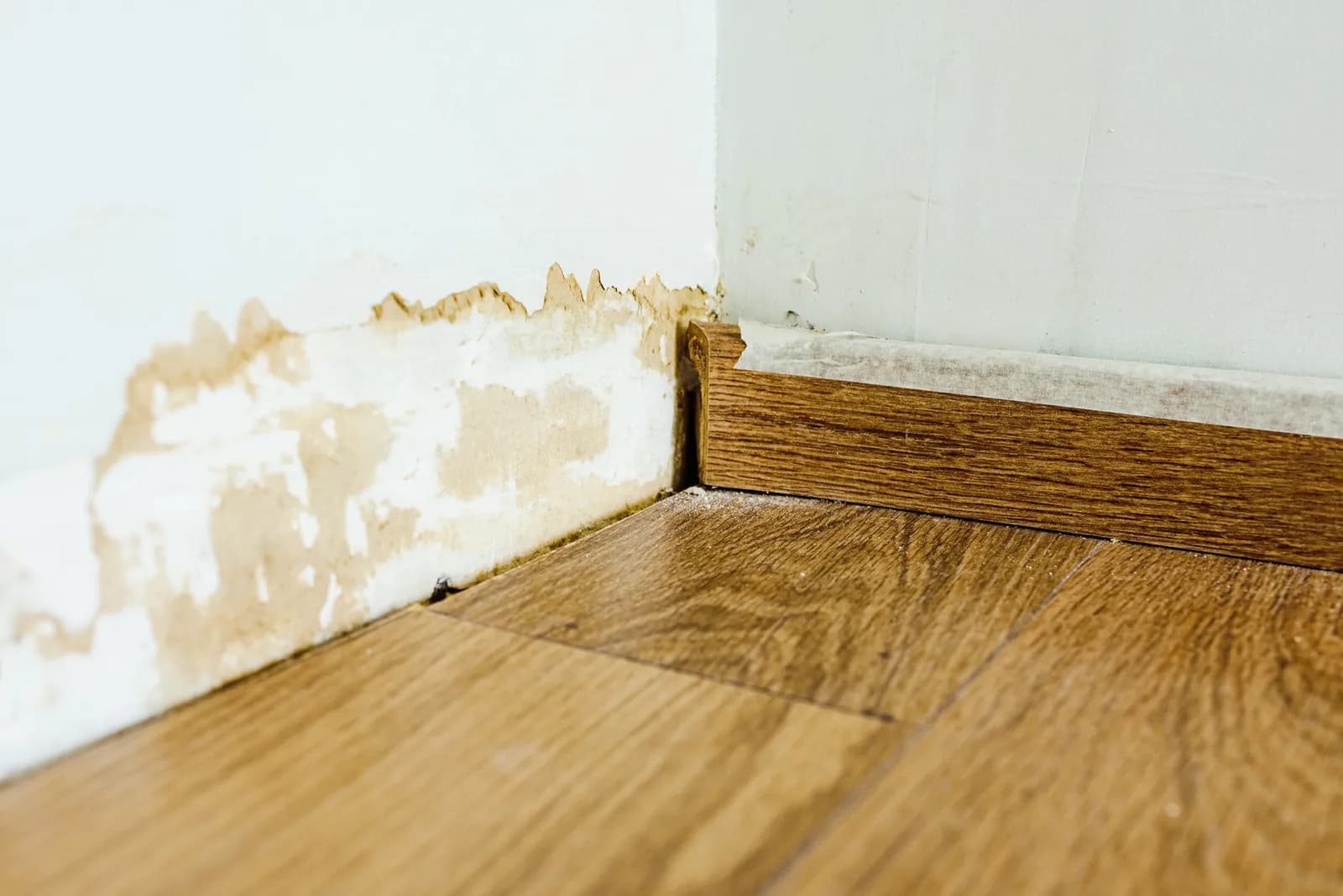
Major flooring water damage produces widespread, structural signs that affect multiple boards and often extend into the subfloor.
- Buckling: Boards separate from the subfloor and lift or tent upward when adhesive bonds or fasteners fail under sustained moisture exposure.
- Severe cupping or crowning: Cupping or crowning spreads across multiple boards, with crowning occurring when the board center rises above the edges after improper drying or sanding.
- Soft or spongy spots: Sections of flooring feel soft, spongy, or give slightly underfoot, which indicates the subfloor has absorbed significant moisture.
- Dark staining: Dark or black staining spreads across a wide area, often signaling prolonged water contact or the presence of mold beneath the finish.
- Persistent odor: A persistent musty odor fills the room, which indicates ongoing microbial activity rather than a single, isolated source.
- Visible mold: Mold growth becomes visible at board seams or edges, appearing as dark, fuzzy, or discolored patches.
- Split or cracked boards: Boards split, crack, or separate significantly as repeated swelling and shrinking cycles break down the wood's structural integrity.
How Much Water It Takes to Damage Hardwood Floors?
Hardwood floors can sustain damage from standing water present for as little as 24 to 48 hours. The exact threshold depends on the wood species, the finish quality, and whether the water reaches the subfloor through seams or gaps. Solid hardwood generally withstands brief surface moisture, such as a quickly wiped spill, without lasting harm because a sealed finish limits absorption.
Extended exposure changes this outcome. Standing water that remains on the surface for more than a few hours begins to penetrate through seams and finish imperfections, and once moisture reaches the subfloor, it can wick upward into the boards even after the visible water is removed. A slow, hidden leak, such as one from a condensate line or an appliance supply hose, can cause equivalent damage over several weeks because the wood absorbs moisture continuously at a lower rate.
What Are The Signs of Mold Under Hardwood Floors?
Mold under hardwood floors produces a musty odor, visible discoloration at board seams, and cupped or buckled boards that persist after the surface appears dry. The odor is often the earliest detectable sign because it develops before mold becomes visible at the surface.
Additional signs include:
- Persistent moisture readings: A moisture meter registers elevated readings in the subfloor or board underside even after the visible surface has dried.
- Discoloration at seams: Dark or greenish staining concentrates along board seams and edges, where trapped moisture accumulates.
- Recurring cupping: Boards continue to cup or feel uneven despite surface-level drying, which indicates moisture retention beneath the flooring.
- Health symptoms: Occupants may experience allergy-like symptoms, such as congestion or irritation, that improve when they leave the affected room.
Confirming mold beneath hardwood flooring typically requires lifting a board or using a moisture meter and, when contamination is suspected, professional air or surface testing.
What Is The Cost of Hardwood Floor Water Damage Repair?
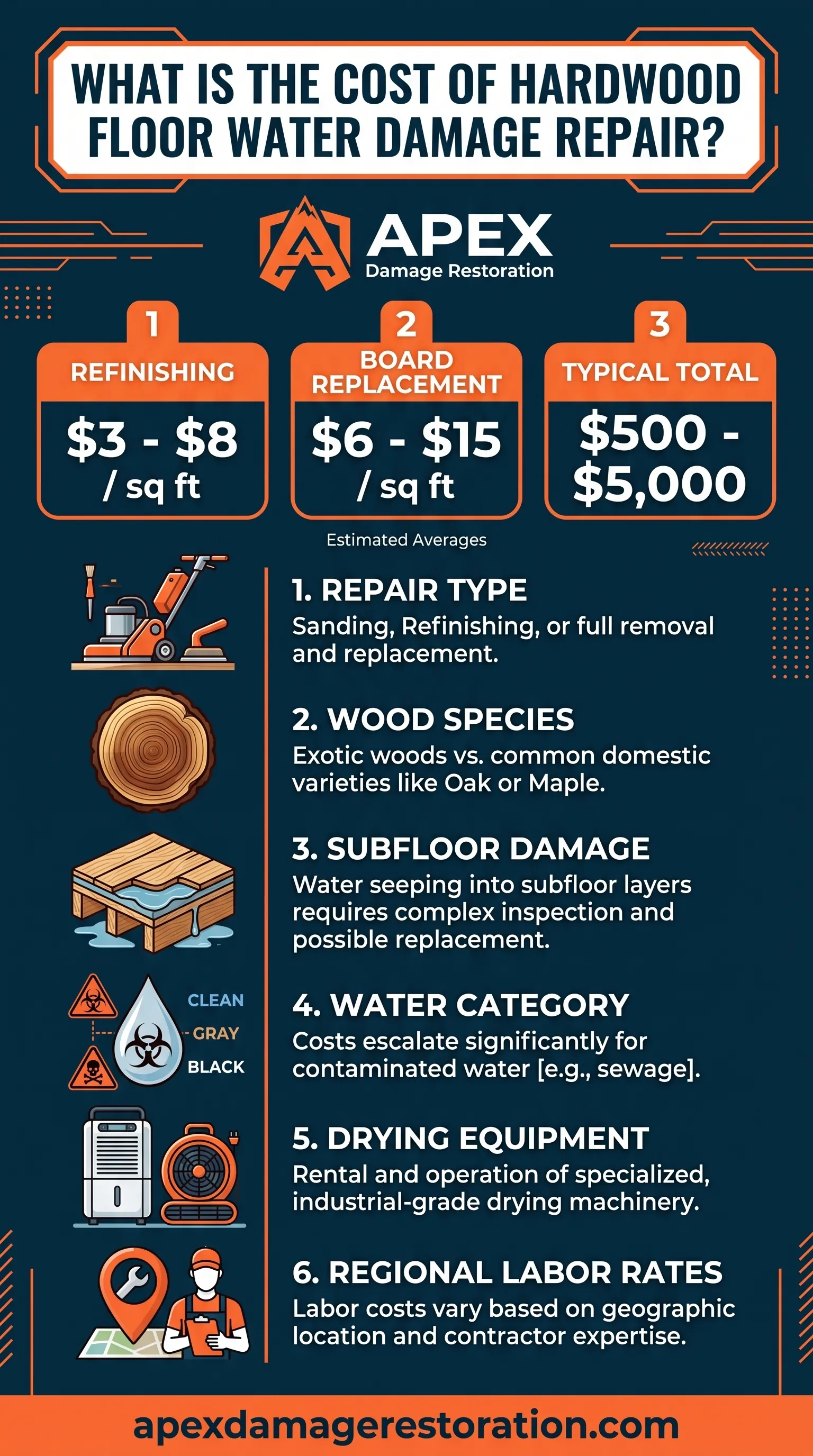
Hardwood floor water damage repair costs range from $3 to $8 per square foot for refinishing minor damage and $6 to $15 per square foot for board replacement, according to industry estimates. Total project costs typically fall between $500 and $5,000, depending on the affected area size and repair method.
These figures vary by several factors:
- Repair type: Refinishing costs less than full board replacement because it addresses surface-level damage without removing structural material.
- Wood species: Exotic or specialty hardwood species cost more to replace than common species such as oak or maple due to material sourcing.
- Subfloor damage: Subfloor repair or replacement adds $2 to $5 per square foot when moisture has compromised the structure beneath the flooring.
- Water category: Contaminated water damage, such as from a sewage backup, increases costs because it requires antimicrobial treatment and, in some cases, full material disposal.
- Drying equipment: Professional drying services, including industrial dehumidification and air movers, typically add $500 to $1,500 to a restoration project when structural drying is required before repairs begin.
- Regional labor rates: Labor costs vary by region and contractor availability, which shifts the total project estimate.
These figures represent general industry estimates in U.S. dollars. Homeowners and businesses should request a written quote from a licensed flooring or restoration contractor based on an on-site inspection.
How to Fix Water-Damaged Hardwood Floors?
Fixing water-damaged hardwood floors requires removing the moisture source, drying the affected area, and then repairing or replacing boards based on the damage severity. The correct method depends on whether the boards show surface-level warping or structural buckling.
The general repair sequence includes:
- 1Stop the water source and remove standing water from the surface.
- 2Remove baseboards or trim near the affected area to expose moisture pathways.
- 3Measure moisture content in the boards and subfloor using a moisture meter.
- 4Dry the area with air movers and dehumidification equipment until moisture readings return to a normal range.
- 5Assess each board for cupping, buckling, splitting, or mold growth.
- 6Repair or replace damaged boards based on the assessment.
- 7Sand and refinish the repaired section to match the surrounding floor.
How to Fix Buckled Hardwood Floors?
Fixing buckled hardwood floors requires removing the affected boards, drying the subfloor completely, and installing replacement boards once moisture levels return to normal. Buckled boards have separated from the subfloor and cannot be pressed back into place without risking further cracking or fastener failure.
The repair process for buckled boards includes:
- Board removal: A contractor removes the buckled boards along with any adjacent boards showing separation from the subfloor.
- Subfloor drying: Air movers and dehumidifiers dry the exposed subfloor until moisture meter readings match the surrounding, unaffected area.
- Subfloor inspection: The contractor inspects the subfloor for rot, delamination, or fastener damage before installing new flooring.
- Board replacement: New boards, matched in species and finish, are installed and secured to the dried subfloor.
- Finish blending: The replacement section is sanded and refinished to blend with the existing floor's color and sheen.
How to Fix Warped Hardwood Floors?
Fixing warped hardwood floors involves drying the boards gradually and, when the warping is minor, allowing the wood to return to its original shape before sanding and refinishing the surface. Warping includes both cupping and crowning, and the correct fix depends on which condition is present.
For cupped boards, gradual drying with controlled dehumidification often reduces the cup over several days as moisture leaves the board evenly. Sanding a cupped board before it fully dries can create a crowned surface once the board finishes drying and contracts. For crowned boards, which commonly result from sanding while the wood was still wet, the contractor waits until the board reaches a stable moisture content before sanding the surface flat.
When cupping or crowning exceeds approximately 3/16 inch across a board's width, replacement is typically more reliable than attempting to flatten the board through sanding, since excessive material removal can compromise the board's remaining thickness.
When to Refinish vs. Repair Water-Damaged Hardwood Floors?
Refinishing water-damaged hardwood floors is appropriate when the boards remain structurally intact and show only surface-level discoloration, minor cupping, or finish clouding. Repair or replacement becomes necessary when boards have buckled, split, cracked, or absorbed contaminated water.
The decision depends on these conditions:
- Board integrity: Refinishing suits boards that are flat, solid, and free of cracks; replacement suits boards that have buckled or split.
- Moisture source: Clean water damage is more likely to qualify for refinishing, while contaminated water damage typically requires replacement due to antimicrobial and hygiene concerns.
- Damage depth: Surface-level discoloration responds to sanding and refinishing; staining that has penetrated deep into the wood grain often remains visible after sanding.
- Subfloor condition: An intact subfloor supports refinishing; a compromised or moldy subfloor requires board removal regardless of the surface condition.
How to Prevent Water Damage to Hardwood Floors?
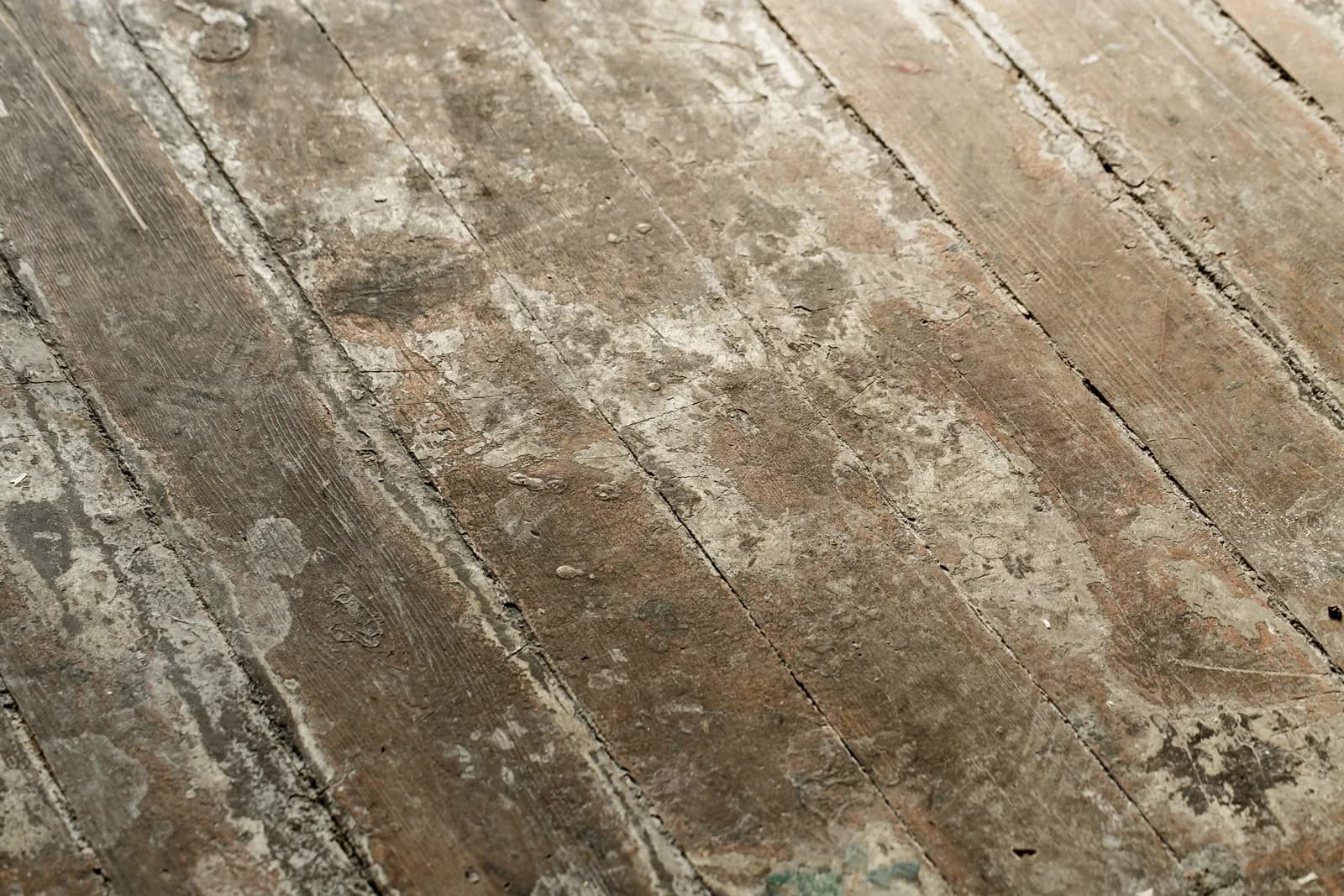
Preventing water damage to hardwood floors requires controlling moisture exposure at its most common sources: spills, humidity, plumbing, and appliance leaks.
Clean Up Spills Immediately
Wiping up spills immediately prevents water from penetrating the floor's finish and reaching the wood grain. Standing liquid begins to break down a floor's protective coating within minutes, particularly at seams and high-traffic areas where the finish has worn thin. Prompt cleanup limits contact time and keeps moisture from reaching the subfloor.
Control Indoor Humidity
Maintaining indoor relative humidity between 35% and 55% keeps hardwood boards within their stable moisture range and reduces the risk of cupping or gapping. Wood expands when humidity rises and contracts when humidity drops, so consistent indoor humidity levels reduce the seasonal movement that stresses board seams and finishes over time.
Use Rugs or Mats in High-Risk Areas
Placing rugs or mats in high-risk areas, such as entryways, kitchens, and near sinks, reduces direct water and moisture contact with the flooring. These areas experience frequent exposure to tracked-in water, splashes, and condensation, and a rug or mat intercepts moisture before it reaches the wood surface.
Maintain Floor Finish and Sealant
Reapplying floor finish or sealant every three to five years restores the protective barrier that prevents water from penetrating the wood. A worn finish loses its water resistance gradually, often without visible signs, which allows moisture to reach the wood grain during routine spills or humidity fluctuations.
Inspect Appliances and Plumbing Regularly
Inspecting appliances and plumbing lines at least once a year identifies slow leaks before they cause hidden water damage beneath hardwood flooring. Supply lines, condensate lines, and appliance connections near flooring, such as those for dishwashers, refrigerators, and washing machines, commonly fail gradually, allowing moisture to seep into the subfloor undetected.
Use a Humidifier/Dehumidifier Seasonally
Using a humidifier during dry winter months and a dehumidifier during humid summer months keeps indoor humidity within the stable range hardwood flooring requires. Seasonal humidity swings cause the greatest stress on hardwood floors, and supplementing indoor air with the appropriate device offsets these fluctuations before they affect the wood.
When to Call a Water Damage Restoration Professional?
Homeowners and businesses should call a water damage restoration professional when standing water has been present for more than 24 to 48 hours, when boards show buckling or structural separation, or when the water source involves contaminated water. Professional intervention is also necessary when moisture has reached the subfloor, since surface drying alone does not address moisture trapped beneath the flooring.
A restoration professional uses moisture meters to assess the subfloor and surrounding structure, applies industrial dehumidification equipment to dry the area thoroughly, and determines whether antimicrobial treatment is necessary based on the water's contamination level. Attempting to address structural or contaminated water damage without professional equipment increases the risk of hidden mold growth and incomplete drying, which can lead to recurring damage after repairs are complete.
Need Emergency Restoration Help Today?
Call Apex Damage Restoration now for fast priority dispatch across Aurora, CO, a written estimate before work begins, and direct insurance claims assistance.