
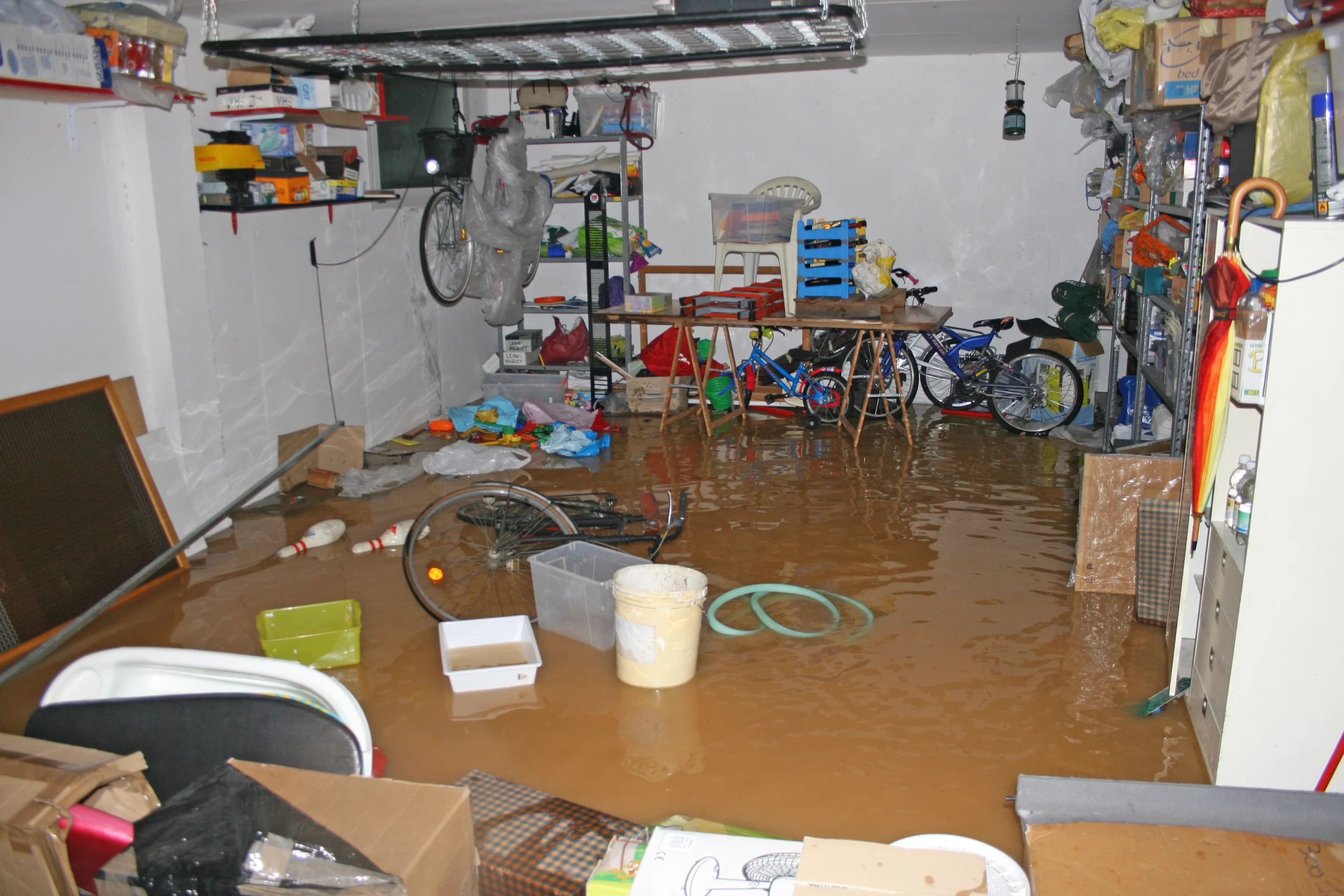
Water damage categories are a three-tier classification system that ranks water intrusion by contamination level. The Institute of Inspection, Cleaning and Restoration Certification (IICRC) defines this system in its S500 Standard for Professional Water Damage Restoration. Restoration professionals use these categories, commonly called clean water, gray water, and black water, to determine the health risk, required safety equipment, and remediation method for a given water loss.
What Water Damage Categories Are?
A water damage category is a classification that identifies how contaminated a water source is at the time of loss. The IICRC S500 standard establishes three categories: Category 1, Category 2, and Category 3
The classification exists because contamination level, not water volume, determines the health risk to occupants and restoration workers. A small Category 3 loss can pose a greater safety hazard than a large Category 1 loss. Restoration technicians assign a category during the initial inspection, based on the water's source and any evidence of contamination, before selecting equipment, personal protective gear, and a treatment method.
The three categories are:
- Category 1 (clean water): Water from a sanitary source with no contamination.
- Category 2 (gray water): Water containing a measurable level of contaminants.
- Category 3 (black water): Water that is grossly contaminated and carries pathogens.
Category 1 Water Damage (Clean Water)
Category 1 water damage involves water from a sanitary source that presents no substantial risk to humans upon contact. Restoration professionals apply this classification only at the point of release; clean water can degrade to Category 2 within 24 to 48 hours if it contacts building materials or stands unaddressed.
- Typical sources: Supply-line breaks, water heater failures, appliance supply-line leaks, and overflowing sinks or bathtubs filled from a clean tap.
- Contamination level: None at the time of release; the water originates from a treated or potable source.
- Safety notes: Occupants and workers face no significant health risk from direct contact, though standing water can still support mold growth if it remains unaddressed.
- Treatment approach: Technicians extract standing water, dry affected materials with air movers and dehumidifiers, and monitor moisture levels; disposal of contaminated materials is not typically required.
Category 2 Water Damage (Gray Water)
Category 2 water damage involves water that contains a significant degree of physical, chemical, or biological contamination and can cause illness or discomfort if humans contact or ingest it. Gray water carries measurable contaminants but lacks the pathogen load associated with sewage.
- Typical sources: Dishwasher and washing machine discharge, sump pump failures, toilet overflow with urine but no feces, and aquarium leaks.
- Contamination level: Moderate; the water may contain detergents, food residue, or microorganisms introduced through household appliances or plumbing.
- Safety notes: Direct contact can cause skin or eye irritation, and workers use gloves, eye protection, and respiratory precautions when materials show contamination.
- Treatment approach: Technicians remove porous materials that absorbed gray water, such as carpet padding, apply antimicrobial treatment to affected surfaces, and dry the structure using moisture meters to confirm results.
Category 3 Water Damage (Black Water)
Category 3 water damage involves water that is grossly contaminated and contains pathogenic, toxigenic, or other harmful agents capable of causing severe illness. Black water poses the highest health risk of the three categories.
- Typical sources: Sewage backups, toilet overflow containing feces, flooding from rivers or seawater, and groundwater intrusion that carries soil contaminants.
- Contamination level: Severe; the water contains bacteria, viruses, or other pathogens along with chemical or organic contaminants.
- Safety notes: Direct contact requires full personal protective equipment, including gloves, eye protection, and respiratory protection; occupants should avoid the affected area until remediation is complete.
- Treatment approach: Technicians remove and dispose of contaminated porous materials such as carpet, drywall, and insulation, apply antimicrobial treatment to remaining structural surfaces, and verify drying with moisture meters before reconstruction begins.
Why Does Water Damage Category Matter?
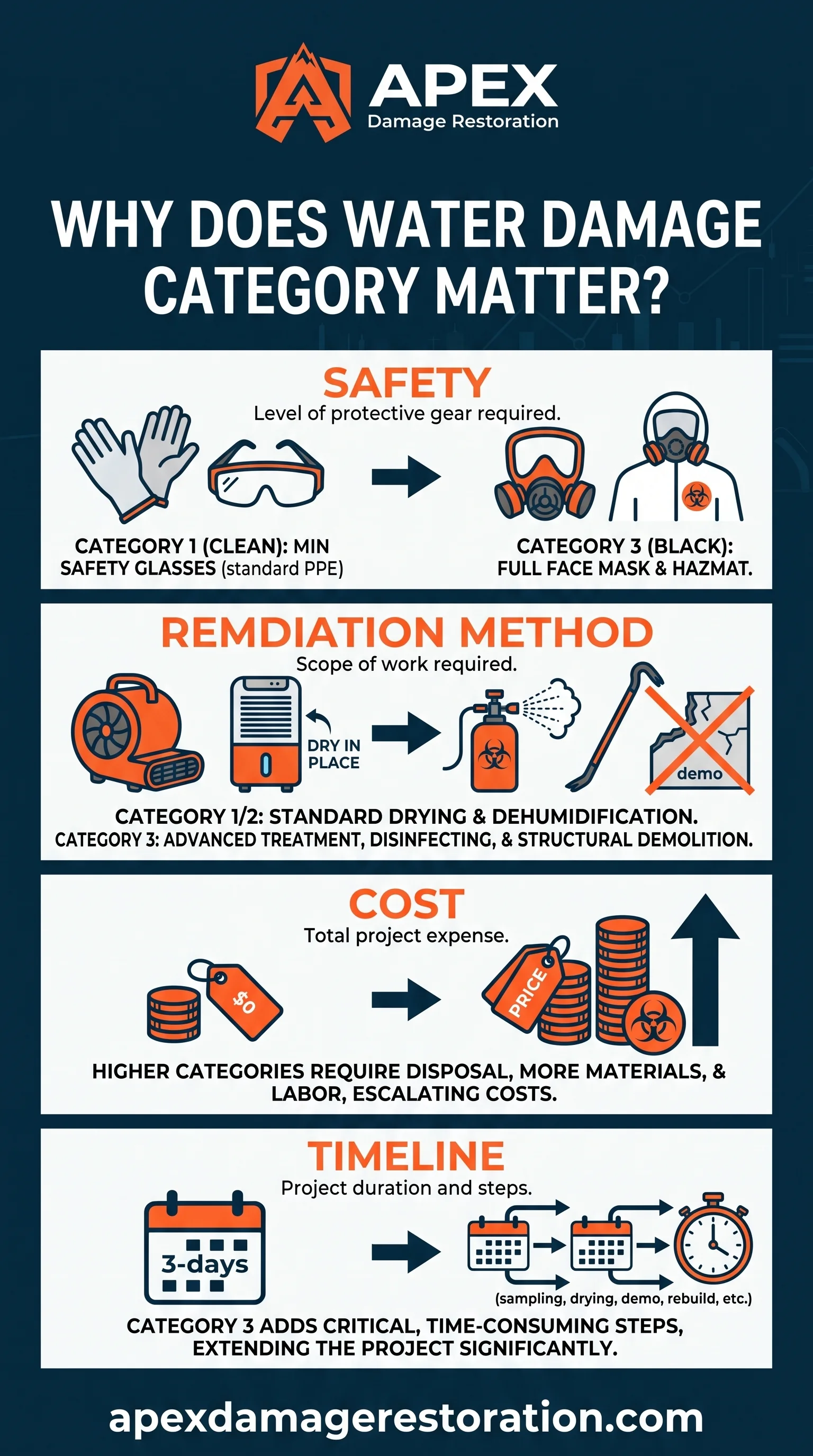
Water damage category determines the safety precautions, remediation method, cost, and timeline of a restoration project. A higher category increases each of these factors because contamination changes what workers must remove, treat, and verify before a structure is safe to occupy.
- Safety: Category 1 losses require minimal personal protective equipment, while Category 3 losses require full PPE for anyone entering the affected area.
- Remediation method: Category 1 restoration typically relies on extraction and drying alone. Category 2 and Category 3 restoration add antimicrobial treatment and, in Category 3 cases, removal of porous materials that cannot be sanitized.
- Cost: Category 3 remediation costs more than Category 1 or 2 remediation because contaminated materials require disposal and replacement rather than drying and reuse.
- Timeline: Category 3 projects generally take longer than Category 1 projects because material removal, disposal, and antimicrobial treatment add steps beyond extraction and drying.
What Category Does Water Damage Insurance Cover?
Standard homeowners insurance policies typically cover water damage that results from a sudden and accidental event, regardless of category, while excluding damage from gradual leaks or long-term neglect. An insurer's coverage decision depends more on how the water loss occurred than on the category alone, though category still affects the scope and cost of the approved remediation.
Insurers commonly exclude coverage for:
- Damage from a leak that occurred gradually over time and went unaddressed.
- Damage resulting from a lack of routine maintenance.
- Flooding from an external body of water, which typically requires separate flood insurance.
Category 3 losses often need clearer documentation than Category 1 or 2 losses. Because Category 3 water frequently originates from sewage backups or flooding, insurers may request evidence distinguishing a covered sudden event, such as a burst sewage line, from an excluded cause, such as external floodwater. Restoration companies typically photograph the source and contamination evidence at the start of a job to support this documentation.
What is The Difference Between Category vs. Class of Water Damage?
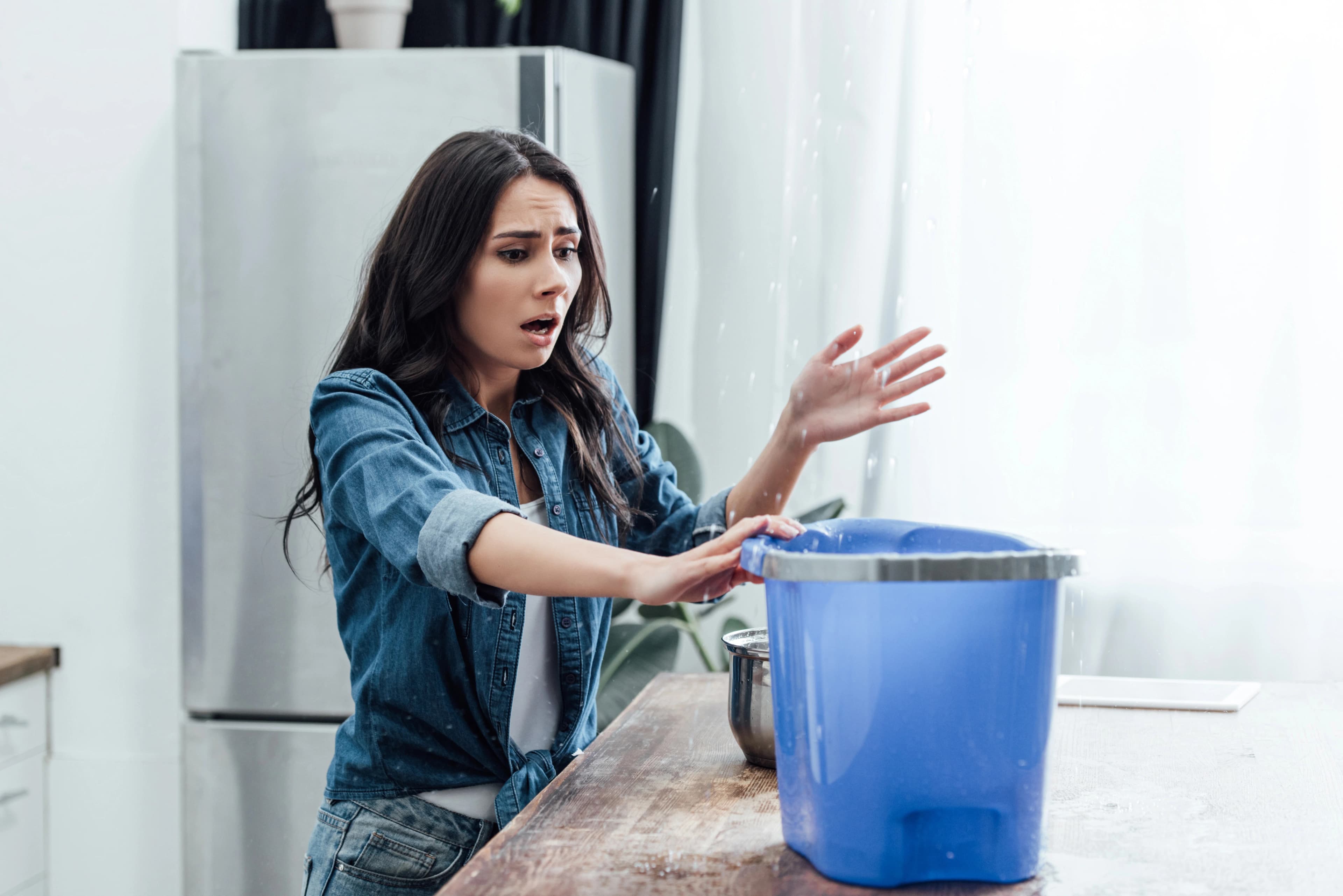
Water damage category and water damage class describe two different classification systems. Category identifies contamination level, while class identifies the volume of water and the rate of evaporation affecting a structure. The IICRC S500 standard defines four classes, numbered 1 through 4, based on how much moisture materials absorbed and how quickly the affected area can dry.
A single water loss carries both a category and a class rating. For example, a burst supply line may produce Category 1 water at a Class 2 volume, meaning clean water saturated a moderate area with a faster evaporation rate. Restoration professionals use category to determine required safety and treatment steps, and class to determine the equipment and time needed for drying.
When to Call a Professional Water Damage Restoration Company?
Homeowners should call a professional restoration company for any Category 2 or Category 3 water loss, given the health risks associated with gray water and black water contamination. Category 1 losses that a homeowner can extract and dry within 24 to 48 hours may not require professional intervention, though standing water that remains untreated beyond that window can progress to Category 2
Need Emergency Restoration Help Today?
Call Apex Damage Restoration now for fast priority dispatch across Aurora, CO, a written estimate before work begins, and direct insurance claims assistance.