
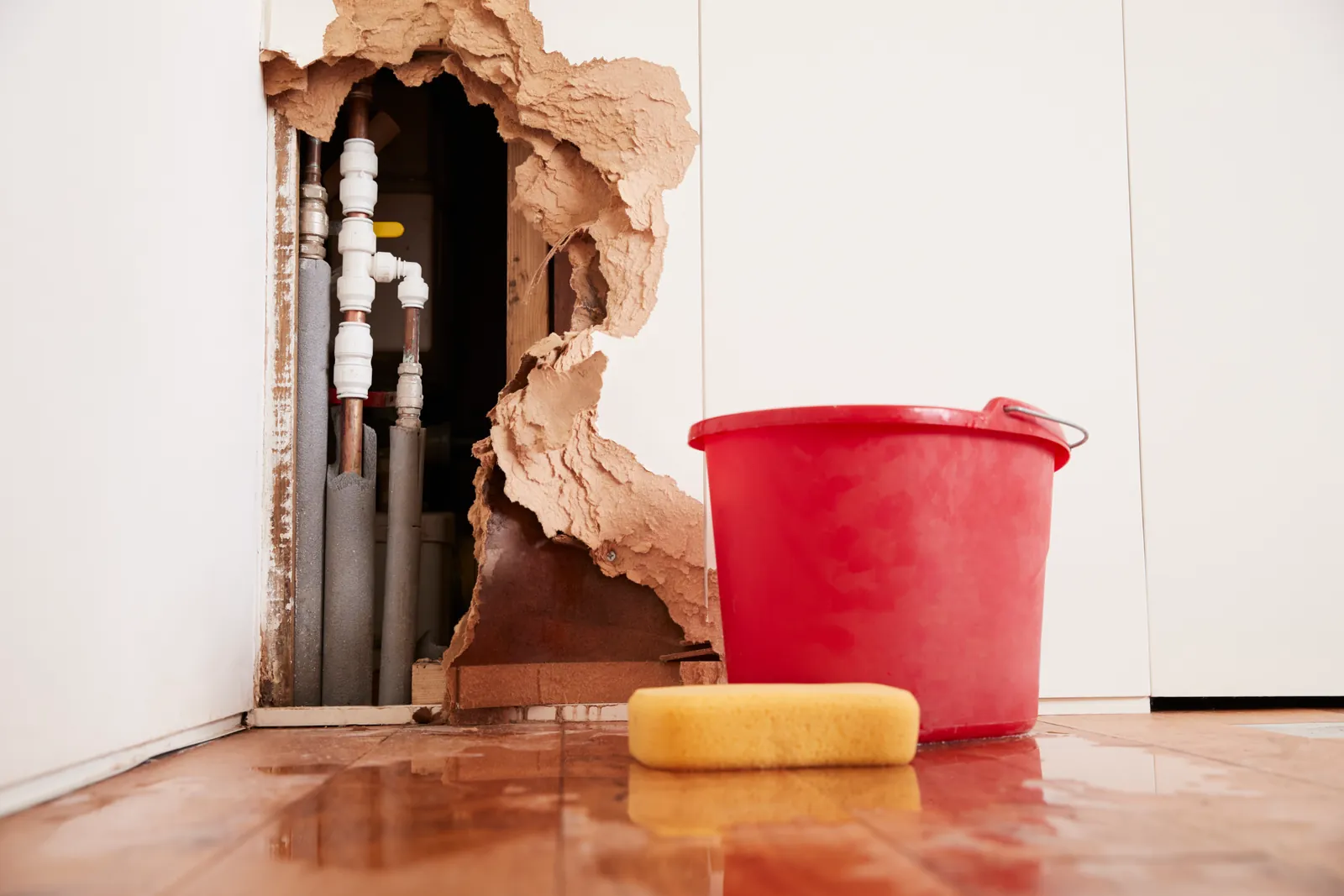
Water damage results from uncontrolled water intrusion caused by plumbing failures, weather events, appliance malfunctions, structural defects, and system breakdowns. Each cause produces distinct patterns of damage that require different approaches to prevention and repair. Identifying the specific source of water intrusion determines the appropriate restoration method and prevents recurring damage.
What Are The Common Causes of Water Damage?
Four sources account for most residential water damage: plumbing failures, storm-related intrusion, appliance leaks, and roof failures. Each source affects different areas of a home and requires distinct detection and repair methods.
Plumbing Failures and Burst Pipe Leaks
Plumbing failures cause water damage when pipes crack, corrode, or burst under pressure, releasing water directly into walls, floors, and ceilings. Freezing temperatures, aging pipe materials, and excessive water pressure are the three primary triggers of pipe failure. A burst pipe can release over 100 litres of water per minute depending on pipe diameter and system pressure, saturating flooring and drywall within minutes.
Corroded joints and deteriorated seals produce slower leaks that remain undetected for weeks, allowing mould growth and structural weakening before symptoms become visible.
Weather and Storm-Related Water Intrusion
Weather-related water damage occurs when storms, heavy rainfall, or flooding force water through a home's exterior barriers. Wind-driven rain penetrates gaps around windows, doors, and siding, while prolonged rainfall saturates soil and increases hydrostatic pressure against foundation walls.
Storm surge and flash flooding introduce standing water that carries sediment, bacteria, and contaminants into living spaces. Hail and high winds can also compromise roofing materials, creating openings for water entry during subsequent storms.
Appliance and Fixture Leaks
Appliance and fixture leaks develop when water-using equipment fails at a supply line, hose connection, or internal seal. Washing machines, dishwashers, water heaters, and refrigerator ice makers rely on hoses and valves that degrade over time and can rupture without warning.
A failed water heater tank can release its full storage capacity, often 150 to 300 litres, directly onto the surrounding floor. Toilet supply lines and wax ring seals also deteriorate gradually, producing leaks at the base of the fixture that damage subfloor and ceiling materials in rooms below.
Roof Leaks and Failed Flashing
Roof leaks introduce water into a home when shingles, underlayment, or flashing fail to block precipitation. Flashing, the thin metal barrier installed around chimneys, vents, and roof valleys, seals joints where the risk of water intrusion is highest.
Damaged or improperly installed flashing allows water to travel along roof decking and enter attic spaces and ceilings. Missing or curled shingles expose the underlayment to direct precipitation, accelerating deterioration and increasing leak frequency during subsequent rainfall.
Causes of Basement Water Damage
Basement water damage develops primarily through groundwater seepage and sump pump failure, both of which relate to a basement's below-grade position relative to the surrounding soil and water table.
Groundwater Seepage Through Foundation Walls
Groundwater seepage occurs when hydrostatic pressure forces water through cracks, porous concrete, or unsealed joints in foundation walls. Saturated soil surrounding a foundation exerts pressure against basement walls, pushing water through even minor structural imperfections.
Poor exterior grading directs surface water toward the foundation instead of away from it, increasing soil saturation near the walls. Clogged or missing gutters and downspouts compound this effect by allowing roof runoff to pool at the foundation perimeter.
Sump Pump Failure
A sump pump failure allows accumulated groundwater to rise inside a basement instead of being redirected outside the home. Power outages during storms disable electric sump pumps at the exact moments when pump function matters most.
Mechanical failure, clogged discharge lines, and pumps undersized for the basement's water volume also prevent adequate drainage. A battery backup system maintains pump operation during power loss, reducing the risk of basement flooding during severe weather.
Causes of Commercial Water Damage
Commercial water damage originates primarily from large-scale mechanical systems and multi-unit building infrastructure, distinguishing it from the residential causes affecting single-family homes.
HVAC and Large-System Leaks
HVAC systems cause commercial water damage when condensate lines clog, refrigerant lines fail, or cooling towers overflow. Condensate drain lines accumulate algae and debris over time, causing backups that release water into ceiling tiles and wall cavities near air handling units.
Rooftop HVAC units with deteriorated seals allow rainwater to enter building interiors through mechanical penetrations. Large commercial systems circulate significantly more water volume than residential units, so a failure point can affect multiple floors before detection.
Roof and Plumbing Failures in Multi-Unit Buildings
Multi-unit buildings experience water damage from shared roofing and plumbing systems that affect several tenants simultaneously. A single roof leak above a multi-story building can travel through multiple floors via shared wall cavities and utility chases before surfacing at a visible ceiling.
Shared plumbing risers and supply lines serving multiple units create a single point of failure that, when compromised, floods units on lower floors. Aging cast iron and galvanized steel pipes common in older commercial buildings corrode from the inside, making failure difficult to predict through visual inspection alone.
Why Do Water Damage Odors Linger After the Water Is Gone?
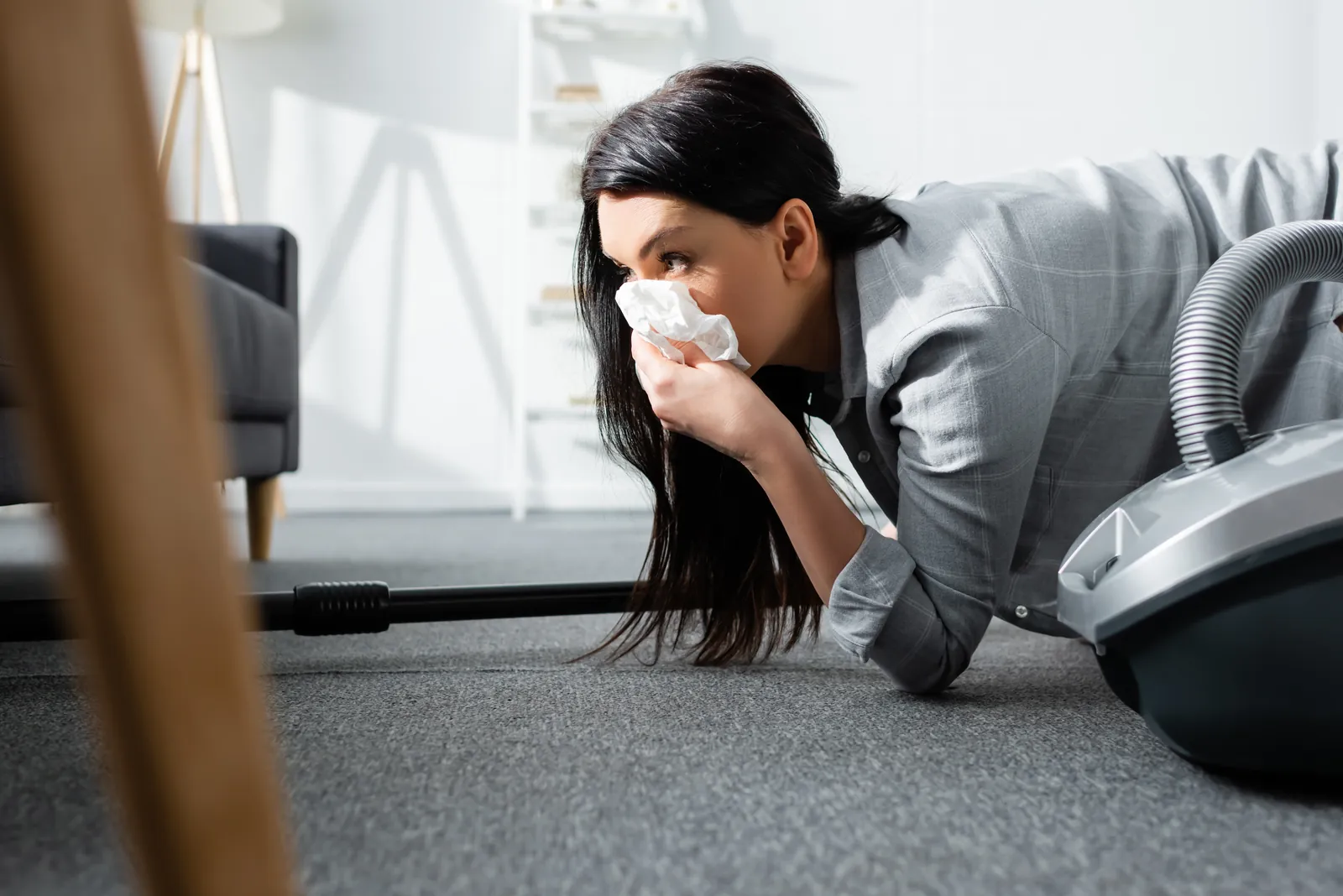
Water damage odors persist after visible water is removed because moisture remains trapped in porous materials such as drywall, subflooring, insulation, and carpet padding. Standing water carries organic material and bacteria into these materials, and trapped moisture allows microbial growth to continue inside wall cavities and beneath flooring where surface drying does not reach.
Mould and mildew produce musty odors as they metabolize organic compounds within damp materials, and this process continues until moisture content returns to normal levels throughout the affected structure.
Surface-level drying with fans and dehumidifiers removes visible moisture but does not always eliminate water retained inside wall assemblies, requiring moisture meters to confirm complete drying before odors resolve permanently.
Why Water Damage Keeps Recurring in the Same Areas?
Water damage recurs in the same location when the underlying source of intrusion remains unaddressed after the visible damage is repaired. Repairing drywall or flooring without correcting a failed pipe, damaged flashing, or poor grading allows the same water pathway to cause damage again during the next leak or storm event.
Incomplete drying during the initial restoration leaves residual moisture that promotes mould regrowth and material deterioration, weakening the area's resistance to future water exposure.
Structural factors such as inadequate exterior grading, undersized gutters, or aging plumbing systems continue directing water toward the same vulnerable point until the underlying defect is corrected rather than merely concealed.
How to Prevent Common Causes of Water Damage?
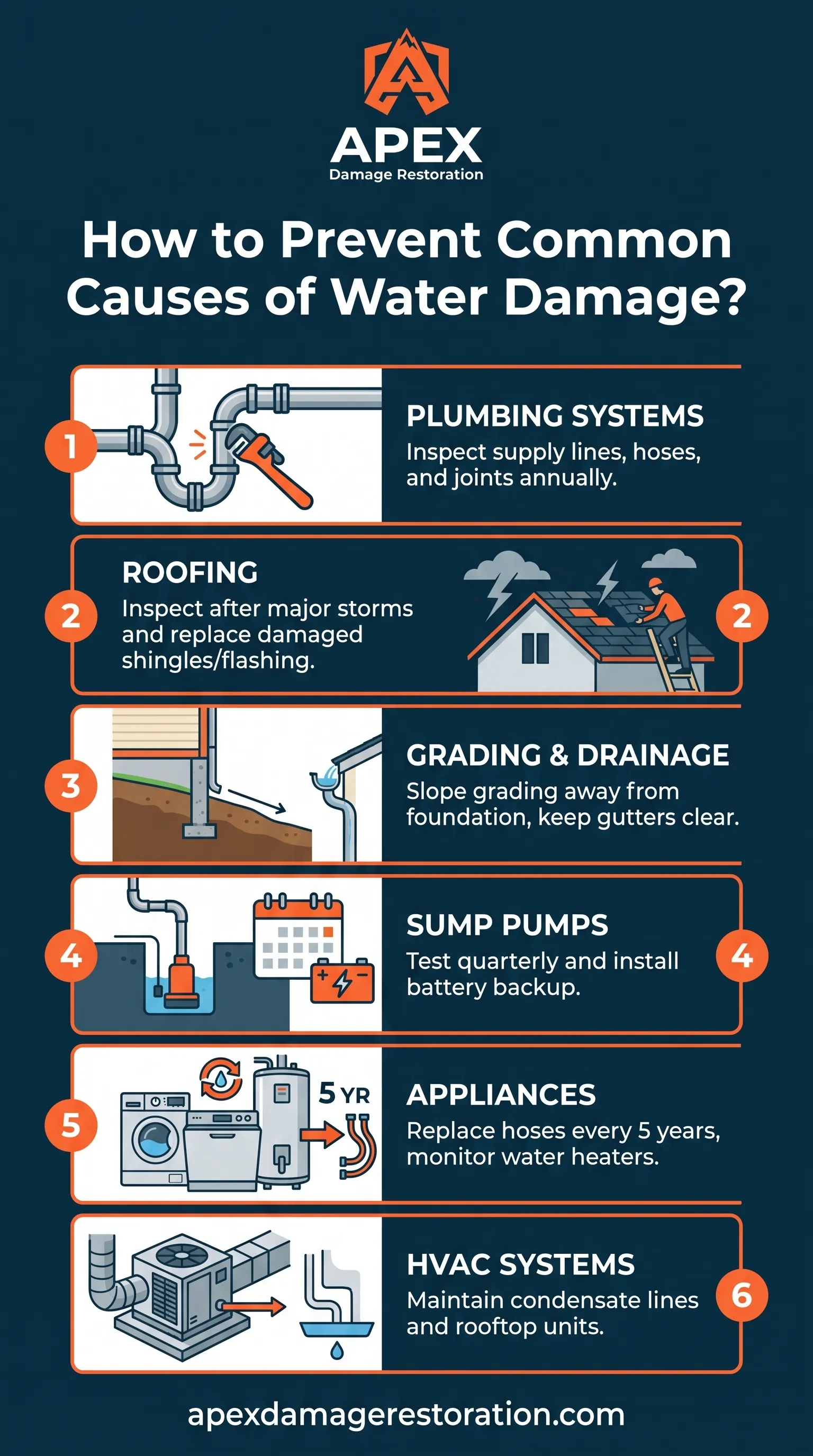
Preventing water damage requires addressing each major cause through routine inspection and maintenance:
- Plumbing systems: Inspect supply lines, hoses, and pipe joints annually, and replace hoses showing cracking or bulging.
- Roofing: Schedule roof inspections after major storms and replace damaged shingles and flashing promptly.
- Grading and drainage: Maintain exterior grading that slopes away from the foundation and keep gutters and downspouts clear of debris.
- Sump pumps: Test sump pump operation quarterly and install a battery backup system to maintain function during power outages.
- Appliances: Replace washing machine and dishwasher hoses every five years and monitor water heaters for corrosion or leaks at the base.
- HVAC systems: Schedule professional maintenance for condensate lines and rooftop units to prevent clogs and seal failures.
When to Call a Professional for Water Damage Restoration
Contact Apex Damage Restoration when water intrusion affects structural materials, exceeds a small, easily dried area, or involves contaminated water sources such as sewage or floodwater. Standing water that remains for more than 24 to 48 hours creates conditions suitable for mould growth, requiring professional-grade extraction and drying equipment beyond typical household tools.
Water damage affecting electrical systems, insulation, or multiple rooms requires moisture detection equipment to identify hidden saturation inside walls and subflooring. A professional assessment also determines whether structural drying, mould remediation, or material replacement is necessary before repairs proceed, reducing the risk of recurring damage from incomplete restoration.
Need Emergency Restoration Help Today?
Call Apex Damage Restoration now for fast priority dispatch across Aurora, CO, a written estimate before work begins, and direct insurance claims assistance.