
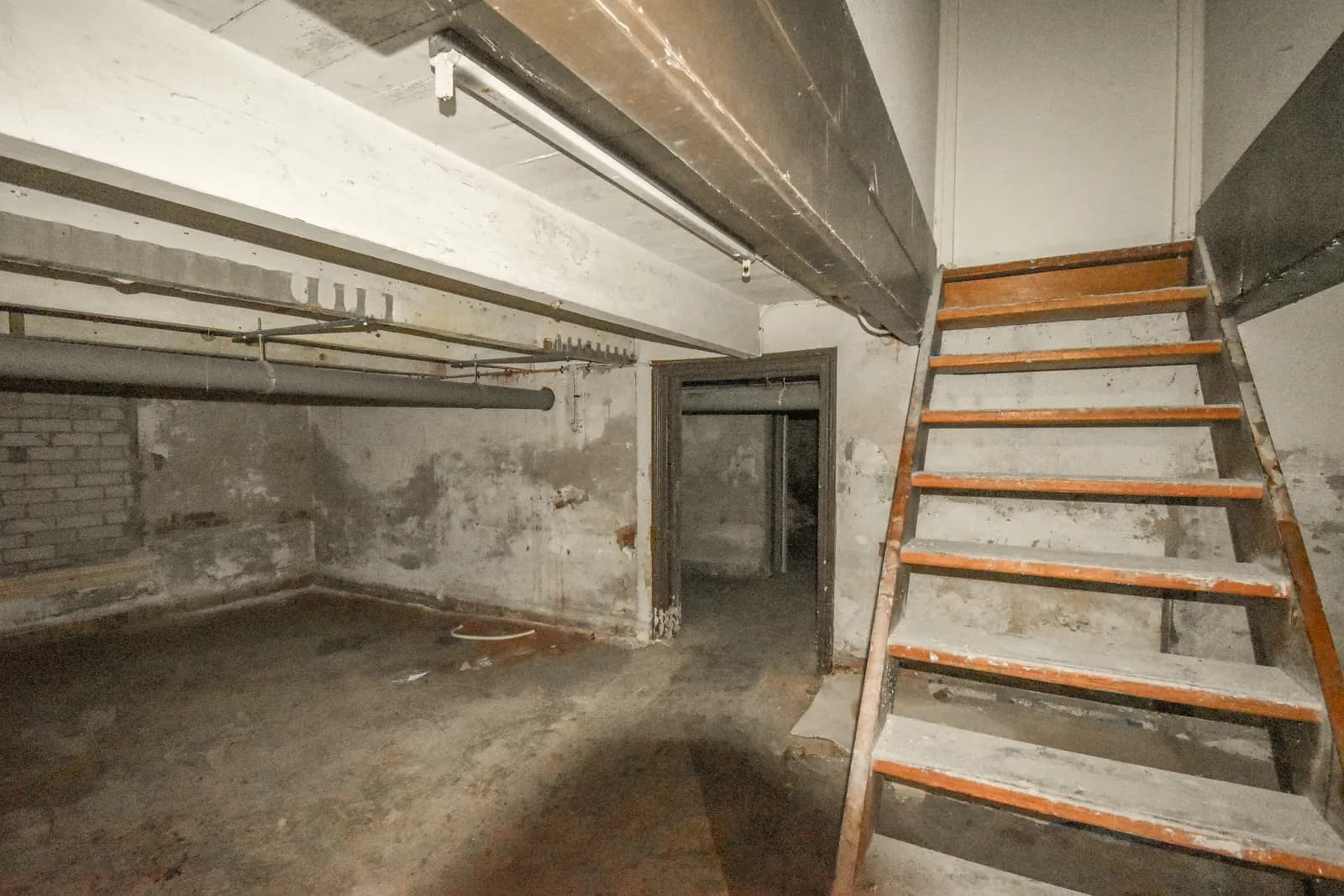
Basement water damage occurs when moisture, groundwater, or plumbing failures penetrate a basement's walls, floor, or foundation. It ranges from minor dampness to structural flooding, and it affects both finished and unfinished basements in nearly every climate zone. This guide explains the primary causes, the cleanup and repair process, and when a homeowner should call a professional restoration company instead of handling the damage independently.
What Causes Basement Water Damage?
Basement water damage results from four primary sources: foundation cracks, sump pump failure, groundwater under hydrostatic pressure, and plumbing or window well intrusion. Each source produces a different pattern of damage and requires a different response.
Foundation Cracks and Structural Issues
Foundation cracks allow water to enter a basement whenever soil moisture or groundwater builds up against the exterior wall. Concrete foundations develop cracks through soil settlement, freeze-thaw cycles, and expansive clay soil that swells when saturated and shrinks when dry. A crack wider than 1/8 inch typically indicates active structural movement rather than surface shrinkage. Water entering through a foundation crack often leaves a visible trail or efflorescence, a white, chalky mineral deposit, on the interior wall surface below the crack.
Sump Pump Failure
A sump pump failure lets collected groundwater rise in the sump basin and overflow into the basement instead of discharging outside the home. Common failure points include a tripped circuit breaker, a stuck float switch, a clogged discharge line, and pump motor burnout after several years of continuous use. A sump pump without battery backup stops working during a power outage, which creates the highest-risk failure scenario because outages frequently coincide with the heavy rainstorms that generate the most groundwater.
Groundwater and Hydrostatic Pressure
Hydrostatic pressure is the force that groundwater exerts against a basement's walls and floor slab as the surrounding soil becomes saturated. This pressure increases with the depth and saturation level of the water table, and it pushes moisture through even hairline cracks, porous concrete, and cold joints where the wall meets the footing. Unlike a single plumbing failure, hydrostatic pressure produces recurring or seasonal flooding that returns after heavy rain or snowmelt until the drainage or waterproofing system is corrected.
Plumbing Leaks and Window Well Intrusion
Plumbing leaks and window well intrusion introduce water from sources unrelated to groundwater. A supply line failure, a cracked drain pipe, or a leaking water heater releases clean or gray water directly into the basement, often suddenly and in large volume. A window well without a properly sealed cover or adequate drainage allows rainwater to pool and seep through the window frame or surrounding foundation wall, particularly in basements with below-grade window installations.
Can Basement Water Damage the Foundation?
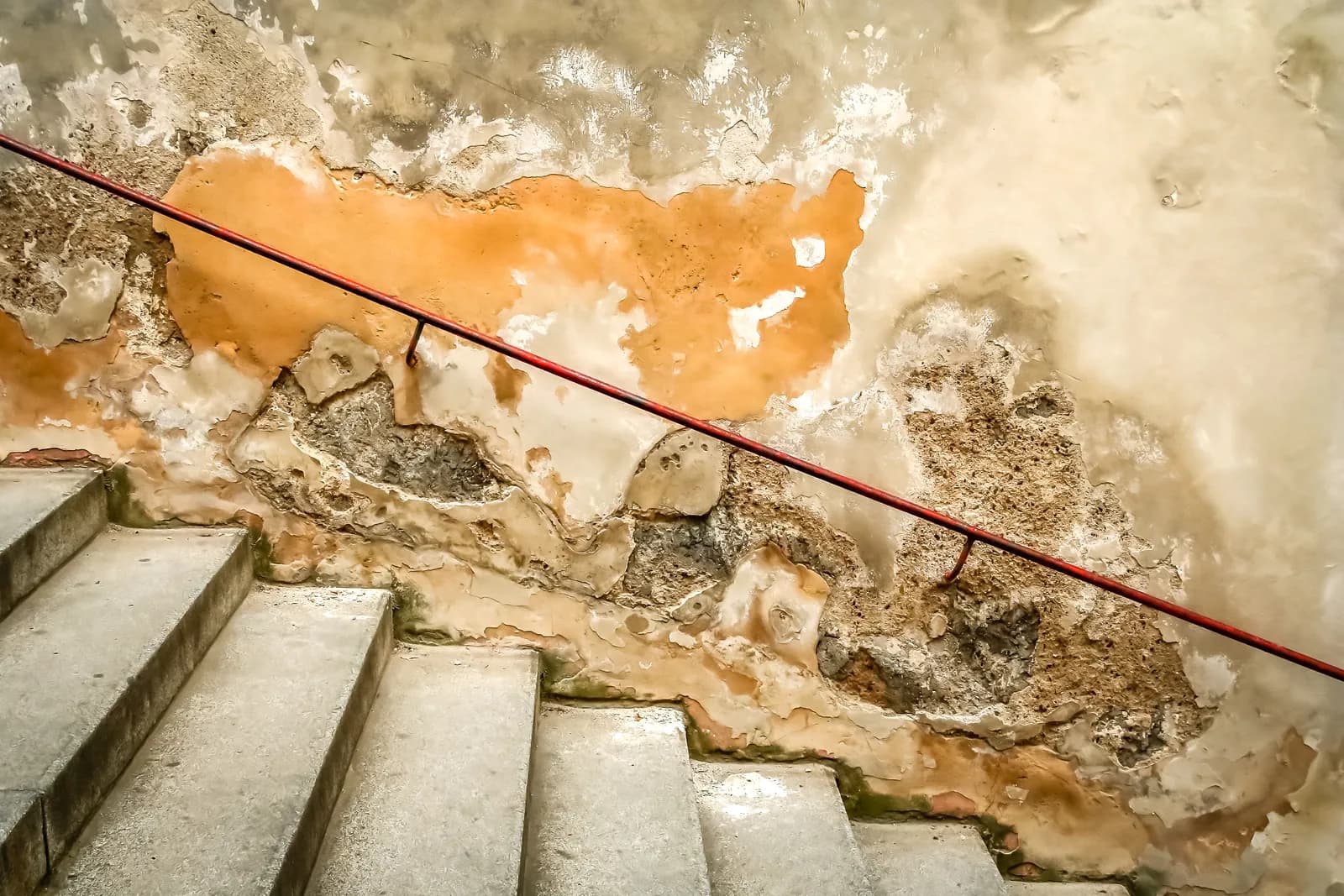
Basement water damage can weaken a foundation when moisture penetrates the concrete over time or when hydrostatic pressure exceeds the wall's structural tolerance. Repeated water exposure corrodes embedded steel reinforcement, and the resulting rust expansion cracks the surrounding concrete from the inside. Prolonged saturation also erodes the soil supporting the footing, which causes uneven settlement and step-cracking in block or poured walls. A single flooding event rarely causes structural failure on its own, but recurring water intrusion accelerates the freeze-thaw and reinforcement-corrosion cycles that compromise foundation integrity over years.
How to Clean and Dry a Basement After Water Damage
To clean a basement after water damage, remove standing water first, then extract moisture from materials before beginning any surface cleaning. Follow these steps in order:
- 1Shut off electricity to the basement at the breaker panel before entering standing water.
- 2Remove standing water using a wet/dry shop vacuum for shallow water or a submersible pump for water deeper than two inches.
- 3Remove saturated porous materials, including wet carpet, carpet padding, and drywall that has wicked water above the flood line.
- 4Discard contaminated items that contacted category 2 (gray) or category 3 (black) water, such as untreated wood, particleboard, and upholstered furniture.
- 5Set up air movers and a dehumidifier to circulate air across wet surfaces and pull moisture out of the space; run this equipment continuously for 48 to 72 hours.
- 6Clean hard surfaces with an antimicrobial cleaner to inhibit bacterial and mold growth on concrete, tile, and framing.
- 7Check moisture levels with a moisture meter on walls, subfloor, and framing before closing up any repaired sections; framing lumber should read below 15% moisture content before reconstruction begins.
Basement water is classified into three types that determine the appropriate cleanup method. Category 1 water is clean, originating from a supply line or appliance. Category 2 (gray) water contains contaminants from sources such as a washing machine discharge. Category 3 (black) water contains sewage or groundwater contamination and requires full personal protective equipment and disposal of any porous material it contacts.
How to Fix Water Damage in a Basement
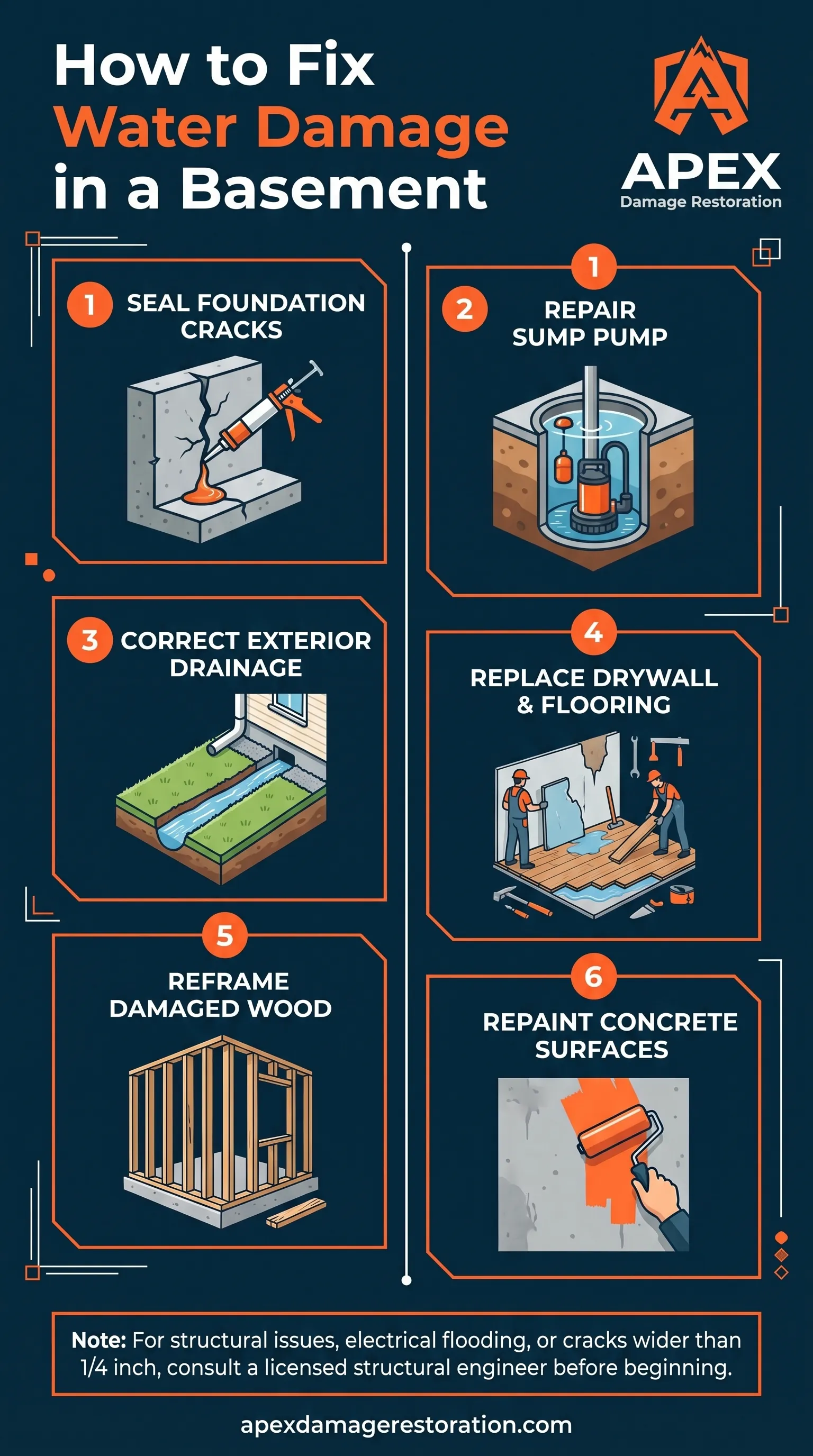
Fixing water damage in a basement requires repairing the source of intrusion first, then restoring the affected materials and structure. Repair work typically follows this sequence:
- Seal or repair foundation cracks using epoxy or polyurethane injection for structural cracks, or hydraulic cement for minor surface cracks.
- Repair or replace the sump pump system, including the float switch, discharge line, and battery backup, if pump failure caused the flooding.
- Install or correct exterior drainage, such as grading the soil away from the foundation and extending downspouts, when hydrostatic pressure is the recurring cause.
- Replace damaged drywall, insulation, and flooring that failed to dry within 48 hours or that tested above acceptable moisture thresholds.
- Reframe or sister damaged framing members where wood shows rot, warping, or fastener corrosion from prolonged moisture exposure.
- Repaint or reseal concrete surfaces with a waterproof coating after the structure reaches normal moisture levels.
Repair work moves beyond basic cleanup when the water has affected structural framing, electrical systems below the flood line, or HVAC components such as ductwork and a furnace installed in the basement. A licensed contractor or structural engineer should evaluate any foundation crack wider than 1/4 inch or any wall showing bowing or inward displacement before repair begins.
How to Prevent Mold After Basement Water Damage
Mold growth after basement water damage is prevented by drying all affected materials within 24 to 48 hours of the water event. Mold spores are present in nearly all indoor environments and begin colonizing wet organic material, including drywall paper and wood, once conditions stay damp for more than two days. The following measures reduce mold risk after a water event:
- Maintain relative humidity below 50% in the basement using a dehumidifier, since mold requires elevated humidity to establish and spread.
- Remove wet porous materials that cannot be fully dried within the 48-hour window, including carpet padding and water-damaged drywall.
- Increase air circulation with fans directed across wet surfaces and toward an exhaust point, such as an open window or exterior door.
- Apply an EPA-registered antimicrobial treatment to structural surfaces after drying to inhibit residual spore growth.
- Inspect for hidden moisture behind baseboards, inside wall cavities, and under flooring using a moisture meter for at least one week after the basement appears dry.
Does Homeowners Insurance Cover Basement Water Damage?
Homeowners insurance covers basement water damage only when the source is sudden and accidental, such as a burst pipe or water heater failure; it typically excludes damage from groundwater flooding and gradual seepage. A standard homeowners policy treats a sudden plumbing failure as a covered peril, and claim payouts for this type of loss average an estimated $11,000 to $12,000 industry-wide, according to insurance industry claims data. Damage caused by surface flooding, groundwater, or sewer backup falls under separate coverage:
- Flood insurance, available through the National Flood Insurance Program, covers groundwater and surface flooding that standard homeowners policies exclude.
- A sewer or water backup endorsement covers water that enters through a backed-up drain or sump pump failure, and this add-on typically costs $50 to $250 per year for $5,000 to $25,000 in coverage.
- Gradual damage exclusion applies when an insurer determines that seepage occurred over weeks or months, such as damage from unaddressed hydrostatic pressure or a long-term foundation crack.
A homeowner filing a claim should document the water source, the affected areas, and the timeline of discovery, since insurers use this information to classify the loss as sudden or gradual.
When to Call a Professional vs. Handling It Yourself
A homeowner can handle basement water damage independently when the water is clean (category 1), the affected area is small, and materials dry within 24 to 48 hours using standard equipment. A professional restoration company becomes necessary under several conditions:
A licensed water damage restoration company uses commercial-grade extraction equipment, industrial dehumidification, and moisture meters to verify that materials reach safe moisture levels before reconstruction begins, steps that reduce the risk of hidden mold growth compared with consumer-grade equipment alone.
- Water covers a large area or exceeds a few inches in depth, exceeding the extraction capacity of a shop vacuum.
- The water is category 2 or category 3, requiring specialized protective equipment and disposal procedures.
- Standing water remains for more than 24 to 48 hours, increasing the likelihood of hidden moisture and mold colonization inside wall cavities.
- The damage affects structural framing, electrical systems, or HVAC equipment, requiring licensed trades for safe repair.
- The foundation shows active cracking, bowing, or water intrusion despite prior repairs, indicating an unresolved hydrostatic pressure or drainage problem.
Need Emergency Restoration Help Today?
Call Apex Damage Restoration now for fast priority dispatch across Aurora, CO, a written estimate before work begins, and direct insurance claims assistance.