

A denied water damage claim is a formal decision by an insurer that a policy will not pay for reported water damage. The insurer documents this decision in a denial letter, which states the specific policy exclusion or condition that removed the claim from coverage. A claim adjuster reaches this coverage determination after inspecting the property, reviewing the policy language, and comparing the cause of loss against the list of covered and excluded perils.
Homeowners insurance covers water damage that results from a sudden, accidental event, such as a burst pipe or an overflowing appliance. Standard policies exclude water damage caused by neglect, gradual deterioration, flooding, and several other conditions listed in the policy. A denial does not always mean the damage itself is disputed; it means the insurer has determined the cause of the damage falls outside the policy's covered perils.
What Are The Top Reasons Insurers Deny Water Damage Claims?
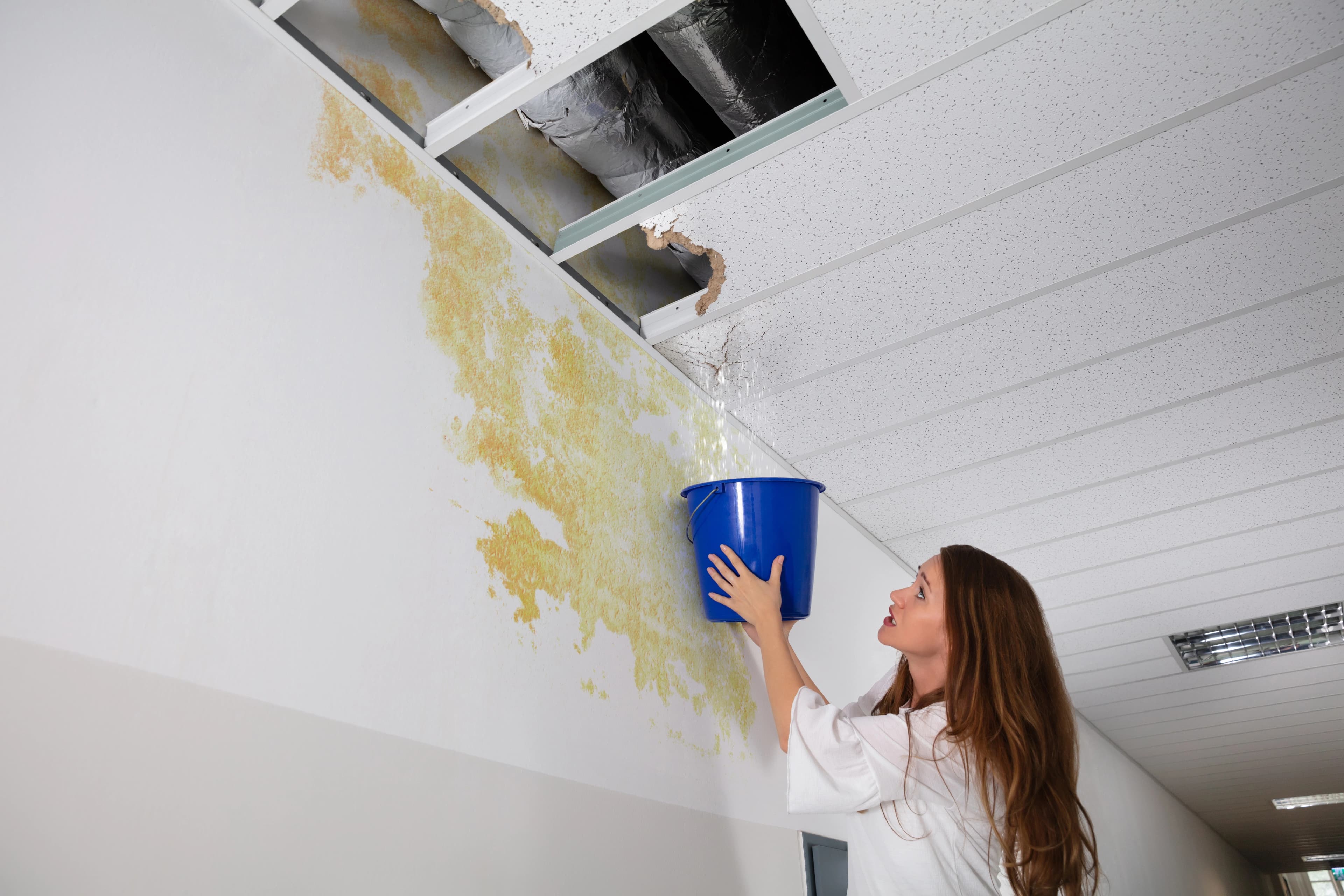
Insurers deny water damage claims for seven primary reasons: lack of maintenance, gradual damage, flood misclassification, mold exclusions, insufficient documentation, policy lapse, and pre-existing damage. Each reason ties to a specific clause in the policy rather than a judgment about the homeowner's honesty.
Lack of Maintenance or Negligence
Insurers deny claims when the damage results from deferred maintenance rather than a sudden event. A negligence clause in most homeowners policies excludes damage that a reasonable homeowner could have prevented through routine upkeep. Adjusters look for indicators of long-term neglect, including corroded pipes, deteriorated caulking, clogged gutters, or a water heater past its expected service life.
Wear and tear itself is not covered under a standard policy, regardless of whether the resulting water damage occurred suddenly. If an adjuster determines that a pipe failed because of years of untreated corrosion rather than a single accidental event, the insurer typically classifies the claim as maintenance-related and denies coverage.
Gradual Damage vs. Sudden, Accidental Damage
Insurers deny claims when damage develops gradually rather than occurring as a single, identifiable event. A covered peril under most policies requires the water source to be sudden and accidental; a pipe that bursts without warning meets this definition, while a slow leak that goes unnoticed for weeks or months does not. Adjusters trace the timeline of the damage through moisture patterns, staining, and material degradation to determine which category applies.
A long-term leak that caused progressive damage before detection is treated differently from a burst pipe, even when both involve the same plumbing system. The distinction between sudden and gradual water events determines coverage in the majority of denial cases tied to plumbing failures.
Flood Damage Misclassified as Water Damage
Insurers deny water damage claims when the actual cause of loss is flooding rather than an internal water source. Standard homeowners policies exclude flood damage entirely; flood coverage requires a separate policy through the National Flood Insurance Program (NFIP) or a private flood carrier. The distinction depends on the water's origin: damage from rising groundwater, storm surge, or overflowing rivers qualifies as flooding, while damage from a failed appliance, plumbing line, or roof leak qualifies as water damage under a standard policy.
Homeowners frequently misunderstand this boundary because both events can produce similar interior damage. An adjuster determines the classification by identifying whether the water entered from an external, rising source or from a failure inside the structure.
Mold Exclusions
Insurers deny water damage claims that involve mold growth when the policy contains a mold exclusion clause or when the homeowner failed to meet a timely mitigation requirement. Most standard policies limit or exclude mold coverage, treating mold as a maintenance issue rather than a covered peril once it develops beyond an initial period after water exposure.
A mold rider can restore limited mold coverage on some policies, but insurers still deny claims when they determine the homeowner delayed water extraction and drying long enough for mold to establish. Adjusters review the timeline between the water event and the mitigation response to assess whether the delay contributed to the mold growth.
Missing or Insufficient Documentation
Insurers deny claims when the homeowner cannot supply adequate proof of loss. A proof of loss submission typically requires photo evidence of the damage, repair estimates from a licensed contractor, and moisture readings that document the extent of water intrusion. Without this evidence, an adjuster has no basis to verify the cause, scope, or value of the claimed damage.
Documentation gaps are among the most avoidable denial causes. Photographing damage before cleanup begins, retaining receipts for emergency mitigation, and requesting a written moisture-reading report from a restoration technician all reduce the likelihood of a documentation-based denial.
Lapsed Policy or Missed Premium Payments
Insurers deny claims filed during a period when the policy was not active due to a missed premium payment. Most insurers apply a grace period of 10 to 30 days after a missed payment, depending on the state and carrier, before the policy lapses. A claim filed after the grace period expires and before reinstatement occurs falls outside any active coverage window.
Reinstatement does not automatically restore coverage for damage that occurred during the lapse. Insurers review the payment history and lapse dates against the reported date of loss to confirm whether the policy was active when the damage occurred.
Pre-Existing Damage Claims
Insurers deny claims when evidence indicates the damage occurred before the current policy's effective date. Adjusters use damage dating techniques, including material degradation, staining patterns, and prior repair evidence, to estimate when the water intrusion began. A home inspection report or prior claims history from a previous insurer can also reveal damage that predates the current policy.
This denial reason applies most often to homeowners who recently purchased a property or switched insurers. An insurer will deny a claim for water damage it determines existed before coverage began, even if the homeowner was unaware of the damage at the time of purchase.
What to Do If Your Water Damage Claim Is Denied?
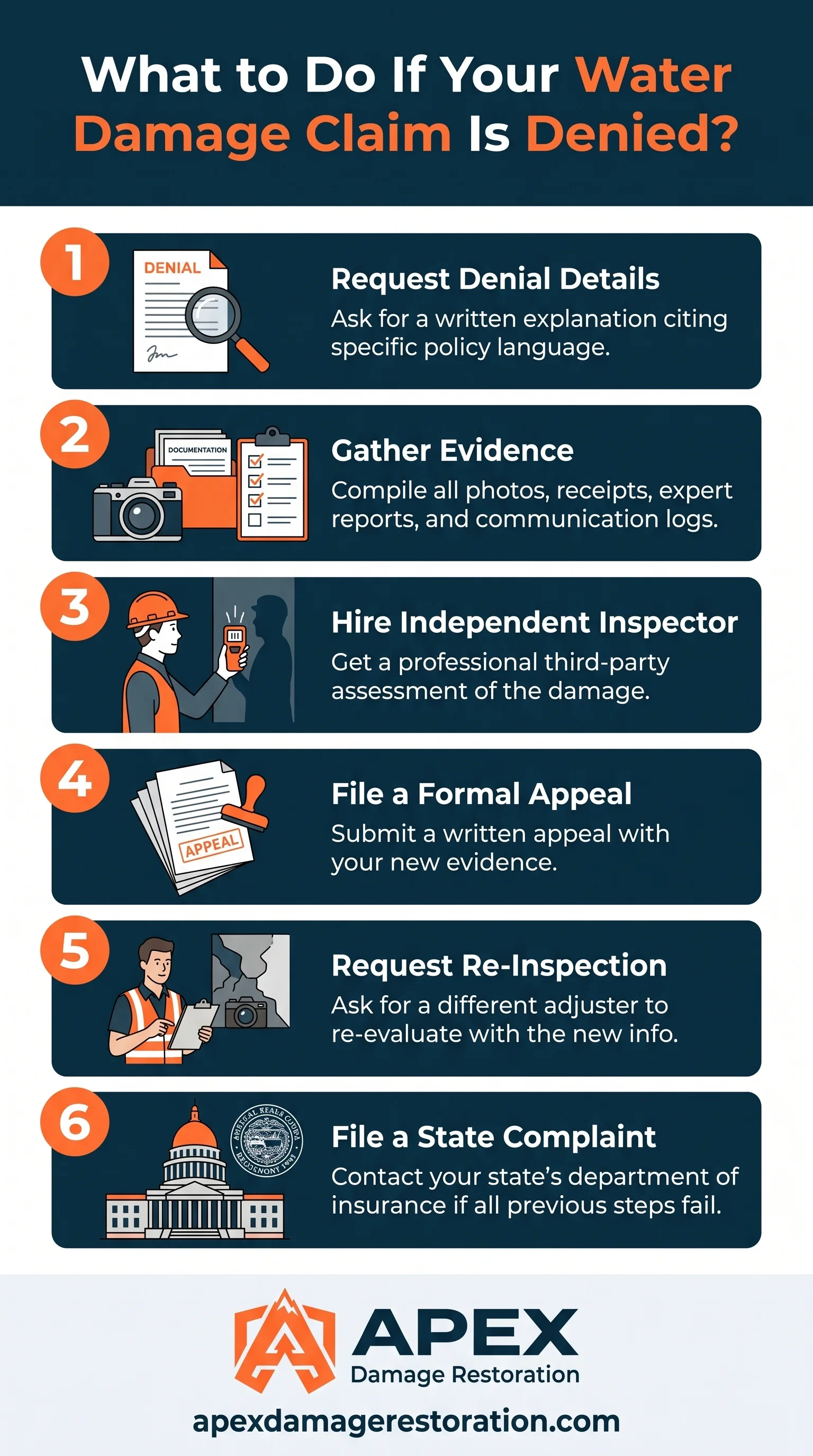
Contact the insurer to request a written explanation of the denial before taking further action. The denial letter must cite the specific policy provision used to deny the claim; if it does not, the homeowner can request this detail directly from the claims department.
To respond to a denied water damage claim:
- 1Request the full denial letter and adjuster report. Obtain the specific exclusion cited and the documentation the adjuster used to reach the decision.
- 2Gather supporting evidence. Collect maintenance records, repair invoices, moisture readings, and dated photographs that contradict or clarify the insurer's stated reason for denial.
- 3Order an independent inspection. A licensed, independent adjuster or restoration contractor can provide a second assessment of the cause and timeline of the damage.
- 4File a formal appeal. Submit an appeal letter to the insurer that references the specific policy language, the new evidence, and a request for re-inspection.
- 5Request a re-inspection. Ask the insurer to send a different adjuster to reassess the property with the newly submitted evidence.
- 6File a complaint with the state insurance department if the appeal fails. State regulators can review whether the insurer applied the policy language correctly and handled the claim in good faith.
Each step builds a documented record that supports either a successful appeal or a formal complaint if the insurer maintains the denial.
How to Tell If Your Insurance Denial Was Justified?
A denial is justified when the stated reason accurately matches both the policy language and the documented facts of the loss. Reviewing a denial requires comparing three elements: the exact exclusion cited in the denial letter, the relevant clause in the policy document, and the adjuster's report describing how the cause of loss was determined.
Start with a direct policy language review. Locate the specific exclusion the insurer cited and confirm its wording matches the reason given in the denial letter; insurers occasionally cite a clause that does not fully apply to the circumstances of the loss. Next, examine the adjuster report for factual accuracy, including the stated timeline of damage, source of water, and any assumptions about maintenance history. A denial based on an incorrect timeline or an unverified assumption about neglect is a common basis for appeal.
Homeowners who have documentation contradicting the adjuster's findings, such as maintenance records, a plumber's invoice showing a sudden pipe failure, or a second opinion from an independent inspector, have grounds to challenge a denial rather than accept it as final.
When to Get Professional Help With a Denied Claim
A homeowner should involve a public adjuster or attorney when an appeal is denied a second time, when the claim value is substantial, or when the denial appears to conflict with the policy's actual language. A public adjuster works on behalf of the homeowner rather than the insurer, typically for a contingency fee in the range of 5% to 20% of the settlement, an industry-standard estimate that varies by state and claim complexity. Public adjusters prepare damage estimates, negotiate directly with the insurer, and identify coverage the original adjuster may have overlooked.
An attorney consultation becomes appropriate when the insurer shows signs of bad-faith claims handling, such as unreasonable delays, inconsistent explanations, or a refusal to review new evidence. Documentation from a licensed restoration company, including moisture logs, drying reports, and itemized mitigation invoices, strengthens both a public adjuster's negotiation and an attorney's case, since this documentation establishes a verified timeline and scope of the original water damage.
Need Emergency Restoration Help Today?
Call Apex Damage Restoration now for fast priority dispatch across Aurora, CO, a written estimate before work begins, and direct insurance claims assistance.