
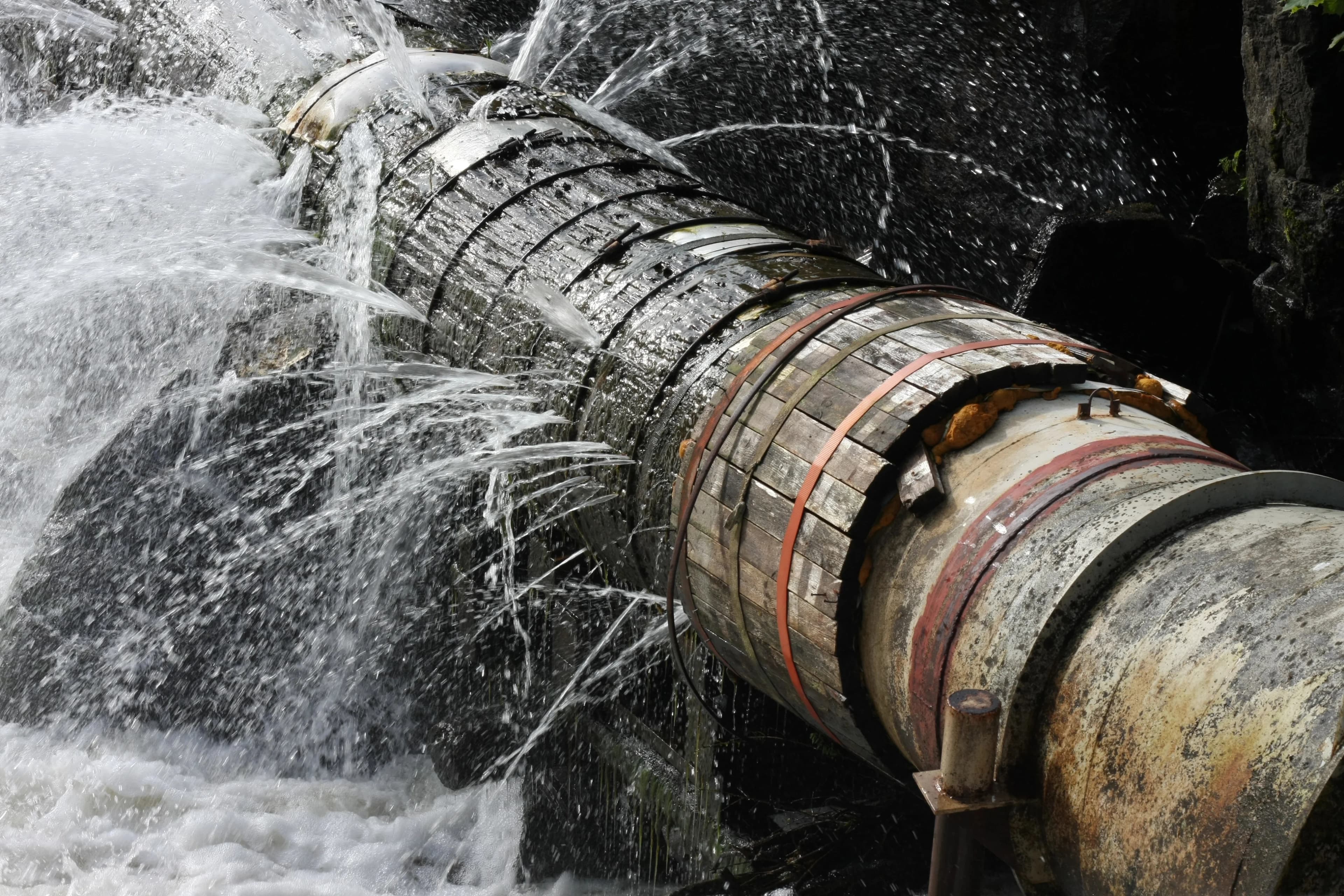
Yes, Homeowners insurance covers burst pipe water damage when the pipe fails suddenly and accidentally, such as from freezing, a manufacturing defect, or unexpected pressure buildup.
A standard HO-3 policy pays for the resulting damage to the structure and belongings under the dwelling and personal property coverages, minus the deductible. Insurance does not cover a burst pipe caused by gradual deterioration, long-term neglect, or a known, unrepaired leak. The distinction between a sudden event and a gradual one determines the outcome of nearly every burst pipe claim.
What's Covered vs. What's Excluded After a Burst Pipe?
A standard homeowners policy separates burst pipe damage into two categories: the water damage itself, which is usually covered when the burst was sudden, and the failed pipe, which is usually excluded regardless of cause. Coverage for burst pipe water damage typically pays under the dwelling coverage, other structures coverage, and personal property coverage sections of an HO-3 policy.
What Does Homeowners Insurance Typically Pays For?
Homeowners insurance typically pays for four categories of loss after a covered burst pipe: structural repair, water extraction, personal property replacement, and additional living expenses.
- Structural repair: Insurers cover drywall, flooring, ceilings, and cabinetry damaged by the water, along with the labor to repair or replace them.
- Water extraction and drying: Policies pay for emergency mitigation services, including water removal, dehumidification, and antimicrobial treatment needed to prevent mold.
- Personal property: Furniture, electronics, and other belongings damaged by the water are covered up to the policy's personal property limit.
- Additional living expenses (ALE): If the home becomes temporarily uninhabitable, the policy reimburses hotel stays, meals, and related costs up to the ALE limit.
What's Usually Not Covered?
Standard homeowners insurance usually does not cover the pipe itself, flood water, sewer backup, or damage from a leak the homeowner knew about and failed to repair. The cost of replacing or repairing the burst pipe falls under normal maintenance, which policies exclude regardless of how the failure occurred. Floodwater entering through the ground requires separate flood insurance, and water backing up through a sewer or drain line requires a sewer backup endorsement, since neither is included in a base policy.
Sudden vs. Gradual Damage: What Determines Coverage
Insurers approve or deny a burst pipe claim based on whether the failure was sudden and accidental or gradual and preventable. This sudden-vs-gradual damage distinction is the primary coverage test that insurance adjusters apply to nearly all plumbing-related water damage, not only burst pipes, and it decides which claims proceed and which get rejected.
Sudden and Accidental Bursts (Typically Covered)
A sudden and accidental burst occurs without warning and results from an unforeseen event rather than ongoing deterioration. Common triggers include a pipe freezing and splitting during a cold snap, a fitting failing under normal water pressure, or a defective pipe rupturing shortly after installation.
Insurers treat these events as covered perils because the homeowner had no reasonable opportunity to prevent them. A burst pipe of this type falls under the same coverage principles that apply to other causes of water damage, where the speed and unpredictability of the event determine eligibility.
Gradual Leaks and Wear-Related Failures (Typically Denied)
A gradual leak develops over weeks or months as a pipe corrodes, a joint loosens, or a seal wears down, and insurers deny these claims because the damage results from a maintenance failure rather than a sudden event. Adjusters look for evidence such as long-term staining, mold growth, or corroded pipe material, all of which indicate the leak existed before the homeowner reported it. A slow leak behind a wall that goes unnoticed for several months typically falls into this category, even if the pipe eventually bursts outright.
How to File a Successful Burst Pipe Insurance Claim?
Filing a successful burst pipe claim requires stopping the water source, documenting the damage before cleanup begins, and submitting the claim promptly with clear evidence that the burst was sudden. Insurers evaluate burst pipe claims more favorably when the homeowner follows the standard water damage claim filing process and provides evidence early, since delayed reporting raises questions about whether the leak was actually gradual.
Documenting the Damage (Photos, Shutoff, Mitigation Steps)
Documenting a burst pipe claim starts with shutting off the home's main water supply to stop further damage, then photographing the pipe, the affected areas, and any damaged belongings before moving or discarding them.
Homeowners should record the date and time the burst was discovered, keep receipts for any emergency mitigation services, and avoid extensive repairs until the adjuster has inspected the damage.
This documentation directly supports the sudden-and-accidental criteria described earlier, since timestamped photos and a clear shutoff record make it easier to demonstrate that the failure was unexpected rather than a known, unaddressed leak.
Filing the Claim and Working With the Adjuster
Filing the claim involves contacting the insurer promptly, providing the documentation gathered after the burst, and scheduling an inspection with the assigned adjuster. The insurance company's adjuster inspects the damage, reviews the homeowner's evidence, and determines the covered scope and payout based on the policy's terms.
Homeowners who disagree with the adjuster's assessment can hire their own representative, and the distinctions between an insurance adjuster and a public adjuster affect who advocates for the homeowner during that negotiation.
Common Reasons Burst Pipe Claims Get Denied or Reduced
Burst pipe claims get denied or reduced most often due to evidence of neglect, coverage limits that cap the payout below the repair cost, or damage the adjuster classifies as gradual rather than sudden.
Proving Neglect or Lack of Maintenance
Insurers deny a burst pipe claim when inspection evidence shows the homeowner neglected routine maintenance, such as failing to insulate exposed pipes in a cold climate or ignoring a previously reported leak. Adjusters look for corrosion patterns, prior repair records, and the condition of surrounding materials to determine whether the damage built up over time. This evidence ties directly back to the gradual-damage exclusion described earlier, since neglect and gradual deterioration are typically documented using the same physical indicators.
Coverage Caps, Deductibles, and Sub-Limits
Coverage caps, deductibles, and sub-limits reduce the final payout even when a burst pipe claim is approved. The policy's dwelling limit sets the maximum payout for structural repair, while separate sub-limits often apply to categories such as valuable personal property or additional living expenses. The homeowner pays the deductible out of pocket before the insurer covers the remaining approved amount, which directly affects the total the homeowner receives.
What a Burst Pipe Claim Typically Costs You (Deductible & Out-of-Pocket)
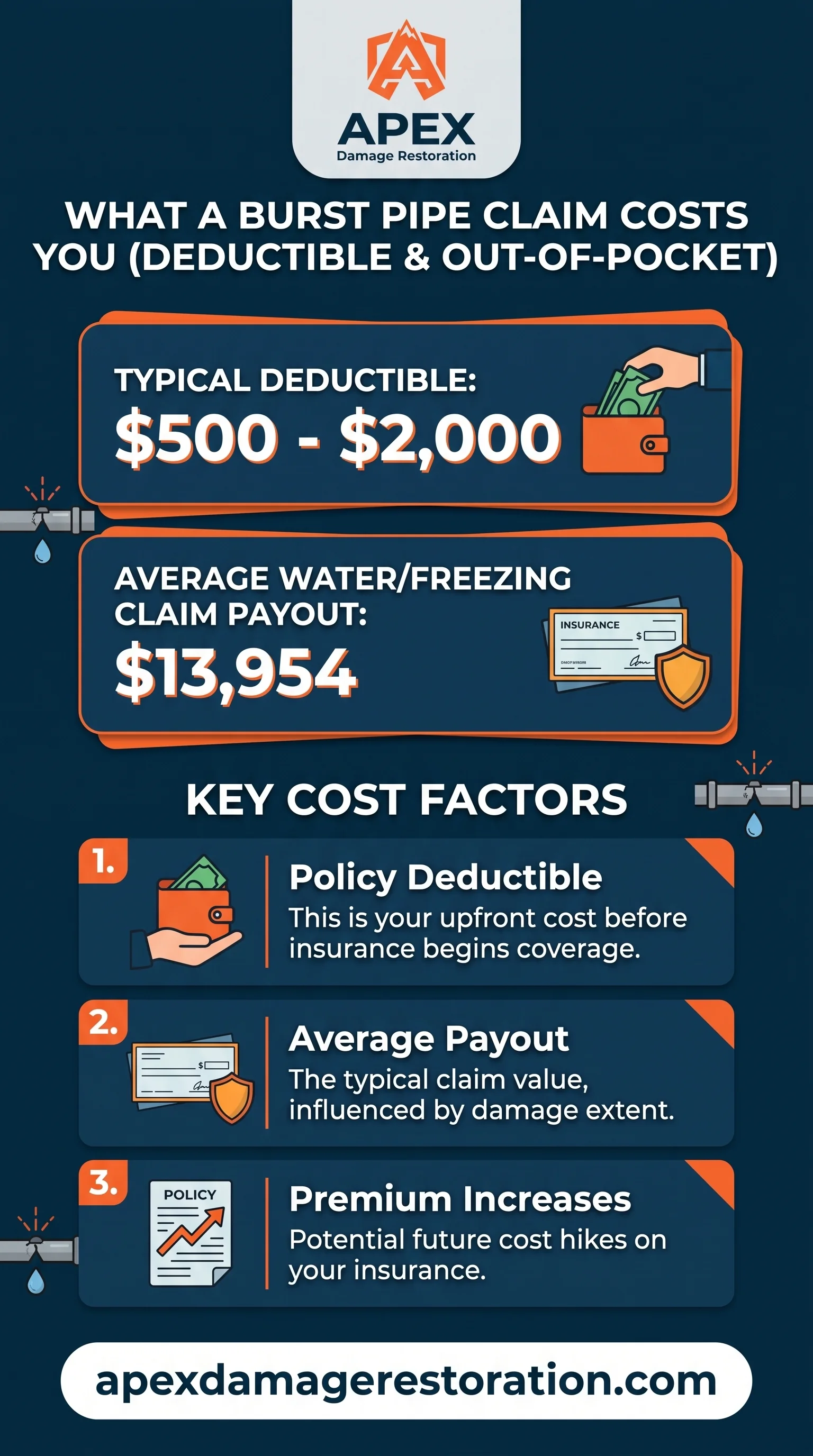
A burst pipe claim typically costs the homeowner the policy deductible, which commonly ranges from $500 to $2,000, plus any repair costs above the policy's coverage limits. According to the Insurance Information Institute, the average homeowners insurance payout for water damage and freezing claims was approximately $13,954 between 2018 and 2022, an industry estimate that reflects a broad mix of claim sizes rather than a guaranteed payout for any individual claim.
Filing a water damage claim can also raise future premiums, with industry data showing homeowners who file a water damage claim pay a higher premium afterward than the national average.
Burst Pipe Water Damage vs. Other Water Damage Insurance Claims
Burst pipe claims are processed differently from other common water damage claims because the coverage decision depends on different criteria for each cause. A burst pipe is evaluated on the sudden-vs-gradual standard, while flooding depends on whether the homeowner holds a separate flood insurance policy, and sewage backup depends on whether the policy includes a sewer backup endorsement.
Flooding water damage from external water sources is excluded from standard homeowners policies regardless of speed, unlike a burst pipe, which can qualify for coverage when the failure is sudden. Similarly, sewage backup water damage requires an added endorsement even when the backup happens suddenly, while a covered burst pipe needs no such add-on under a standard HO-3 policy.
Frequently Asked Questions
Need Emergency Restoration Help Today?
Call Apex Damage Restoration now for fast priority dispatch across Aurora, CO, a written estimate before work begins, and direct insurance claims assistance.