
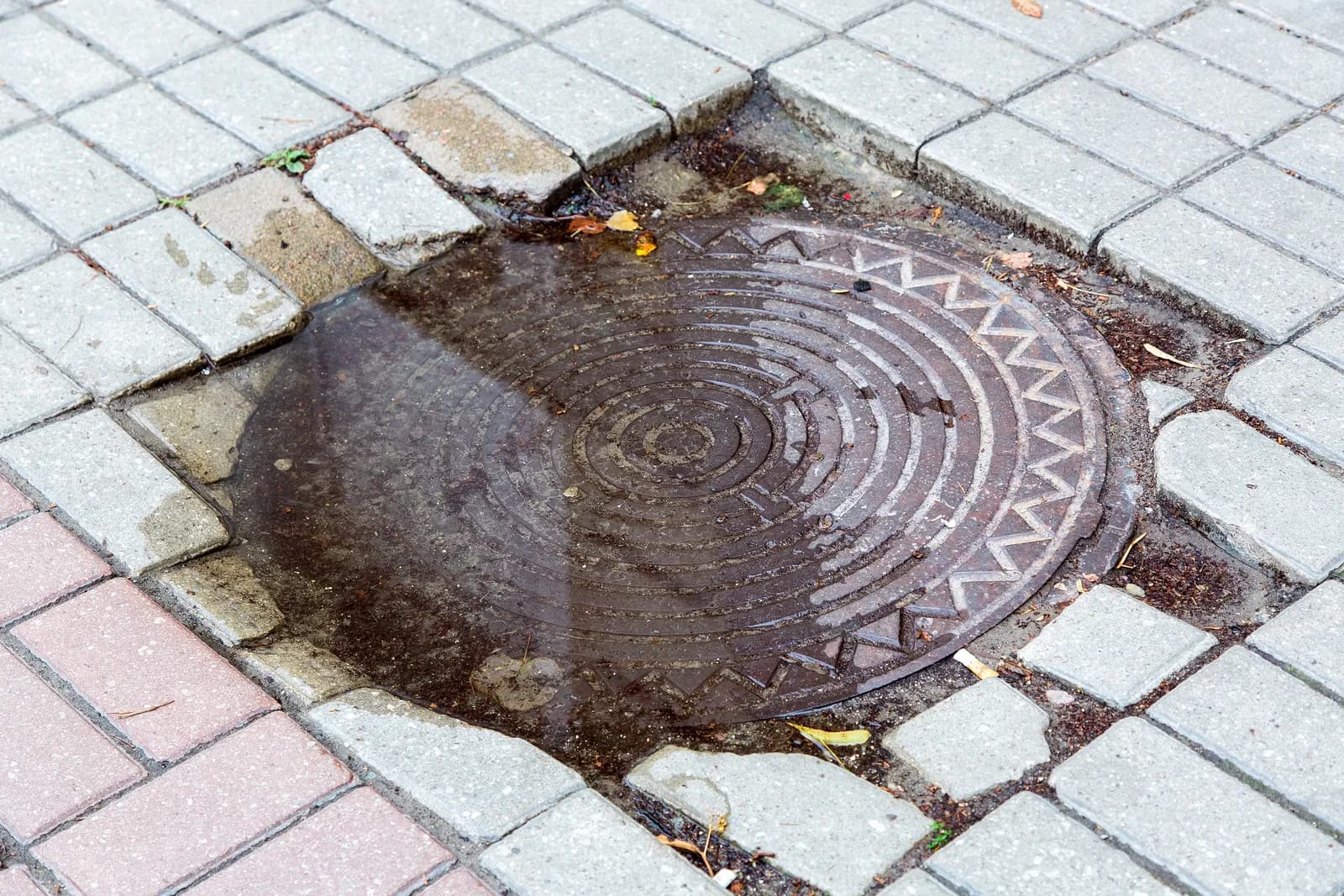
Sewage backup ranks among the most hazardous forms of water damage because it introduces bacteria, viruses, and other contaminants directly into living spaces. Homeowners facing a backup need to identify the cause, understand the health risk, and confirm whether their insurance policy responds before cleanup begins. This guide covers why sewage backups happen, how insurers treat sewage backup claims, and what professional cleanup involves.
What Is Sewage Backup Water Damage?
Sewage backup water damage occurs when wastewater from a sewer line or septic system reverses direction and enters a home through drains, toilets, or floor fixtures instead of flowing away from the property. The water carries human waste, bacteria, viruses, and chemical residue, which classifies it as Category 3 water under industry contamination standards. Sewage backups affect basements, lower-level bathrooms, and floor drains first because these fixtures sit closest to the main sewer line.
What Causes Sewage Backups?
Four conditions account for most residential sewage backups: line blockages, root intrusion, municipal system overload, and aging plumbing.
Sewer Line Blockages and Clogs
Sewer line blockages form when grease, wipes, sanitary products, or foreign objects accumulate inside the pipe and restrict wastewater flow. A partial clog slows drainage, while a full clog forces wastewater back through the lowest fixtures in the home. Grease buildup narrows the pipe diameter gradually, so blockages often develop over months before a backup occurs.
Tree Root Intrusion
Tree roots enter sewer lines by growing into small cracks or joint gaps in search of water and nutrients. Once inside the pipe, roots expand, trap debris, and restrict wastewater flow. Root intrusion affects older clay and cast-iron sewer lines more frequently than modern PVC piping because clay and cast-iron joints degrade and separate over time.
Municipal Sewer System Overload
Municipal sewer system overload happens when heavy rainfall or snowmelt exceeds the treatment system's processing capacity. Excess stormwater enters combined sewer systems and pushes wastewater back through connected household lines. Homes located at lower elevations relative to the municipal main experience overload backups more often because gravity directs excess flow toward the lowest connection points.
Aging or Damaged Plumbing
Aging or damaged plumbing causes backups when sewer pipes corrode, collapse, or shift due to soil movement. Cast-iron pipes installed before 1975 corrode from the inside, reducing internal diameter and flow capacity. Clay pipes crack under ground pressure and allow soil infiltration, which combines with reduced flow capacity to increase backup risk in homes with original, unreplaced sewer lines.
Health Risks of Sewage Water (Category 3 Contamination)
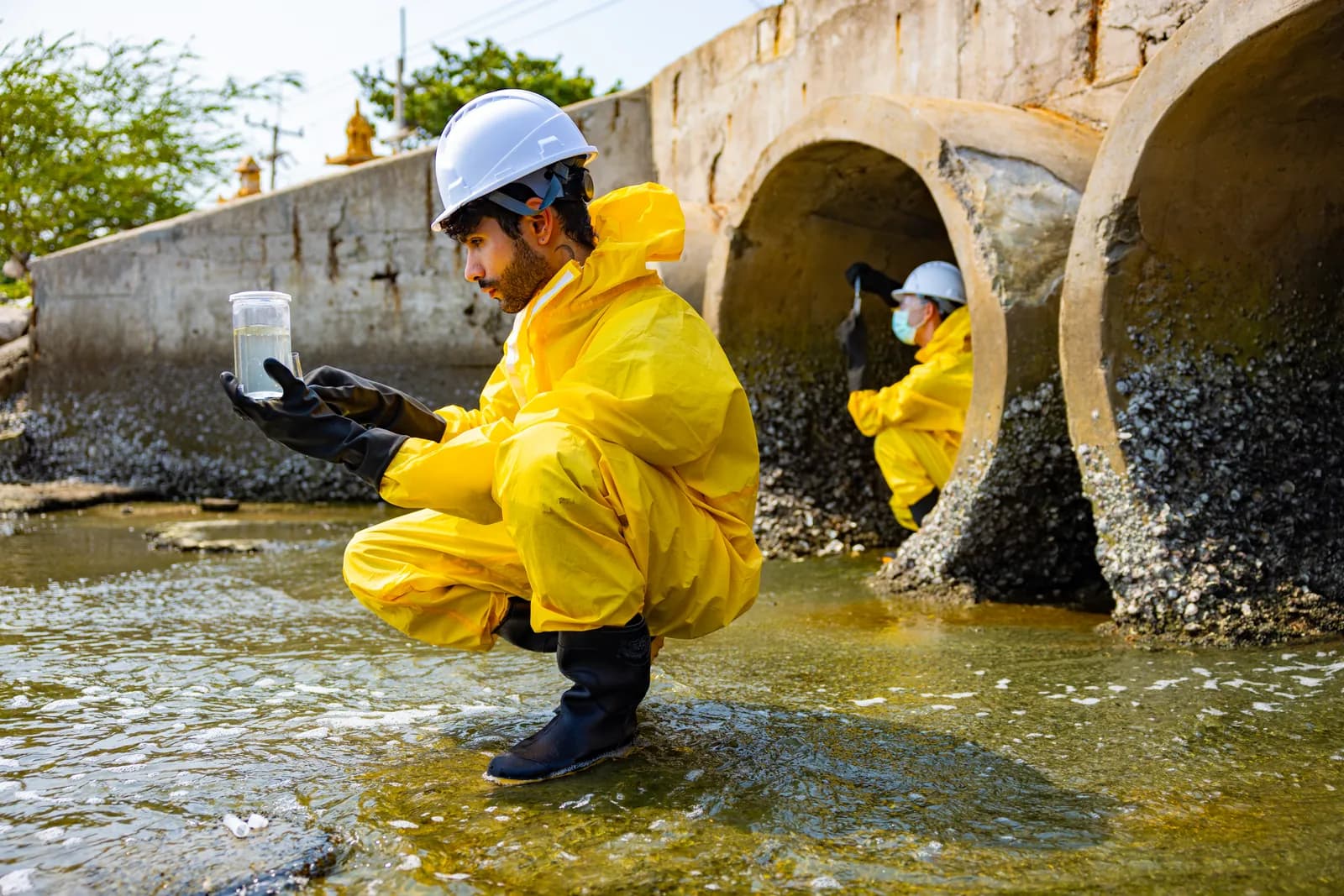
Sewage water poses direct health risks because it is classified as Category 3 water, the most contaminated tier in the clean-gray-black water classification system. Category 3 water contains bacteria such as E. coli and Salmonella, along with viruses, parasites, and mold spores that develop rapidly in organic material. Contact with sewage water can cause gastrointestinal illness, skin infections, and respiratory irritation from airborne contaminants. Standing sewage water also supports mold growth within 24 to 48 hours, which extends the contamination risk beyond the original spill area. Occupants without personal protective equipment should avoid direct contact with sewage-affected surfaces and standing water.
Is Sewage Backup Water Damage Covered by Insurance
Sewage backup water damage is not covered by a standard homeowners policy unless the policyholder purchased a specific sewer backup endorsement. Water damage insurance generally separates sudden plumbing failures from backup and overflow events, and insurers treat sewage backup as a distinct, optional coverage category rather than a default inclusion.
Standard Homeowners Policy Exclusions
Standard homeowners policies exclude water that backs up through sewers or drains as a named exclusion, separate from general water damage coverage. This exclusion applies regardless of whether the backup originated from a municipal line or the homeowner's private sewer lateral. Without an endorsement, the policyholder bears the full cost of cleanup, contaminated material disposal, and structural repair.
Sewer Backup Coverage Endorsements
A sewer backup endorsement adds coverage for sewage backup damage to an existing homeowners policy for an additional premium. Endorsement limits typically range from $5,000 to $25,000 per occurrence, according to industry estimates, though insurers offer higher limits for an increased premium. The endorsement covers cleanup, disinfection, and repair costs up to the selected limit, but it does not cover damage caused by the homeowner's failure to maintain the sewer lateral.
When an Insurer Will or Won't Pay
An insurer pays a sewer backup claim when the policy includes a backup endorsement and the cause qualifies as a covered event under that endorsement. Insurers deny claims when the backup results from deferred maintenance, a pre-existing blockage the homeowner knew about, or gradual deterioration rather than a sudden event. Claims tied to sudden versus gradual water damage classification face closer scrutiny, since insurers require proof that the backup occurred abruptly rather than developing over an extended period.
What to Do Immediately After a Sewage Backup
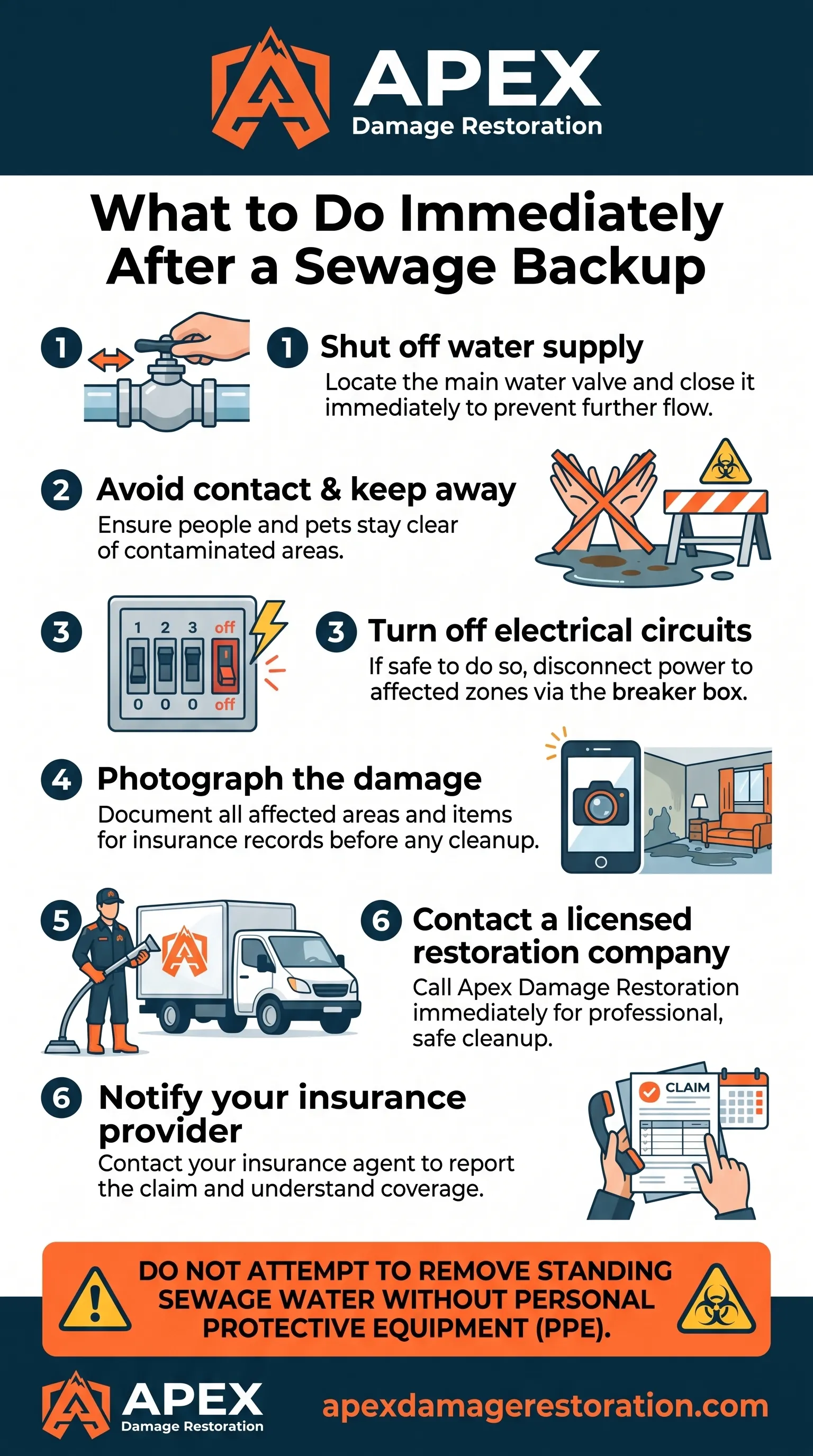
To respond to a sewage backup safely:
- 1Shut off the water supply to stop additional wastewater from entering the home.
- 2Avoid direct contact with sewage water and keep household members and pets away from the affected area.
- 3Turn off electrical circuits serving the affected area if it is safe to reach the breaker panel.
- 4Photograph the damage before moving or discarding any affected materials.
- 5Contact a licensed sewage cleanup and restoration company to begin containment and extraction.
- 6Notify the insurance provider and begin the water damage insurance claim process.
Do not attempt to remove standing sewage water without personal protective equipment, since direct exposure increases the risk of bacterial and viral infection.
Professional Sewage Cleanup and Restoration Process
Professional sewage cleanup follows a sequence of containment, extraction, disposal, disinfection, and drying to remove contamination and restore the affected structure. Technicians first contain the affected area to prevent cross-contamination, then extract standing sewage water using pumps and wet vacuums rated for Category 3 water. Porous materials that absorbed sewage water, including carpet, padding, and drywall below the flood line, require removal and disposal rather than cleaning, since these materials cannot be fully decontaminated. Technicians then apply antimicrobial treatment to remaining structural surfaces and position air movers and dehumidifiers to dry the space to industry-standard moisture levels. Restoration companies certified by the Institute of Inspection, Cleaning and Restoration Certification (IICRC) follow standardized protocols for Category 3 water contamination, which reduces the risk of incomplete decontamination.
Cost of Sewage Backup Cleanup
Sewage backup cleanup costs range from $1,000 to $7,000 for a contained, single-room backup, according to industry estimates, with costs exceeding $10,000 when contamination spreads through multiple rooms or requires structural material removal. Cost factors include the volume of sewage, the number of affected rooms, the extent of porous material disposal, and whether mold remediation is required.
Sewage Backup vs. Other Causes of Water Damage
Sewage backup differs from burst pipe water damage and flooding water damage primarily in contamination level and insurance treatment. Burst pipes release clean or lightly contaminated water classified as Category 1 or 2, which standard homeowners policies typically cover as a sudden and accidental event. Flooding involves water from an external source, such as rising groundwater or storm surge, which falls under flood insurance rather than a standard homeowners policy. Sewage backup produces Category 3 contaminated water and requires a separate endorsement for coverage, making it the most restrictive of the three causes in terms of both health risk and default insurance protection.
Frequently Asked Questions
Get Help With Sewage Backup Cleanup
A sewage backup requires fast containment and Category 3-certified cleanup to limit health risk and structural damage. Apex Damage Restoration's water damage restoration service provides emergency extraction, disinfection, and drying for sewage-contaminated properties in Aurora, CO, and nearby communities.
Need Emergency Restoration Help Today?
Call Apex Damage Restoration now for fast priority dispatch across Aurora, CO, a written estimate before work begins, and direct insurance claims assistance.