
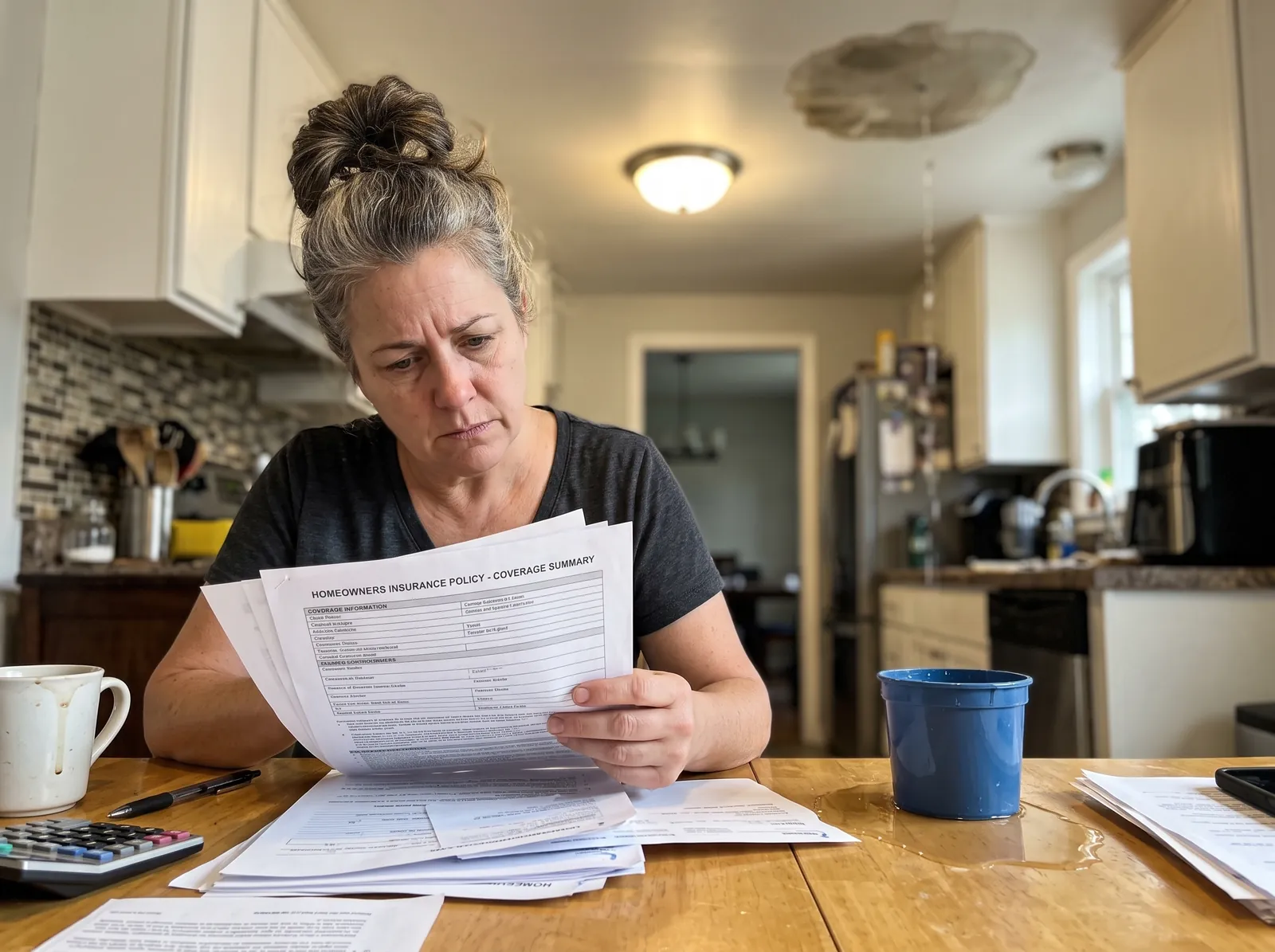
Homeowners insurance covers water damage when the cause is sudden and accidental, but it excludes damage caused by gradual leaks, flooding, and lack of maintenance. Your insurance won't cover water damage if you delay repairs. Coverage eligibility depends on the specific cause of the water intrusion and how quickly the damage was discovered and reported.
What Types Of Water Damage Does Homeowners Insurance Typically Cover?
Homeowners insurance covers water damage that results from a sudden and accidental discharge of water, a standard insurers use to distinguish unpredictable failures from preventable deterioration. A covered event must originate from an internal source, occur without warning, and cause damage the policyholder could not have reasonably anticipated or prevented through routine maintenance.
Burst or Broken Pipes
Homeowners insurance covers water damage from a burst pipe because the failure is sudden and unpreventable through routine homeowner action. A pipe that ruptures under normal water pressure releases water directly into walls, floors, or ceilings, and the resulting structural damage falls within the sudden-and-accidental-discharge standard. Coverage can be denied if an insurer determines the pipe failed due to long-term corrosion the homeowner failed to address.
Frozen Pipes
Homeowners insurance covers water damage from frozen pipes when the policyholder took reasonable steps to prevent freezing, such as maintaining adequate heat in the home during cold weather. A pipe that bursts after freezing is treated as a sudden and accidental event, since the expansion and rupture happen without warning. Insurers frequently deny frozen pipe claims when a home was left unheated or vacant during freezing temperatures without adequate precautions, since this circumstance shifts the cause toward preventable neglect.
Leaking or Faulty Plumbing
Homeowners insurance covers water damage from leaking or faulty plumbing when the leak develops suddenly, such as a fitting that fails or a supply line that ruptures without warning. Coverage becomes uncertain when a plumbing leak has been active for an extended period, since insurers classify prolonged leaking as gradual damage rather than a sudden event. The sudden vs. gradual water damage distinction determines the outcome of most plumbing-related claims, since evidence of how long a leak persisted before discovery directly affects eligibility.
Water Heater Leaks
Homeowners insurance covers water damage from a water heater leak when the tank or connecting lines fail suddenly, releasing stored water into the surrounding area. A water heater's storage tank can release 150 to 300 litres at once when it fails, causing significant damage to flooring and nearby structures. Insurers typically deny claims involving a water heater that leaked gradually over time due to age-related corrosion the homeowner did not address through routine inspection.
Air Conditioner Leaks
Homeowners insurance covers water damage from an air conditioner leak when a component such as the condensate line or drain pan fails suddenly and releases water into the surrounding structure. Coverage becomes less certain when a clogged condensate line causes water to back up and overflow gradually, since insurers may classify this as a maintenance failure rather than a sudden event. Regular HVAC maintenance, including condensate line cleaning, reduces both the risk of the leak and the risk of a denied claim.
Bathroom Fixtures (Toilets, Tubs, Showers)
Homeowners insurance covers water damage in bathrooms when it results from a sudden fixture failure, such as a cracked supply line, a failed wax ring seal, or an overflow caused by a mechanical malfunction. A toilet supply line that bursts or a tub that overflows due to a stuck valve qualifies as a sudden and accidental event under most policies. Damage caused by a slow leak around a fixture base that persisted unnoticed for weeks or months typically falls outside coverage, since the prolonged exposure indicates a maintenance issue rather than a sudden failure.
What Type Of Water Damage Does Homeowners Insurance Usually Exclude?
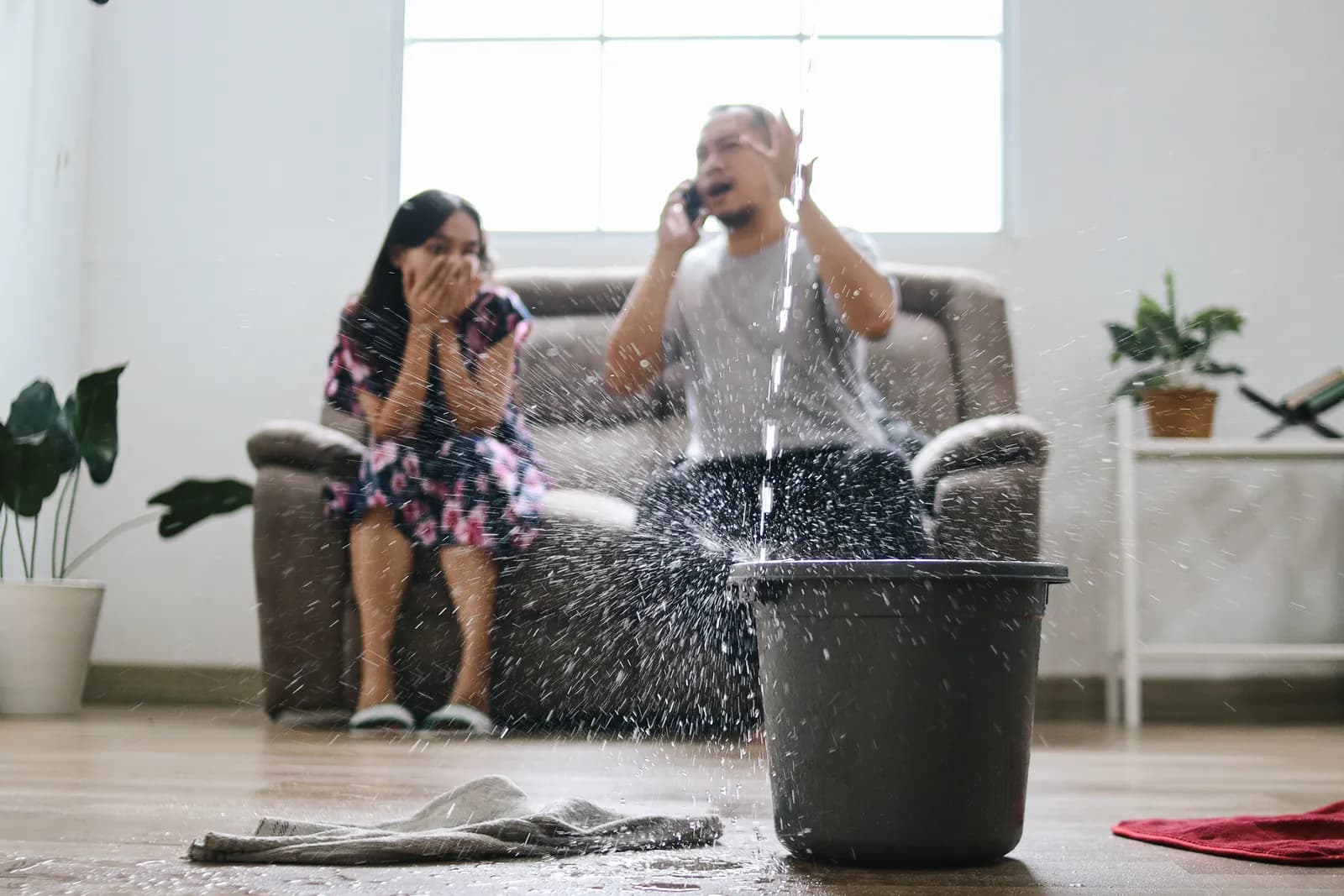
Homeowners Insurance does not cover water damage caused by external water sources, gradual deterioration, and specific perils that require separate coverage. These exclusions apply regardless of the extent of damage, since the cause of the water intrusion determines eligibility rather than the severity of the resulting loss.
Rain and Roof Leaks
Homeowners insurance usually excludes water damage from rain unless the water entered through an opening caused by a covered peril, such as wind or hail damage to the roof. A roof that leaks due to age, wear, or lack of maintenance produces water damage that insurers classify as preventable and therefore excluded. Coverage applies when a storm first damages the roof structure and rain subsequently enters through that specific damage, since the roof failure itself qualifies as the covered event.
Ground Water and Flooding
Homeowners insurance usually excludes water damage from flooding and ground water intrusion, since this type of damage requires separate flood insurance through the National Flood Insurance Program or a private flood policy. Water that enters a home from rising rivers, storm surge, or surface water accumulation falls outside standard homeowners coverage regardless of the storm's severity. Groundwater seepage through foundation walls due to hydrostatic pressure is similarly excluded, since insurers treat this gradual intrusion as a structural and maintenance issue rather than a sudden event.
Sewer and Drain Backup
Homeowners insurance usually excludes water damage from a sewage backup under a standard policy, since sewer and drain backup coverage requires a separate endorsement. Water or waste that backs up through a drain, toilet, or sewer line into a home is treated as a distinct peril from other plumbing failures, even when the backup itself occurs suddenly. Homeowners without this endorsement bear the full repair cost for sewage backup damage, which often involves contaminated Category 3 water requiring more extensive remediation than a clean water loss.
How to Get Coverage for Sewer Backup and Other Exclusions?
Homeowners can obtain coverage for sewer backup and similar exclusions by purchasing a specific endorsement added to their existing policy. A sewer backup endorsement typically costs $50 to $250 per year and adds coverage limits ranging from $5,000 to $25,000 specifically for backup-related losses. Flood insurance, purchased separately through the National Flood Insurance Program or a private insurer, addresses the flooding exclusion and covers damage from rising water that a standard policy does not include.
Homeowners in areas prone to groundwater seepage or basement flooding can also request a water backup and sump pump overflow endorsement, which extends coverage to failures in a home's drainage and pumping systems.
Reviewing a policy's declarations page or speaking directly with an insurance agent confirms which endorsements are already active and which gaps remain unaddressed.
What Is the Average Insurance Payout For Water Damage?
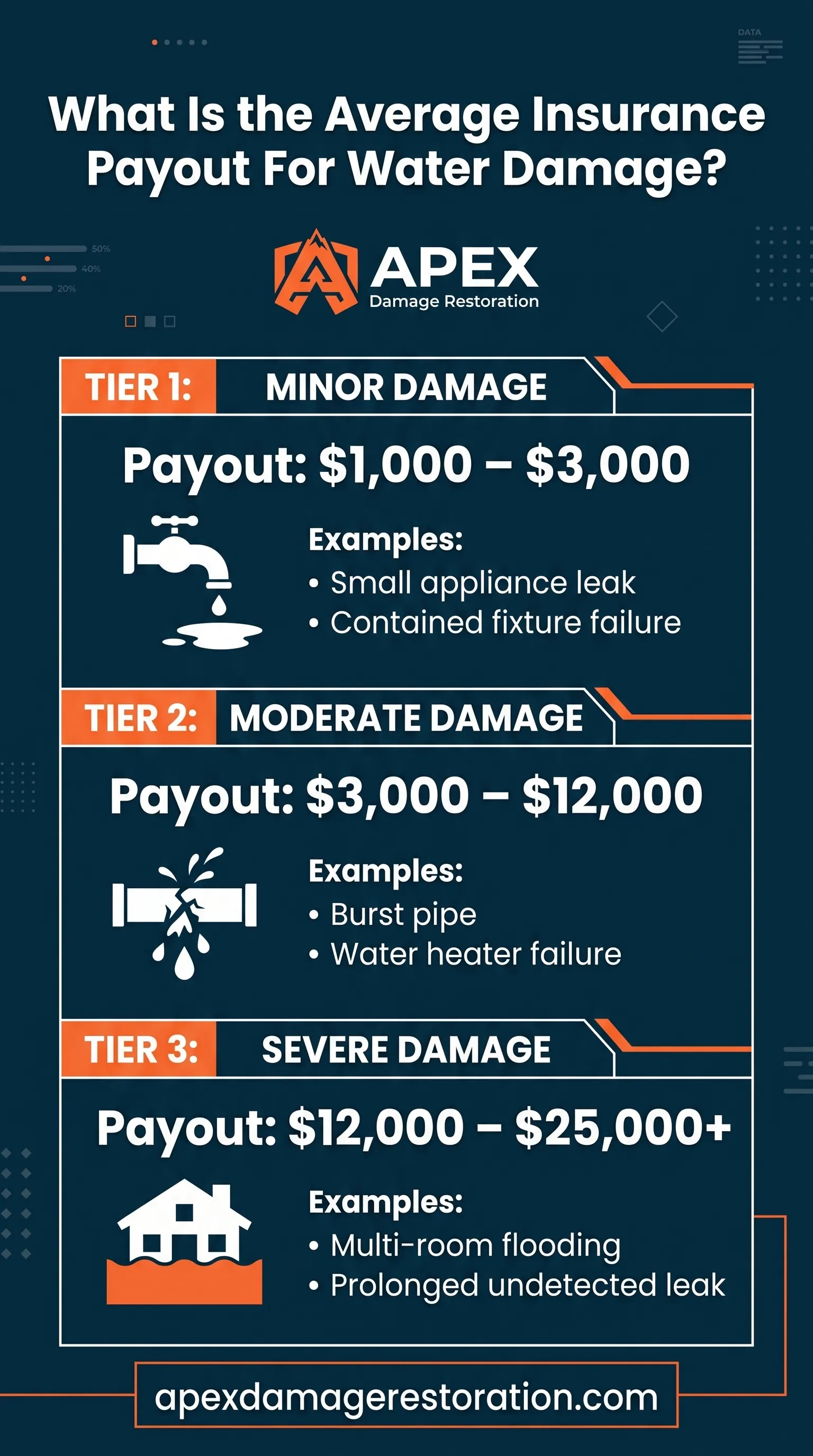
The average insurance payout for water damage ranges from $3,000 to $12,000 for moderate residential claims, with severe structural damage producing payouts that exceed $25,000, according to industry estimates.
| Damage Severity | Typical Payout Range | Common Cause Examples |
|---|---|---|
| Minor | $1,000 – $3,000 | Small appliance leak, contained fixture failure |
| Moderate | $3,000 – $12,000 | Burst pipe, water heater failure |
| Severe | $12,000 – $25,000+ | Multi-room flooding, prolonged undetected leak |
Payout amount depends on the extent of structural damage, the affected square footage, and the water category involved, since contaminated water requires more extensive remediation than a clean water loss.
A policy's dwelling coverage limit and deductible also directly affect the final payout, and policies that calculate payouts using replacement cost generally pay more than those using actual cash value, since actual cash value subtracts depreciation from damaged items.
How To File a Water Damage Insurance Claim?
Filing a water damage insurance claim starts with stopping the water source, documenting the damage, and contacting the insurer to open the claim. The policyholder then works with an assigned adjuster, obtains a repair estimate from a licensed restoration company, and submits documentation supporting the claimed loss.
What to Do If Your Water Damage Claim Is Denied?
A denied water damage claim can be appealed by requesting the insurer's written denial reason, gathering supporting documentation, and formally disputing the decision. The following steps outline how to respond to a denial:
- 1Request the insurer's written explanation for the denial, since insurers must state a specific reason under most state regulations.
- 2Review the stated reason to determine whether the insurer classified the damage as gradual, excluded under the policy, or insufficiently documented, since each reason requires a different response.
- 3Gather additional documentation that directly addresses the stated reason, such as maintenance records, photographs, or a professional damage assessment.
- 4Obtain an independent damage assessment and repair estimate from a licensed restoration company, since this evidence can strengthen an appeal, particularly when the original denial relied on an incomplete inspection.
- 5Submit a formal written appeal to the insurer, including all supporting documentation and a clear response to the denial reason.
- 6Engage a public adjuster if the insurer upholds the denial or offers an inadequate settlement, since a public adjuster can independently assess the damage and negotiate directly with the insurer.
- 7File a complaint with the state insurance department if the appeal process does not resolve the dispute, since state regulators can review denials for compliance with policy terms and state law.
Frequently Asked Questions
Get Professional Water Damage Restoration Help
Apex Damage Restoration provides professional water damage restoration that addresses both the structural repair and the documentation needs of an insurance claim, from emergency extraction through final repair.
Our water damage restoration services provide the assessment, drying, and repair work insurers require to process a claim accurately, helping homeowners recover from covered water damage with proper documentation at every stage.
Need Emergency Restoration Help Today?
Call Apex Damage Restoration now for fast priority dispatch across Aurora, CO, a written estimate before work begins, and direct insurance claims assistance.