
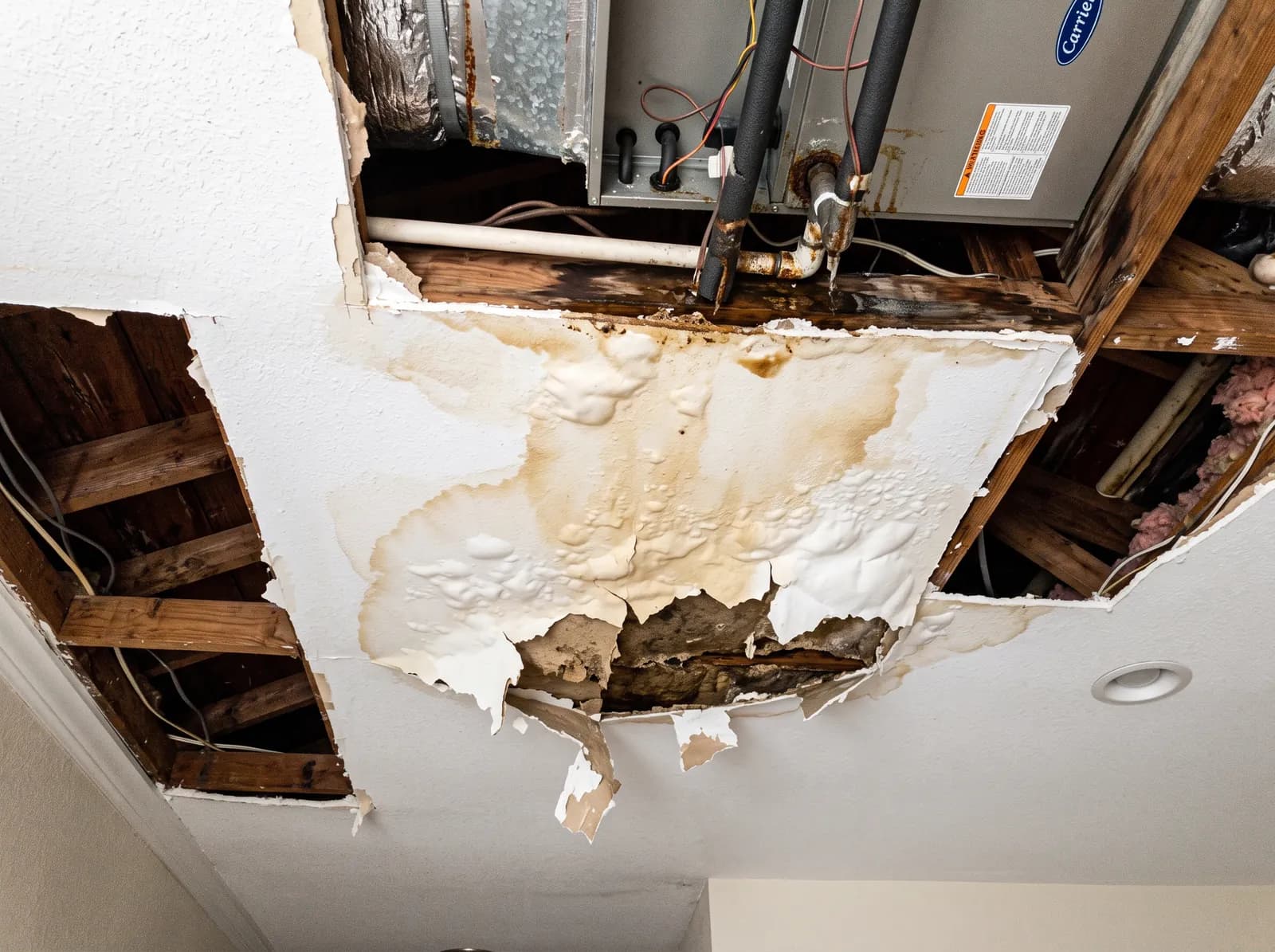
An HVAC system leaks water when condensate production exceeds what the drain line, drain pan, or condensate pump can remove, or when a component such as the evaporator coil, drain pan, or drain hose fails. The leak can originate from the air handler, the furnace, or the ductwork, and the underlying cause determines whether the fix is a simple filter change or a professional repair. This page explains why HVAC systems leak water, how to tell an AC-side leak from a heating-side leak, the water damage risks an ongoing leak creates, and the steps to take once you notice one.
What It Means When Your HVAC Is Leaking Water?
An HVAC system leaking water means the unit is producing condensate faster than its drainage components can remove it, or a drainage component has failed. Central air conditioners and high-efficiency furnaces both generate condensate as a normal byproduct of cooling or exhaust cooling. A functioning system channels that condensate through a drain line into a drain pan and out to an approved drainage point. Water leaking means one part of that path is blocked, cracked, disconnected, or overwhelmed.
Is It Normal for an HVAC System to Leak Water?
Condensate production is normal; visible pooling or dripping indoors is not. An air conditioner's evaporator coil removes humidity from indoor air as it cools, and this moisture drips into the drain pan and exits through the condensate drain line during ordinary operation. That process produces no visible water inside the home when the drainage path is clear. Standard-efficiency furnaces do not produce condensate at all, so water near a standard furnace signals a separate issue, such as a nearby pipe leak, a roof leak, or ductwork condensation rather than normal furnace operation.
What Are The Common Causes of HVAC Water Leaks?
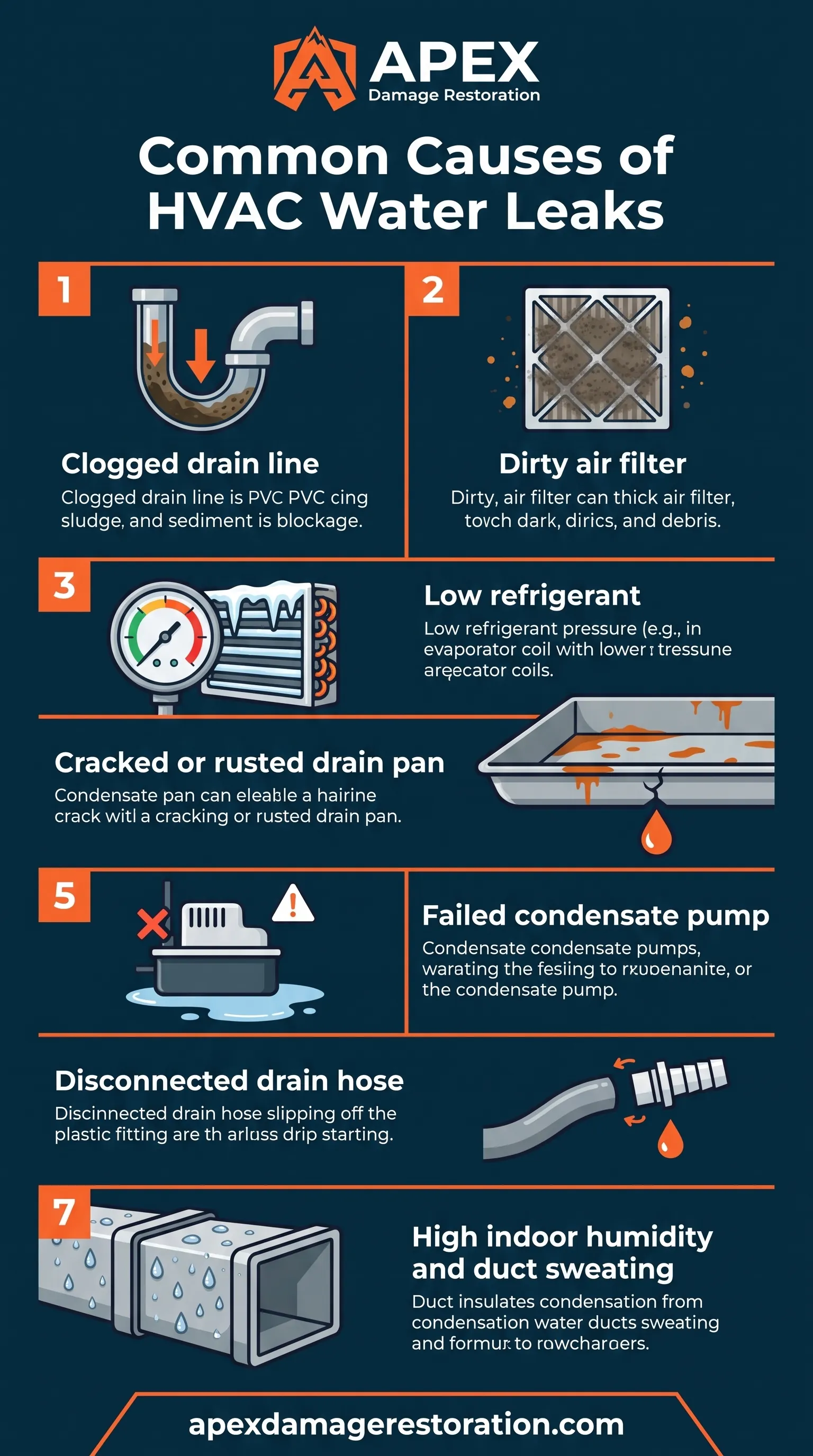
HVAC systems leak water for seven common reasons, most involving a blocked drain path or a frozen coil that later melts and overflows.
- Clogged condensate drain line: Algae, dirt, and debris accumulate inside the drain line over time and block water from draining, forcing it to back up and overflow at the unit.
- Dirty air filter: A clogged filter restricts airflow across the evaporator coil, and the reduced airflow causes the coil to freeze; the resulting meltwater exceeds the drain pan's capacity when the ice thaws.
- Low refrigerant: Insufficient refrigerant lowers coil pressure and causes the evaporator coil to freeze, producing the same overflow risk as a dirty filter once the ice melts.
- Cracked or rusted drain pan: A damaged pan allows condensate to leak through the pan itself instead of draining out through the line.
- Failed or overwhelmed condensate pump: A condensate pump that stops working, or one that cannot keep pace with a high-humidity load, allows water to accumulate and overflow at the pump reservoir.
- Disconnected or damaged drain hose: A hose that has slipped off its fitting or cracked releases condensate at the connection point instead of carrying it to the drain.
- High indoor humidity and duct sweating: Excess humidity around uninsulated ductwork causes condensation to form on the duct exterior, which can drip and appear as an unrelated leak.
HVAC Leaking Water When the AC Is On vs. When the Heat Is On
An HVAC system leaks water from different components depending on whether it is running in cooling mode or heating mode, because the two modes generate condensate through separate processes.
Why Your AC Leaks Water When Running
An air conditioner leaks water when running because the evaporator coil, drain line, or drain pan fails to manage the condensate the cooling cycle produces. The coil condenses moisture out of indoor air continuously while the compressor runs, so a blockage or crack anywhere in that drainage path produces a leak within hours of the clog forming. Frozen-coil leaks from low refrigerant or restricted airflow typically appear after the system shuts off, once the ice has time to melt and overwhelm the drain pan.
Why Your Furnace Leaks Water When Heating
A furnace leaks water when heating if it is a high-efficiency, condensing furnace, since these units extract additional heat from exhaust gases and produce condensate as a normal function. That condensate exits through a dedicated drain line, and a clog, disconnection, or cracked inducer assembly in that line causes the same type of leak seen on the AC side. A standard-efficiency furnace produces no condensate, so water appearing near one indicates a plumbing leak, roof leak, or nearby AC-related leak rather than a furnace malfunction.
Why an HVAC Unit Leaks From the Bottom?
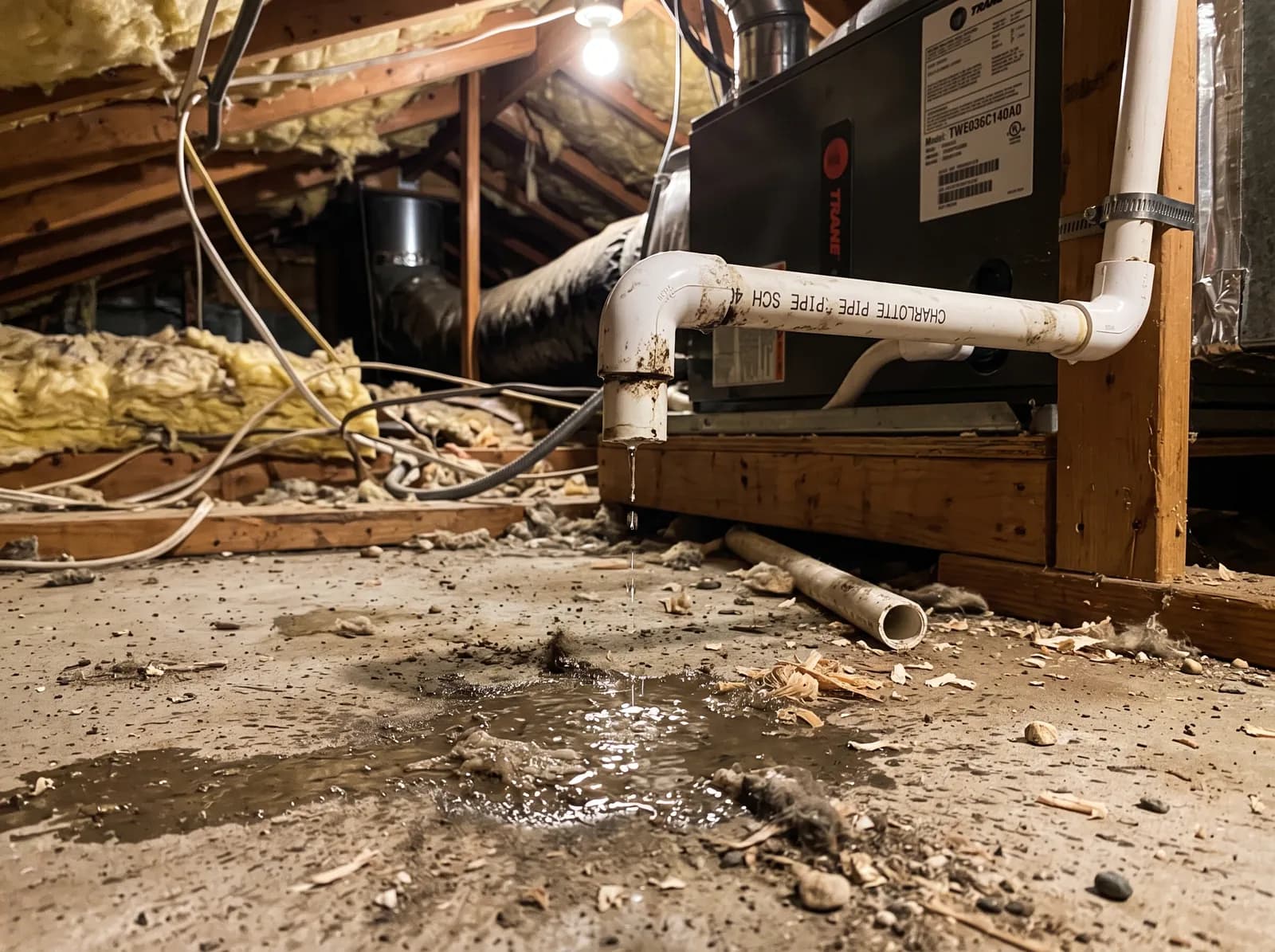
An HVAC unit leaks from the bottom when the drain pan overflows, cracks, or the condensate line disconnects at the base of the unit. A drain pan overflows when the drain line is clogged downstream, forcing water to rise and spill over the pan's edge. A cracked or rusted pan allows water to pass directly through the pan floor instead of routing to the drain. When a frozen evaporator coil thaws, the resulting meltwater volume can exceed the pan's capacity within minutes, producing a leak that pools directly beneath the air handler.
Water Damage Risks From an Ongoing HVAC Leak
An ongoing HVAC leak creates four main categories of water damage: microbial growth, structural staining, material deterioration, and insulation saturation. Mold and mildew can begin colonizing damp materials within 24 to 48 hours of sustained moisture exposure, a timeframe referenced in IICRC S500 water damage restoration standards, and HVAC leaks often go unnoticed long enough to reach that window because the source is hidden inside a closet, attic, or mechanical room. A musty odor is frequently the first detectable sign of hidden mold growth around ductwork or an air handler.
An air handler installed in an attic or closet above living space can leak through the ceiling below it, producing brown or yellow staining on drywall and, in prolonged cases, sagging or collapse of the ceiling material. Water reaching the subfloor beneath the unit causes swelling, warping, or delamination of the flooring material, and the damage frequently extends beyond the visibly wet area as moisture wicks through adjacent building materials. Duct insulation and surrounding wall or attic insulation that absorbs condensate loses its thermal effectiveness and retains moisture long after the surface appears dry, which sustains conditions for mold growth even after the leak itself has been fixed.
What to Do the Moment You Notice an HVAC Leak?
- 1Turn off the HVAC unit at the thermostat or the power switch to stop additional water from accumulating.
- 2Place towels or a container beneath the leak to catch water and limit its spread to surrounding materials.
- 3Avoid contact with any electrical components near the leak, since water and electrical connections in an air handler or furnace present a shock hazard.
- 4Photograph the leak and any visible water damage before cleanup begins, since documentation supports an insurance claim if one becomes necessary.
- 5Ventilate the affected area with a fan or open window to reduce humidity while the source is addressed.
- 6Contact a water damage restoration professional if water has reached flooring, drywall, or ceiling materials, since surface drying alone does not address moisture trapped inside building materials.
DIY Fixes vs. When to Call a Professional
Whether an HVAC water leak calls for a DIY fix or a professional repair depends on whether the cause involves routine maintenance or an internal system component.
Safe DIY Steps for Minor HVAC Leaks
A homeowner can safely replace a dirty air filter, clear an accessible drain line clog using a wet/dry vacuum at the outdoor termination point, and remove visible debris from the drain pan. These three tasks address the most common overflow-related causes without requiring tools beyond a vacuum and a replacement filter, and they carry no risk of refrigerant exposure or electrical contact when performed with the unit powered off.
When the Leak Needs a Professional
A leak requires a licensed HVAC technician when it involves refrigerant handling, since federal regulation requires EPA certification to service refrigerant systems. Internal component repair, drain pan replacement, and recurring or unexplained leaks after a filter change and drain line clearing also require professional diagnosis, since these issues typically indicate a mechanical failure rather than routine blockage. Any leak that has already caused visible water damage to flooring, drywall, or ceiling materials falls under water damage restoration scope rather than HVAC repair scope, since drying and material assessment require restoration-specific equipment and training.
How To Prevent Future HVAC Water Leaks
Replacing the air filter every one to three months prevents the airflow restriction that leads to a frozen evaporator coil. Scheduling annual or semi-annual HVAC maintenance allows a technician to inspect the drain pan, refrigerant charge, and condensate pump before a failure produces a leak. Flushing the condensate drain line during routine maintenance removes the algae and debris buildup responsible for the most common clog-related leaks. Testing the condensate pump periodically confirms it will handle the system's peak humidity load, and insulating exposed ductwork prevents the sweating that produces duct-related leaks in humid conditions.
Does Homeowners Insurance Cover HVAC Water Damage?
Homeowners insurance typically excludes the mechanical failure of the HVAC unit itself, since insurers classify component breakdown from wear or maintenance neglect as a maintenance issue rather than a covered peril. Water damage that results from a sudden, accidental HVAC leak may be covered under a standard homeowners policy, depending on how the policy defines and distinguishes sudden versus gradual water damage.
Frequently Asked Questions
Need Emergency Restoration Help Today?
Call Apex Damage Restoration now for fast priority dispatch across Aurora, CO, a written estimate before work begins, and direct insurance claims assistance.