
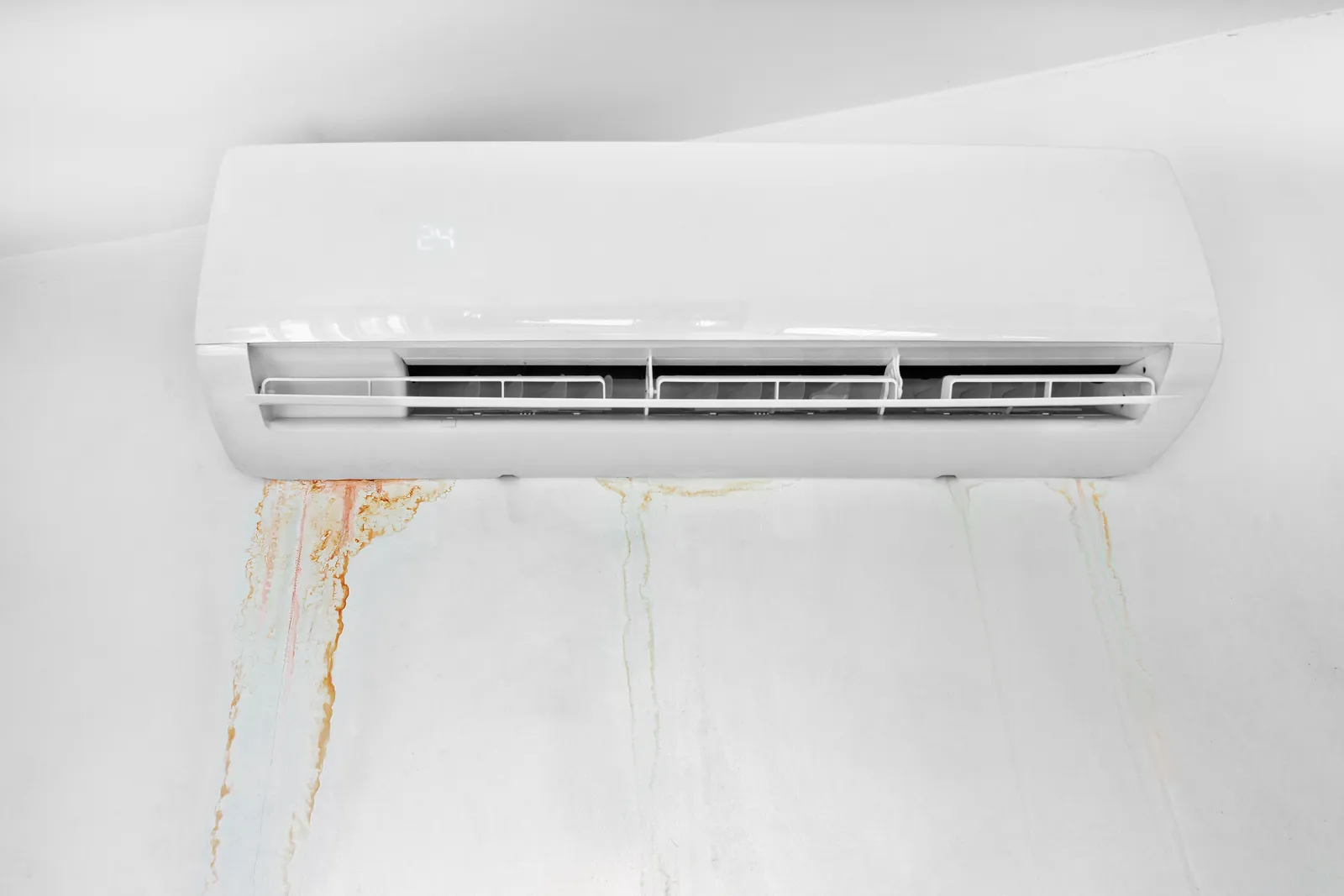
An air conditioner leaking water indoors is almost always a sign of a blocked or malfunctioning condensate drainage system, not a normal part of cooling operation. While a small amount of condensation on an exterior unit is expected, water pooling near an indoor unit, dripping from a window AC, or staining a ceiling near a vent signals a problem that needs attention before it causes structural damage.
Why Is Your AC Leaking Water?
An AC leaks water indoors when condensation produced by the evaporator coil cannot drain properly and backs up into the unit or surrounding structure. Air conditioners remove humidity from indoor air by passing it over a cold evaporator coil. The moisture that condenses on the coil normally exits through a condensate drain line into a drain pan or exterior discharge point.
Exterior condensation, such as a drip pan releasing water outside a central unit or window unit, is a normal byproduct of this process. Water appearing inside the home, dripping from an indoor air handler, or pooling around a window or portable unit indicates that the condensate drain line, drain pan, or evaporator coil is not functioning correctly.
What Are The Common Causes of an AC Leaking Water?
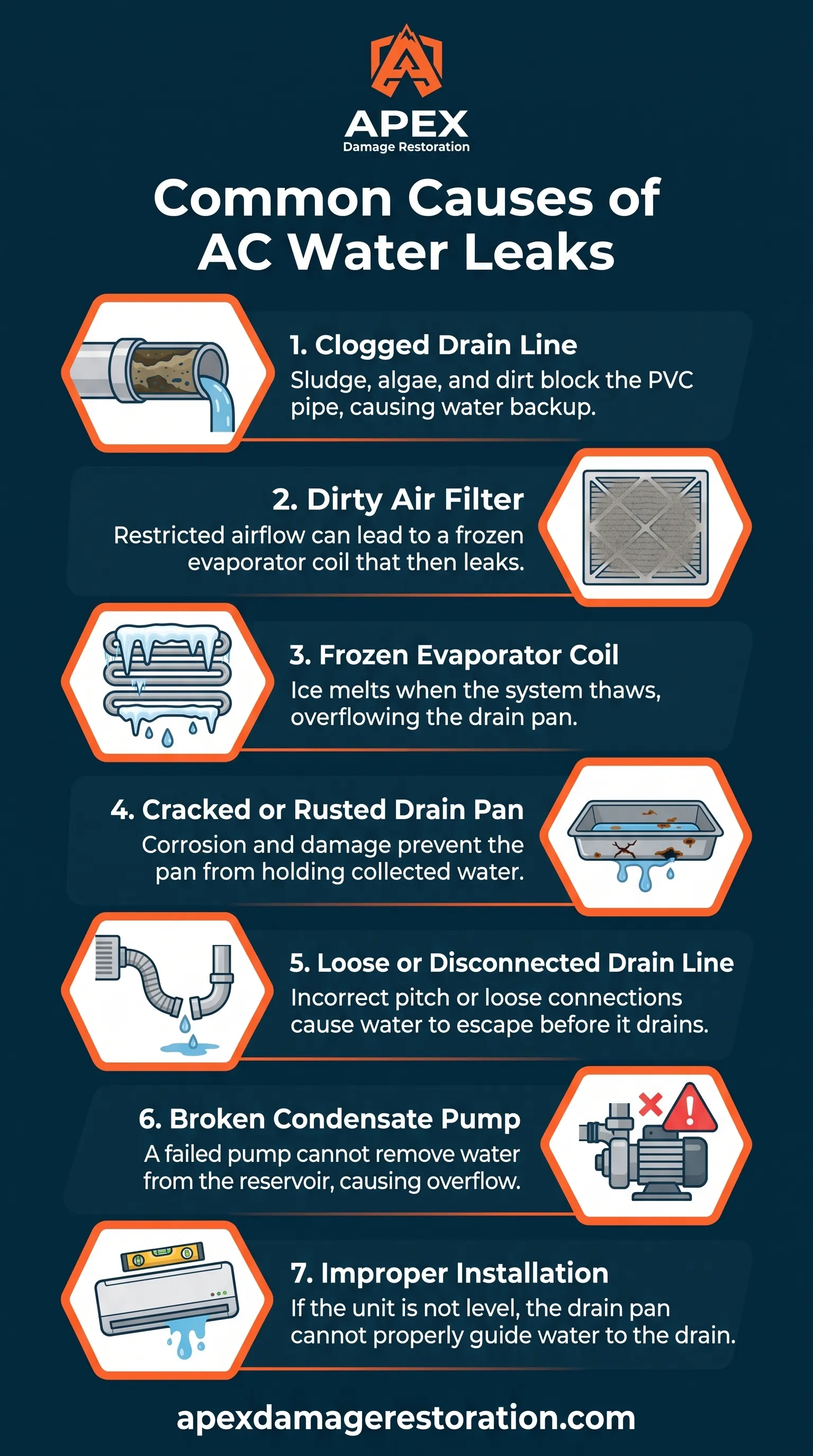
An air conditioner leaks water for several distinct mechanical reasons, and identifying the correct cause determines the appropriate fix.
- Clogged condensate drain line: Algae, dirt, and debris accumulate inside the drain line over time and block water flow, forcing condensate to back up and overflow the drain pan.
- Dirty or clogged air filter: A restricted filter reduces airflow across the evaporator coil, causing the coil to drop below freezing temperature and accumulate ice that later melts faster than the drain system can handle.
- Frozen evaporator coil: Low refrigerant levels or restricted airflow cause the coil to freeze. When the ice melts, it produces more water than the drain pan and line can manage at once.
- Cracked or rusted drain pan: A damaged drain pan no longer holds or channels condensate correctly, allowing water to leak directly onto the floor or surrounding structure.
- Disconnected or improperly pitched drain line: A drain line that has come loose or lacks the correct downward slope allows water to collect and leak at the disconnection point instead of draining outside.
- Broken condensate pump: Units without gravity drainage rely on a pump to move condensate out of the system, and pump failure causes water to accumulate and overflow.
- Improper installation or unlevel unit: A unit installed without the correct tilt directs condensate toward the indoor side of the unit instead of the drain outlet.
Signs Your Air Conditioner Is Leaking Water
An AC leak produces several observable signs before or alongside visible water.
- Water pooling on the floor near the indoor unit or air handler
- Water stains or discoloration on the ceiling or wall near an air vent
- A musty odor in rooms near the unit, indicating trapped moisture
- Visible ice on the evaporator coil, refrigerant lines, or coil housing
- Reduced cooling performance occurring at the same time as moisture or dripping
- Dripping water from the front or bottom of a window or portable unit
Any combination of these signs confirms an active leak rather than normal humidity or condensation.
AC Leaks by Unit Type
The mechanical cause of a leak differs by AC unit type because each system handles condensate drainage differently.
Central and Split-System AC Units
A central or split-system AC leaks water indoors when the indoor air handler, typically located in an attic, closet, or basement, develops a drain line clog or drain pan failure. These systems use a primary drain pan connected to a condensate drain line and, in many installations, a secondary drain pan beneath the unit as a backup. A float switch inside the primary or secondary pan shuts the system off automatically when water rises above a set level, which prevents overflow but also signals that the primary drainage path has failed. Water damage from a central AC leak often appears first as a ceiling stain below an attic-mounted air handler.
Window AC Units
A window AC unit leaks water inside the home when it is installed at the wrong angle, has clogged weep holes, or has a dirty filter restricting airflow. Window units require a slight backward tilt so condensate drains outside through the rear of the unit rather than toward the room. Weep holes on the bottom of the unit's exterior housing allow accumulated water to exit; when these holes clog with debris, water backs up and drips inside instead. A dirty filter that causes coil icing compounds the problem once the ice melts faster than the housing can release it.
Portable AC Units
A portable AC unit leaks water from the bottom when its internal condensate collection bucket or reservoir overflows. Unlike central and window units, most portable ACs collect condensate in an internal tank rather than draining it continuously, and that tank requires manual emptying or a connected drain hose. A full or disconnected bucket, a kinked drain hose, or a failed internal condensate pump each cause water to leak from the base of the unit onto the floor.
Should You Turn Off Your AC If It's Leaking Water?
Turn off an AC unit immediately if water is leaking near electrical components, dripping from a ceiling, or the cause of the leak is unknown. Continuing to run a unit under these conditions risks electrical hazards and allows a small leak to develop into ceiling or drywall damage.
A unit can typically keep running for a short period if the leak is a minor, monitored drip clearly caused by a drain clog and the water is not contacting electrical parts or spreading to building materials. Running a unit with a frozen evaporator coil should be avoided even briefly, since continued operation adds more ice that produces a larger volume of water once it melts.
How to Fix an AC Leaking Water?
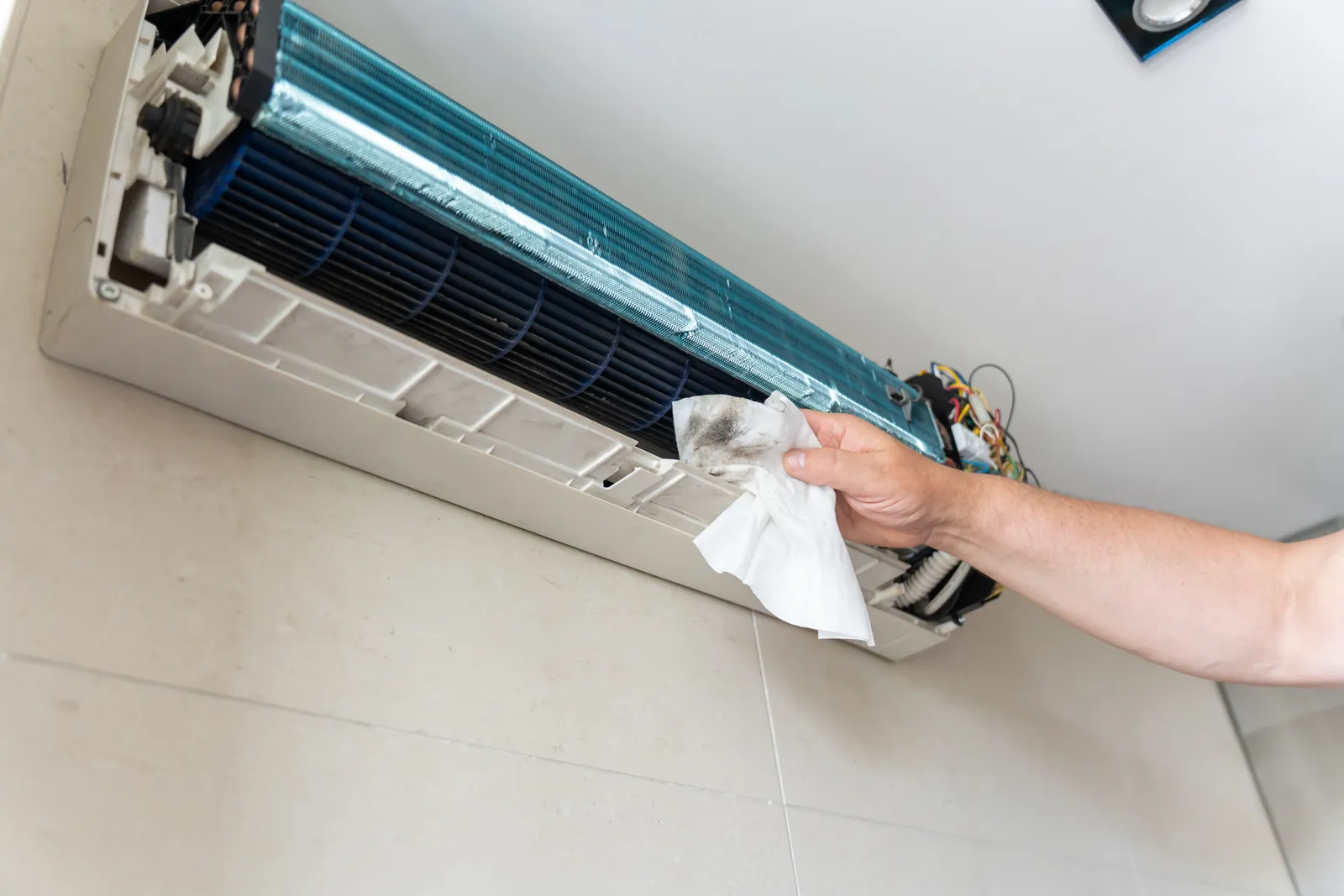
Fixing an AC leak requires addressing the specific mechanical cause identified during diagnosis.
Clear a Clogged Condensate Drain Line
To clear a clogged condensate drain line, locate the drain line access point (typically a T-shaped fitting near the indoor unit), remove the cap, and use a wet/dry vacuum on the exterior end of the line to pull the clog out. A mixture of equal parts vinegar and water flushed through the line afterward helps break down algae growth and slows future clogging. This fix addresses the most common cause of AC leaks.
Replace a Dirty Air Filter
To replace a dirty air filter, turn off the unit, remove the existing filter from its housing, and install a new filter of the correct size and MERV rating. Manufacturers generally recommend replacing standard filters every 60 to 90 days, though homes with pets or high dust levels may require more frequent changes. A clean filter restores proper airflow across the evaporator coil and prevents the freezing that leads to overflow.
Level the Unit
To level a window or portable AC unit, use a carpenter's level to check the unit's tilt and adjust mounting brackets, shims, or support frames until the unit sits with a slight backward pitch toward the exterior drain point. Correct leveling directs condensate outside rather than into the room.
Repair or Reset the Condensate Pump
To repair or reset a condensate pump, first check the pump's float switch and power connection, since many pumps stop functioning due to a stuck float or tripped safety switch rather than pump failure. If the pump motor no longer runs after resetting, replacement is typically required, as pumps are not designed for field repair beyond the float mechanism and tubing connections.
When to Call a Professional
Call a licensed HVAC technician when the leak involves low refrigerant, electrical components, a cracked drain pan, or a leak that recurs after a drain line clearing. Refrigerant handling requires EPA-certified technicians under federal regulations, and recurring leaks after a basic fix often indicate a mechanical issue, such as a damaged coil or pan, that requires professional diagnosis and repair.
Water Damage Caused by an AC Leak
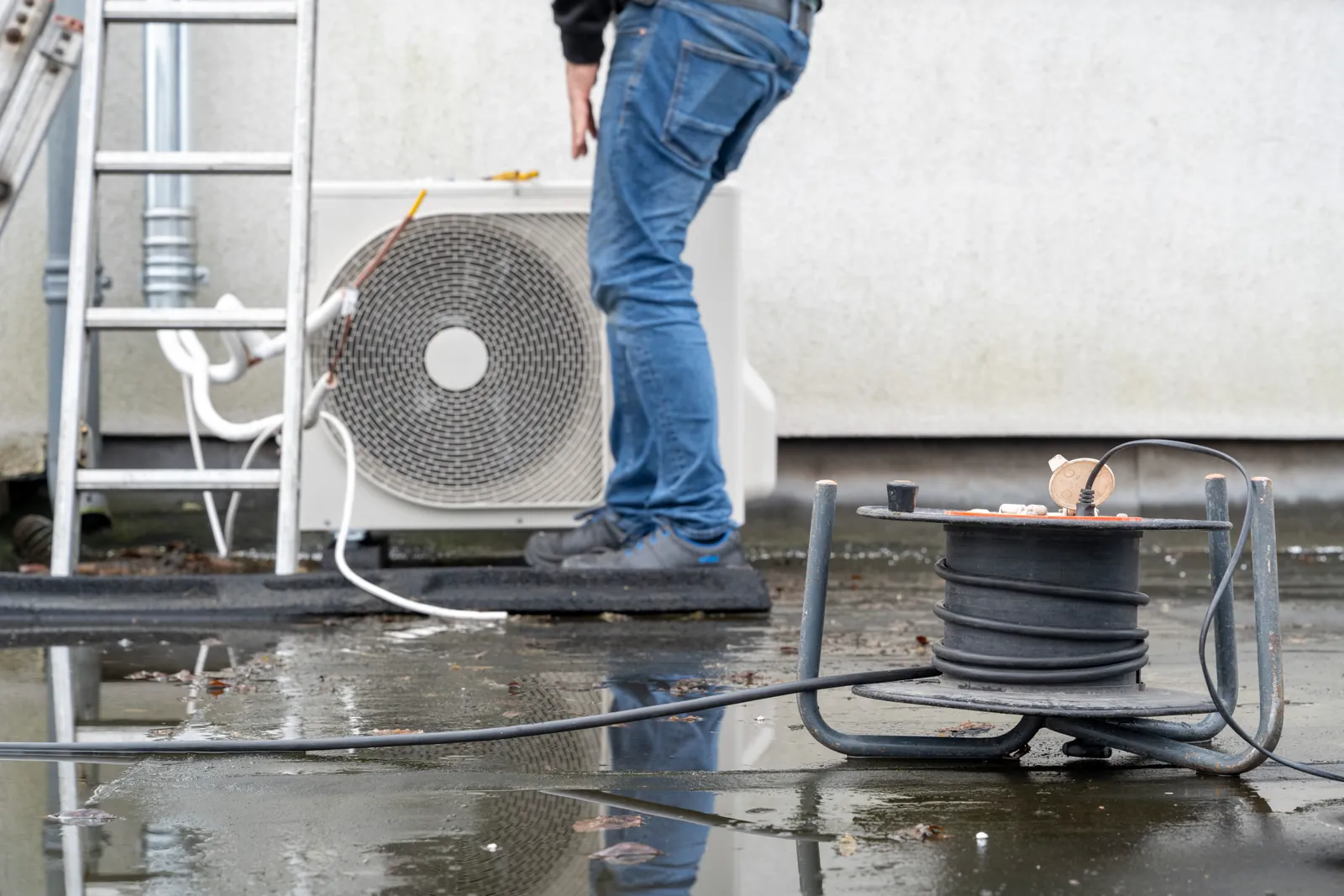
An AC leak that goes unaddressed can saturate building materials and create conditions for mold growth within 24 to 48 hours of sustained moisture exposure. Ceiling stains and sagging drywall are the most common early signs of damage when an air handler is located in an attic or closet above living space. Prolonged moisture from an undetected leak allows mold colonization inside wall cavities and ceiling assemblies, particularly when the leak originates in an enclosed attic or crawl space.
A homeowner can typically handle filter replacement, drain line clearing, and minor cleanup without professional help. Once water has soaked into a ceiling assembly, saturated drywall, or spread beyond a small, contained area, a water damage restoration professional is needed to assess moisture intrusion, dry the affected structure, and prevent mold growth.
How To Prevent Future AC Leaks?
Routine maintenance prevents most of the mechanical failures that cause AC leaks.
- Schedule annual HVAC maintenance with a licensed technician to inspect the coil, refrigerant charge, and drain components.
- Replace air filters every 60 to 90 days, or more often in homes with pets or high dust levels.
- Flush the condensate drain line with a vinegar-and-water solution every three to four months during cooling season.
- Test the condensate pump periodically by pouring water into the pan and confirming the pump activates and clears it.
- Inspect the drain pan annually for cracks, rust, or standing water that indicates a developing clog.
Air Conditioner Leaks FAQs
Need Emergency Restoration Help Today?
Call Apex Damage Restoration now for fast priority dispatch across Aurora, CO, a written estimate before work begins, and direct insurance claims assistance.