
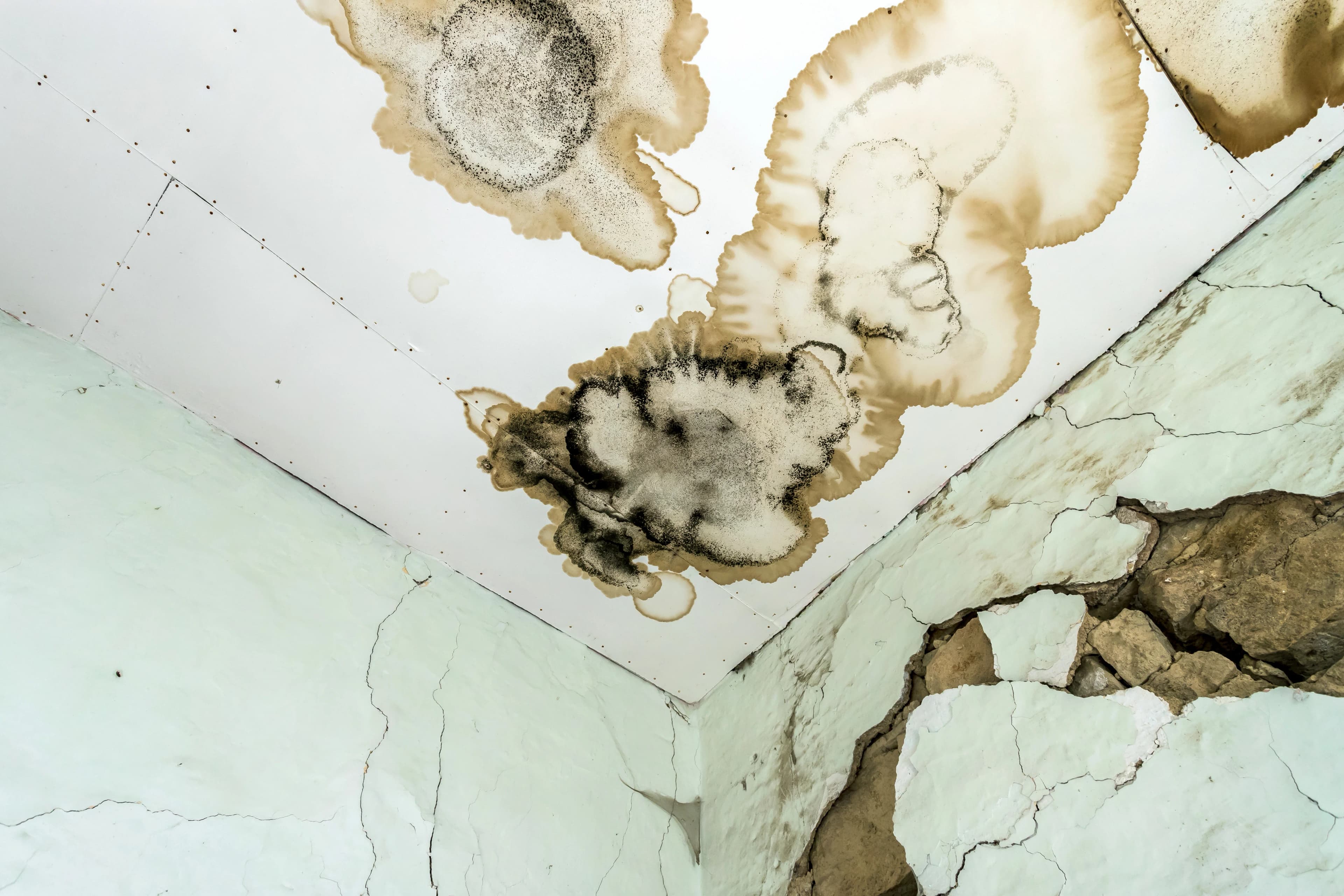
Ceiling water damage occurs when moisture from a roof leak, plumbing failure, or condensation source penetrates the ceiling assembly, producing stains, sagging, or paint failure on the surface below. The visible signs range from a faint discoloration ring to a fully saturated, sagging section of drywall, depending on how much water has accumulated and how long it has been present.
Addressing the damage requires identifying the source, drying the affected material, repairing or replacing the ceiling surface, and correcting the underlying cause to prevent recurrence. The sections below cover how to recognize ceiling water damage, what causes it, how to repair it by ceiling type, typical repair costs, and how to prevent future leaks.
What Does Water Damage on a Ceiling Look Like?
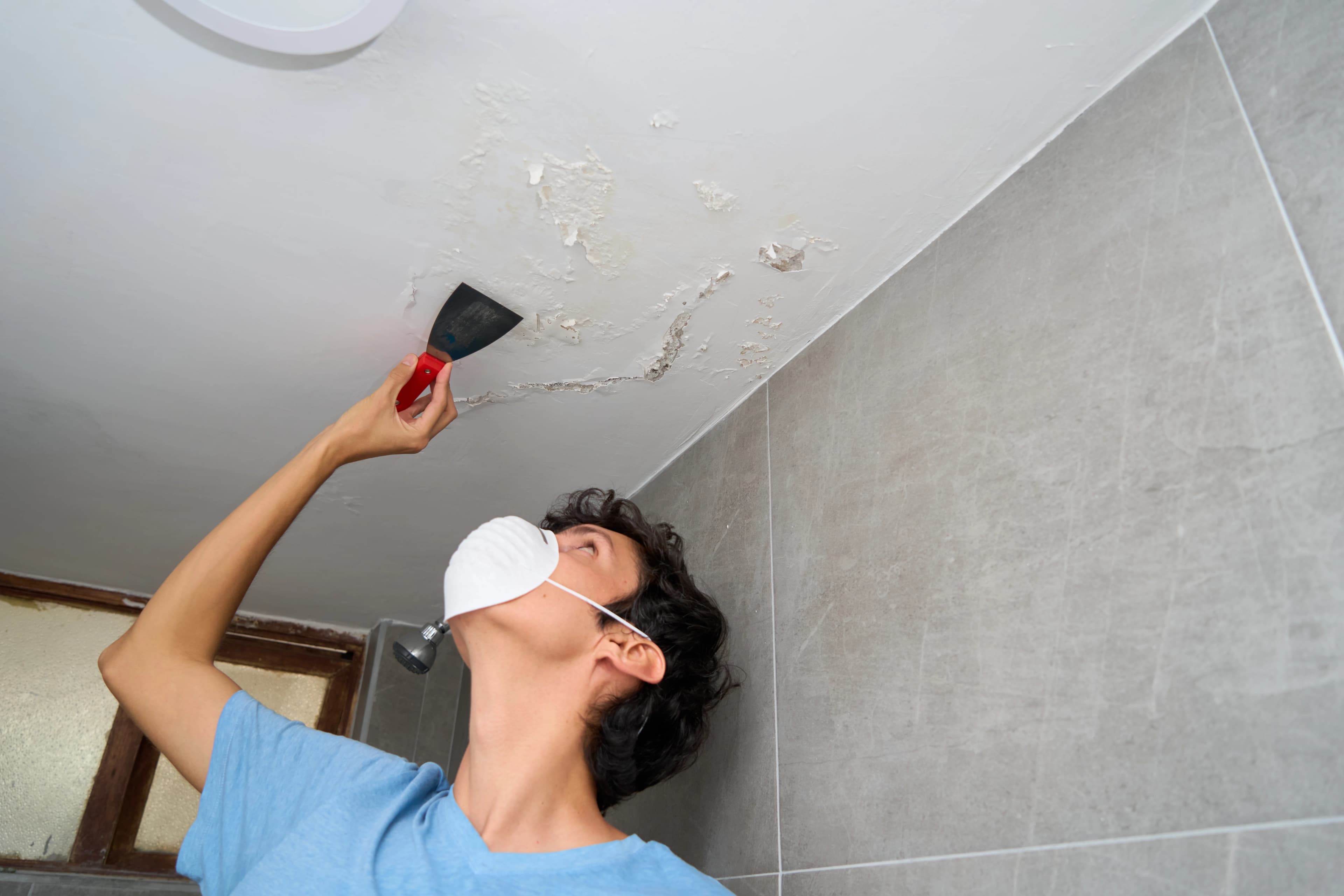
Water damage on a ceiling appears as discoloration, bubbling paint, sagging drywall, or visible stains in a ring or blotch pattern. These signs indicate that moisture has penetrated the ceiling material from above, typically from a roof leak, plumbing failure, or condensation source. The severity of the visible damage generally corresponds to how long the moisture has been present and how much water has accumulated behind the surface.
Discoloration, Stains & Water Rings
A water stain on a ceiling forms as a yellow, brown, or copper-colored ring with a darker outer edge and a lighter center. The ring pattern develops because water spreads outward from the point of entry as it evaporates, leaving mineral and tannin deposits behind on the drywall or plaster surface. A fresh stain typically appears darker and slightly damp to the touch, while an older, dried stain appears flatter and lighter in tone. Multiple concentric rings on the same spot indicate repeated leaking events rather than a single incident.
Bubbling, Peeling Paint & Sagging Texture
Bubbling paint and sagging ceiling texture indicate that water has saturated the drywall or plaster beneath the painted surface. Trapped moisture breaks the bond between the paint film and the substrate, causing the paint to blister and separate. Continued saturation weakens the gypsum core of the drywall, causing the ceiling to sag or droop under its own weight. A ceiling that sags more than a few millimeters or feels soft when pressed has likely lost structural integrity and requires prompt evaluation before the material fails completely.
What Causes Water Damage on a Ceiling?
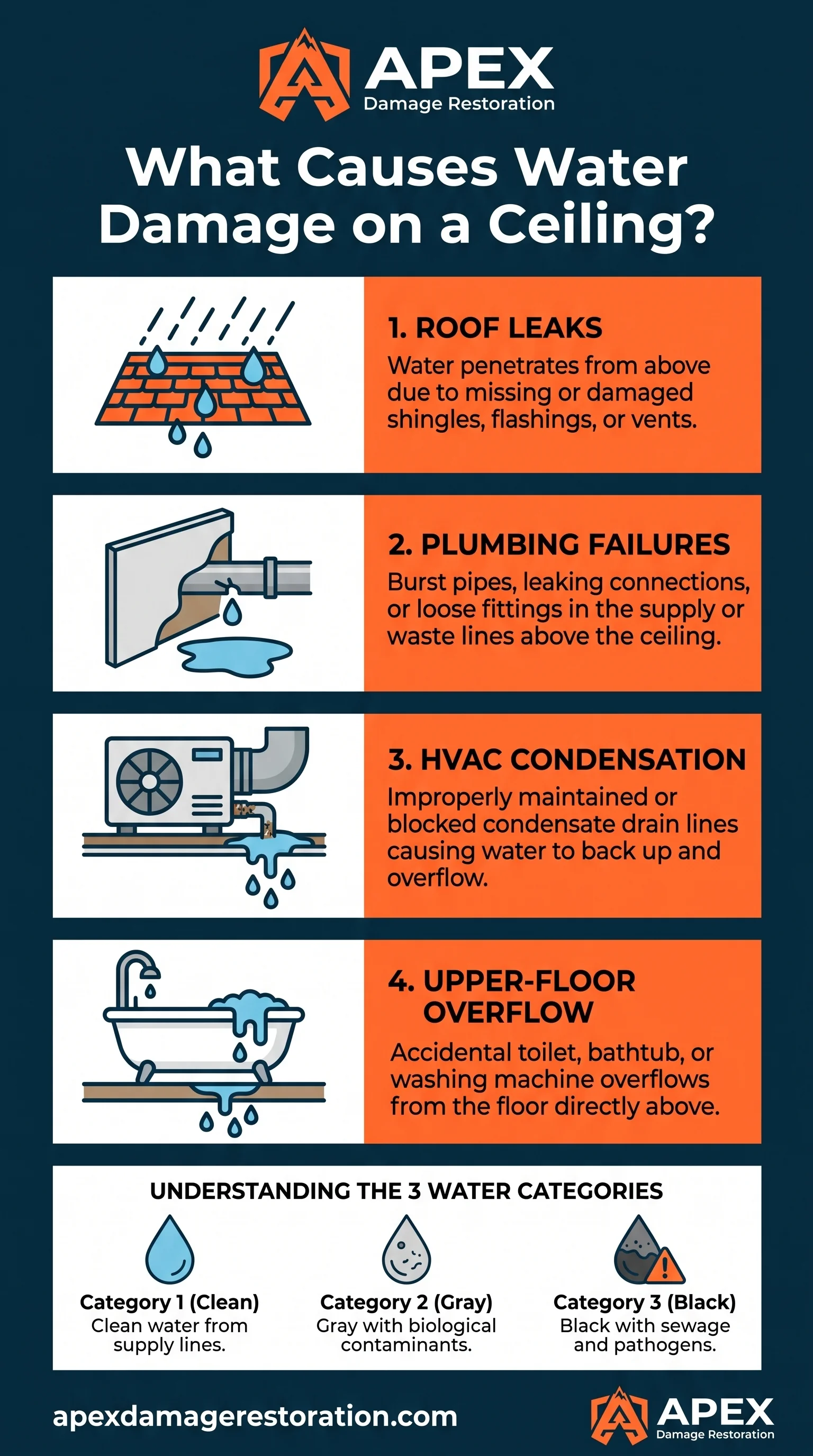
Ceiling water damage results from roof leaks, plumbing failures, HVAC condensation, or upper-floor overflow events that allow water to penetrate the ceiling assembly from above.
- Roof leaks: Damaged or missing shingles, deteriorated flashing around chimneys and vents, and clogged gutters force water back under the roofline.
- Plumbing failures: Burst supply lines, leaking drain pipes, and failed connections in bathrooms or kitchens on the floor above allow water to seep downward.
- HVAC condensation: Clogged or disconnected condensate lines drip condensation into the ceiling cavity instead of draining outside.
- Upper-floor overflow events: An overflowing tub, toilet, or washing machine introduces a sudden volume of water that saturates the ceiling below within minutes.
Restoration professionals classify the water responsible for ceiling damage into three categories: Category 1 (clean water from a supply line), Category 2 (gray water from appliances), and Category 3 (contaminated water from sewage or extended flooding), and this classification determines the required cleaning and remediation approach.
What Should You Do When Your Ceiling Has Water Damage?
When a ceiling shows water damage, stop the water source, protect the area below, and document the damage before starting repairs.
- Shut off the water supply to the affected fixture, or shut off the main water valve to the property if the source is unclear.
- Contain active drips by placing buckets or towels beneath the affected area.
- Move belongings out of range, clearing furniture, electronics, and other items from beneath the damaged section.
- Photograph the damage from multiple angles to document the stain, sag, or bubbling paint for an insurance claim.
- Avoid the electrical fixtures in the affected area, since water contact with wiring creates a shock or fire hazard.
- Contact a restoration professional or licensed electrician before restoring power to any circuit that water has reached.
How to Repair Water Damage on a Ceiling
Repairing water damage on a ceiling requires drying the cavity, removing compromised material, and restoring the surface finish to match the original ceiling type. The process begins with locating and correcting the water source, since repairing the surface before stopping the leak allows the damage to recur.
A moisture meter measures the residual moisture content of the drywall, framing, and insulation to confirm the area has dried to an acceptable level before repair work begins. Structural drying with air movers and a dehumidifier typically continues until moisture readings return to a normal range for the material.
Contractors apply an antimicrobial treatment to framing and remaining drywall when moisture exposure has lasted more than 24 to 48 hours, reducing the risk of mold growth in the cavity. The specific repair technique that follows depends on the ceiling's surface type.
Repairing Popcorn Ceiling Water Damage
Repairing a popcorn ceiling with water damage involves scraping away the damaged texture, replacing the underlying drywall if needed, and reapplying matching texture. The stained or sagging section of popcorn texture is removed with a scraper after light misting to soften the material. If the drywall panel beneath the texture has sagged, delaminated, or lost structural strength, the installer cuts out and replaces the affected panel before retexturing.
New texture is sprayed or hand-applied to match the surrounding popcorn pattern, then primed and painted to blend with the rest of the ceiling. Popcorn ceilings installed before 1980 may contain asbestos, so testing the material before disturbing it is a required precaution in older homes.
Repairing Textured Ceiling Water Damage
Repairing a textured ceiling with water damage involves skim-coating the affected section and matching the existing pattern before painting. Unlike popcorn texture, decorative textures such as knockdown, orange peel, or swirl patterns require the installer to replicate a specific tool technique rather than a sprayed finish.
After removing damaged drywall or plaster and installing new material, the installer applies joint compound in thin layers, feathering the edges into the surrounding texture to avoid a visible patch line. The pattern is recreated using the same tool and technique as the original finish, such as a trowel, brush, or stipple roller, before the section is primed and painted to match.
Repairing Drywall and Flat Ceiling Water Damage
Repairing a flat drywall ceiling with water damage involves cutting out the damaged panel, installing new drywall, and finishing the seams to a smooth surface. The installer removes drywall along the framing members surrounding the damaged area, exposing the joists or trusses for inspection and drying.
A new drywall panel is cut to size, screwed into the framing, and finished with joint tape and multiple coats of compound sanded smooth between applications. The repaired section is primed before painting, since unprimed patches absorb paint differently and remain visible under most lighting conditions.
How Much Does Ceiling Water Damage Repair Cost?
Ceiling water damage repair typically costs $300 to $1,400 for a single stained or minor section and $1,500 to $6,000 or more for repairs involving structural drywall replacement or mold remediation, according to industry cost estimates. Pricing depends on the ceiling's size, the extent of drywall or plaster replacement required, the texture-matching complexity, and whether mold remediation or structural drying equipment is needed. Labor typically accounts for a larger share of the total cost than materials, since drying, containment, and texture-matching require specialized skill. Regional labor rates and the accessibility of the damaged area, such as a vaulted or high ceiling requiring scaffolding, also affect the final price.
Cost by Ceiling Damage Severity
Ceiling water damage repair costs scale with the severity of the damage, ranging from a few hundred dollars for a surface stain to over $10,000 for a collapsed or heavily mold-affected ceiling, as an industry estimate. A minor stain limited to the paint layer, with no structural sagging, typically costs $300 to $700 to clean, prime, and repaint. Moderate damage involving a sagging or bubbled section that requires partial drywall replacement typically costs $700 to $3,000, depending on the size of the cut-out area and texture-matching requirements.
Severe damage involving structural sagging across a large section, water-damaged framing, or visible mold growth typically costs $3,000 to $10,000 or more, since it requires framing repair, antimicrobial treatment, and possible insulation replacement in addition to drywall work.
DIY Ceiling Repair vs. Hiring a Water Damage Restoration Professional
DIY ceiling repair is a suitable option for small, dry, surface-level stains with no sagging, while a water damage restoration professional is necessary for active leaks, structural sagging, large affected areas, or suspected mold growth. A homeowner can typically clean, prime, and repaint a small, fully dried stain using standard tools and stain-blocking primer at low cost.
Ceiling damage that involves a sagging panel, a soft or spongy texture, or an unknown water source requires professional assessment, since these conditions indicate saturated framing or an active leak that untrained repair work will not resolve.
A restoration professional brings moisture meters, commercial-grade dehumidification equipment, and antimicrobial treatments that are not standard in most homeowner toolkits, and these tools directly affect whether the repair prevents future mold growth. Water categorized as Category 2 or Category 3, involving gray or contaminated water, also requires professional handling due to the health risks associated with direct contact.
Who to Call for Ceiling Water Damage
For ceiling water damage, contact a licensed water damage restoration company for active leaks or structural damage, and a plumber or roofer to address the source of the water. A restoration company handles moisture detection, structural drying, antimicrobial treatment, and drywall or texture repair, coordinating the full remediation process from initial inspection through final finish work.
A plumber resolves the water source when the cause is a burst pipe, leaking drain line, or failed fixture connection, while a licensed roofer addresses causes originating from damaged shingles, flashing, or gutters. Homeowners filing an insurance claim typically contact their insurance provider first to confirm coverage and documentation requirements before restoration work begins, since some policies require an approved contractor or a specific claims process.
How to Prevent Future Ceiling Water Damage
Preventing future ceiling water damage requires routine roof inspection, prompt plumbing maintenance, and proper HVAC condensate drainage. The following measures reduce the risk of recurring ceiling leaks:
- Roof inspection: Inspect shingles, flashing, and gutters at least twice a year and after major storms to catch damage before it allows water intrusion.
- Plumbing maintenance: Check supply lines, drain connections, and shut-off valves on upper-floor fixtures for signs of corrosion or slow leaks.
- HVAC condensate lines: Clear condensate drain lines annually to prevent clogs that force condensation into the ceiling cavity.
- Gutter cleaning: Remove debris from gutters and downspouts to maintain proper water flow away from the roofline.
- Bathroom and kitchen seals: Reseal caulking around tubs, showers, and sinks on upper floors to prevent water from seeping into the subfloor and ceiling below.
- Attic ventilation: Maintain adequate attic ventilation to reduce condensation buildup on the underside of the roof deck during temperature swings.
Related Areas Where Water Damage Occurs
Ceiling water damage often shares a common source with damage in other parts of a building, since water traveling from a roof or upper-floor plumbing failure can affect multiple areas along its path. A wall affected by water damage frequently shows staining below a damaged ceiling, as moisture continues traveling downward through the structure.
Damage that reaches a lower level may also appear as floor water damage, particularly when the ceiling leak originates from an upper-floor bathroom or kitchen. Basement-level water intrusion follows a different mechanism, typically involving hydrostatic pressure from groundwater rather than a leak traveling downward from above.
Frequently Asked Questions About Ceiling Water Damage
Need Emergency Restoration Help Today?
Call Apex Damage Restoration now for fast priority dispatch across Aurora, CO, a written estimate before work begins, and direct insurance claims assistance.