
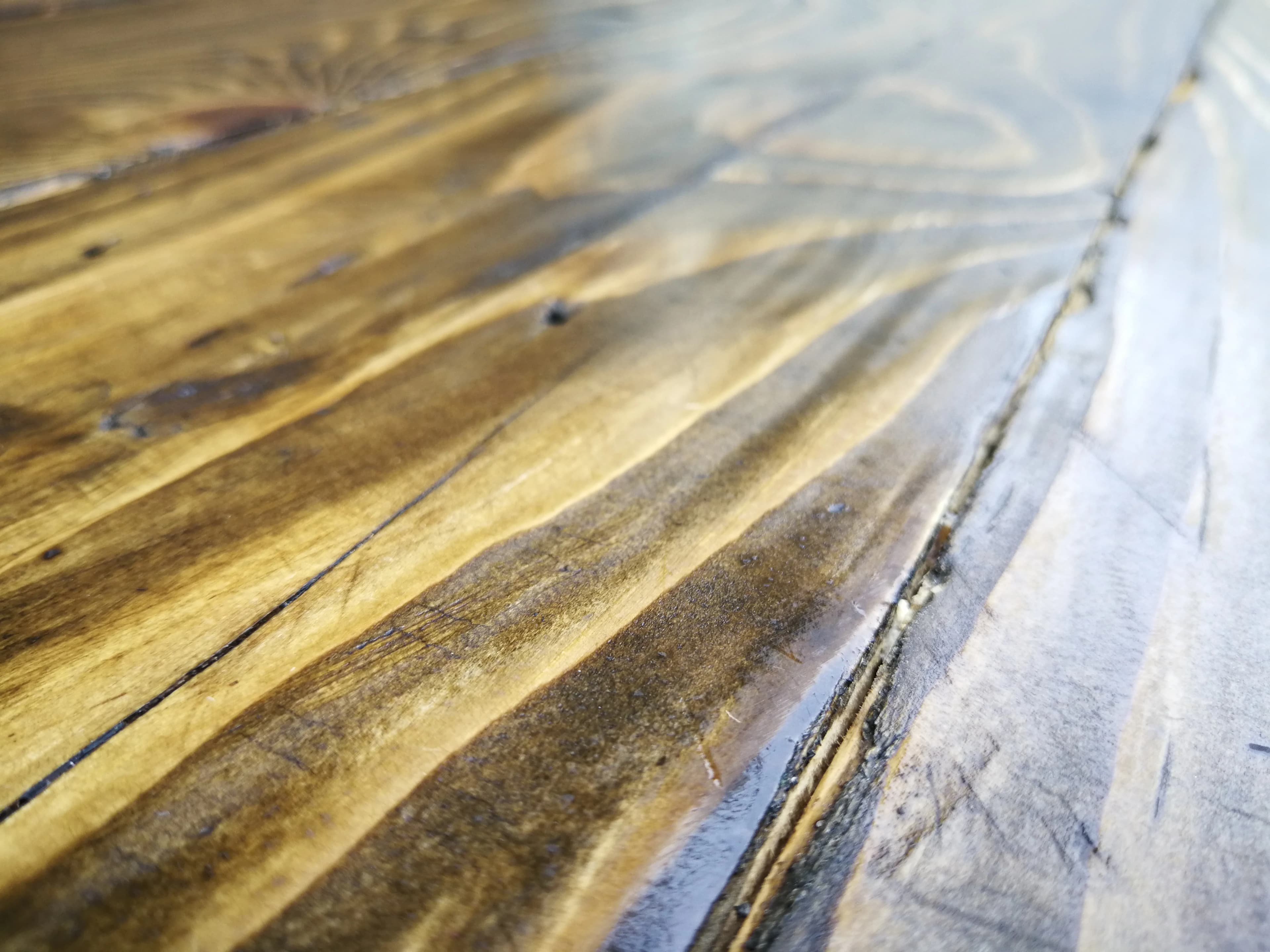
Water-damaged flooring affects hardwood, engineered hardwood, laminate, and LVP or vinyl surfaces differently, and the correct response depends on the material, the amount of water exposure, and how long the floor stayed wet. Cupping, swelling, delamination, and subfloor saturation each signal a different repair path, and some materials tolerate moisture far better than others. This guide explains how to recognize water damage, how drying works, when a floor can be repaired instead of replaced, and when the damage requires a professional restoration company rather than a DIY fix.
How to Tell If Your Floor Has Water Damage
A water-damaged floor shows physical distortion, discoloration, or odor changes that develop within hours to days after moisture exposure. The specific signs vary by material, but several indicators apply across hardwood, laminate, and vinyl flooring.
- Cupping: Plank edges rise higher than the center, creating a shallow trough down each board.
- Crowning: The center of a plank rises above its edges, often after moisture has already been present for an extended period.
- Buckling: Planks separate from the subfloor and lift upward, sometimes several inches, indicating severe or prolonged water exposure.
- Warping: Boards twist or bow out of their original flat plane.
- Discoloration and staining: Dark patches, gray or black tinting, or uneven color changes appear where water has soaked into the material.
- Musty odor: A persistent damp or moldy smell indicates moisture trapped beneath or within the flooring.
- Soft spots: The floor feels spongy or gives underfoot, which often points to subfloor damage.
- Delamination: Layers of engineered wood or laminate separate, exposing the core material or causing the surface layer to peel.
- Peeling finish: The protective coating lifts or flakes away from the wood surface.
- Gaps between planks: Boards pull apart as wood fibers shrink after drying unevenly.
Cupping and buckling typically affect solid and engineered hardwood, while delamination and edge swelling are more common in laminate flooring. LVP and vinyl show fewer surface symptoms because the material resists moisture, but seams can separate and the subfloor beneath can still sustain damage.
Water Damage by Flooring Material
Flooring materials differ in composition, moisture resistance, and repairability, so the effect of water exposure and the appropriate response depend on which material is installed.
Hardwood Floors
Solid hardwood absorbs water through its cellular wood structure, which causes cupping, swelling, and finish damage. Because hardwood repair and refinishing involve a distinct process from engineered, laminate, and vinyl materials, see the hardwood floor water damage guide for drying methods, sanding and refinishing steps, and repair-versus-replacement guidance specific to solid wood.
Engineered Hardwood Floors
Engineered hardwood consists of a thin hardwood veneer bonded to a plywood or high-density fiberboard core, and water damage most often appears as veneer separation or core delamination. The veneer layer typically measures between 0.6 millimetres and 6 millimetres thick, which limits how many times the surface can be sanded and refinished compared with solid hardwood. Water that reaches the plywood core causes the layers to delaminate, and the affected planks usually require replacement rather than refinishing once separation occurs. Engineered hardwood with a thicker veneer withstands limited moisture exposure better than laminate, but it remains less repairable than solid hardwood because sanding removes the thin top layer faster.
Laminate Flooring
Laminate flooring has a fiberboard core that swells permanently when exposed to water, and this swelling cannot be reversed through drying or refinishing. The core material, typically high-density fiberboard, absorbs moisture at the seams first, causing the click-lock joints to separate and the plank edges to swell. Unlike hardwood, laminate has no solid wood layer to sand down, so a swollen or delaminated laminate plank cannot be refinished and must be replaced. Standing water for more than 24 to 48 hours typically causes irreversible core damage across an entire laminate installation, since moisture travels along the interlocking seams to adjacent planks.
LVP and Vinyl Flooring
Luxury vinyl plank (LVP) and vinyl flooring are water-resistant or waterproof at the surface layer, but the subfloor beneath the material and the seams between planks remain vulnerable to water damage. A waterproof vinyl product prevents water from penetrating the plank itself, while a water-resistant product limits but does not eliminate moisture penetration under prolonged exposure. Water that reaches the subfloor through seams, transitions, or damaged edges can cause the subfloor to swell, weaken, or develop mold, even when the vinyl surface shows no visible damage. Mold growth beneath vinyl flooring is a particular risk because the material's water resistance can trap moisture against the subfloor rather than allowing it to evaporate.
How to Dry a Water-Damaged Floor
Drying a water-damaged floor requires removing standing water first, then reducing moisture in the flooring material and subfloor using controlled airflow and dehumidification. The process differs in duration and equipment depending on the flooring material and the extent of water intrusion.
Water extraction removes surface water using a wet vacuum or extraction pump before any drying equipment is deployed, since standing water left in place extends the drying timeline and increases the risk of subfloor damage. Air movers direct high-velocity airflow across the floor surface to accelerate evaporation, and dehumidifiers remove the resulting moisture from the surrounding air to prevent it from re-absorbing into the flooring. Moisture meters measure the moisture content of the wood, subfloor, or surrounding materials throughout the drying process, allowing technicians to confirm when the material has returned to an acceptable moisture range rather than estimating by touch or appearance.
Hardwood and engineered hardwood floors sometimes require specialized drying mats or injection drying systems, which use controlled airflow beneath the surface of the wood to draw moisture out from the bottom of the planks without removing them. Subfloor drying addresses moisture that has penetrated beneath laminate, LVP, or hardwood, and it often requires removing baseboards, drilling small access points, or lifting a section of flooring to direct airflow into the subfloor cavity.
Drying timelines range from three to five days for minor surface moisture on water-resistant materials to two weeks or longer for hardwood subfloor saturation, depending on the water category, humidity conditions, and the equipment used. A shorter drying period generally applies to LVP and vinyl surfaces, while hardwood and engineered hardwood subfloor drying typically requires the longer end of this range because wood absorbs and releases moisture more slowly than synthetic materials.
Repairing vs. Replacing Water-Damaged Flooring
Water-damaged flooring can be repaired when the material has not permanently swollen, delaminated, or lost structural integrity, and replacement becomes necessary when the damage extends beyond what drying and refinishing can correct. Several factors determine which outcome applies to a specific floor.
- Extent of swelling: Minor cupping in solid hardwood often flattens as the wood dries and can be sanded level, while significant swelling or crowning usually requires plank replacement.
- Standing water duration: Water present for less than 24 hours causes less structural damage than water left in contact with the floor for several days.
- Material type: Solid hardwood tolerates limited moisture exposure and can often be refinished, engineered hardwood tolerates less due to its thin veneer, laminate rarely survives water exposure without replacement, and LVP or vinyl surfaces frequently survive intact while the subfloor beneath requires attention.
- Cost comparison threshold: Replacement becomes the more practical option when the labor and material cost of repairing multiple damaged planks approaches or exceeds the cost of replacing the affected section.
- Subfloor condition: A weakened, delaminated, or mold-affected subfloor requires repair or replacement regardless of whether the surface flooring material itself can be salvaged, since flooring installed over a compromised subfloor will fail again.
Laminate flooring with swollen or delaminated planks cannot be restored to its original condition and requires replacement of the affected boards. Hardwood and engineered hardwood floors with limited, localized swelling are more often candidates for repair, provided the subfloor beneath has dried completely before any refinishing or sealing takes place.
Step-by-Step Repair Process by Material
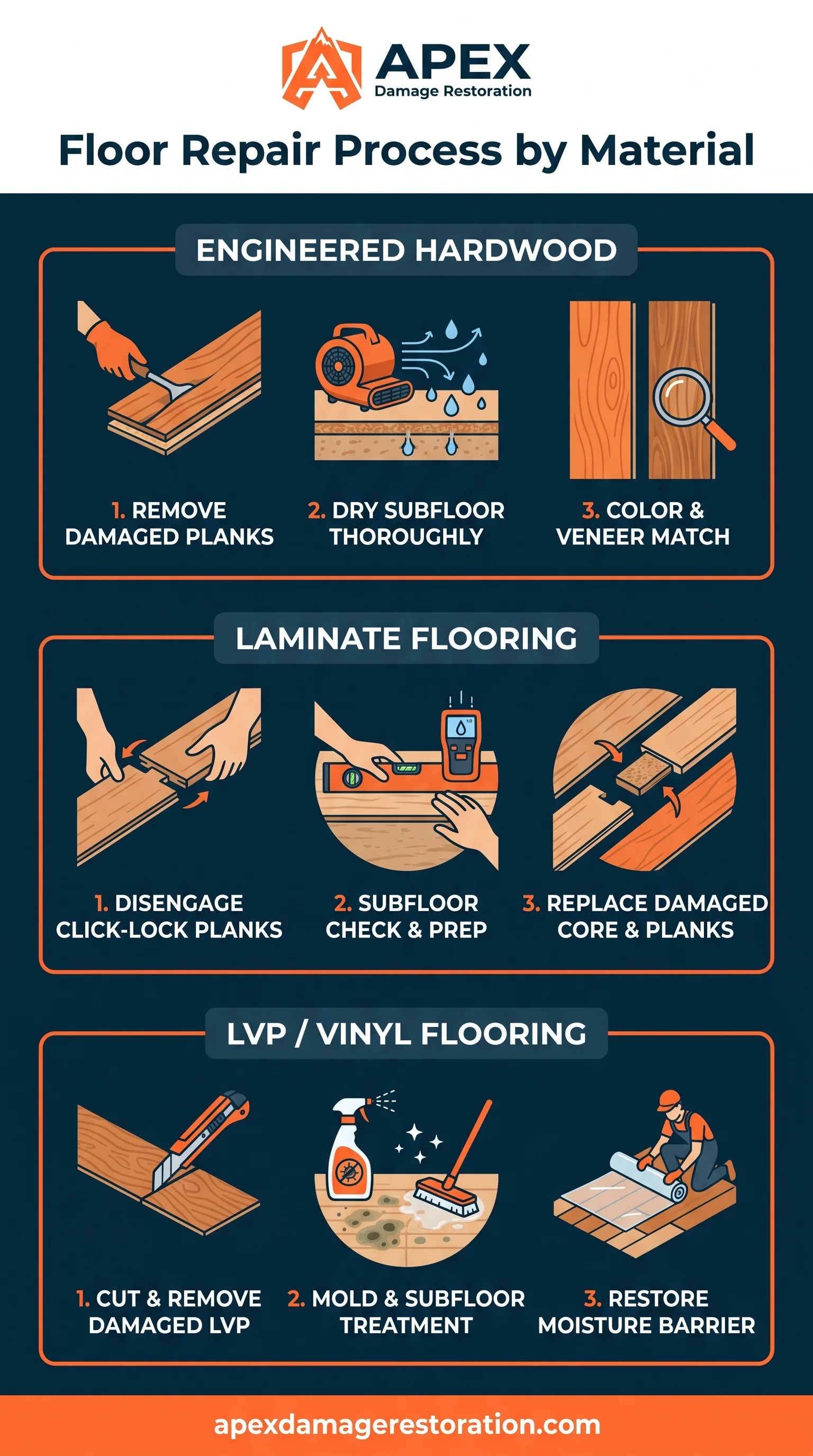
The repair process for water-damaged flooring follows a common sequence of removal, subfloor inspection, and reinstallation, though the specific steps vary by material.
Repairing Engineered Hardwood
- 1Remove the damaged engineered hardwood planks, cutting along seams where necessary to avoid disturbing surrounding boards.
- 2Inspect and dry the subfloor beneath the removed section using moisture meters to confirm the area has returned to a normal moisture range.
- 3Source replacement planks that match the existing veneer species, thickness, and finish.
- 4Install the replacement planks using the same method as the original installation, whether glue-down, floating, or nail-down.
- 5Seal the seams and edges of the new planks to restore moisture resistance at the repair site.
Because engineered hardwood has a thin veneer layer, sanding and refinishing the repaired section is typically limited to light touch-up rather than a full resurface.
Repairing Laminate Flooring
- 1Remove the swollen or delaminated laminate planks by disengaging the click-lock seams, working outward from the damaged area.
- 2Inspect the subfloor for moisture, staining, or mold, and dry it fully before proceeding.
- 3Replace the underlayment beneath the removed planks if it shows signs of saturation.
- 4Install new laminate planks that match the existing product's pattern, thickness, and locking profile.
- 5Reconnect the click-lock seams and verify the new planks sit flush with the surrounding floor.
Laminate repair always involves plank replacement rather than refinishing, since the fiberboard core cannot be sanded or resurfaced.
Repairing LVP/Vinyl Flooring
- 1Remove the affected LVP or vinyl planks, cutting adhesive-backed sections free or disengaging click-lock seams as applicable.
- 2Inspect the subfloor for moisture retention, mold growth, or weakening, since vinyl's water resistance can mask subfloor damage.
- 3Dry and treat the subfloor, addressing any mold growth before reinstalling flooring.
- 4Install replacement LVP or vinyl planks matched to the existing product line and finish.
- 5Reseal seams and transitions to restore the moisture barrier at the repair site.
LVP and vinyl repairs frequently focus more heavily on subfloor remediation than on the visible flooring material itself, since the surface layer often withstands the initial water exposure.
Does Insurance Cover Water Damage to Floors?
Homeowners insurance can cover water damage to flooring when the damage results from a sudden and accidental event, such as a burst pipe, while damage from gradual leaks or long-term moisture exposure is typically excluded. This distinction between sudden and gradual damage determines coverage eligibility across most standard homeowners policies, and the sudden versus gradual water damage guide explains how insurers evaluate this distinction in detail.
Flooring is generally covered as part of the dwelling coverage section of a homeowners policy when the underlying cause of damage is covered, since flooring is a fixed component of the structure rather than personal property. Documenting the damage with photographs, retaining damaged flooring samples when possible, and recording the date the damage was discovered support a claim regardless of flooring material. For a broader overview of coverage triggers, exclusions, and the claims process, see the water damage insurance guide.
When to Call a Professional Restoration Company
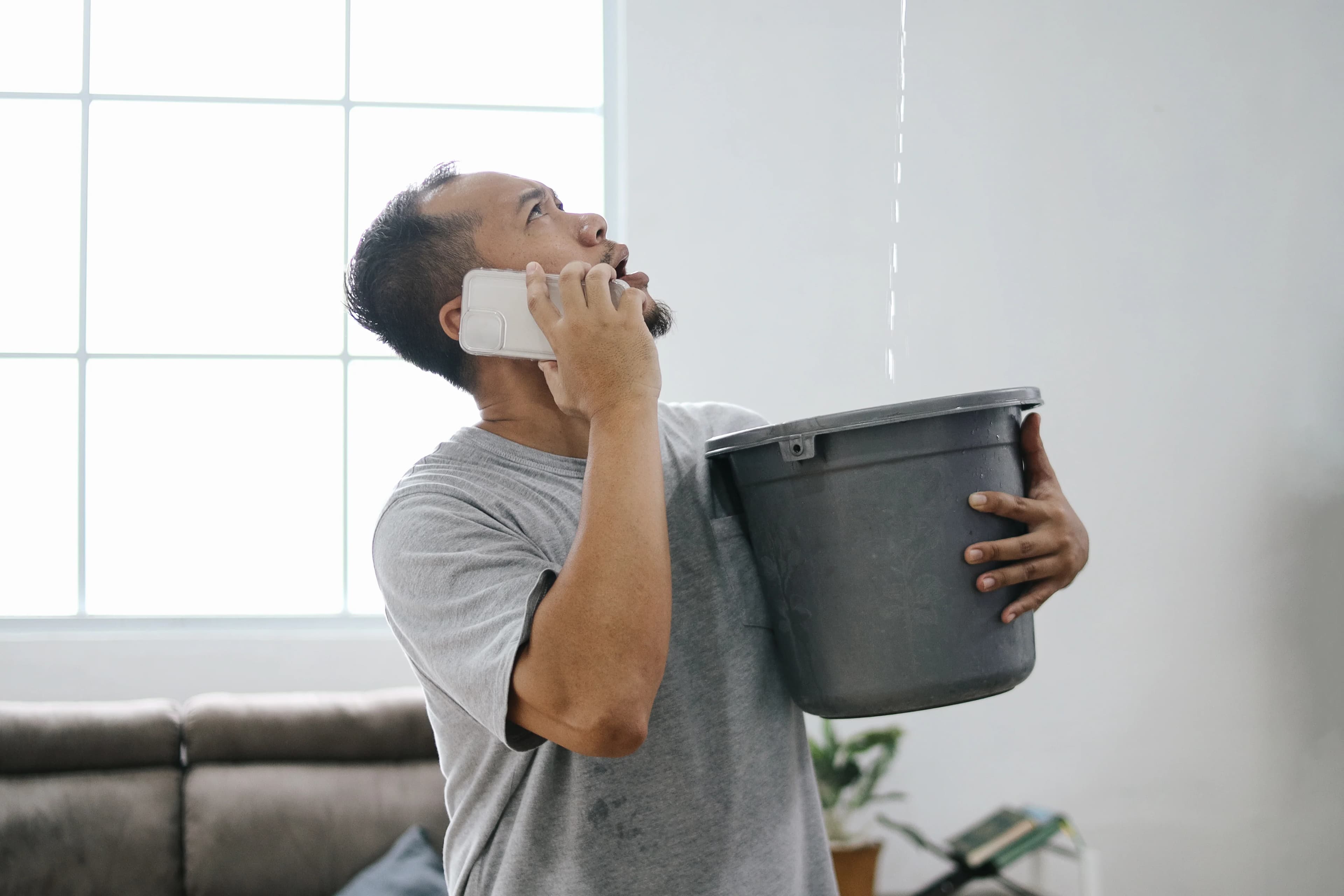
A professional restoration company should be called when standing water has been present for more than 24 to 48 hours, when the subfloor shows signs of structural weakening, or when mold growth is visible or suspected beneath the flooring. DIY drying methods using household fans and dehumidifiers can address minor surface moisture on water-resistant materials, but they cannot reliably dry a saturated subfloor or verify moisture levels with the accuracy of professional-grade meters.
Subfloor and structural concerns require professional assessment because water trapped beneath flooring can weaken plywood or OSB subflooring in ways that are not visible from above. Mold can begin developing within 24 to 48 hours of water exposure in a warm, humid environment, and mold remediation requires specialized containment and treatment procedures beyond standard drying equipment. Insurance claims also benefit from professional documentation, since a licensed restoration company can provide moisture readings, drying logs, and damage assessments that support a claim more effectively than homeowner-collected evidence. Response speed affects the outcome directly, since flooring and subfloor materials sustain more permanent damage the longer they remain wet.
Apex Damage Restoration provides 24/7 emergency response for water-damaged flooring throughout the Aurora, Colorado area, with IICRC-trained technicians who assess flooring and subfloor damage across hardwood, laminate, and vinyl materials. Apex Damage Restoration also coordinates directly with insurance carriers to document moisture readings, drying progress, and repair scope, which supports claims involving flooring coverage. Homeowners uncertain whether their floor requires professional attention can review the complete water damage restoration process to understand what a full restoration involves before contacting a technician.
FAQ
Need Emergency Restoration Help Today?
Call Apex Damage Restoration now for fast priority dispatch across Aurora, CO, a written estimate before work begins, and direct insurance claims assistance.