
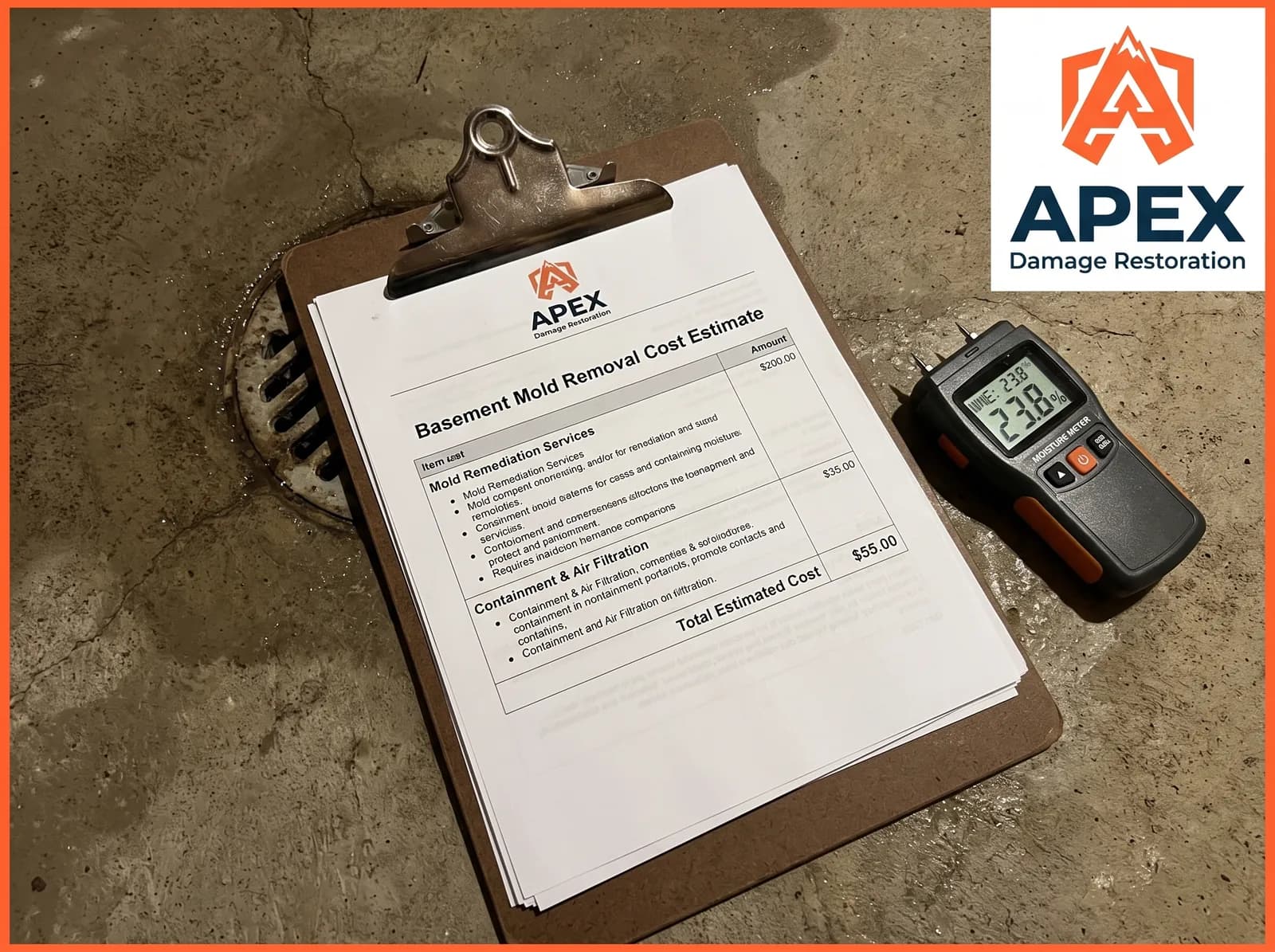
Basement mold removal costs $500 to $6,000 for most homes, with severe or behind-wall infestations reaching $15,000 or more. Professional remediation is typically priced at $10 to $25 per square foot, so a small, contained problem falls near the bottom of the range while a full-basement infestation with demolition falls near the top.
Basement mold spans a wider cost range than mold in most other rooms because basements combine several cost-driving conditions at once: below-grade moisture, finished surfaces that hide growth, and limited airflow that lets contamination spread before it becomes visible.
A homeowner in Aurora, Lakewood, Arvada, or another suburb should treat a quoted price as reasonable only after confirming the affected square footage, whether walls need to come down, and whether the underlying moisture source is included in the scope.
How Much Does Basement Mold Removal Cost by Severity and Size?
Basement mold removal cost depends primarily on two factors: how far the mold has spread and whether it sits on an exposed surface or behind finished materials. These two variables account for most of the difference between a $500 job and a $15,000 job.
Denver-specific pricing data from Angi shows an average local mold remediation cost of $2,056, with a typical range of $1,109 to $3,112 figures that fall within the partial-to-large basement tiers above and reflect what most homeowners actually pay for a contained, single-area basement infestation.
| Basement Mold Extent | Typical Cost | What's Typically Included |
|---|---|---|
| Small, single surface (under 10 sq ft) | $500 – $1,500 | HEPA cleaning, antimicrobial treatment, minimal containment |
| Partial basement / single room (10–100 sq ft) | $1,500 – $3,500 | Containment, HEPA filtration, removal of a limited section of affected material |
| Large or full basement (100–300 sq ft) | $3,500 – $6,000 | Full containment, drywall or paneling removal, structural drying |
| Extensive contamination (300+ sq ft) | $6,000 – $15,000+ | Demolition, disposal, reconstruction coordination, post-remediation clearance testing |
Surface Mold Cleaning Cost
Surface mold on an exposed, non-porous surface costs $500 to $1,500 to remove professionally. This scenario covers mold growing directly on unfinished concrete foundation walls, exposed floor joists, or a small patch on unpainted drywall in an unfinished basement. Surface cleaning involves HEPA vacuuming, antimicrobial treatment, and containment, but no demolition or material replacement.
Cost When Mold Is Behind Finished Walls or Paneling
Removing mold behind finished walls or paneling costs $1,500 to $6,000 or more, because the contractor must open the wall cavity to reach the contamination. Drywall replacement adds $1.50 to $3.50 per square foot, and insulation replacement adds $1.00 to $4.50 per square foot on top of the remediation labor itself. A basement finished with wood paneling, drywall, or carpet over concrete carries a higher cost than the same square footage of exposed surface because the finish materials must come out before remediation can begin.
Cost by Square Footage
Basement mold removal follows a per-square-foot rate of $10 to $25, which produces the following approximate costs by affected area:
- Under 10 square feet: $500 to $1,500
- 10 to 100 square feet (partial basement): $1,000 to $2,500
- 100 to 300 square feet (large or full basement): $2,500 to $6,000
- 300+ square feet (extensive contamination): $6,000 to $15,000+
Smaller jobs often land at the higher end of the per-square-foot range because containment setup, personal protective equipment, and equipment mobilization cost roughly the same whether the affected area is 20 square feet or 200.
Does Black Mold Cost More to Remove From a Basement?
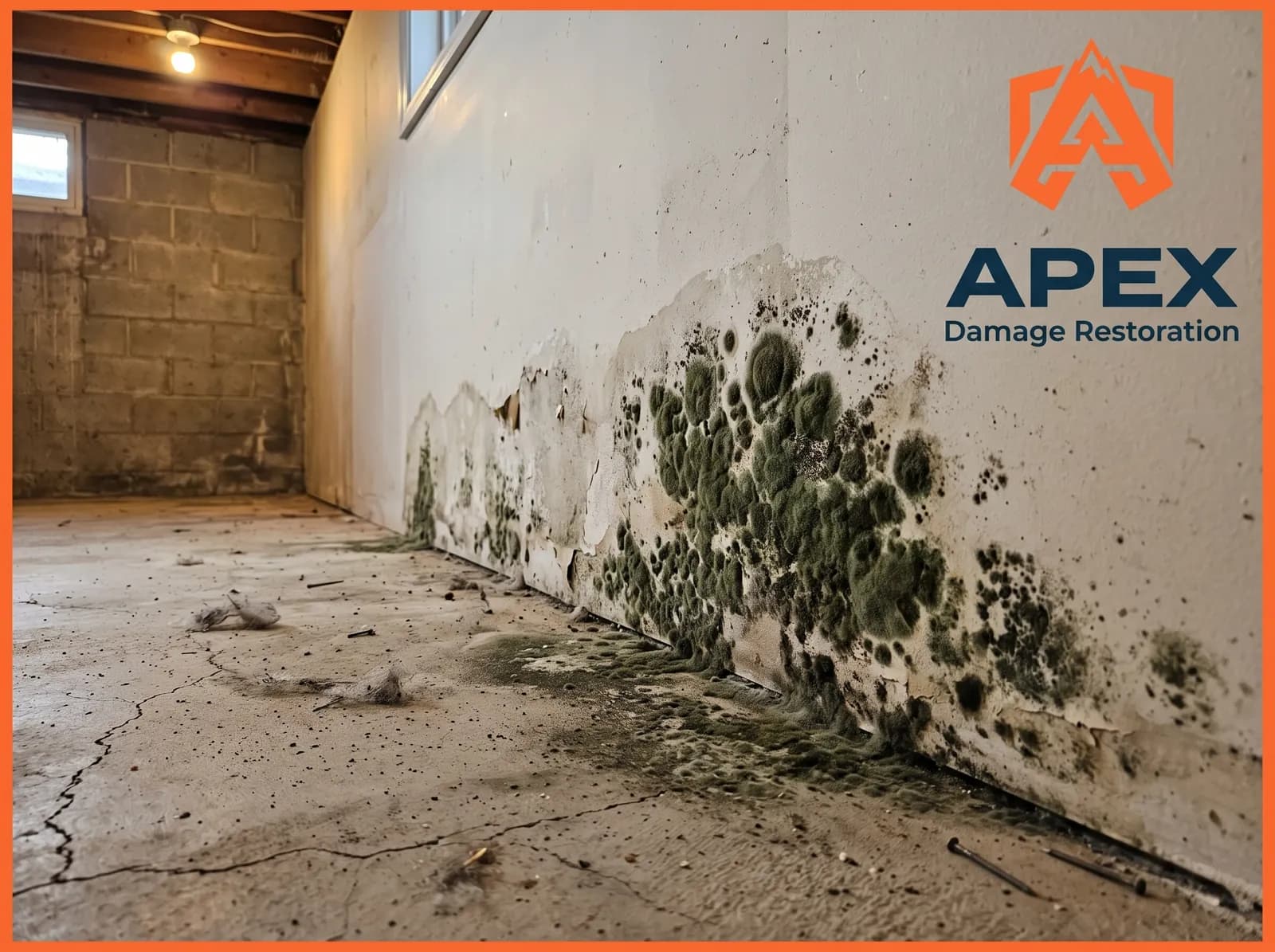
Black mold removal from a basement typically costs more than removal of common household molds, but the mold species itself is not the primary driver of the higher price. Stachybotrys chartarum, the mold commonly called black mold, thrives in the same damp, cellulose-rich conditions common to basements, wet drywall paper, cardboard, and wood framing.
The added cost comes from the conditions that allow black mold to establish and from the precautions remediation requires:
- Extended containment: Black mold remediation typically requires stricter negative-air containment to prevent spore migration to other rooms.
- Additional protective equipment: Technicians use a higher level of personal protective equipment when handling Stachybotrys, which adds labor cost.
- Confirmed porous-material removal: Because black mold favors cellulose materials, affected drywall, insulation, and framing are more likely to require full removal rather than surface treatment.
A basement with black mold growing on exposed concrete does not automatically cost more to remediate than a basement with a different mold species in the same condition. The premium applies when black mold has established in porous, hard-to-access materials, the same condition that raises cost for any mold type.
What Affects the Cost of Basement Mold Removal?
Beyond severity and square footage, three additional factors determine the final basement mold removal cost: the basement's finish state, how accessible the contaminated area is, and whether the underlying moisture source needs to be addressed as part of the job.
Finished vs. Unfinished Basement
A finished basement costs more to remediate than an unfinished basement because drywall, insulation, flooring, and paint must be removed and replaced in addition to the mold removal itself. Painting after new drywall installation adds $1 to $3 per square foot, and carpet replacement adds $2 to $8 per square foot including removal of the old carpet and padding. An unfinished basement with exposed concrete and open joists allows a contractor to treat surfaces directly, which keeps the project closer to the remediation-only cost.
Accessibility and Containment Requirements
Mold in hard-to-reach areas costs more to remove than mold on an open, visible surface. Mold behind finished walls, under flooring, inside wall cavities near plumbing chases, or around HVAC ductwork requires more labor time and more extensive containment barriers than mold on an exposed foundation wall. Containment prevents spores from spreading to the rest of the house during removal, and the complexity of building that containment rises with how enclosed the affected area is.
The Underlying Moisture Source
Basement mold removal cost estimates typically address only the existing contamination, not the moisture source that caused it. Common basement moisture sources include foundation cracks, sump pump failure, and condensation from the temperature difference between below-grade walls and interior air. Identifying and repairing that source is a separate cost, covered in the waterproofing section below, and remediation performed without fixing the source carries a high risk of the mold returning.
How Much Does Mold Inspection and Testing Cost?
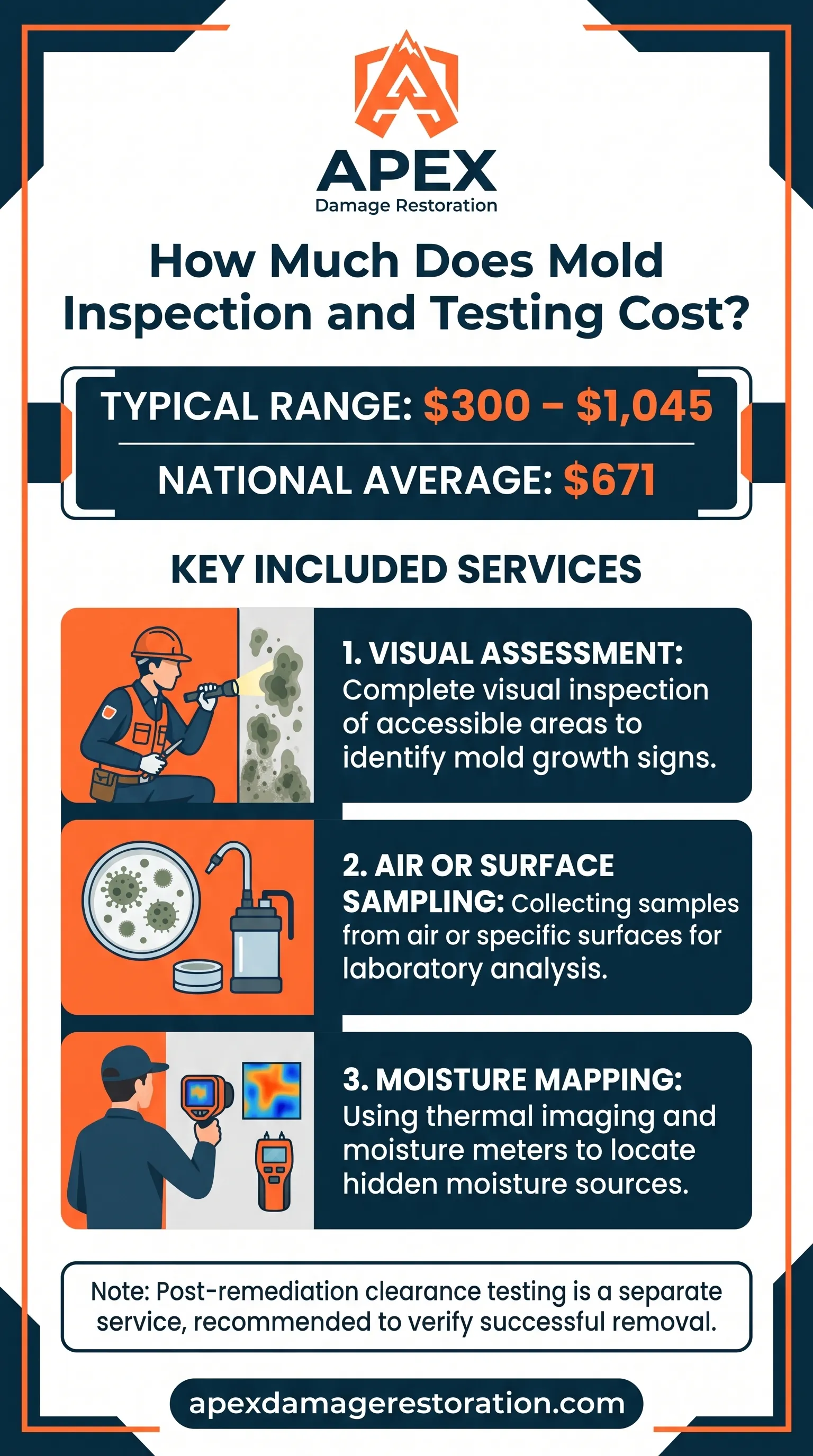
A professional mold inspection costs $300 to $1,045, with a national average around $671, and is priced separately from the removal work itself. Inspection and remediation are two distinct services: an inspection identifies whether mold is present and where, while remediation removes it. A full inspection typically includes:
- Visual assessment: A contractor examines visible surfaces and moisture-prone areas for signs of active or past growth.
- Air or surface sampling: Air sampling captures airborne spores for laboratory comparison against an outdoor baseline; surface sampling uses tape lifts or swabs to confirm species on a suspect area. Sampling and lab analysis typically add $250 to $500 to the inspection fee.
- Moisture mapping: Infrared cameras or moisture meters locate hidden dampness behind walls or under flooring that visual inspection alone would miss.
Post-remediation clearance testing, which confirms the remediation was successful, is billed separately from the initial inspection and is not automatically included in a remediation quote. A homeowner comparing quotes should confirm whether clearance testing is included or priced as an add-on.
Will Homeowners Insurance Cover Basement Mold Removal?
Homeowners insurance covers basement mold removal only when the mold results from a sudden and accidental covered event, not from gradual moisture or long-term neglect. Insurers draw a firm line between these two causes when evaluating a claim.
Likely covered: Mold following a burst pipe, a failed water heater, or storm-driven water intrusion that reaches the basement suddenly. In these cases, the mold is treated as consequential damage from a covered peril, and remediation is typically included alongside the water damage repair.
Likely excluded: Mold from chronic basement humidity, a slow foundation seep, or an undetected long-term leak. Insurers classify these as maintenance issues rather than covered perils, since the homeowner had an ongoing opportunity to identify and address the moisture before mold developed.
A standard homeowners policy also excludes flood-related mold; water that enters from outside the home during a flood event requires a separate flood insurance policy through the National Flood Insurance Program or a private flood carrier. Homeowners filing a mold-related claim should document the triggering event with photos, shut off the water source immediately, and contact their insurer before remediation begins, since delayed reporting can support an insurer's argument that the damage was gradual rather than sudden.
Fixing the Moisture Problem: Waterproofing and Related Costs
Basement mold remediation without a moisture fix does not prevent the mold from returning, since the underlying condition that allowed growth remains in place. Addressing the moisture source is a separate project from mold removal, priced independently.
- Interior waterproofing systems (interior drain tile with a sump pump) cost $3,000 to $8,000 and manage water after it enters the basement by collecting and pumping it out.
- Exterior waterproofing (excavation and membrane application at the foundation) costs $8,000 to $15,000 and stops water before it reaches the foundation wall, offering a more permanent fix at a higher upfront cost.
- Sump pump installation costs $600 to $2,500, depending on pump type, and is often the single most cost-effective step for a basement with a known water table or drainage issue.
A homeowner addressing recurring basement moisture from a foundation leak or grading issue should review the water damage restoration content on foundation and structural leaks for cause-specific guidance before selecting a waterproofing method.
Should You Get DIY vs. Professional Basement Mold Removal?
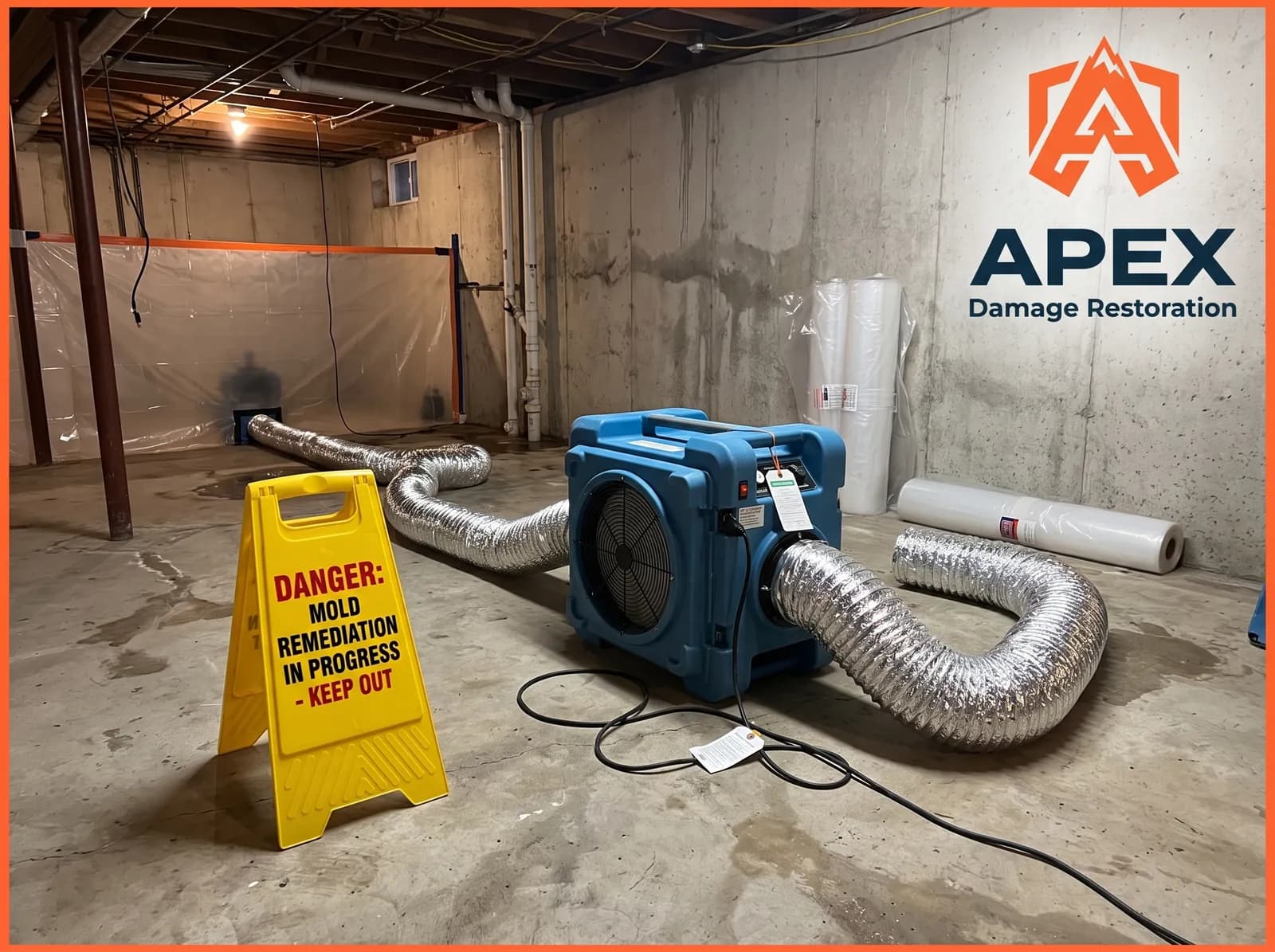
DIY basement mold cleanup is a reasonable option only for small, accessible, non-porous surface mold; professional remediation is necessary once the mold covers a larger area, sits on porous materials, or involves the HVAC system. The EPA sets roughly 10 square feet as the practical threshold above which professional remediation is recommended.
DIY cleanup may be appropriate when the mold:
- Covers less than approximately 10 square feet of surface area
- Grows on a hard, non-porous surface such as concrete, tile, or metal
- Is not connected to an active or unresolved water source
- Does not involve HVAC ductwork or return air
Professional remediation is necessary when the mold:
- Covers a large area or spans multiple sections of the basement
- Has spread into porous materials like drywall, insulation, or carpet padding
- Involves or is near HVAC ductwork, which can spread spores throughout the house
- Affects a household member with respiratory sensitivity, asthma, or a compromised immune system
DIY cleaning addresses visible surface growth but does not include the containment, air filtration, or moisture-source diagnosis that professional remediation provides, which is why most basement infestations beyond a small, contained spot warrant a professional assessment before cleanup begins.
How to Get an Accurate Basement Mold Removal Quote?
An accurate basement mold removal quote starts with a professional inspection that documents the affected square footage, the mold's location relative to finished surfaces, and the moisture source, rather than a verbal estimate based on a homeowner's description alone. A quote built without this documentation is more likely to change once work begins.
Before hiring a contractor, homeowners should:
- Confirm IICRC S520 certification. The Institute of Inspection, Cleaning and Restoration Certification's S520 standard governs professional mold remediation practice; certification indicates the contractor follows recognized containment and clearance procedures.
- Request a written scope of work. The scope should separate inspection, containment, removal, material replacement, and post-remediation clearance testing as distinct line items rather than a single lump sum.
- Ask whether the price is per-square-foot or fixed-scope. A per-square-foot quote can understate total cost if demolition or material replacement has not been scoped in advance; a fixed-scope quote based on a completed inspection carries less risk of change orders.
- Verify moisture-source diagnosis is included. A quote limited to mold removal without addressing the underlying leak or humidity issue leaves the basement vulnerable to recurrence.
- Get the containment and clearance-testing plan in writing. This confirms the job includes verification that remediation succeeded, not just visible cleanup.
Need Emergency Restoration Help Today?
Call Apex Damage Restoration now for fast priority dispatch across Aurora, CO, a written estimate before work begins, and direct insurance claims assistance.