
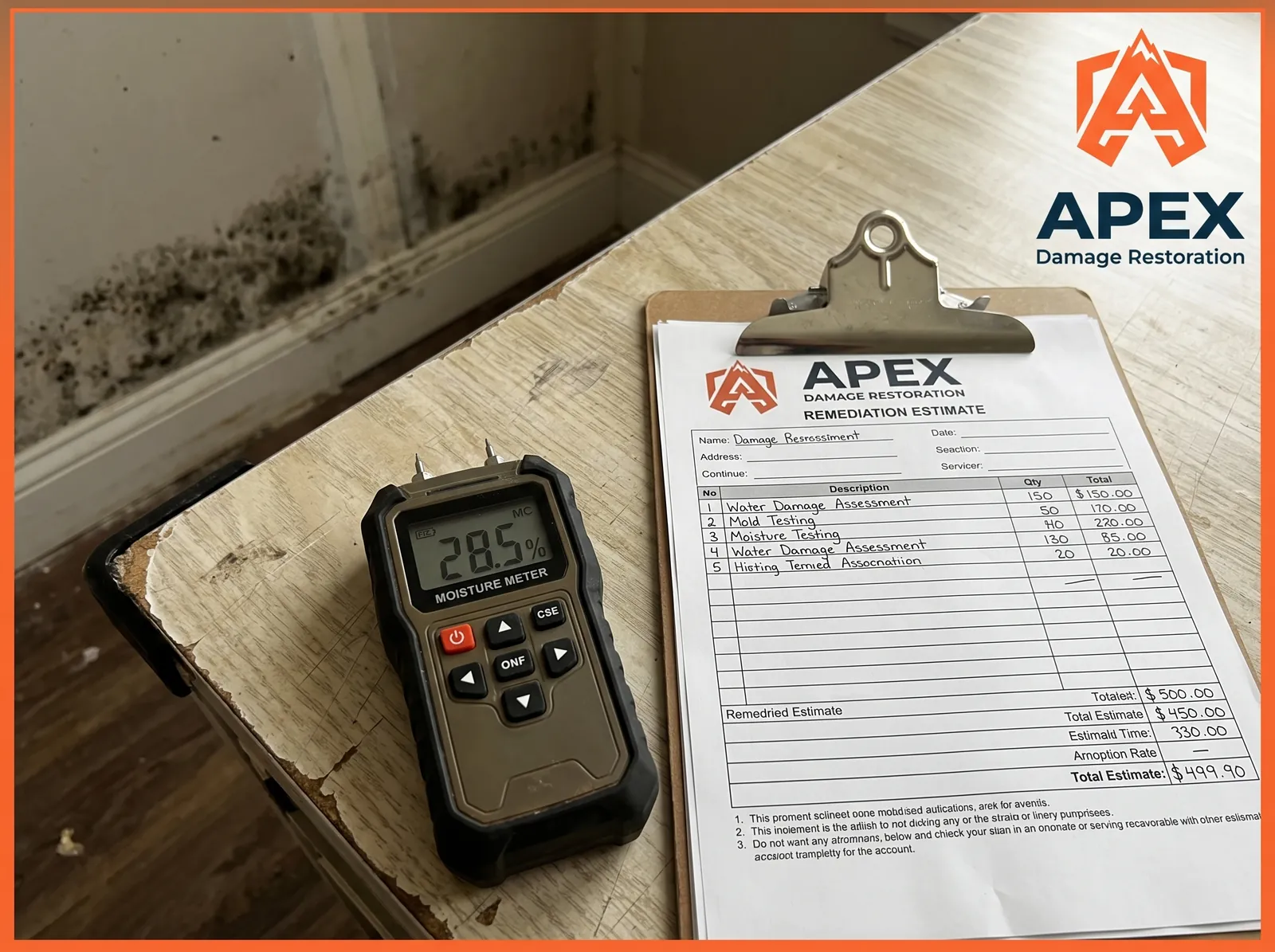
Mold remediation typically costs $10 to $25 per square foot, or $1,200 to $3,750 for most residential jobs, with a national average around $2,300 to $2,400. Small, contained jobs under 100 square feet often stay in the $500 to $1,500 range, while whole-house or severe infestations can reach $10,000 to $30,000 or more. Final cost depends on the square footage affected, the mold's location within the home, its type, and how accessible the affected area is.
| Job size | Typical cost range |
|---|---|
| Small/spot treatment (under 100 sq ft) | $500–$1,500 |
| Average residential job | $1,200–$3,750 |
| Whole-house or severe infestation | $10,000–$30,000+ |
How Much Does Mold Remediation Cost in the Denver Metro Area?
Mold remediation costs in the Denver metro area generally track national pricing, with local project data placing the average completed job between $1,804 and $2,130 depending on the city. Denver-area homeowners pay an average of $1,804 to $1,970 per completed project, based on regional project-cost data covering dozens of completed local jobs, with a per-square-foot rate of $10 to $21. Colorado homeowners pay a comparable average of $1,955 to $2,130 per project, with a per-square-foot rate of $9 to $19 in the same regional dataset.
These local averages sit within the national $1,200 to $3,750 range, since Colorado's per-square-foot rates fall inside the broader $10 to $25 national band rather than significantly above or below it. Aurora and the surrounding Denver metro suburbs typically fall within this same regional pricing range, since labor rates and contractor overhead remain consistent across the metro area.
How Much Does Mold Remediation Cost Per Square Foot?
Mold remediation costs $10 to $25 per square foot on average, with the rate varying by accessibility, containment requirements, and job size. Contractors typically calculate a project's price by multiplying this per-square-foot rate by the affected area, then adding fixed costs such as equipment setup and a minimum service fee.
Confined or hard-to-reach spaces increase the per-square-foot rate. Crawl spaces and attics where technicians must crouch or work from a ladder take longer to treat, which raises labor cost above the rate charged for open, walk-in areas. This premium applies regardless of mold type, since it reflects labor time rather than remediation complexity.
Small Jobs vs. Whole-House Pricing Tiers
Job size determines which pricing tier applies to a mold remediation project. Jobs under 100 square feet typically fall in the $500 to $1,500 range and are often subject to a contractor's minimum service fee, since equipment setup and technician time create a cost floor regardless of the treated area. Jobs that cross 300 square feet or spread across multiple rooms escalate quickly beyond the standard per-square-foot rate, because they require additional containment barriers, longer negative-air equipment runtime, and coordination across separate work zones.
How Much Does Mold Remediation Cost by Location in Your Home?
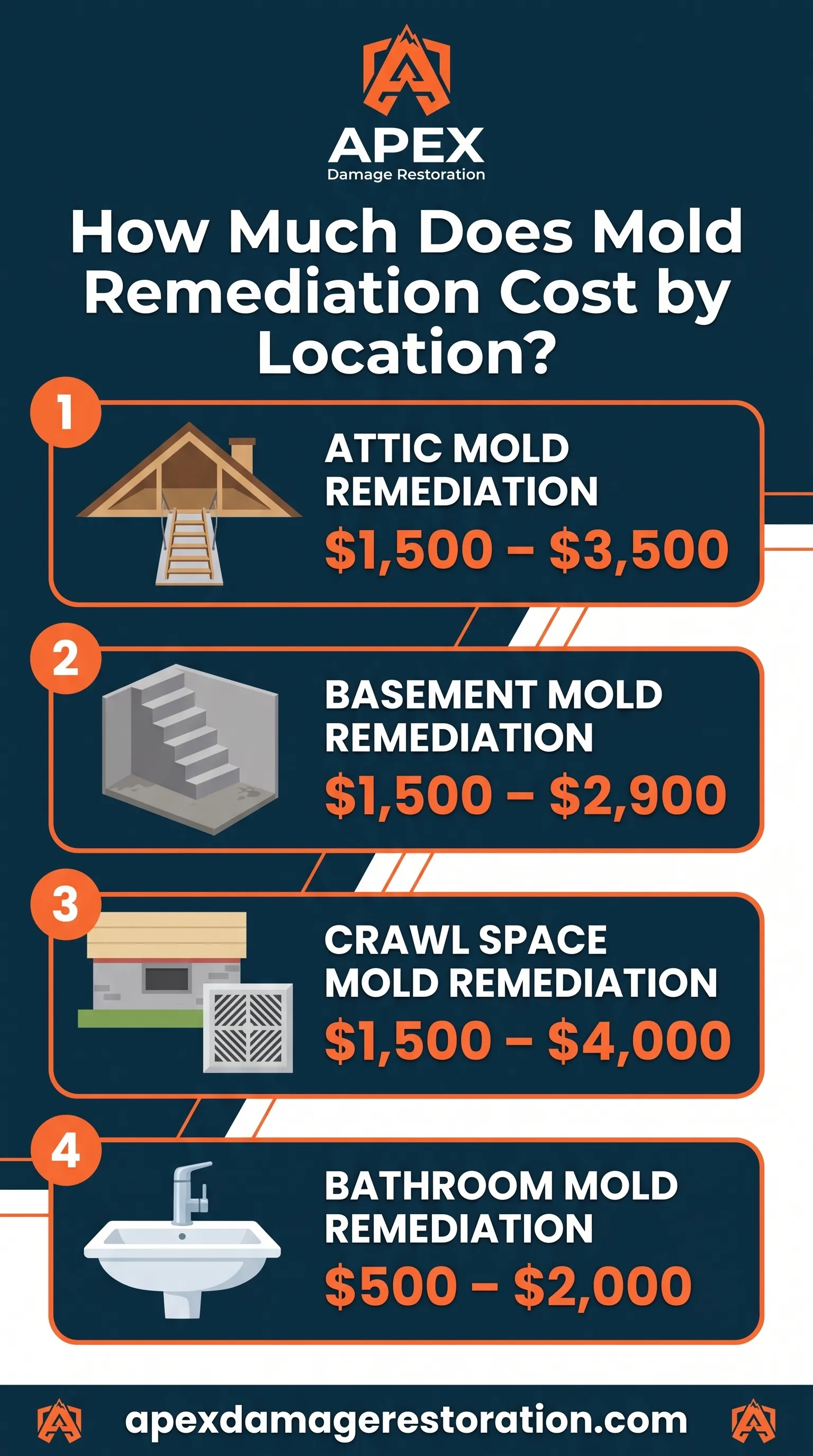
Mold remediation cost varies by location within the home because each area presents different accessibility, moisture sources, and construction materials. Attics and crawl spaces raise labor costs through confined-space access, while bathrooms and finished basements raise costs through plumbing proximity and material replacement needs.
Attic Mold Remediation Cost
Attic mold remediation typically costs $1,500 to $3,500 in the Denver metro area, based on regional project-cost data, with costs rising to $4,900 when a large or long-undetected roof leak requires extensive material handling and disposal. Roof leaks and inadequate ventilation are common moisture sources in attic mold cases, and a technician typically addresses both the mold and the underlying moisture source during the same visit.
Basement Mold Remediation Cost
Basement mold remediation cost depends primarily on whether the space is finished or unfinished. Unfinished basements with exposed concrete typically cost $1,500 to $2,900 in the Denver metro area, based on regional project-cost data, because technicians can access and clean surfaces directly without demolition. Finished basements raise costs beyond this range when drywall must be removed to reach mold growing behind wall cavities, since material removal and replacement add labor and reconstruction costs.
Crawl Space Mold Remediation Cost
Crawl space mold remediation costs $1,500 to $4,000 on average, depending on the space's size and accessibility. Low clearance in crawl spaces requires technicians to work in confined positions, which raises the effective labor cost above the rate for other tight-access areas. Ground moisture and inadequate vapor barriers are frequent contributors to crawl space mold, making moisture-source correction part of most remediation quotes for this area.
Bathroom Mold Remediation Cost
Bathroom mold remediation costs $500 to $2,000 on average, since the surface mold common in bathrooms is among the easiest types to remove. Bathroom mold typically grows on grout, caulk, and painted drywall surfaces exposed to routine humidity rather than a specific leak event. Costs rise toward the higher end of the range when plumbing damage has affected the subfloor or wall cavity, since material replacement adds labor and reconstruction costs beyond surface cleaning.
How Much Does Black Mold Remediation Cost?
Black mold (Stachybotrys chartarum) remediation typically costs 10 to 25% more than common mold remediation, due to stricter containment and personal protective equipment requirements. This premium applies once a species has been confirmed through lab testing, since color alone does not confirm the mold type, and several common mold species also appear dark or black.
The added cost of confirmed black mold remediation comes from full-face respirators, higher-grade HEPA filtration, and sealed waste handling procedures required under IICRC S520 protocols. Containment level also affects price: a Level 1 job (isolated, small-area contamination) costs less than a Level 3 or Level 4 job, which requires full negative-air containment and decontamination chambers due to a larger contaminated area or occupied, sensitive spaces such as HVAC systems.
How Much Does Residential vs. Commercial Mold Remediation Cost?
Residential and commercial mold remediation costs differ primarily in scale, system complexity, and compliance requirements rather than in the underlying per-square-foot rate. Residential projects generally follow the ranges outlined above, while commercial projects introduce additional cost drivers tied to building size and business operations.
Commercial Mold Remediation Cost
Commercial mold remediation cost is driven by property scale, HVAC system complexity, and compliance obligations rather than a fixed national range, since commercial buildings vary widely in square footage and system design. Large HVAC systems in commercial buildings require specialized duct remediation that residential projects rarely need, and business-interruption pressure often requires accelerated timelines that increase labor costs. Property managers and landlords also face liability and regulatory compliance requirements, such as documentation for tenant notification or health-code standards, that add administrative and inspection costs beyond the remediation work itself. Because commercial pricing depends heavily on the specific building and industry, an on-site assessment provides a more accurate figure than a general estimate.
What Else Adds to Your Mold Remediation Bill?
The per-square-foot remediation rate covers mold removal and containment but typically excludes testing, HVAC work, and structural repairs, which are billed as separate line items. Understanding these additional expenses helps explain why a final invoice often exceeds the base removal estimate.
Mold Testing & Inspection Cost
Mold testing typically costs $250 to $350 for standard sampling, or $450 to $800 for more comprehensive lab analysis covering multiple sample types. In the Denver Metro area, regional project-cost data places the average mold inspection between $326 and $407. Testing confirms mold species and airborne spore concentration before remediation begins, and post-remediation clearance testing, often billed separately, verifies that spore counts have returned to normal levels after the work is complete.
Containment & Air Filtration Setup
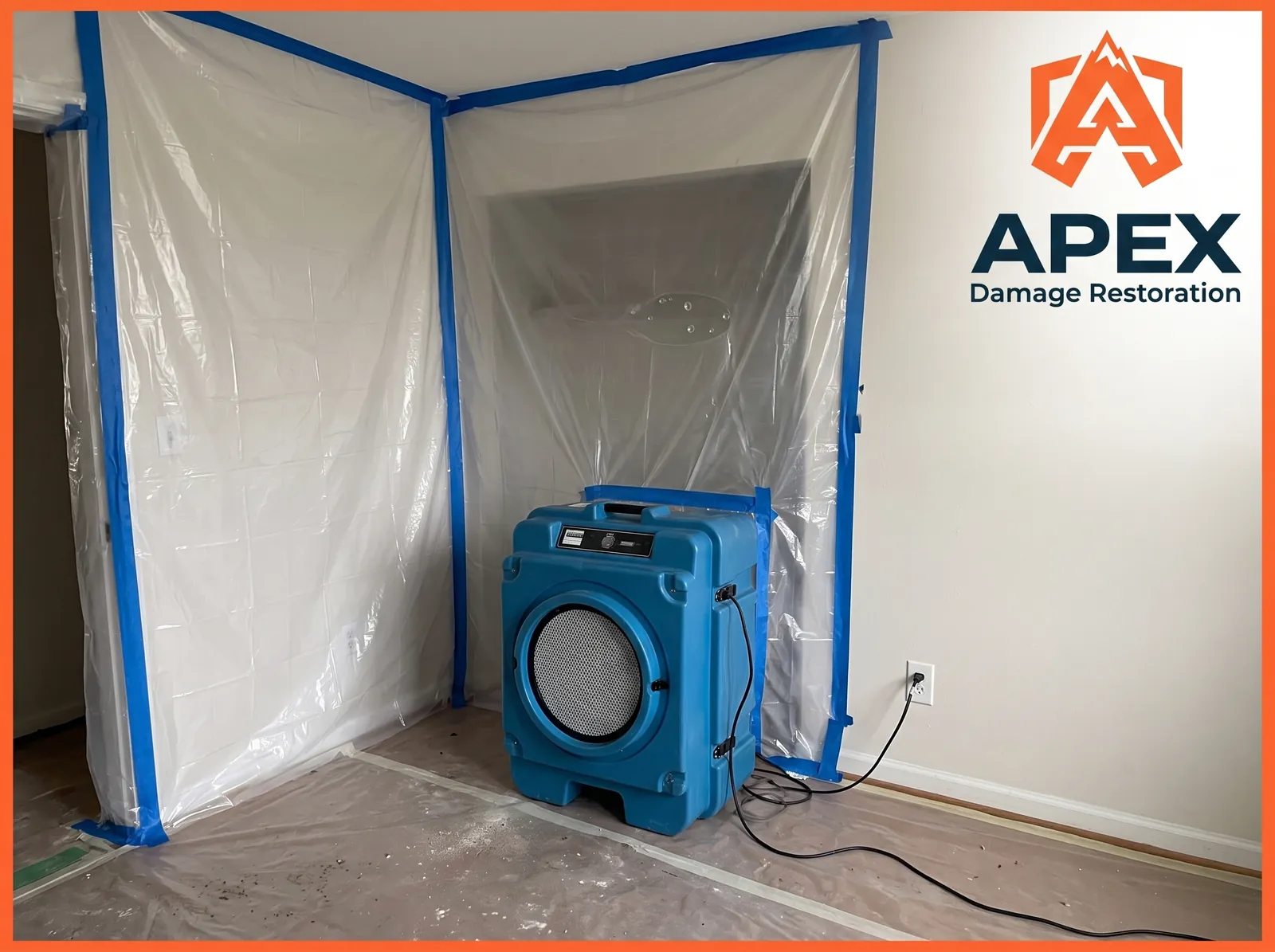
Containment and negative-air filtration setup isolates the work area to prevent spores from spreading to unaffected parts of the home during remediation. This equipment includes physical barriers, HEPA air scrubbers, and negative-air machines, with cost scaling to the containment level required; a small Level 1 job needs minimal setup, while a Level 3 or 4 job requires full barrier systems and decontamination chambers.
HVAC/Duct Mold Remediation Cost
HVAC duct mold remediation is priced separately from surface remediation and typically costs $2,000 to $10,000 depending on system size. Mold growing inside ductwork can recontaminate a home after surface remediation is complete, so an HVAC inspection is a common recommendation whenever mold has been present near air handling equipment or return vents.
Drywall, Insulation & Structural Repair Costs
Drywall, insulation, and structural repairs are billed separately from the mold removal rate, since the base per-square-foot cost covers cleaning and treatment rather than reconstruction. Materials removed to access mold-affected wall cavities, including drywall, insulation, and in some cases subflooring, require replacement before a space returns to pre-loss condition, and this reconstruction cost is added to the remediation invoice as a distinct phase of the project.
What Affects Your Final Mold Remediation Cost?
Several factors combine to determine where a specific project lands within the ranges described above. Accessibility is the most significant factor: mold on exposed concrete in an unfinished basement costs less to remediate than mold behind finished drywall, since finished spaces require material removal to reach the contamination. The extent of spread also affects price, since a contained, single-room case costs less than mold that has spread through wall cavities, subflooring, or HVAC ductwork. The materials involved play a role as well; porous materials like drywall and insulation often require replacement rather than cleaning, while non-porous surfaces like concrete and tile can typically be treated and retained. Together, these factors explain why two jobs of similar square footage can carry different final costs.
Does Insurance Cover Mold Remediation?
Homeowners insurance typically covers mold remediation only when the mold resulted from a sudden, accidental covered peril, such as a burst pipe or water damage from firefighting activity. Under this standard, mold that develops because a pipe suddenly ruptured and caused water damage is generally covered, since the underlying water event itself qualifies as a covered peril.
Mold resulting from long-term neglect is typically excluded from coverage. Insurers generally deny claims for mold caused by ongoing high humidity, unaddressed leaks left unresolved over time, or flooding, since these causes are classified as preventable maintenance issues rather than sudden accidental events. A homeowner who ignores a slow, persistent leak for months before mold develops is less likely to have that remediation covered than one whose pipe burst without warning. Reviewing a policy's specific mold exclusions and coverage limits before filing a claim helps set accurate expectations for out-of-pocket cost.
How Much Does DIY Mold Removal vs. Professional Remediation Cost?
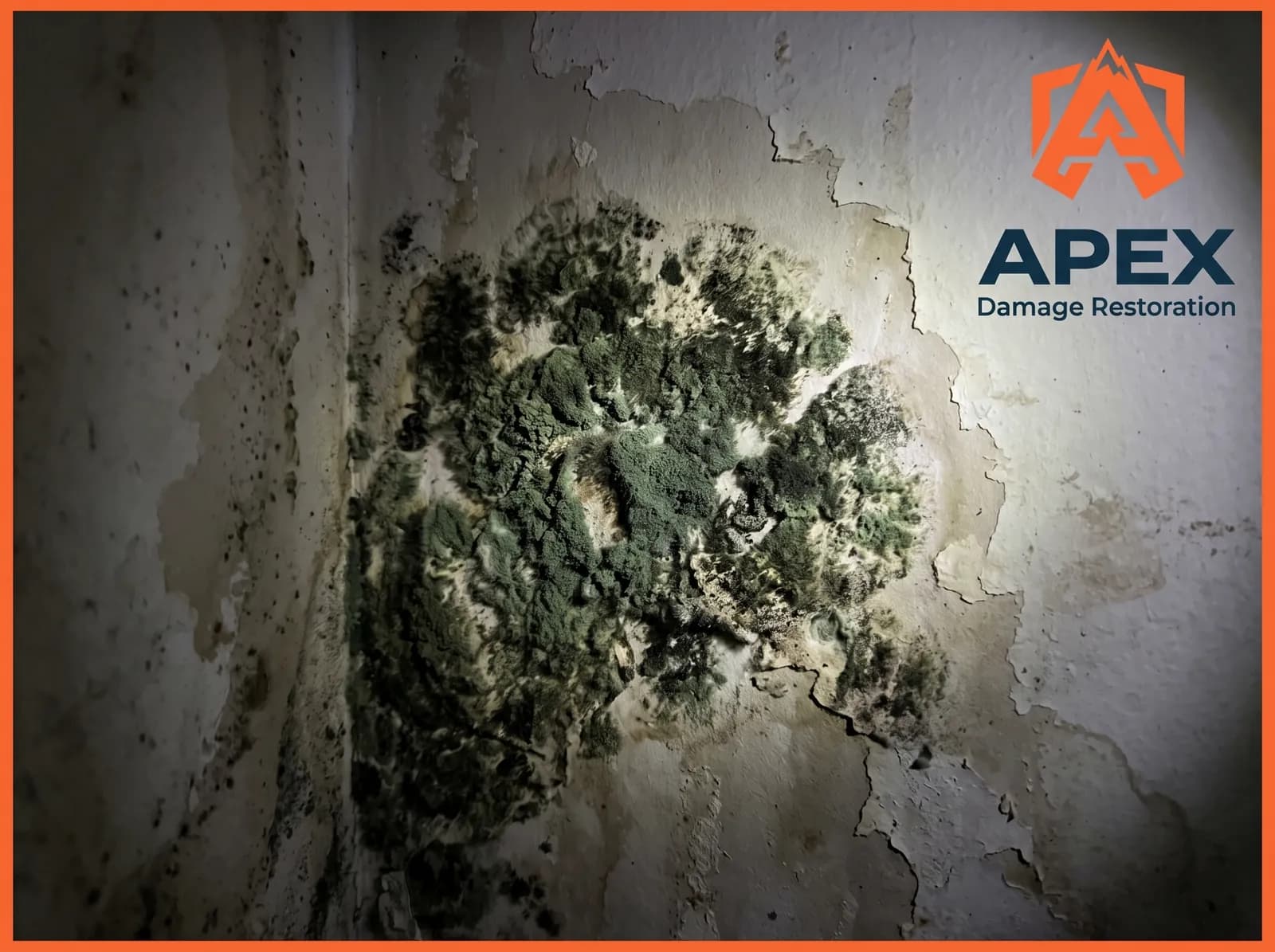
DIY mold removal supplies for a small, contained area typically cost $50 to $300, but cleaning visible mold does not verify or resolve the underlying moisture source that caused the growth. A homeowner cleaning visible mold from a bathroom tile surface, for example, may remove what's visible while leaving elevated moisture behind the wall untreated, allowing regrowth.
Professional remediation costs more than DIY cleaning products but includes moisture-source identification, containment to prevent spore spread during the work, and verification that hidden mold in wall cavities or ductwork has been addressed. For mold covering a small, contained area on a hard, non-porous surface, DIY cleaning may be sufficient. For mold that has spread, appears behind walls, or affects porous materials, professional remediation is necessary to prevent recurrence.
How to Get an Accurate Mold Remediation Quote?
An accurate mold remediation quote starts with an in-person inspection rather than a phone estimate, since square footage, accessibility, and mold type all affect the final price. A written quote should itemize testing, containment, removal, and any anticipated reconstruction as separate line items rather than a single lump sum, since this breakdown makes it possible to compare quotes from different contractors on equal terms.
A quote that rises significantly once work has already started is a common red flag, particularly when the increase isn't tied to a documented discovery, such as mold found behind a wall during demolition. Confirming in advance whether a quote includes post-remediation clearance testing also prevents an unexpected added cost at the end of the project, since clearance testing is sometimes billed separately from the initial estimate.
Frequently Asked Questions
Need Emergency Restoration Help Today?
Call Apex Damage Restoration now for fast priority dispatch across Aurora, CO, a written estimate before work begins, and direct insurance claims assistance.