
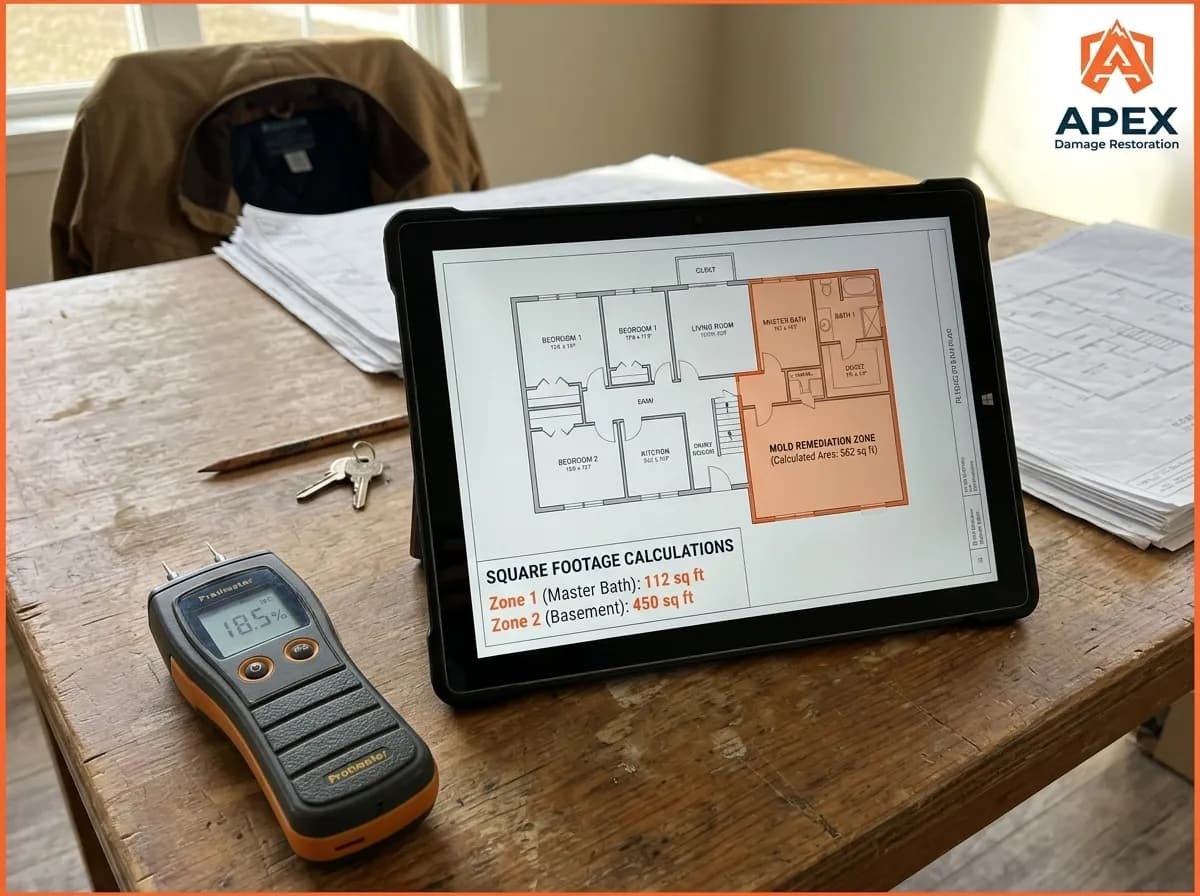
Professional mold removal costs $10 to $25 per square foot in the Denver Metro area, with most homeowners paying a total of $1,200 to $3,800 per project. A typical 100-square-foot job runs $1,000 to $2,500, while a 500-square-foot job runs $5,000 to $12,500. Local per-square-foot rates in Denver commonly fall between $10 and $21, placing most jobs at the lower to middle end of the national range.
What is The Average Mold Removal Cost Per Square Foot?
Most contractors apply a minimum project charge of $500 to $1,500 regardless of the affected area, since containment setup and labor mobilization cost the same whether the job covers 20 square feet or 90 square feet. Square footage, mold type, treatment method, and accessibility each adjust the final per-square-foot rate; the sections below break down each factor.
The table below summarizes the core pricing figures homeowners use to budget a project.
| Cost Metric | Typical Range |
|---|---|
| Cost per square foot | $10 – $25 |
| Average total project cost | $1,200 – $3,800 |
| National average | $2,300 – $2,400 |
| Minimum project charge | $500 – $1,500 |
| 100-square-foot job | $1,000 – $2,500 |
| 500-square-foot job | $5,000 – $12,500 |
How Much Does Mold Removal Cost by Job Size?
Job size is the single largest driver of total mold remediation cost, since contractors price most projects on a per-square-foot basis with a fixed minimum charge for small jobs.
Small or Spot Treatment (Under 100 Square Feet)
Spot treatment for an area under 100 square feet costs $500 to $2,500, driven mainly by the contractor's minimum project charge rather than the per-square-foot rate. A single bathroom ceiling patch or a small closet wall section typically falls at the low end of this range. Areas under 10 square feet on hard, non-porous surfaces qualify for homeowner-performed cleanup under EPA guidance, which removes professional labor costs entirely but still requires proper containment and personal protective equipment.
Average Residential Job
An average residential mold remediation job affecting 100 to 300 square feet costs $2,000 to $6,000. This size range covers common scenarios such as a finished basement wall section, an attic deck affected by roof leaks, or mold spreading across multiple bathroom surfaces. Jobs in this range typically involve one to three days of on-site work, including containment setup, material removal, antimicrobial treatment, and structural drying.
Whole-House or Severe Infestation
Whole-house mold remediation costs $10,000 to $30,000, with severely affected or larger homes reaching $50,000 or more. This scope applies when mold has spread through wall cavities, HVAC ductwork, or multiple rooms following prolonged water intrusion. Costs at this level include extensive demolition, disposal of contaminated building materials, HEPA air filtration throughout the structure, and post-remediation reconstruction.
What Affects Your Cost Per Square Foot?
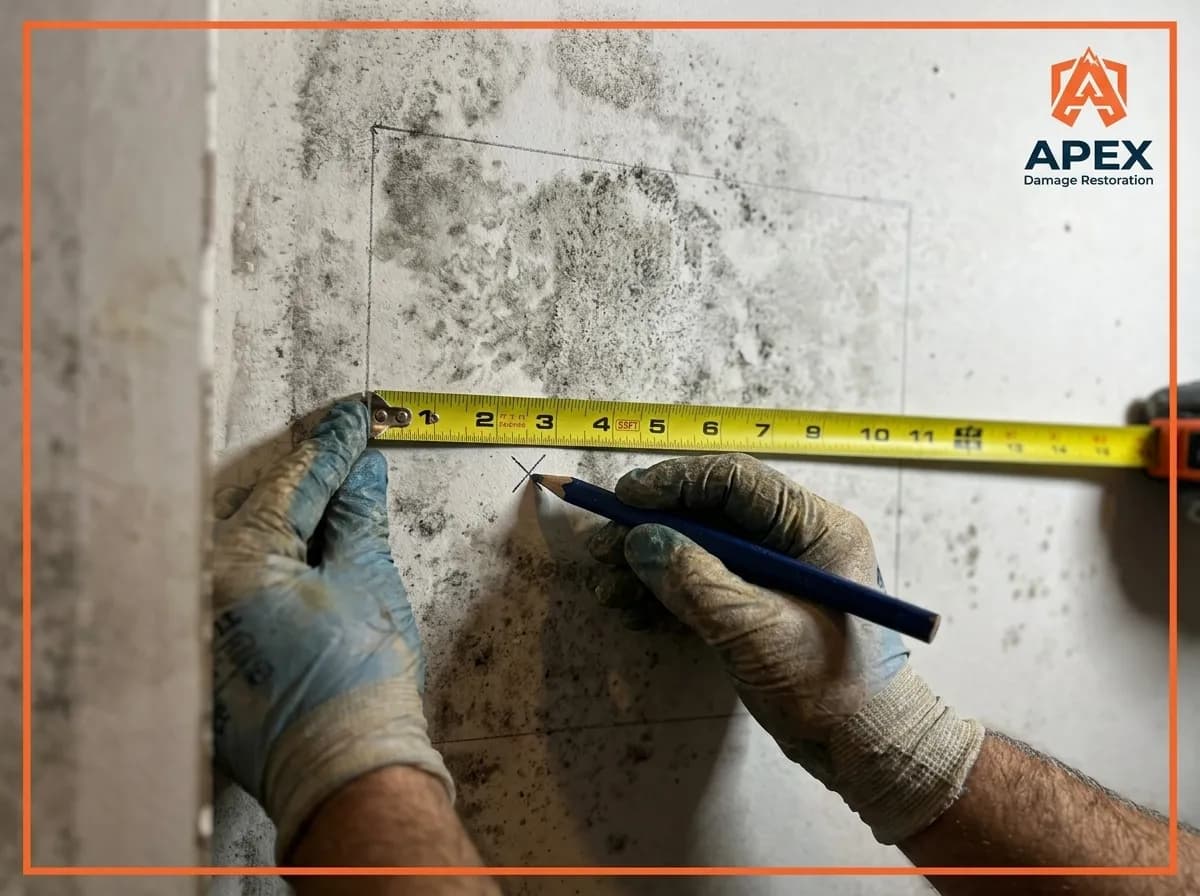
Four variables push a project's per-square-foot rate toward the low or high end of the $10 to $25 range: the mold's location in the home, the mold type, how accessible the affected area is, and the treatment method a contractor selects.
Mold's Location in the Home
Mold location affects cost because some areas require more labor time and specialized access equipment than others. Bathroom mold typically costs $500 to $1,000 to remediate due to small, accessible surfaces. Attic mold costs $1,000 to $7,000 for partial remediation and up to $15,000 for full attic remediation with structural or insulation damage. Crawl space mold costs $1,500 to $4,000, reflecting the confined workspace and limited ventilation. HVAC and ductwork mold costs $2,000 to $10,000, since the system typically requires disassembly, cleaning, and sanitizing rather than surface treatment alone.
Type of Mold, Including Black Mold Removal Cost
Mold type affects cost because hazardous species require additional protective equipment, stricter containment, and specialized disposal procedures. Black mold removal cost per square foot commonly runs at the higher end of the standard range, often $20 to $30 per square foot, compared with $10 to $18 per square foot for common non-toxic molds like mildew. The added cost covers full-face respirators, disposable protective suits, negative-air containment, and mycotoxin-safe disposal that lower-risk mold species do not require.
Accessibility of the Affected Area
Accessibility affects cost because hidden or hard-to-reach mold requires demolition to expose the growth before treatment can begin. Mold growing behind drywall, under flooring, or inside wall cavities pushes a project toward the higher end of the per-square-foot range, since contractors must remove and later replace finished surfaces. Mold on open, visible surfaces such as tile grout or exposed framing costs less because it requires no demolition to access.
Treatment Method Used
Treatment method affects cost because each approach requires different labor time, equipment, and materials. Mechanical removal, which involves physically scraping or sanding mold from a surface, is typically included in the base per-square-foot labor rate. Antimicrobial or biocide application adds a chemical treatment step after mechanical removal to kill remaining spores on porous surfaces. Encapsulation, which seals treated surfaces with a protective coating to prevent regrowth, adds $2 to $10 per square foot depending on the product and application area, with crawl space vapor barriers costing $2 to $4 per square foot and full encapsulation costing $3 to $10 per square foot. HEPA vacuuming and dry ice blasting are specialized techniques contractors use for delicate or heavily contaminated surfaces where scraping would spread spores or damage the substrate.
Is Mold Testing Included in Removal Cost?
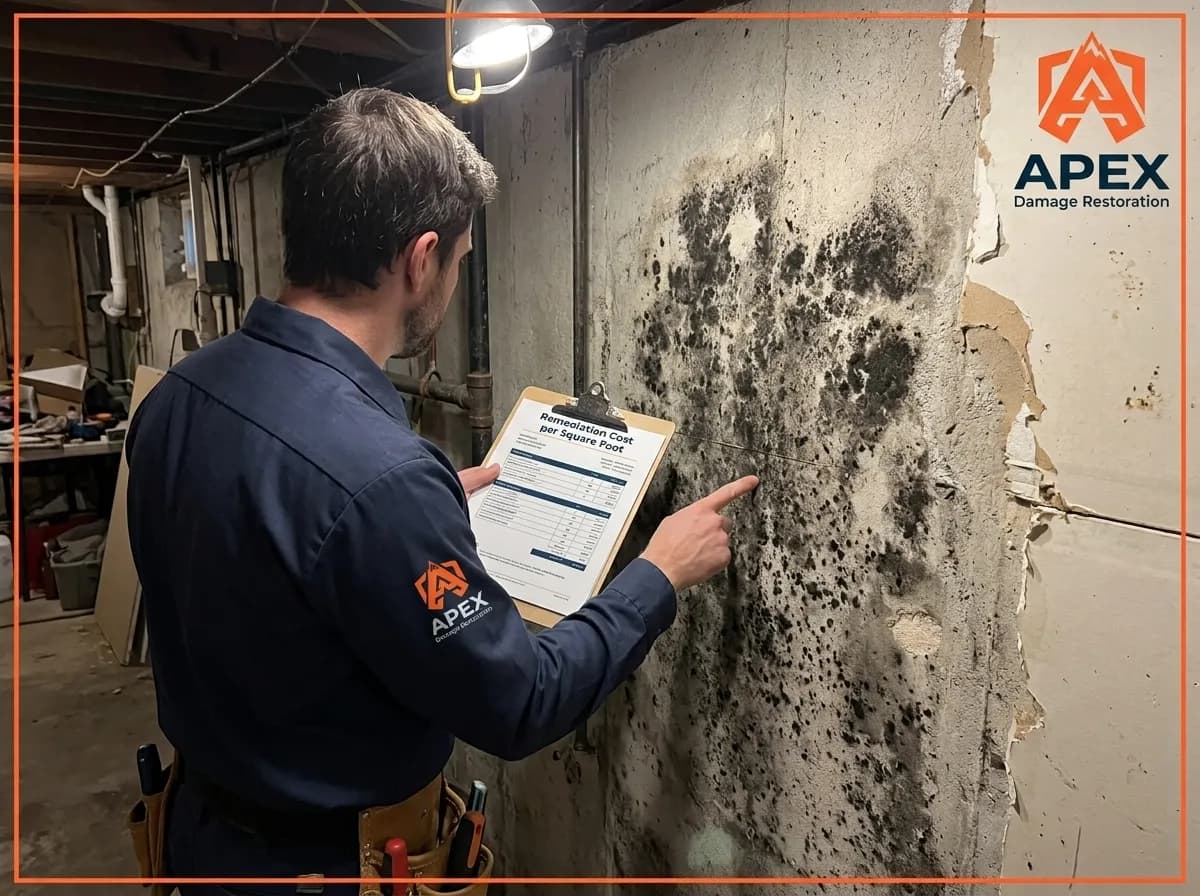
Mold testing is not automatically included in mold removal cost; most contractors price inspection, testing, and remediation as separate line items. Pre-remediation mold testing costs $250 to $800, depending on whether the service includes air sampling, surface sampling, or both. Post-remediation clearance testing, which confirms the remediation was successful, costs $150 to $600 and is billed separately from the initial test.
Some remediation contractors waive the pre-remediation testing fee when a homeowner signs a remediation contract, since visible mold does not always require lab confirmation before cleanup begins under EPA guidance. Post-remediation clearance testing is optional but recommended for black mold projects, insurance documentation, and real estate transactions, since it provides independent verification that spore levels have returned to normal before the work is considered complete.
DIY Mold Removal Cost vs. Professional Cost
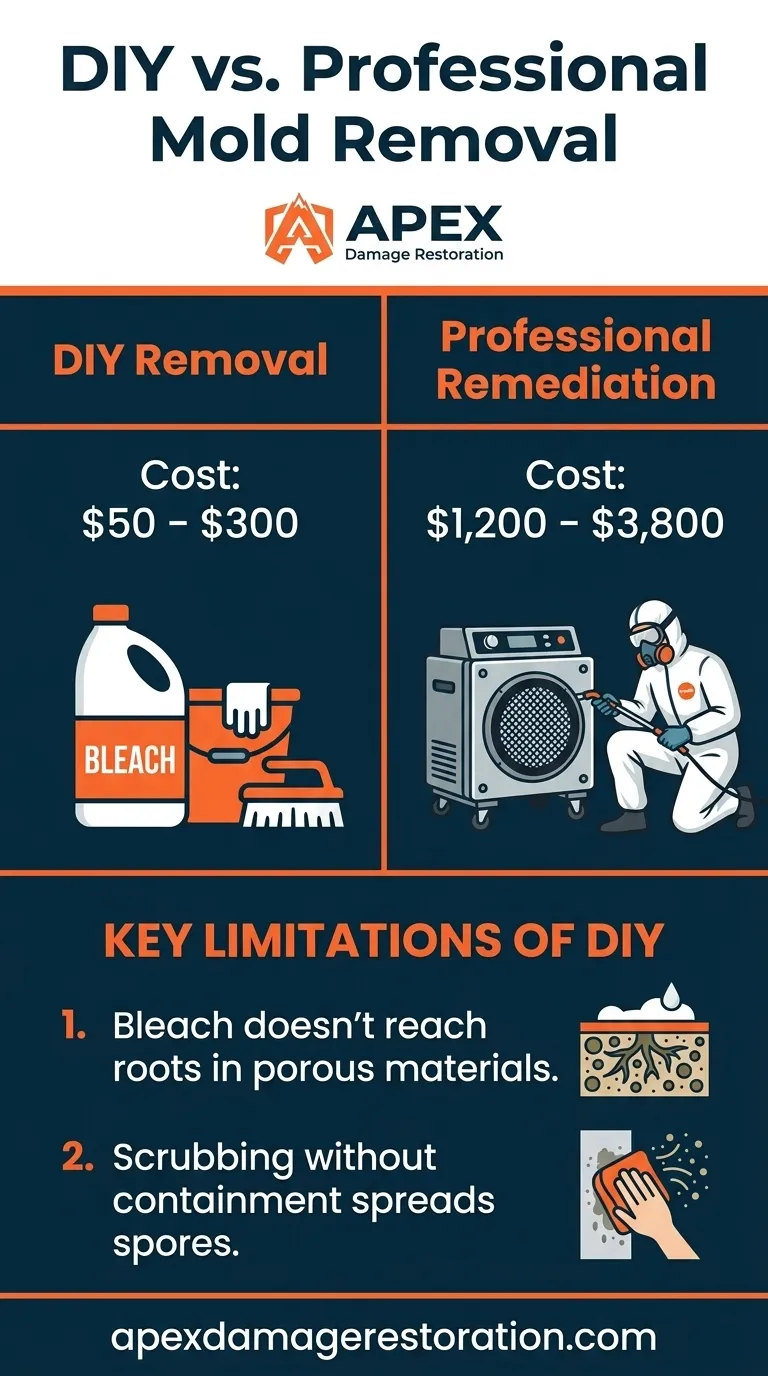
DIY mold removal costs $50 to $300 in products and protective equipment, compared with $1,200 to $3,800 for professional remediation of a comparable area. The EPA considers DIY removal appropriate only for visible mold covering less than 10 square feet on hard, non-porous surfaces, with the moisture source already corrected.
DIY removal carries two limitations professional remediation addresses directly. First, common household products like bleach do not penetrate porous materials such as drywall, wood, or insulation deeply enough to kill mold at the root, which allows regrowth within weeks even when the surface appears clean. Second, DIY scrubbing without negative-air containment releases spores into the surrounding air, spreading contamination to previously unaffected rooms. Professional remediation uses HEPA-filtered containment and EPA-registered biocides that address both limitations, which is why professional cost reflects equipment and expertise rather than markup on comparable cleaning supplies.
Does Insurance Cover Mold Removal Cost?
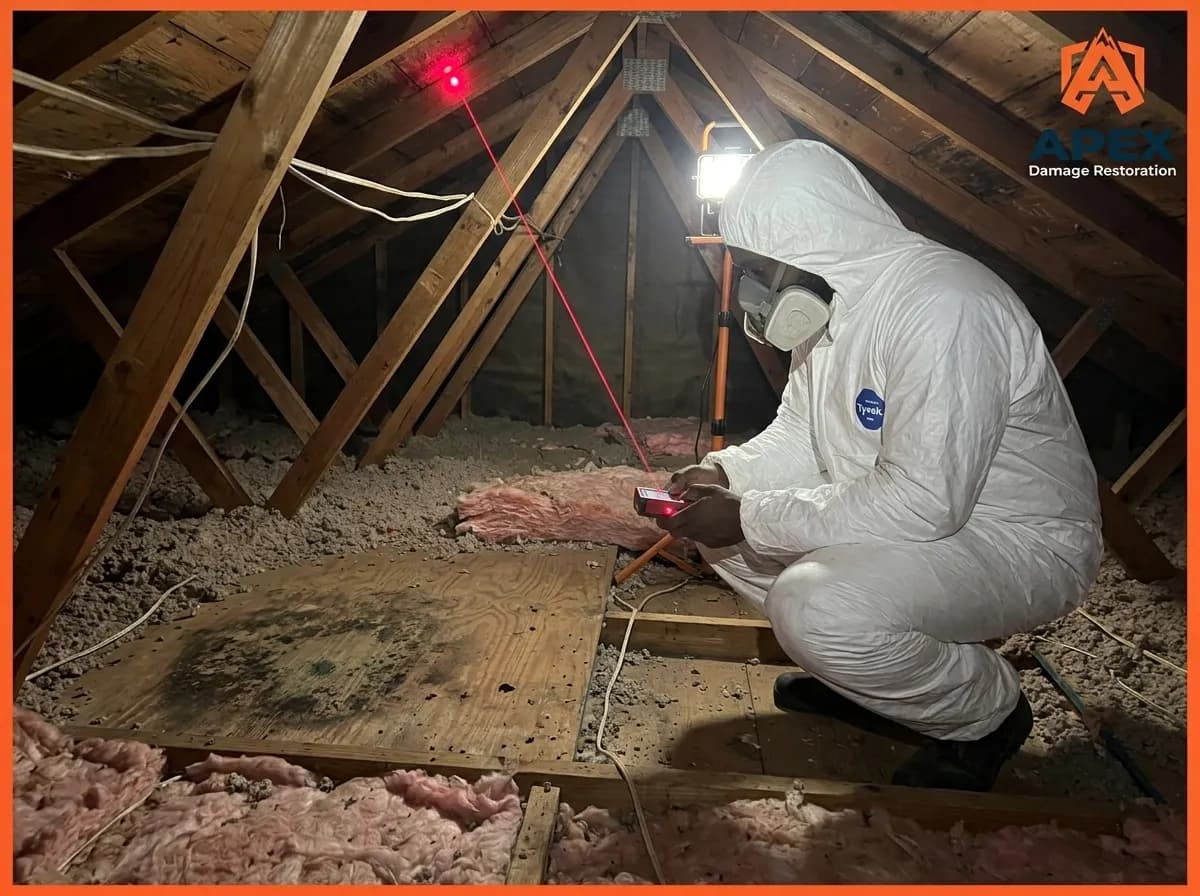
Homeowners insurance covers mold removal cost only when the mold resulted from a sudden, accidental event covered under the policy, such as a burst pipe or a failed appliance. Insurance typically excludes mold caused by long-term neglect, including gradual humidity buildup, an unrepaired slow leak, or delayed maintenance, since standard policies treat these as preventable conditions rather than covered perils.
Documentation strengthens a mold-related claim tied to a covered water event. Homeowners filing a claim should retain the source of the water intrusion, the date it occurred, and any mold testing results connecting the growth to that specific event. An insurer's per-square-foot reimbursement rate for approved claims generally matches standard market rates for the region, so a documented claim does not typically change the per-square-foot cost figures outlined above, only who pays them.
How To Get an Accurate Per-Square-Foot Quote?
An accurate mold removal quote requires an in-person or documented assessment of the affected square footage, mold location, and accessibility, since online estimates cannot account for hidden growth behind walls or inside HVAC systems. A written quote should itemize the per-square-foot remediation rate, any testing fees, and material replacement costs separately, so homeowners can compare quotes on equal terms rather than a single bundled total.
Need Emergency Restoration Help Today?
Call Apex Damage Restoration now for fast priority dispatch across Aurora, CO, a written estimate before work begins, and direct insurance claims assistance.