
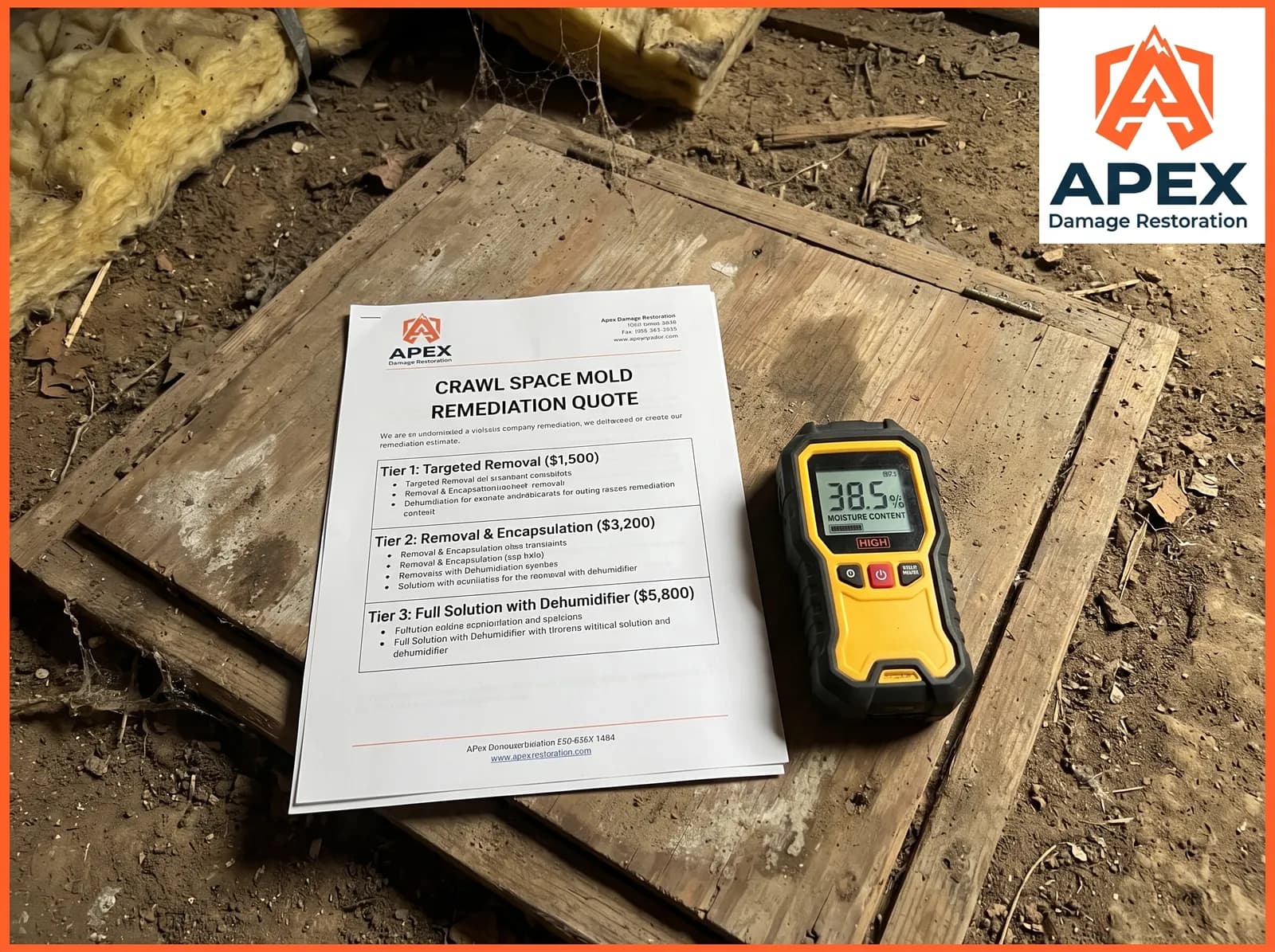
Crawl space mold removal typically costs $500 to $4,000, with most Denver Metro homeowners paying between $1,200 and $2,800 for a standard remediation job. The final price depends on the size of the crawl space, the severity of the infestation, and whether moisture control work is included alongside removal. A crawl space with surface mold on exposed wood costs less to treat than one with contaminated insulation or structural rot, since the second scenario requires material removal and replacement in addition to mold treatment.
Removal and remediation are not the same service. Removal refers to physically cleaning or removing mold from surfaces. Remediation includes removal plus the moisture-control work needed to stop the mold from returning, such as vapor barrier installation or encapsulation.
Cost by Mold Infestation Severity
Infestation severity is the single largest factor in crawl space mold removal cost because it determines how much material must be treated, removed, or replaced.
Minor Infestation Cost
A minor crawl space mold infestation costs $500 to $1,500 to remediate. Minor infestations involve surface mold on exposed floor joists, subflooring, or support beams without contaminated insulation. Treatment typically includes HEPA vacuuming, antimicrobial application, and a final clearance inspection.
Severe Infestation Cost
A severe crawl space mold infestation costs $2,500 to $6,000 or more to remediate. Severe cases involve extensive fungal growth across joists, subfloor, and insulation, often combined with soft or rotted wood. Treatment for severe infestations can include soda blasting to strip mold from wood surfaces, removal and disposal of contaminated insulation, and replacement of structurally compromised wood before moisture control work begins.
Cost Per Square Foot
Crawl space mold damage contractors typically charge $3 to $28 per square foot, depending on the removal method and the extent of contamination. Basic surface treatment falls at the lower end of that range, while jobs requiring soda blasting, material removal, or structural repair fall toward the higher end. The table below applies that per-square-foot range to common crawl space sizes.
| Crawl Space Size | Estimated Cost Range |
|---|---|
| 50 sq ft | $150 to $1,400 |
| 100 sq ft | $300 to $2,800 |
| 200 sq ft | $600 to $5,600 |
| 300 sq ft | $900 to $8,400 |
| 500 sq ft | $1,500 to $14,000 |
| 750 sq ft | $2,250 to $21,000 |
| 1,000 sq ft | $3,000 to $28,000 |
What Affects Crawl Space Mold Removal Cost?
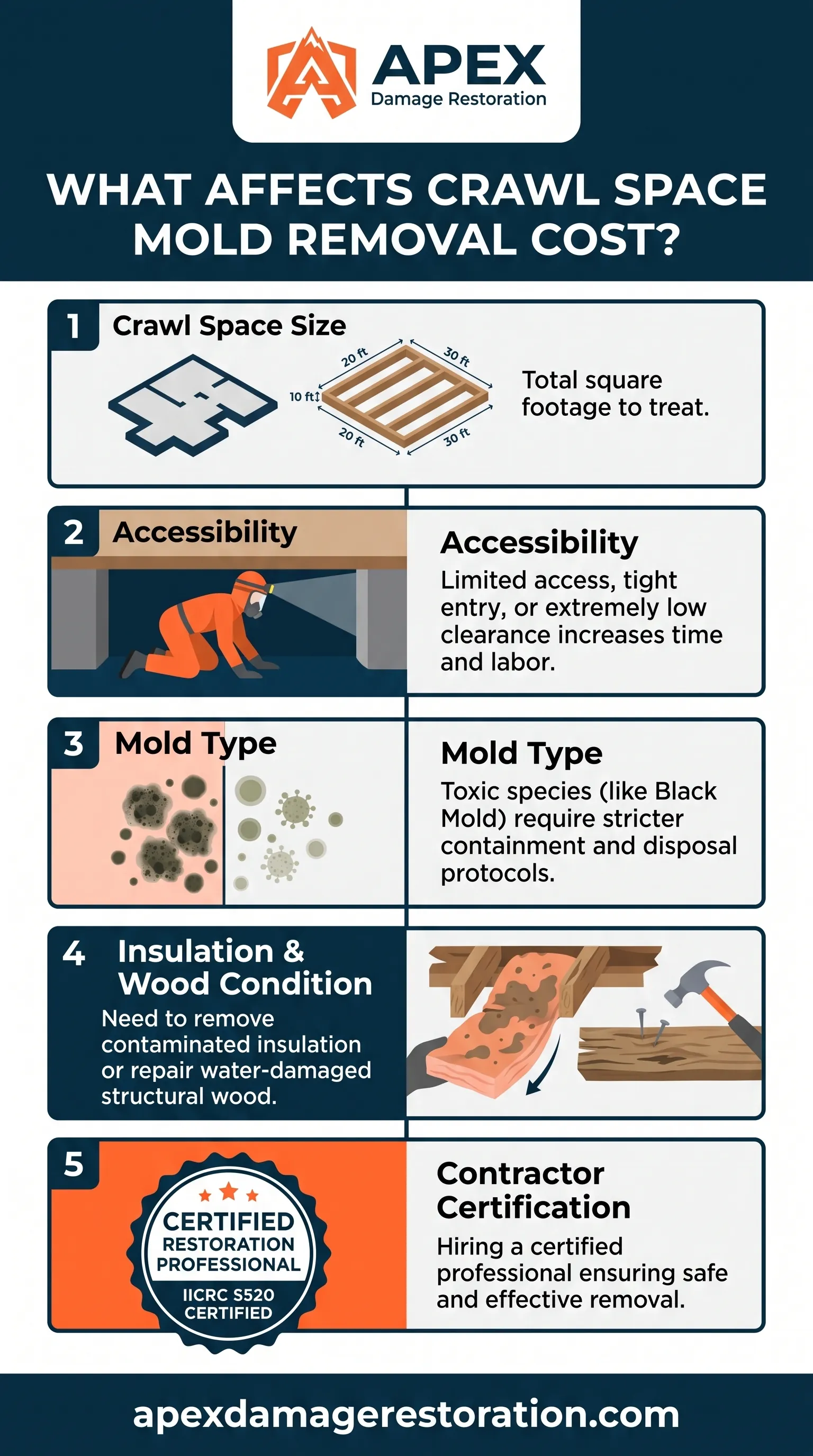
Crawl space mold removal cost depends on five primary factors: crawl space size, accessibility, mold type, insulation and wood condition, and contractor certification. Each factor changes labor time, material needs, or treatment complexity, which shifts the total price within the estimated range.
| Factor | Cost Impact |
|---|---|
| Crawl space size | Larger square footage increases material and labor costs |
| Accessibility | Low crawl height or a single restricted entry point raises labor time and cost |
| Mold type | Black mold (Stachybotrys) treatment often carries a premium over common molds |
| Insulation and wood condition | Contaminated insulation and rotted wood add removal and replacement costs |
| Contractor certification | IICRC S520-certified contractors typically price above uncertified providers |
Crawl Space Size and Accessibility
Crawl space size and accessibility affect labor time, which directly affects total cost. A larger crawl space requires more square footage of treatment, while a low-clearance crawl space with a single entry point slows a technician's ability to move equipment and materials, increasing labor hours for the same amount of mold coverage.
Black Mold vs. Other Mold Types
Black mold (Stachybotrys) removal typically costs more than removal of common molds such as Aspergillus or Penicillium. Stachybotrys requires stricter containment and disposal protocols under IICRC S520 guidelines, which increases labor and material costs compared with surface molds that respond to standard antimicrobial treatment.
Insulation and Structural Wood Replacement
Contaminated insulation and rotted structural wood add direct material and labor costs beyond mold treatment itself. Fiberglass insulation that has absorbed moisture and mold cannot be cleaned and must be removed and replaced, while joists or subflooring with active wood rot require structural repair before a contractor can certify the space as remediated.
Contractor Certification (IICRC S520)
An IICRC S520-certified contractor generally charges more than an uncertified provider because certification requires documented containment, testing, and clearance procedures. IICRC S520 is the recognized industry standard for mold remediation, and certified contractors follow it for containment barriers, negative air pressure, and post-remediation verification testing.
Moisture Control Costs (Beyond Mold Removal)
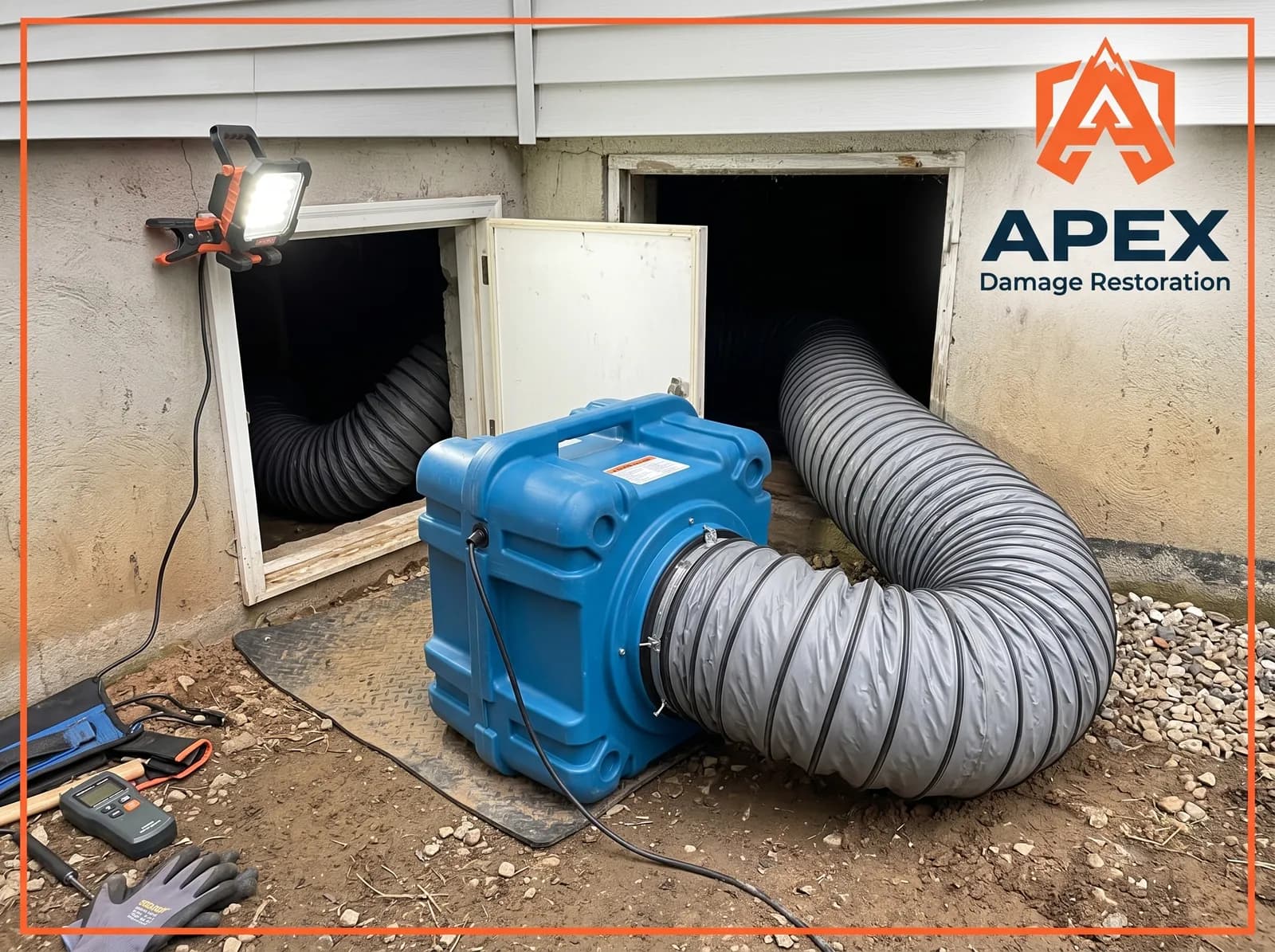
Mold removal without moisture control addresses the visible growth but not the underlying cause. Colorado's dry climate lowers baseline humidity risk compared with coastal regions, but crawl spaces without a vapor barrier still draw ground moisture that supports regrowth. The table below breaks down typical moisture-control add-on costs.
| Moisture Control Item | Typical Cost Range |
|---|---|
| Vapor barrier installation | $1,500 to $4,000 |
| Full crawl space encapsulation | $5,000 to $15,000 |
| Dehumidifier installation | $1,200 to $2,800 |
Vapor Barrier Installation Cost
A crawl space vapor barrier costs $1,500 to $4,000 to install, depending on square footage and mil thickness. A vapor barrier is a plastic or reinforced polyethylene sheet laid across the crawl space floor to block ground moisture from evaporating into the air, and thicker barriers (10-mil or higher) generally cost more than standard 6-mil sheeting but resist punctures better over time.
Full Crawl Space Encapsulation Cost
Full crawl space encapsulation costs $5,000 to $15,000, depending on square footage and the scope of sealing work. Encapsulation extends beyond a floor vapor barrier to seal the walls, vents, and entry points of the crawl space, creating a controlled environment that limits humidity at its source rather than only covering the ground.
Dehumidifier Installation Cost
A crawl space dehumidifier installation costs $1,200 to $2,800, including the unit and setup. Dehumidifier sizing depends on square footage and existing humidity levels, and most systems target a relative humidity level below 55% to limit conditions that support mold growth.
How Much Does Mold Inspection and Testing Cost?
A professional mold inspection and testing service for a crawl space costs $300 to $700. Testing typically includes a visual inspection, air quality sampling, and surface sampling, with lab analysis of collected samples adding to turnaround time and cost. Homeowners should confirm that a mold inspector does not also sell remediation services, since an inspector with a financial interest in the remediation outcome presents a conflict of interest that can inflate a diagnosis.
How Much Does DIY vs. Professional Crawl Space Mold Removal Cost?
DIY mold removal is only appropriate for small, surface-level infestations. The U.S. Environmental Protection Agency advises homeowners to handle mold cleanup themselves only when the affected area is smaller than approximately 10 square feet, using protective equipment and proper ventilation. A DIY mold removal kit costs $20 to $75, but DIY treatment in a crawl space carries added risk because confined access limits ventilation and visibility of the full extent of contamination. DIY removal on an area larger than the EPA's guidance, or removal that skips professional testing, can also complicate future home sale disclosures if undetected mold resurfaces after closing.
Is Crawl Space Mold Removal Covered by Insurance?
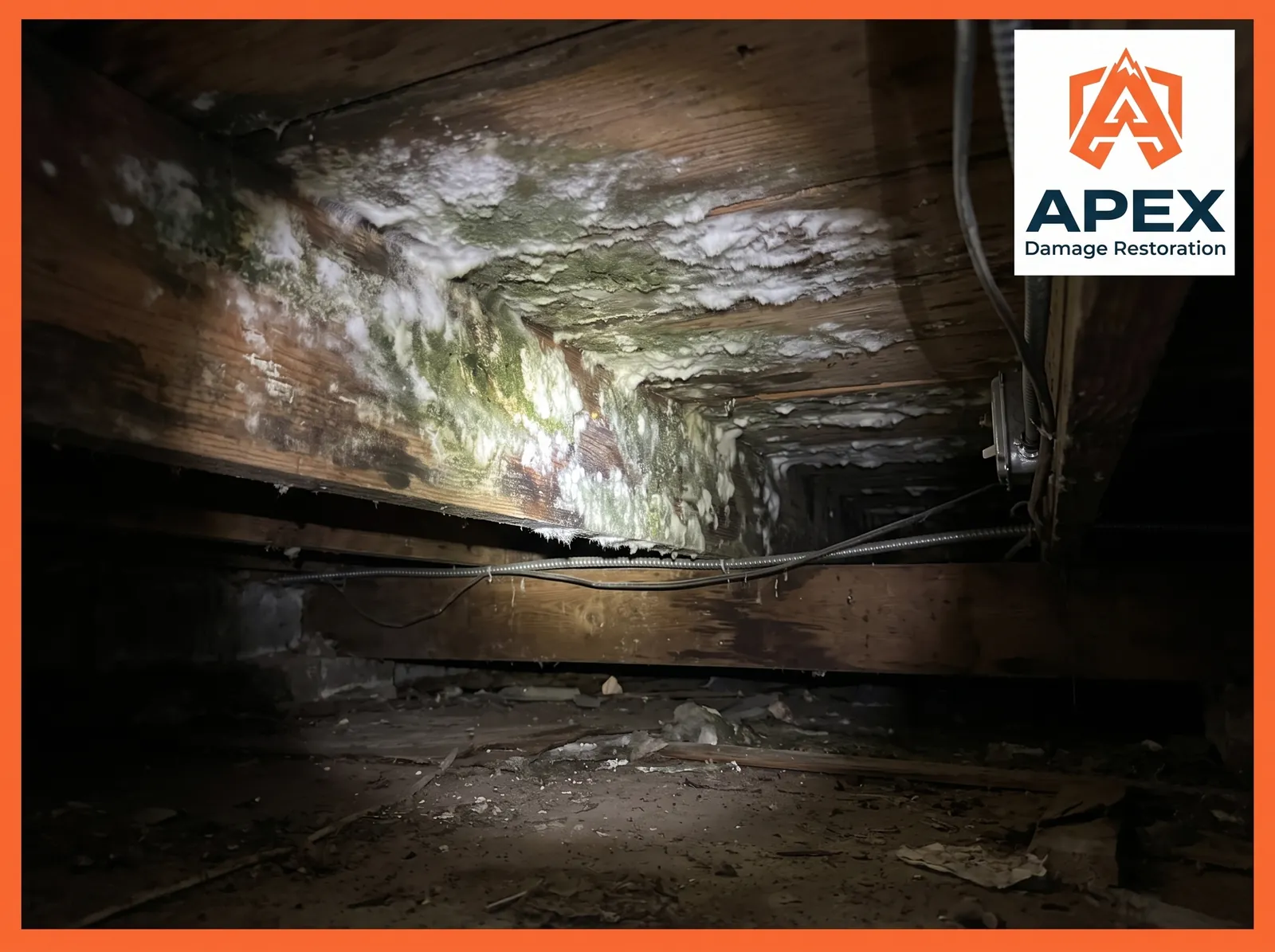
Homeowners insurance coverage for crawl space mold removal depends on whether the moisture source qualifies as sudden and accidental damage. A burst pipe that causes rapid water intrusion and subsequent mold growth is more likely to qualify for coverage than long-term, gradual moisture such as chronic ground seepage, which many policies exclude as a pre-existing or maintenance-related condition. Some policies include mold-specific riders with coverage caps separate from general water damage limits, so homeowners should review their policy's mold provisions before assuming a claim will be paid in full.
Frequently Asked Questions
Need Emergency Restoration Help Today?
Call Apex Damage Restoration now for fast priority dispatch across Aurora, CO, a written estimate before work begins, and direct insurance claims assistance.