
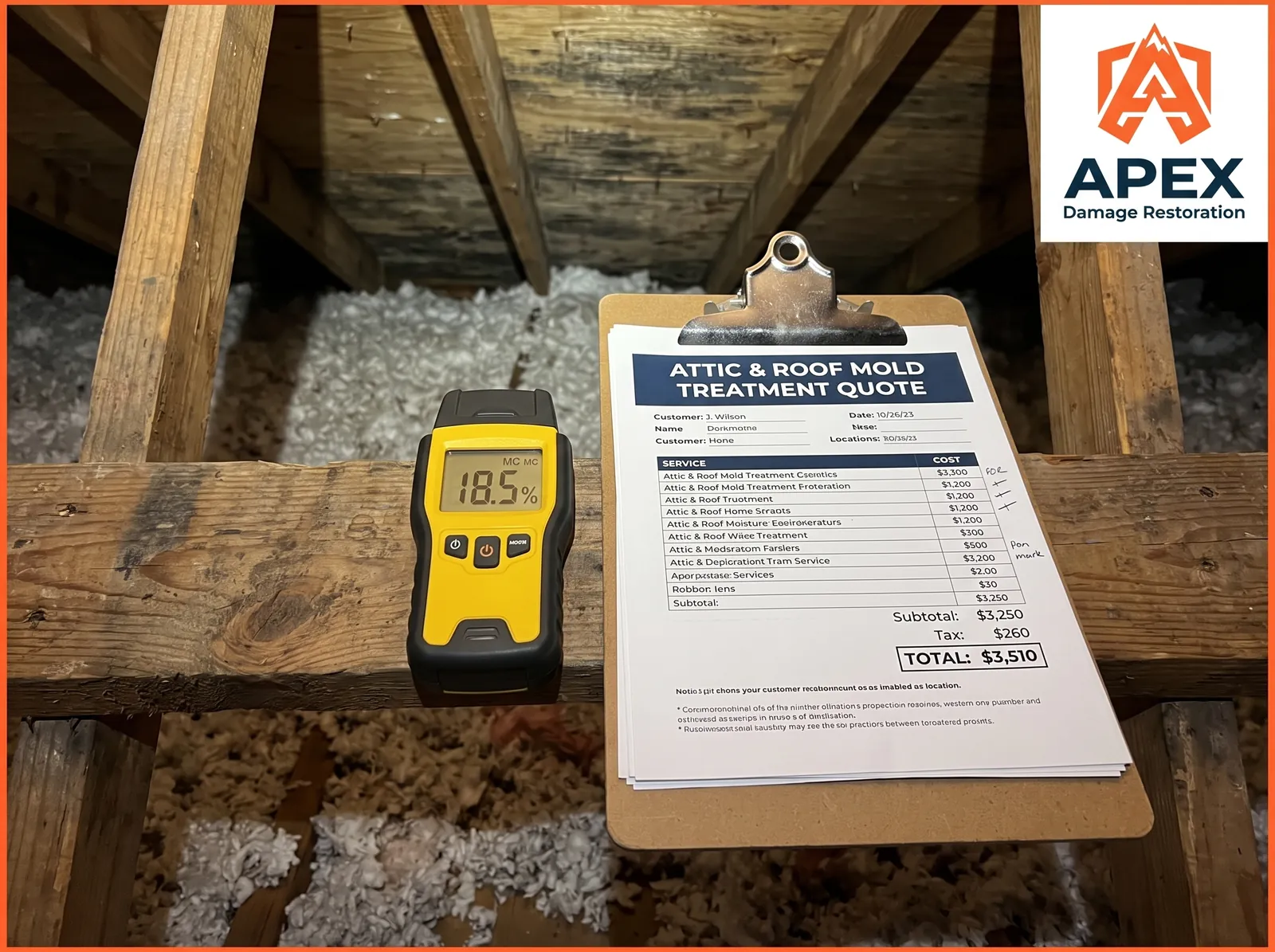
Roof mold treatment costs between $1,000 and $9,000, with most Denver Metro homeowners paying $2,000 to $4,000 for standard remediation. Roof mold treatment, roof mold cleaning, and roof mold removal describe the same service: a licensed contractor removing mold growth from a roof deck, attic, or roof-adjacent ceiling and treating the surface with an antimicrobial solution.
- Minor surface mold (under 10 sq. ft.): $500 to $1,500
- Moderate spread (partial attic or large roof section): $1,500 to $5,000
- Severe infestation (structural or insulation damage): $5,000 to $10,000+
- Per-square-foot rate: $10 to $25, rising to $30 for intensive removal and antimicrobial treatment
Roof leak repair, insulation replacement, testing, and attic accessibility push the final price toward the higher end of this range.
Roof Mold Treatment Cost by Size and Severity
Roof mold treatment cost rises directly with the square footage affected and the depth of material damage, since larger areas require more containment, labor, and antimicrobial product.
| Severity tier | Affected area | Typical cost range |
|---|---|---|
| Minor surface mold | Under 10 sq. ft. | $500 – $1,500 |
| Moderate spread | Partial attic or large roof section | $1,500 – $5,000 |
| Severe infestation | Whole attic, with structural or insulation damage | $5,000 – $10,000+ |
Minor Surface Mold (Under 10 Sq. Ft.)
Minor surface mold costs $500 to $1,500 to treat when the growth is limited to a single patch of roof decking or ceiling drywall. A contractor typically completes this scope in a single visit using surface cleaning and antimicrobial application, without removing insulation or structural material. The U.S. Environmental Protection Agency identifies 10 square feet as the general threshold above which professional remediation, rather than DIY cleaning, becomes appropriate.
Moderate Mold (Partial Attic or Roof Section)
Moderate mold spread costs $1,500 to $5,000 to remediate when growth covers a partial attic or a large section of roof sheathing. This tier commonly involves multiple roof rafters or joists, partial insulation removal, and a longer containment period than a minor-tier job. Labor time increases because the crew must isolate a larger work zone to prevent spore migration into unaffected areas.
Severe or Whole-Attic Mold Infestation
Severe mold infestation costs $5,000 to $10,000 or more when growth spans an entire attic and has damaged structural framing or insulation. This tier often requires demolition of affected drywall or decking, full insulation replacement, and post-remediation clearance testing before the space is closed back up. A severe infestation typically results from a roof leak that went undetected for an extended period.
Roof Mold Treatment Cost by Location
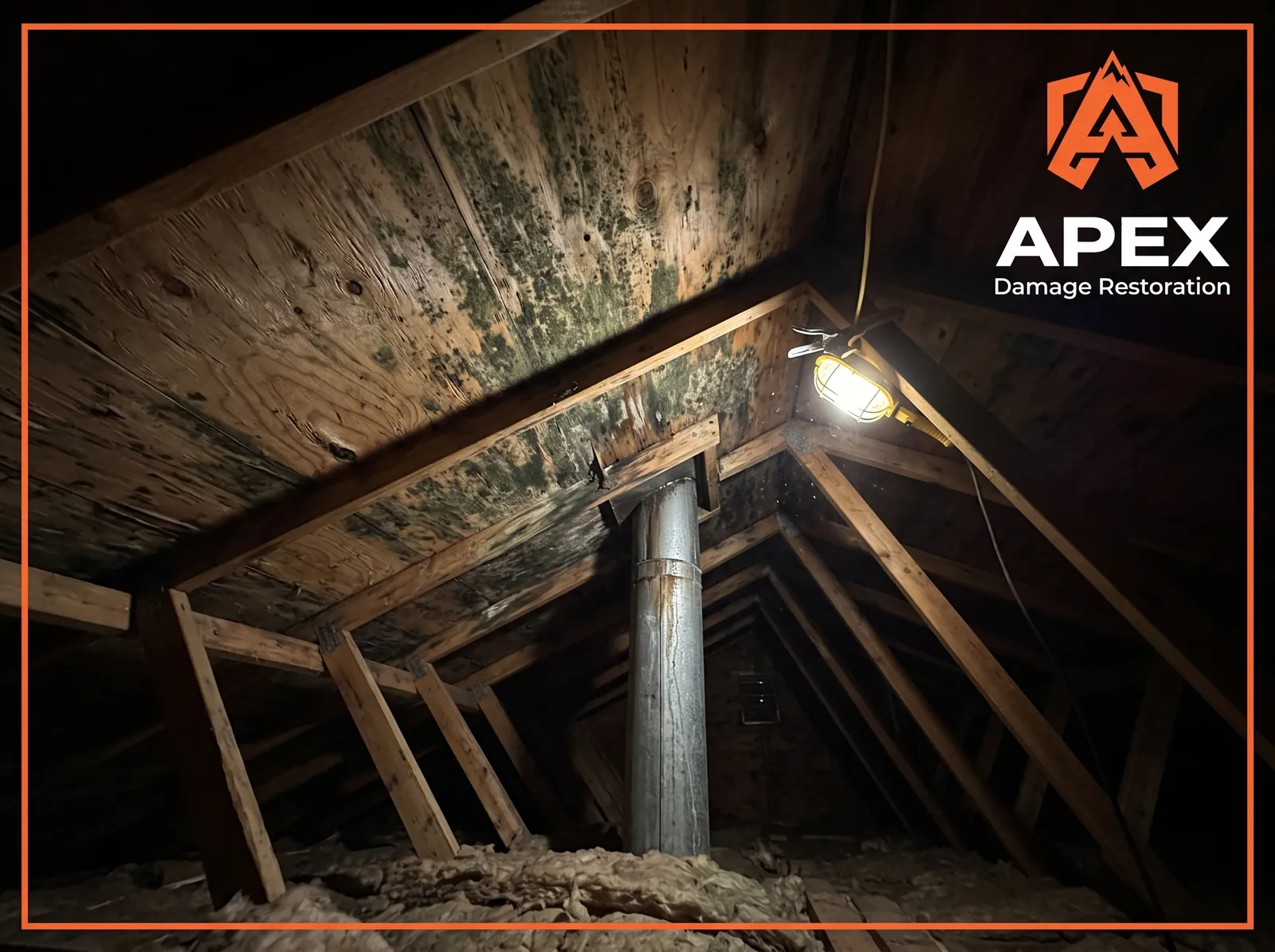
Roof mold treatment cost varies depending on where the mold grows within the roof-attic system, since accessibility and the underlying material affect how much labor a job requires.
Open Attic vs. Tight Crawlspace or Soffit
An open, walk-in attic costs less to treat than a tight crawlspace or soffit because technicians can move freely and set up containment without extra time. Confined spaces where a technician must crouch, crawl, or work from a ladder add roughly 20% to 35% more labor time than the same square footage in an open attic. Soffit and eave mold, which sits at the roofline's edge, often requires partial removal of fascia or vent covers to access the growth, adding a labor line item beyond the base remediation cost.
Roof Decking vs. Drywall Ceiling
Mold on roof decking or sheathing costs more to remediate than mold on a drywall ceiling below it, because decking is structural and requires careful surface treatment rather than replacement whenever possible. Drywall ceiling mold, by contrast, is frequently cheaper to address through section removal and replacement than through extended surface cleaning. A contractor determines the decking approach based on whether the wood has softened or delaminated; sound wood is treated in place, while compromised sections require replacement.
Black Mold Removal Cost on a Roof or in an Attic
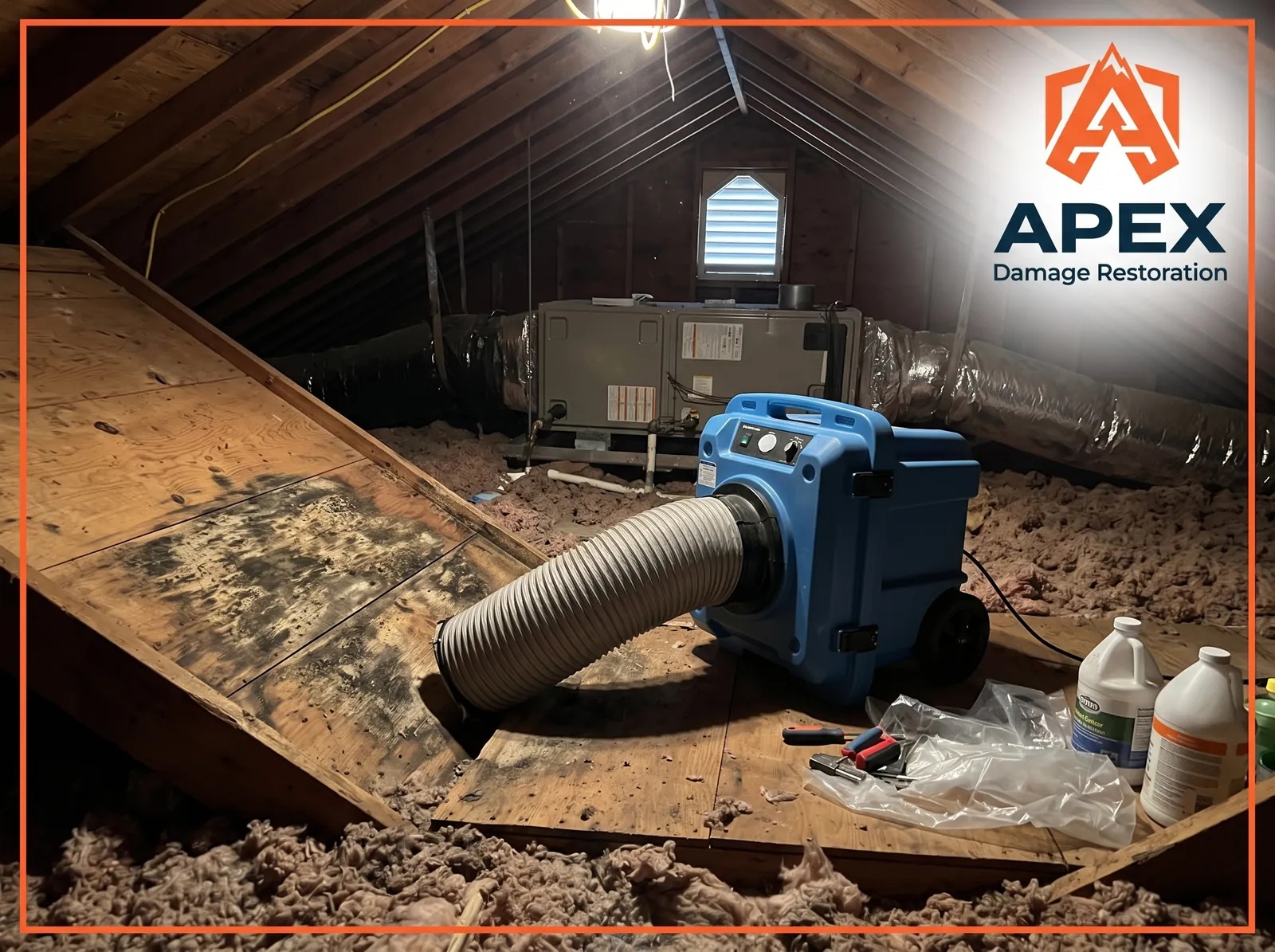
Black mold removal on a roof or in an attic costs 15% to 25% more than removal of common household mold species, because Stachybotrys chartarum requires full-face respirators, higher-grade HEPA filtration, and sealed waste disposal under IICRC S520 protocols. A job that would otherwise fall in the $1,500 to $5,000 moderate tier can move toward $6,000 or higher once confirmed black mold drives that premium. The added cost covers containment barriers, personal protective equipment, and disposal procedures that standard mold species do not require. A mold test confirms the species before a contractor quotes the black mold premium, since visual color alone does not reliably identify Stachybotrys.
Cost When Mold Is Caused by an Active Roof Leak
Mold caused by an active roof leak costs more to resolve than mold from a dry, historical moisture event because the total price must include both leak repair and mold remediation. Attempting remediation without repairing the roof leak allows mold to regrow within weeks, since the moisture source remains active.
A roof leak that has gone unnoticed for an extended period can push attic remediation costs toward $4,900 or higher in the Denver Metro area, compared with $1,500 to $3,500 for mold tied to a moisture source that has already been resolved.
Roof leak repair typically adds $500 to $750 for a patch-level fix, though full roof replacement can raise the combined project cost to $12,000. A contractor addresses the leak source first, then proceeds with remediation once the roof is confirmed dry.
Additional Costs Beyond Mold Removal
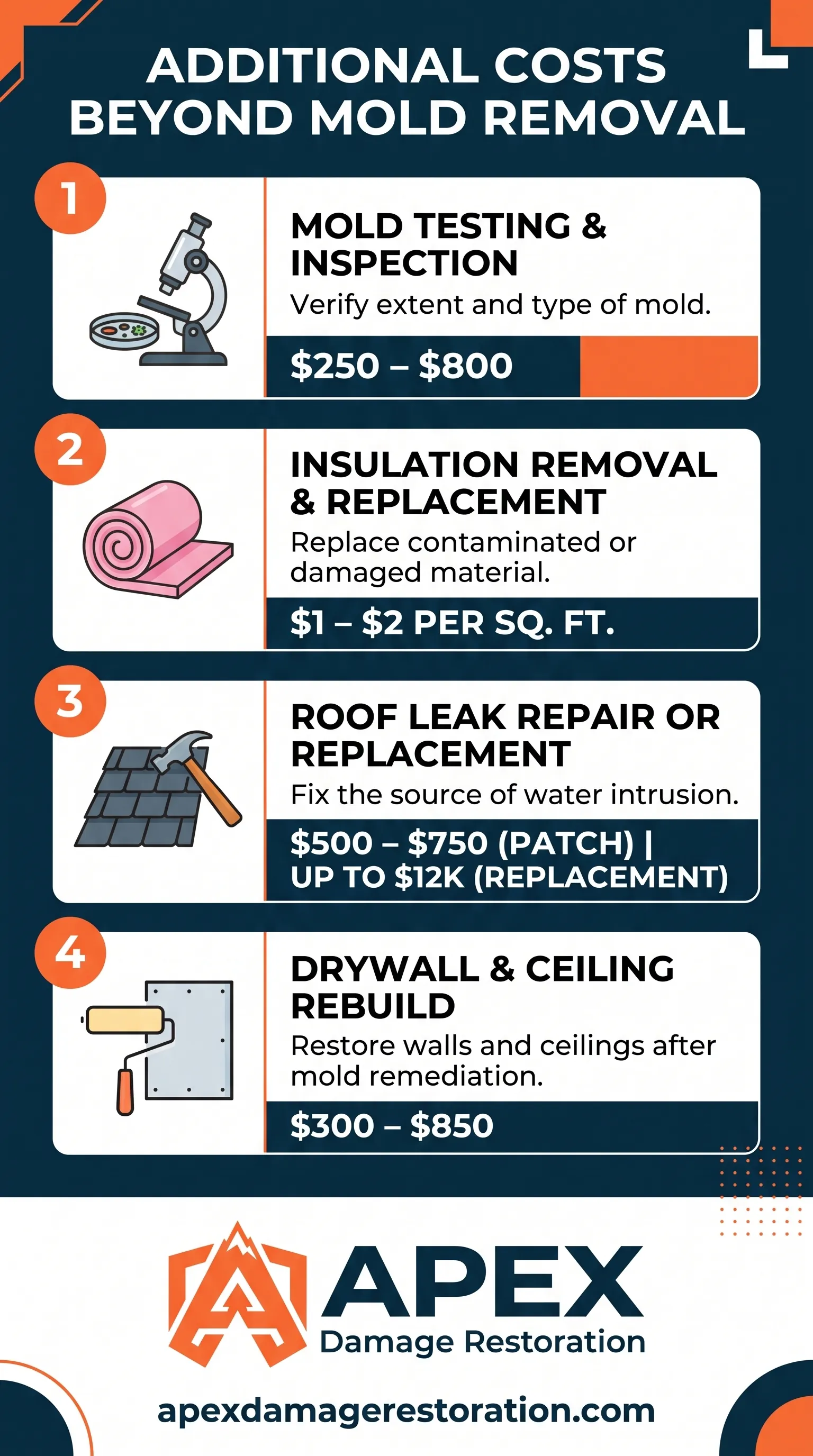
Roof mold projects frequently include costs beyond the core remediation line item, since testing, insulation, and rebuild work often accompany the removal itself.
| Line item | Typical cost | When it applies |
|---|---|---|
| Mold testing and inspection | $250 – $800 | Before remediation, to confirm mold species and scope |
| Insulation removal and replacement | $1 – $2 per sq. ft. | When insulation has absorbed moisture or mold |
| Roof leak repair or replacement | $500 – $750 (patch); up to $12,000 (replacement) | When an active leak caused the mold |
| Drywall and ceiling rebuild | $300 – $850 | When ceiling drywall is removed during remediation |
Mold Testing and Inspection
Mold testing and inspection costs $250 to $800 and confirms the mold species and the extent of contamination before remediation begins. A certified inspector collects air or surface samples and sends them to a laboratory for analysis. Insurance claims and post-remediation clearance both typically require documented test results, making this step a common addition to the base remediation cost rather than an optional extra.
Insulation Removal and Replacement
Insulation removal and replacement costs $1 to $2 per square foot and applies whenever attic insulation has absorbed moisture or visible mold growth. Contaminated insulation cannot be effectively cleaned, so a contractor removes and disposes of it as part of the remediation scope, then installs new insulation once the surrounding structure passes clearance testing.
Roof Leak Repair or Roof Replacement
Roof leak repair costs $500 to $750 for a patch-level fix in the Denver Metro area, while full roof replacement can raise the combined project cost to $12,000. A contractor recommends a patch when the damage is localized to flashing, a vent boot, or a small section of shingles. Widespread shingle failure, extensive decking rot, or an aging roof nearing the end of its service life typically points toward replacement instead of repeated patch repairs.
Drywall and Ceiling Rebuild
Drywall and ceiling rebuild costs $300 to $850 and applies when a contractor removes contaminated ceiling material during remediation. The rebuild scope covers new drywall, taping, texture matching, and paint for the affected section. This cost stays separate from the base remediation line item because rebuild work occurs only after clearance testing confirms the space is free of remaining mold.
Roof Mold Removal Cost in Denver Metro Area
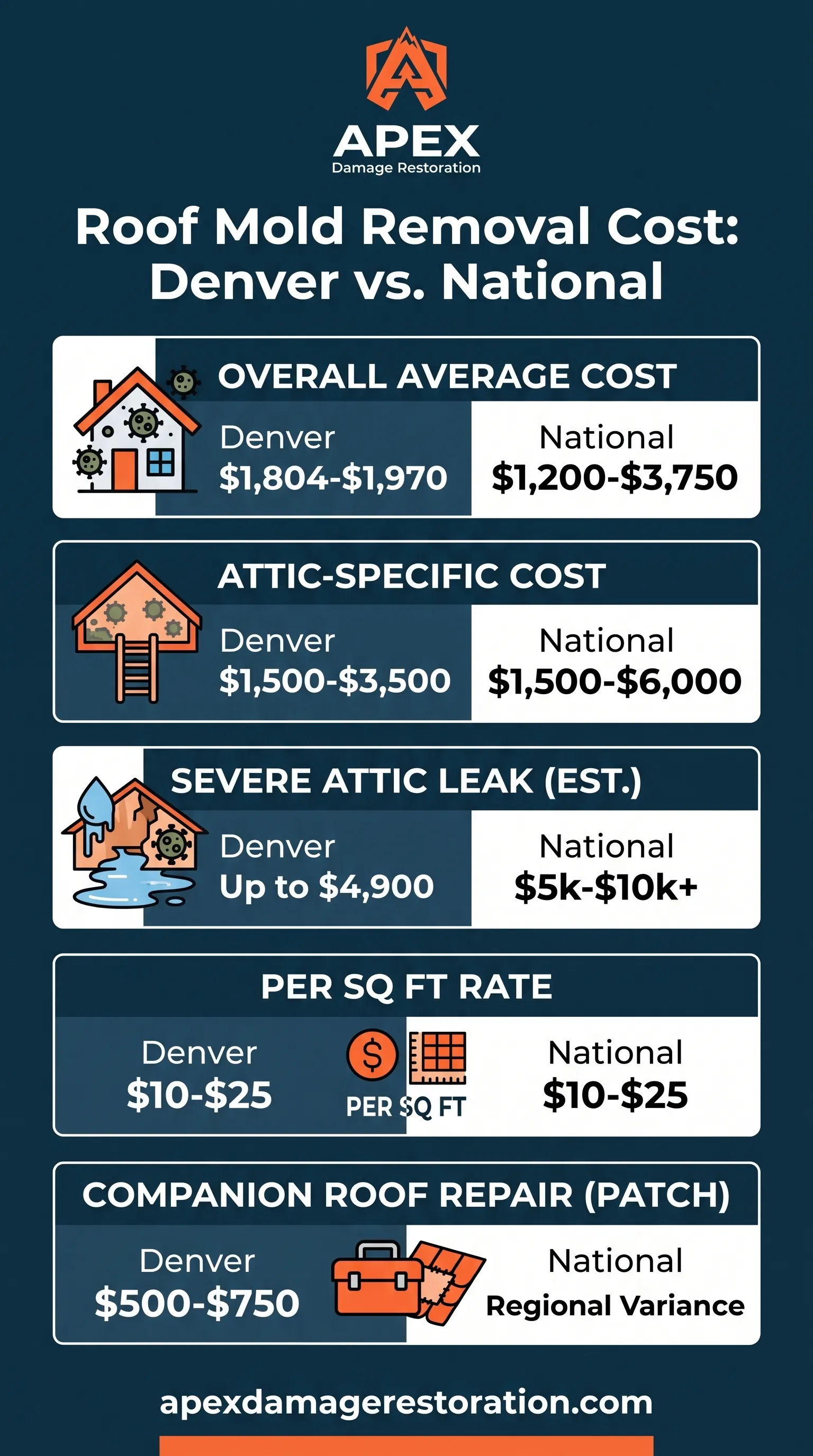
Roof mold removal in the Denver Metro area follows local pricing that runs close to national averages, with attic-specific jobs typically costing more than the citywide average for all mold locations combined.
| Metric | Denver Metro figure | National comparison |
|---|---|---|
| Overall mold removal average (all locations) | $1,804 – $1,970 | $1,200 – $3,750 |
| Attic-specific average | $1,500 – $3,500 | $1,500 – $6,000 |
| Attic average, long-undiscovered leak | Up to $4,900 | $5,000 – $10,000+ |
| Per-square-foot rate | $10 – $25 | $10 – $25 |
| Companion roof repair cost | $500 – $750 (patch); up to $12,000 (replacement) | Varies by region |
Denver Metro's per-square-foot rate for mold remediation runs $10 to $25, matching the national standard rate rather than exceeding it. Colorado's freeze-thaw cycles and periodic hailstorms contribute to roof damage that exposes decking to moisture, which raises the frequency of roof-leak-driven mold cases across the metro area compared with regions with milder winters. Attic jobs in Denver typically fall between $1,500 and $3,500, though a leak that went undiscovered through a full winter season can push that figure toward $4,900.
Does Homeowners Insurance Cover Roof Mold Removal?
Homeowners insurance covers roof mold removal when the mold results from a sudden and accidental event, such as a storm-damaged roof that let water in unexpectedly, but insurance typically excludes mold caused by long-term neglect or deferred maintenance. An insurer distinguishes between these two categories by reviewing how long the moisture source was present before mold developed. A roof leak reported and repaired within days of a hailstorm generally qualifies as sudden and accidental, while a slow leak that went unaddressed for months typically falls under a maintenance exclusion.
Most policies that do cover mold remediation also cap the payout, commonly between $1,000 and $10,000, regardless of the actual remediation cost. Homeowners filing a claim should document the roof damage with photos, retain the original mold test results, and report the leak to their insurer as soon as it is discovered, since delayed reporting strengthens an insurer's case for a neglect-based denial. An adjuster typically requests a contractor's inspection report alongside the homeowner's documentation before approving coverage.
DIY Roof Mold Removal vs. Hiring a Professional
DIY roof mold removal is limited to surface patches under 10 square feet on accessible, non-structural drywall, while any larger area, roof decking, or attic space calls for a licensed remediation contractor. Roof and attic work carries added risk beyond a typical DIY mold job: technicians must access sloped or confined spaces, disturb insulation that may harbor spores, and confirm the mold species before treatment, since black mold requires containment that a homeowner cannot safely replicate. DIY cleaning on a scope beyond this threshold also risks spreading spores through the attic rather than containing them, which can turn a $1,500 job into a $5,000 one.
Homeowners filing an insurance claim should hire an IICRC-certified contractor rather than attempting DIY removal, since insurers commonly require professional documentation and post-remediation clearance testing before approving payment. A professional also verifies that the underlying roof leak has been repaired before closing out the job, a step that prevents the regrowth a DIY approach often misses.
How to Reduce Roof Mold Treatment Costs?
Homeowners can lower roof mold treatment costs by addressing the problem before it spreads and by managing the project efficiently once remediation begins.
- Fix roof leaks immediately. Repairing a leak within days rather than months keeps the affected area in the minor or moderate cost tier instead of the severe tier.
- Schedule a mold inspection at the first sign of a leak. Early testing costs $250 to $800 and can prevent a $5,000 to $10,000 severe-tier remediation.
- Get multiple quotes. Comparing at least two or three contractor estimates helps confirm that a quoted price reflects the actual scope rather than an inflated per-square-foot rate.
- Bundle roof repair and mold remediation with one contractor. A single contractor coordinating both the leak repair and the remediation reduces scheduling delays that allow mold to keep spreading between separate appointments.
- Address attic ventilation. Improving airflow reduces the condensation that leads to repeat mold growth, lowering the likelihood of a second remediation cost down the line.
Frequently Asked Questions
Need Emergency Restoration Help Today?
Call Apex Damage Restoration now for fast priority dispatch across Aurora, CO, a written estimate before work begins, and direct insurance claims assistance.