
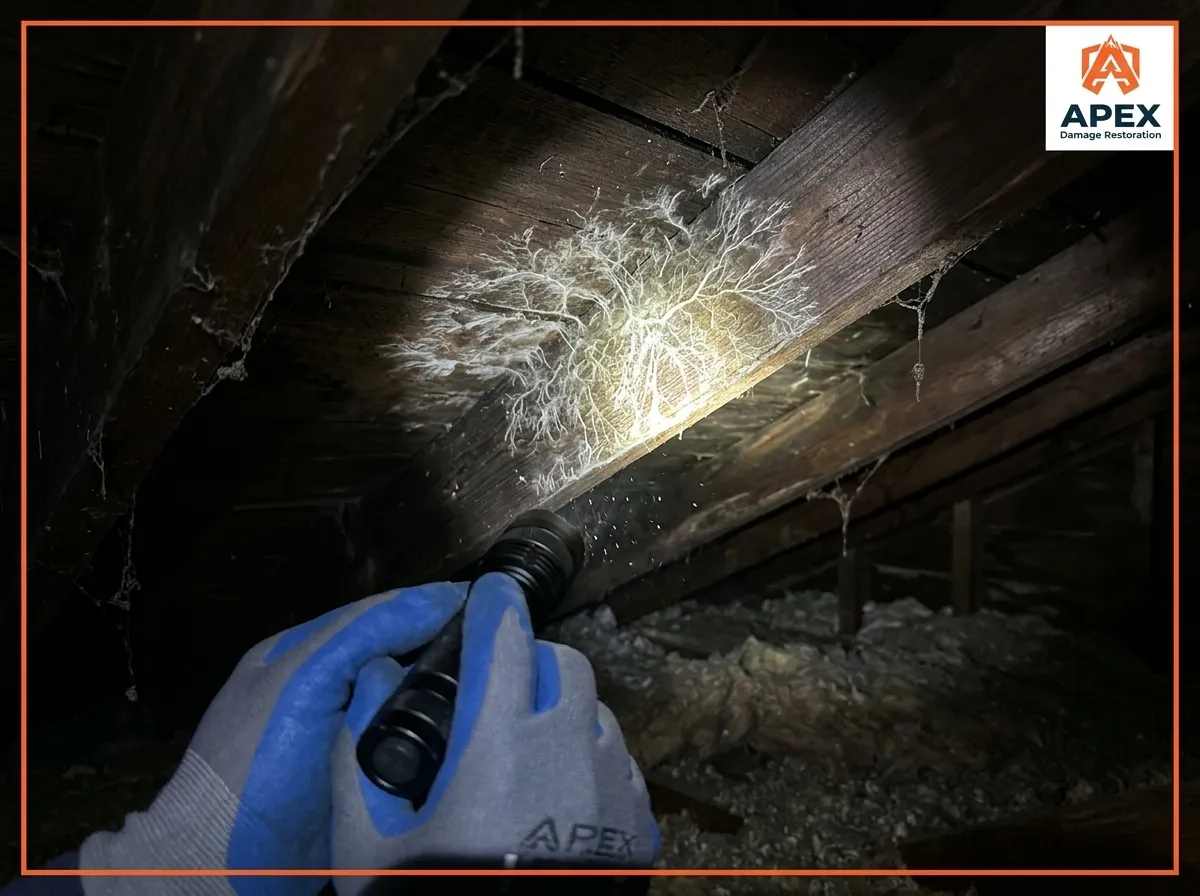
"White mold" is a common, non-scientific term for fungal growth that appears pale white, off-white, or grayish-white during its early growth stage, rather than a single species of fungus. Multiple fungal genera, including Aspergillus, Penicillium, and Cladosporium, can produce white-colored colonies before pigmentation develops or spreads across a surface, so color alone does not confirm the species without laboratory testing.
White mold grows on organic and inorganic building materials, including wood, drywall, insulation, carpet padding, and stored paper products, whenever sustained moisture combines with a food source and limited air circulation. The U.S. Environmental Protection Agency (EPA) identifies moisture control as the primary method for preventing mold growth, since mold requires water to establish and expand a colony.
Homeowners and renters most often encounter white mold in basements, crawlspaces, attics, and bathrooms, locations that combine low light, restricted airflow, and elevated humidity. Left untreated, white mold spreads across additional square footage, degrades porous building materials, and contributes to indoor air quality complaints.
This article covers white mold identification, common causes and locations, associated health risks, safe removal methods, Denver Metro-area removal costs for 2026, and how white mold differs from black mold, efflorescence, and mildew.
What Does White Mold Look Like?
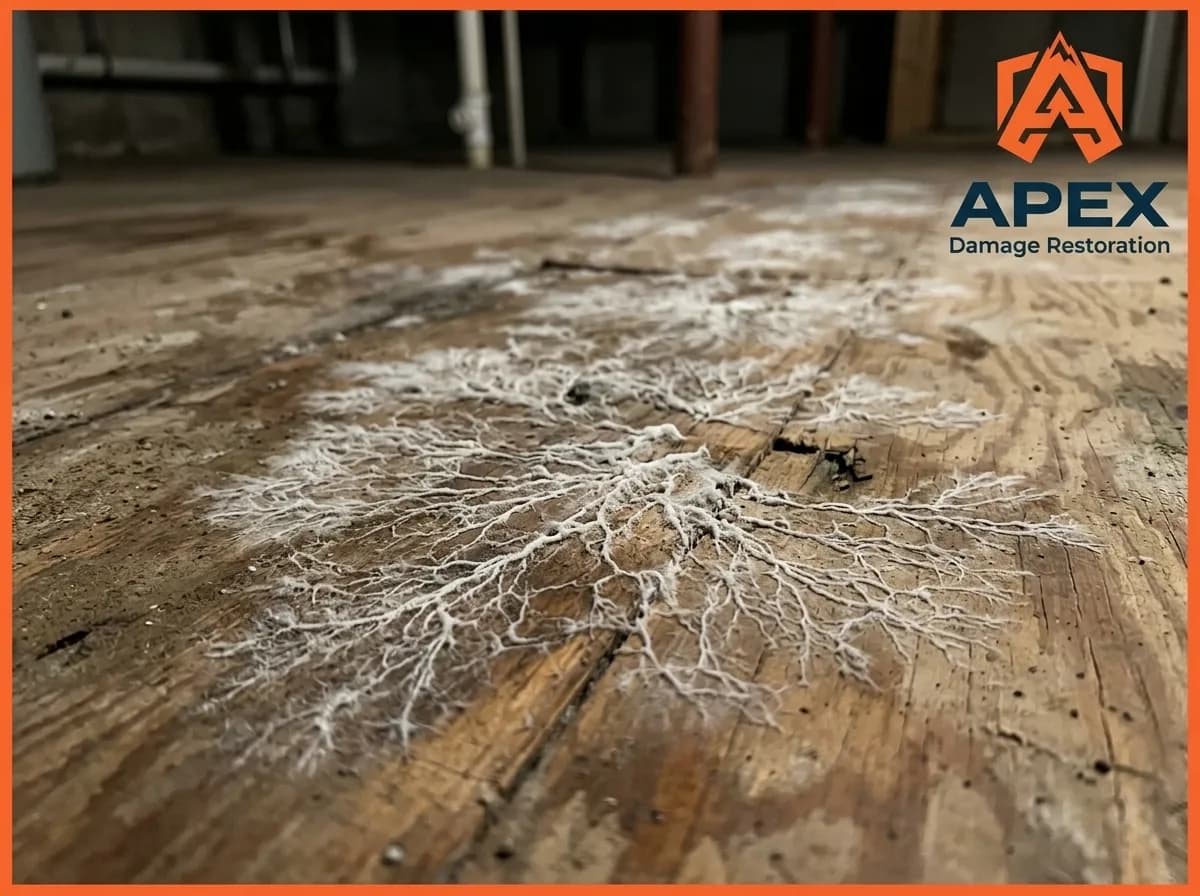
White mold appears as a powdery, thread-like, or cottony growth in white, off-white, or pale gray shades, often forming irregular patches rather than uniform circles. Early-stage colonies frequently resemble a fine dusting or spiderweb-like coating, while more mature colonies develop a fuzzy or webbed texture as fungal threads (hyphae) multiply.
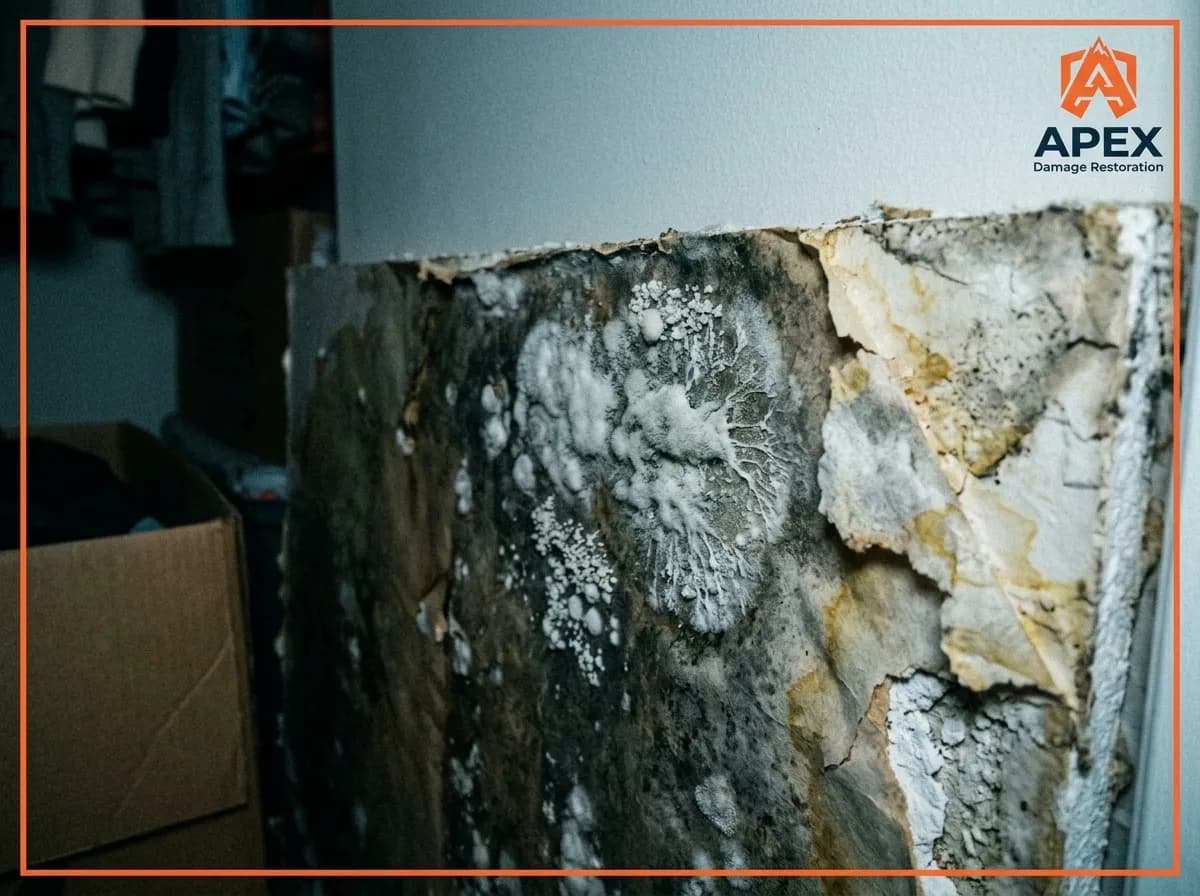
Appearance varies by surface. On wood, white mold forms light-colored fuzzy patches or a fine dust that can be mistaken for sawdust, though a raised or fuzzy texture distinguishes active mold from dry debris. On drywall, it appears as circular or streaked staining with a chalky or fuzzy surface layer, which can initially resemble a water stain before texture develops. On fabric, cardboard, or stored items, white mold presents as fine white or gray speckling that clusters in creases, seams, and folds. Along grout lines and tile edges, it forms thin, fuzzy white filaments that follow the seam.
As white mold colonies mature, they often shift toward yellow, green, or gray as the fungus produces spores and pigmentation develops. This color change is one reason visual inspection alone cannot confirm a mold species without lab analysis.
What Does White Mold Smell Like?
White mold produces a musty, earthy odor similar to wet soil, rotting wood, or old paper, caused by microbial volatile organic compounds (MVOCs) released during fungal metabolism. This odor ranges from faint to strong depending on colony size and moisture level, and it is often detectable before any growth becomes visible.
The smell typically intensifies in enclosed, poorly ventilated spaces, such as basements, crawlspaces, and closets, where limited airflow allows MVOC concentration to build. A persistent musty smell without visible surface growth can indicate mold hidden inside wall cavities, under flooring, or behind furniture, even when no staining or fuzzy texture is visible on exposed surfaces.
What Causes White Mold?
White mold grows when three conditions occur together: elevated moisture, an organic or cellulose-based food source, and limited air circulation. Removing any one of these conditions stops active growth, which is why moisture control remains the EPA's primary prevention strategy.
Common, verified causes of white mold growth include:
- Plumbing leaks: Slow leaks behind walls or under sinks that go undetected create sustained moisture in an enclosed space.
- Roof leaks or damaged flashing: Water intrusion through compromised roofing allows moisture to reach attic insulation and framing.
- High indoor humidity: The EPA recommends maintaining indoor relative humidity between 30% and 50% to limit fungal growth on porous surfaces.
- Condensation: Warm, humid air contacting cooler surfaces, such as window frames, pipes, or poorly insulated walls, produces moisture buildup.
- Poor ventilation: Bathrooms, attics, and crawlspaces trap humidity that would otherwise dissipate through normal airflow.
- Flooding or water damage: Large volumes of moisture from flooding create conditions for mold growth within 24 to 48 hours, according to the EPA.
Where Is White Mold Commonly Found?
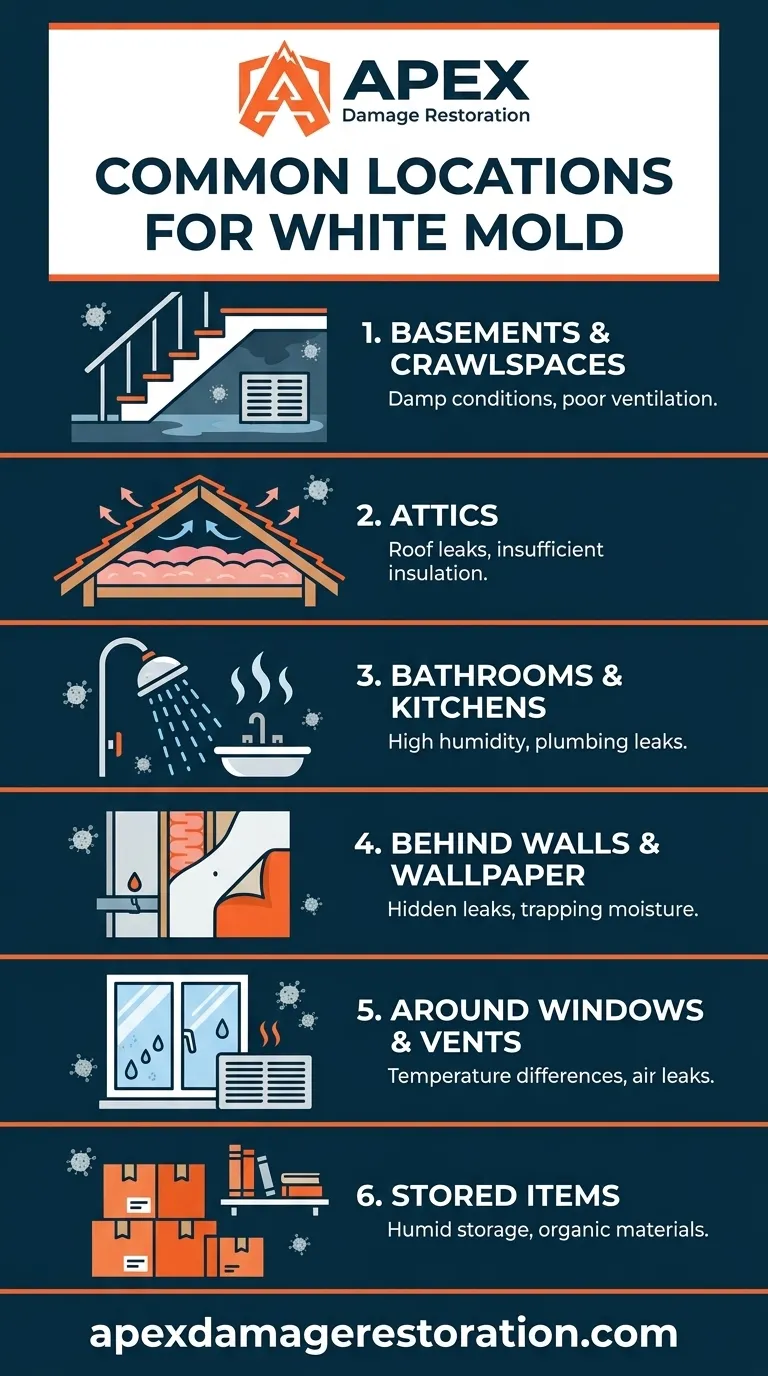
White mold commonly grows in basements, crawlspaces, attics, bathrooms, kitchens, and behind walls or wallpaper, areas that combine limited airflow, elevated humidity, and organic building materials. Moisture sources and material conditions vary by location, which affects both detection and removal difficulty.
Basements and Crawlspaces
Basements and crawlspaces support white mold growth because of below-grade moisture intrusion, high humidity, and minimal natural ventilation. Groundwater seepage through foundation cracks keeps concrete, wood framing, and stored items at elevated moisture levels for extended periods. Denver Metro homes with unfinished or partially finished basements face additional risk during spring snowmelt, when rising groundwater increases foundation moisture intrusion.
Attics
Attics develop white mold when roof leaks, damaged flashing, or inadequate ventilation allow moisture to accumulate in insulation and roof sheathing. Poor attic ventilation traps warm, humid air rising from living spaces below, and this air condenses on cooler roof sheathing during the temperature swings common to Colorado's high-elevation climate.
Bathrooms and Kitchens
Bathrooms and kitchens generate white mold from daily condensation, shower steam, and cooking moisture that accumulates on tile grout, caulking, and cabinet surfaces. Exhaust fans that vent inadequately or run for too short a duration after showers or cooking allow humidity to linger long enough for fungal growth to establish.
Behind Walls and Wallpaper
White mold grows behind walls and wallpaper when moisture from plumbing leaks, condensation, or exterior water intrusion becomes trapped between the wall surface and interior structure. Wallpaper adhesive provides an additional organic food source, and the enclosed cavity limits airflow, so growth in this location often remains undetected until a musty odor or wallpaper staining appears.
Around Windows and Vents
Windows and vents accumulate white mold from condensation that forms when warm interior air contacts cold glass, metal frames, or duct surfaces. Single-pane windows and poorly sealed vents are most susceptible, since minimal insulation allows faster temperature transfer and more frequent condensation cycles.
Stored Items
Stored items, including cardboard boxes, books, clothing, and upholstered furniture, support white mold growth when kept in damp basements, attics, or storage units without adequate airflow. Cellulose-based materials such as paper and cardboard act as a direct food source once moisture and limited ventilation are present.
What Are the Health Risks of White Mold?
White mold exposure can cause several health effects, primarily affecting the respiratory system and triggering allergic responses in sensitive individuals. The Centers for Disease Control and Prevention (CDC) states that exposure to any mold type, regardless of color, can cause nasal and sinus congestion, throat irritation, coughing, wheezing, and eye or skin irritation in some individuals. People with mold allergies, asthma, or compromised immune systems face a higher risk of more pronounced reactions.
- Allergic reactions: White mold spores can trigger sneezing, runny nose, itchy or watery eyes, and skin rashes in individuals with mold sensitivities, based on CDC guidance on mold-related allergic symptoms.
- Asthma flare-ups: Mold exposure can worsen asthma symptoms, increasing wheezing, chest tightness, and shortness of breath in people with pre-existing asthma or reactive airway conditions.
- Respiratory irritation: Airborne mold spores can irritate the throat and lungs, causing persistent coughing or nasal congestion, even in individuals without a diagnosed mold allergy.
- Fungal infections in immunocompromised individuals: The CDC notes that people with weakened immune systems face an increased risk of fungal lung infections following prolonged mold exposure, though this risk remains uncommon in healthy individuals.
How to Safely Remove White Mold?
Homeowners can safely remove small areas of white mold, under 10 square feet, using protective equipment, moisture control, and an appropriate cleaning solution, following EPA mold cleanup guidelines. The EPA recommends professional remediation for mold-affected areas exceeding 10 square feet, since larger infestations require containment procedures to prevent spore spread throughout the structure.
Several natural solutions kill surface-level white mold without harsh chemical fumes:
- White vinegar: Undiluted white vinegar applied to affected surfaces kills many common household mold species through its acidic properties, though it is less effective against mold that has penetrated porous materials deeply.
- Hydrogen peroxide: A 3% hydrogen peroxide solution breaks down mold at the cellular level and works well on non-porous and semi-porous surfaces such as tile, countertops, and sinks.
- Baking soda: Mixed with water into a paste, baking soda absorbs residual moisture and inhibits future growth while lifting surface mold from hard surfaces.
- Tea tree oil: Diluted tea tree oil solutions applied to affected areas provide antifungal properties, though the strong scent limits its practicality for large surfaces.
To safely remove a small area of white mold:
- 1Put on protective equipment, including an N95 respirator, rubber gloves, and eye protection, before beginning cleanup.
- 2Ventilate the area by opening windows or running an exhaust fan to reduce airborne spore concentration.
- 3Apply the chosen cleaning solution to the affected surface and let it sit for several minutes to penetrate the mold.
- 4Scrub the surface with a stiff brush to lift mold from grout lines, wood grain, or textured materials.
- 5Dry the area completely using fans or a dehumidifier, since residual moisture allows mold to return.
- 6Dispose of contaminated porous materials, such as drywall or insulation, that cannot be fully cleaned.
- 7Contact a certified mold remediation company if the affected area exceeds 10 square feet or returns after cleaning.
Renters facing an active infestation should also review renters insurance coverage for mold damage before starting removal, since policy language affects whether cleanup costs are reimbursed.
How Much Does White Mold Removal Cost?
Professional white mold removal costs between $700 and $6,000, with most homeowners spending an average of $1,200 to $3,750 depending on the size and location of the infestation. Total project cost depends primarily on the affected square footage, the extent of material removal required, and the accessibility of the affected area. Additional factors include the number of affected rooms and whether the service includes post-remediation clearance testing.
The size-based breakdown below applies typical Denver Metro, Colorado market rates for 2026 to the overall cost range above. Homeowners should request a written quote from a local IICRC-certified contractor for an exact price, since these figures reflect regional market extrapolation rather than a verified per-project local pricing dataset.
Small Areas (Under 10 Sq Ft)
Small white mold infestations under 10 square feet typically cost $700 to $1,500 to remediate in the Denver Metro area for 2026, covering containment, cleaning agents, and labor for a single technician visit. This size category often qualifies for DIY treatment under EPA guidelines, so professional mold remediation costs in this range usually apply when homeowners prefer certified removal or when mold recurs after a prior cleaning attempt.
Medium Areas (10–100 Sq Ft)
Medium white mold infestations between 10 and 100 square feet cost $1,500 to $3,200 in the Denver Metro area for 2026, reflecting the containment barriers, HEPA air filtration, and multi-day labor required once an area exceeds the EPA's DIY threshold. Aurora, CO homeowners with basement or crawlspace infestations in this range commonly pay toward the higher end due to below-grade access limitations.
Large Areas (100–500 Sq Ft)
Large white mold infestations spanning 100 to 500 square feet cost $3,200 to $5,000 in the Denver Metro area for 2026, driven by extended containment, structural material removal, and multiple days of technician labor. Projects in this range frequently require removal and replacement of drywall, insulation, or subflooring, which increases material costs beyond cleaning alone.
Whole-House Remediation
Whole-house white mold remediation costs $5,000 to $6,000 or more in the Denver Metro area for 2026, covering comprehensive containment, HVAC system treatment, and material replacement across multiple rooms. This scope typically follows a significant water event, such as a burst pipe or roof failure, that allows moisture to spread throughout a structure's building materials.
How Many Types of White Mold Are There?
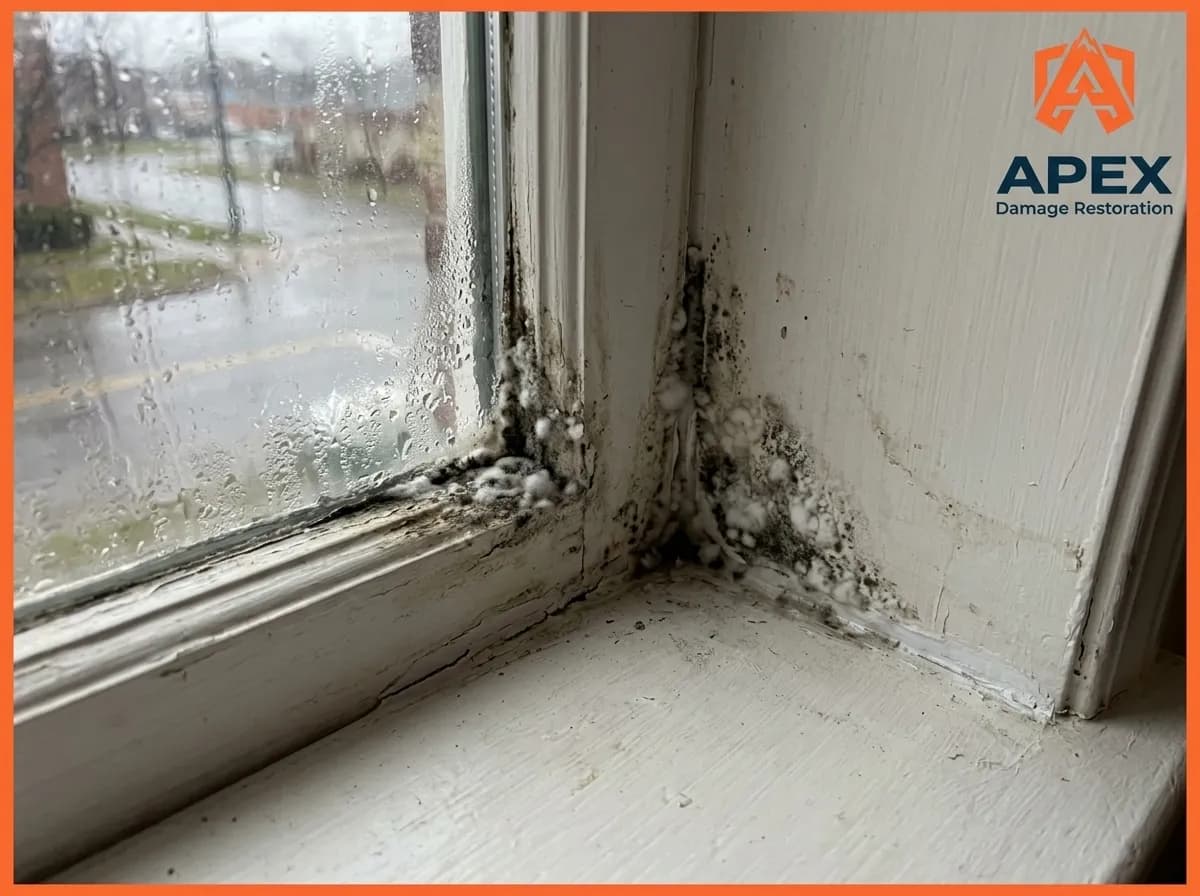
White mold is not a single species. Multiple fungal genera can appear white during early growth stages; the four most frequently identified in home environments are Aspergillus, Penicillium, Cladosporium, and Mucor.
Aspergillus species commonly appear as a fine, white, powdery growth that can transition to yellow-green or black as spores mature. Penicillium initially forms white, fuzzy colonies before developing a blue-green surface layer. Cladosporium typically presents as olive-green to brown but can appear pale gray-white in early stages on cooler surfaces. Mucor forms a rapidly spreading, cottony white growth often found on water-damaged organic debris and food.
White Mold vs. Black Mold
White mold and black mold differ primarily in color stage and species association rather than in the danger level of one fixed species. White mold typically describes early-stage or immature fungal growth from genera such as Aspergillus and Penicillium, while black mold most often refers to Stachybotrys chartarum, a species associated with heavier, prolonged water damage. Both mold types can trigger allergic and respiratory symptoms, and color alone does not determine toxicity, since species identification requires laboratory testing rather than visual inspection.
White Mold Vs. Efflorescence
White mold differs from efflorescence in composition: efflorescence is a crystalline, salt-based mineral deposit, while white mold is a living fungal organism. Efflorescence forms on concrete, brick, and masonry surfaces when water dissolves salts within the material and deposits them on the surface as the water evaporates. A water test distinguishes the two: efflorescence dissolves when misted with water, while mold does not dissolve and instead darkens or smears when wet. Efflorescence also lacks the musty odor associated with active mold growth.
White Mold vs. Mildew
White mold differs from mildew in growth depth and surface texture. Mildew grows only on the surface of a material, appearing flat, powdery, or downy in white, gray, or yellow tones, and commonly develops on fabric, plants, and bathroom surfaces. White mold, by contrast, can penetrate porous materials such as wood and drywall, producing a raised, fuzzy, or slimy texture as the colony matures. Mildew is generally easier to remove because it does not extend below the material surface.
FAQs About White Mold
Need Emergency Restoration Help Today?
Call Apex Damage Restoration now for fast priority dispatch across Aurora, CO, a written estimate before work begins, and direct insurance claims assistance.