
Carpet water damage occurs when water from a plumbing failure, appliance leak, weather event, or humidity source saturates carpet fibers, padding, or the subfloor beneath it. The source and category of the water determine how quickly damage develops and whether the carpet can be dried and reused or must be removed. Homeowners and property managers who identify the cause early can limit moisture exposure to the window in which carpet remains salvageable, typically 24 to 48 hours from the start of saturation.
What Are the Most Common Causes of Carpet Water Damage?
Carpet water damage results most often from seven recurring sources: burst or leaking pipes, appliance and fixture leaks, roof and window intrusion, flooding, sewage backups, and high humidity. Each cause carries a different water category and a different level of urgency, which affects whether the carpet can be dried in place or must be removed.
Burst or Leaking Pipes
Burst and leaking supply pipes are the most frequently cited cause of carpet water damage in residential and commercial properties. A pipe can fail suddenly under pressure, or it can develop a slow, hidden leak beneath flooring that saturates carpet and padding over weeks before becoming visible. Freeze-related bursts occur when water inside a pipe expands as it turns to ice, cracking the pipe wall and releasing pressurized water once the ice thaws. Pipe failures typically release clean water (Category 1), which carries the lowest contamination risk if the carpet is dried within 24 to 48 hours.
Appliance and Fixture Leaks
Washing machines, dishwashers, refrigerators, water heaters, and HVAC or air conditioning units cause carpet water damage through hose failures, worn seals, clogged condensate lines, and overflow events. A washing machine supply hose can rupture during a fill cycle, while a dishwasher gasket can degrade and leak gradually under the unit. HVAC systems generate condensation that drains through a condensate line; a blocked or disconnected line diverts this water directly onto nearby flooring. Appliance leaks generally fall into the gray water category, since detergent residue, minor contaminants, or standing mechanical fluids can be present.
Roof, Window, and Door Leaks
Roof, window, and door leaks introduce exterior water into a structure through failed flashing, damaged shingles, cracked seals, or gaps around frames. Flashing failure allows rainwater to travel behind exterior finishes and down interior wall cavities before reaching carpet at the base of a wall. Window and door leaks typically appear after wind-driven rain forces water past weatherstripping or through improperly sealed frames. This entry pathway often causes damage far from the visible leak point, since water can travel along framing members before saturating carpet.
Flooding and Storm Damage
Flooding and storm damage saturate carpet through heavy rainfall, rising groundwater, or storm surge that enters a structure faster than drainage systems can remove it. Groundwater intrusion occurs when soil surrounding a foundation becomes saturated and hydrostatic pressure forces water through foundation cracks or gaps. Storm-driven flooding frequently carries silt, chemicals, and debris from outside the property, which places it in the gray or black water category depending on the source. Flood-affected carpet requires prompt water category testing before a drying or removal decision is made.
Sewage Backups and Blocked Drains
Sewage backups and blocked drains release black water, the most contaminated water category, directly into carpeted areas. A blocked main drain line forces wastewater back through floor drains, toilets, or lower-level plumbing fixtures instead of flowing out of the property. Black water contains bacteria, viruses, and other pathogens, which makes carpet exposed to sewage a health hazard rather than a standard drying scenario. This contamination level typically requires removal of the affected carpet and padding rather than in-place drying and treatment.
High Humidity and Condensation
High humidity and condensation cause carpet water damage gradually, through elevated indoor moisture rather than a sudden water release. Indoor relative humidity above 60% allows moisture to accumulate in carpet fibers and padding over time, particularly in basements, crawl spaces, and poorly ventilated rooms. Condensation forms on cool surfaces such as concrete slabs, pipes, or windows when warm, moist air contacts a colder surface, and the resulting moisture transfers into adjacent carpet. This cause produces the slowest onset of visible damage among the seven categories, but sustained exposure still supports mold growth and fiber deterioration.
What Happens When Carpet Gets Wet?
Wet carpet absorbs water into its fibers, backing, padding, and the subfloor beneath it within minutes of contact. The carpet fibers hold surface moisture first, then water migrates through the backing into the padding, which acts like a sponge and retains significantly more moisture than the carpet itself. Once the subfloor absorbs water, drying time extends and the risk of structural damage increases.
Discoloration can appear within hours as dyes in the carpet react with moisture or as tannins leach from wood subflooring. A musty odor develops as damp padding and backing begin to break down, typically within 24 to 48 hours of saturation. Mold growth becomes a measurable risk starting at the 24- to 72-hour mark after water exposure, based on restoration industry guidelines from organizations such as the IICRC. Carpet is not automatically ruined if it gets wet; clean water exposure that is addressed within this window is typically salvageable, while contaminated water or prolonged saturation reduces the chance of recovery.
Can Water-Damaged Carpet Be Saved?
Water-damaged carpet can be saved when the water is clean, the saturation period stays under 48 hours, and drying begins promptly. Clean water (Category 1) exposure, such as a burst supply pipe, allows carpet and padding to be dried and reused in most cases when extraction starts within 24 to 48 hours. Gray water (Category 2) exposure from appliance leaks or storm intrusion requires professional cleaning and antimicrobial treatment in addition to drying, since gray water carries chemical or biological contaminants beyond plain moisture.
Black water (Category 3) exposure from sewage backups or floodwater cannot be cleaned to a safe condition; the carpet and padding require removal and disposal regardless of drying time. The 48-hour threshold applies specifically to saturation duration rather than the type of incident: carpet exposed to clean water for longer than 48 hours develops the same mold and bacterial growth risk as gray water exposure. Carpet padding retains moisture longer than the carpet surface and frequently requires replacement even when the carpet itself is salvageable, since padding cannot be effectively dried or disinfected once saturated.
How to Dry Carpet After Water Damage
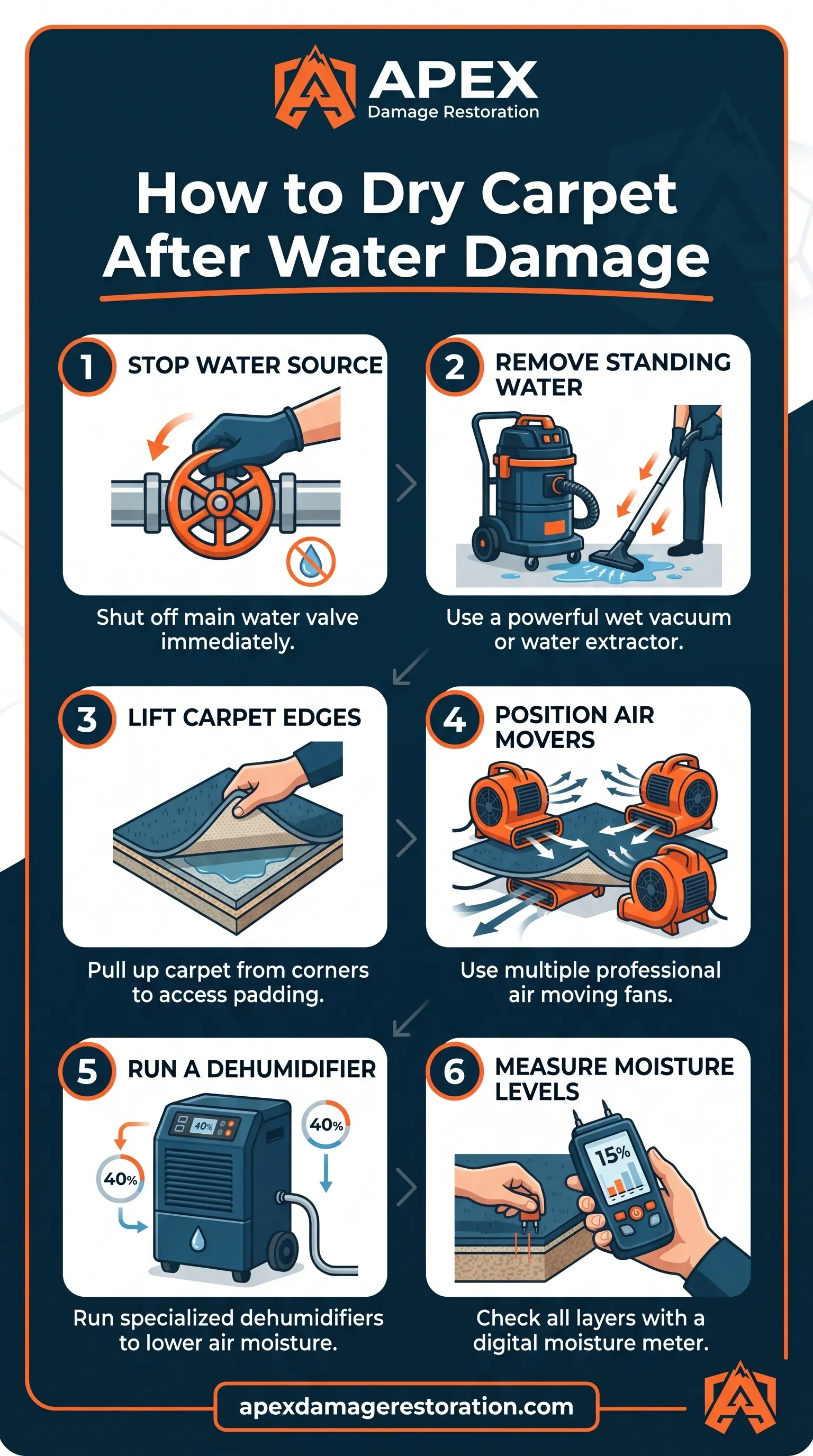
Drying water-damaged carpet requires water extraction, air movement, and dehumidification performed in sequence, beginning within hours of the water event. The process removes standing and absorbed water first, then reduces the remaining moisture in carpet, padding, and subfloor to a safe level before mold growth can establish.
Steps to Remove Water From Carpet
To remove water from carpet:
- 1Stop the water source before beginning extraction.
- 2Remove standing water with a wet/dry vacuum or a professional-grade water extraction unit.
- 3Lift the carpet edges to release trapped water from the padding when saturation is extensive.
- 4Position air movers around the affected area to accelerate surface drying.
- 5Run a dehumidifier in the room to reduce ambient moisture and support subfloor drying.
- 6Measure moisture levels with a moisture meter to confirm drying progress before reinstalling furniture.
How Long Carpet Takes to Dry
Carpet takes 24 to 48 hours to dry when professional-grade air movers and dehumidifiers are used immediately after water extraction. Drying time extends to 72 hours or longer when only household fans are available, when humidity in the surrounding area remains high, or when the padding and subfloor beneath the carpet are heavily saturated. A moisture meter reading at or near the carpet's pre-loss baseline confirms that drying is complete; carpet reinstalled before reaching this baseline remains at risk for mold growth and odor.
Should Carpet Be Removed or Replaced After Water Damage?
Carpet should be removed after water damage when contamination level, saturation duration, or structural condition make in-place drying unsafe or ineffective. Removal and replacement are separate decisions: removal addresses immediate contamination or access needs, while replacement becomes necessary when the carpet or padding can no longer function or meet safety standards even after cleaning.
When to Remove Carpet
Carpet should be removed when water exposure falls into the black water category, when mold growth is visible on the carpet or padding, or when the padding has been saturated for longer than 48 hours. Removing carpet in these conditions allows direct access to the subfloor for cleaning, disinfection, and structural drying that cannot occur with carpet in place. Padding is removed and discarded in nearly all water-damage scenarios beyond minor clean-water spills, since its porous structure retains contaminants that resist standard cleaning methods.
When Replacement Is Necessary
Carpet replacement becomes necessary when delamination separates the carpet backing from the fibers, when the carpet was exposed to black water, or when saturation persisted long enough to allow mold colonization within the fibers. Delamination causes the carpet to bubble, wrinkle, or separate at the seams, and this damage cannot be reversed through drying or cleaning. Persistent odor that remains after professional cleaning and deodorizing indicates that contamination has penetrated beyond what treatment can remove, which also points to replacement. Homeowners filing an insurance claim should document the cause, water category, and saturation timeline before disposal, since this information affects claim eligibility and coverage under most standard policies.
How Much Does Water Damage Restoration for Carpets Cost?
Water damage restoration for carpets costs $1 to $12 per square foot, depending on the water contamination category, with additional costs for pad replacement, full carpet replacement, or subfloor repair when saturation exceeds 24 hours. These figures represent industry-wide estimates and vary by region, room size, and the extent of secondary damage.
Cost Breakdown by Service Type
Restoration cost splits into two phases: immediate mitigation (extraction and drying) and reconstruction (replacement and repair).
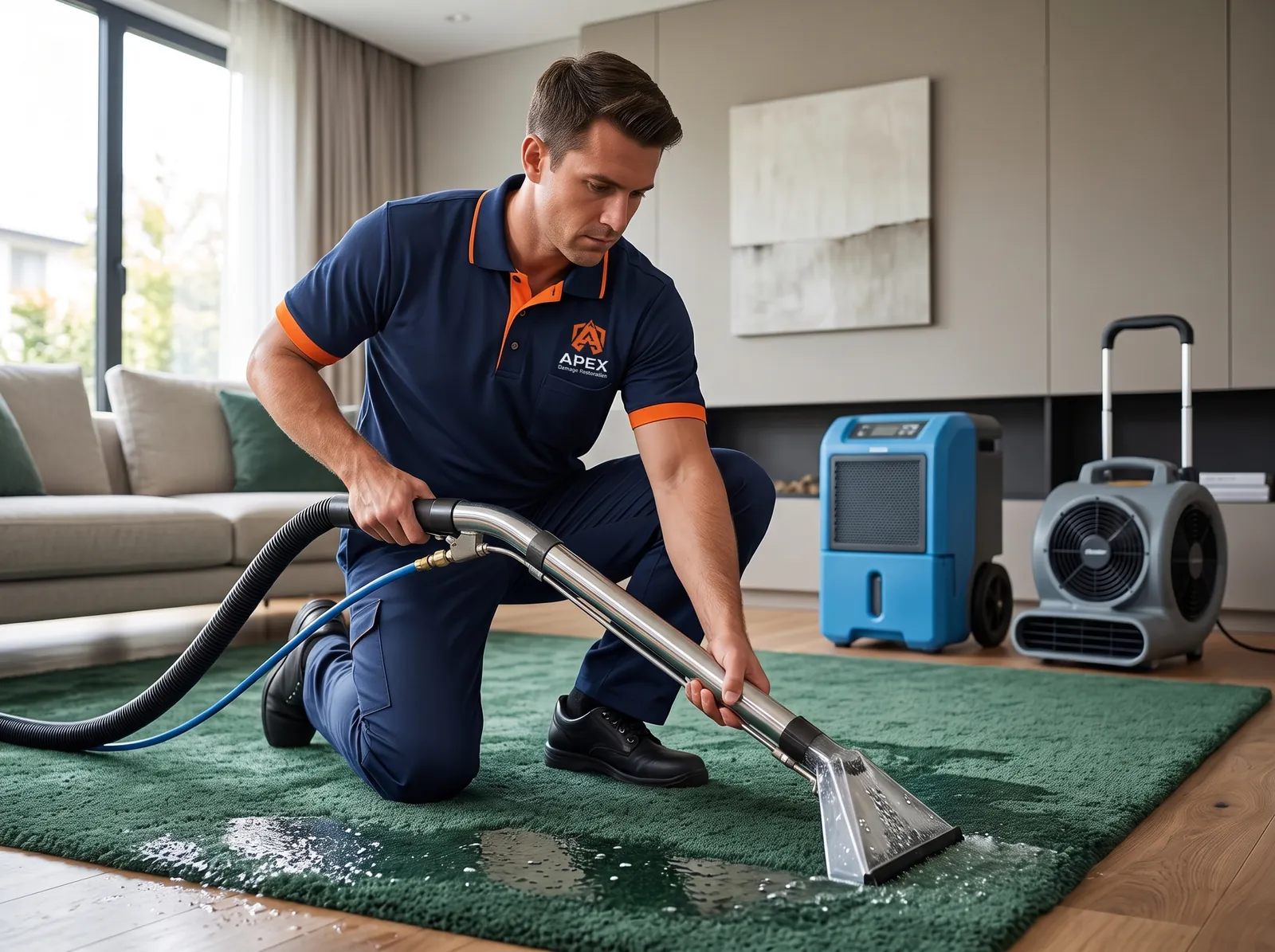
- Water extraction and drying: Costs $1 to $11 per square foot, or $150 to $500 per room, for professional water pumping, industrial air movers, and dehumidification.
- Carpet pad replacement: Costs $0.75 to $3.75 per square foot. Carpet padding absorbs water like a sponge and typically cannot be dried and reused if it remains saturated for more than 24 hours.
- Full carpet replacement: Costs $2 to $8 per square foot when the carpet is contaminated by black water or damaged beyond cleaning.
- Subfloor repair: Costs approximately $400 for a 300-square-foot room when water passes through the padding and causes wood rot in the subfloor.
Costs by Water Contamination Level
The water category present at the time of the loss determines both the cleanup cost per square foot and whether the carpet can be saved, based on ANSI/IICRC S500 water damage restoration standards. The following table compares clean, gray, and black water by cleanup cost, salvageability, and typical source.
| Water Category | Cleanup Cost / Sq. Ft. | Can the Carpet Be Saved? | Typical Sources |
|---|---|---|---|
| Category 1: Clean Water | $3 – $6 | Yes, with extraction and drying | Supply line breaks, rainwater |
| Category 2: Gray Water | $6 – $9 | Sometimes; carpet can be sanitized, but the pad requires replacement | Dishwasher and washing machine leaks |
| Category 3: Black Water | $9 – $12 | No; carpet and padding require full replacement | Sewage backups, toilet overflow, floodwater |
Important Cost Drivers
Two factors most often increase the total restoration cost beyond the base extraction and drying price: delayed response time and the source of the water.
- The 48-hour window: Mold begins growing within 24 to 48 hours of saturation. Delaying extraction past this window adds professional mold remediation costs of $15 to $30 per square foot.
- Insurance coverage: Standard homeowners insurance typically covers sudden events such as a burst pipe. Insurers generally deny claims for gradual damage caused by a long-neglected leak.
Get Professional Help With Water-Damaged Carpet
Water-damaged carpet involving gray water, black water, or saturation beyond 48 hours requires professional assessment to confirm salvageability and prevent mold growth. A licensed restoration contractor can test water category, measure moisture levels in carpet, padding, and subfloor, and determine whether drying, cleaning, or removal is the appropriate response.
Need Emergency Restoration Help Today?
Call Apex Damage Restoration now for fast priority dispatch across Aurora, CO, a written estimate before work begins, and direct insurance claims assistance.