
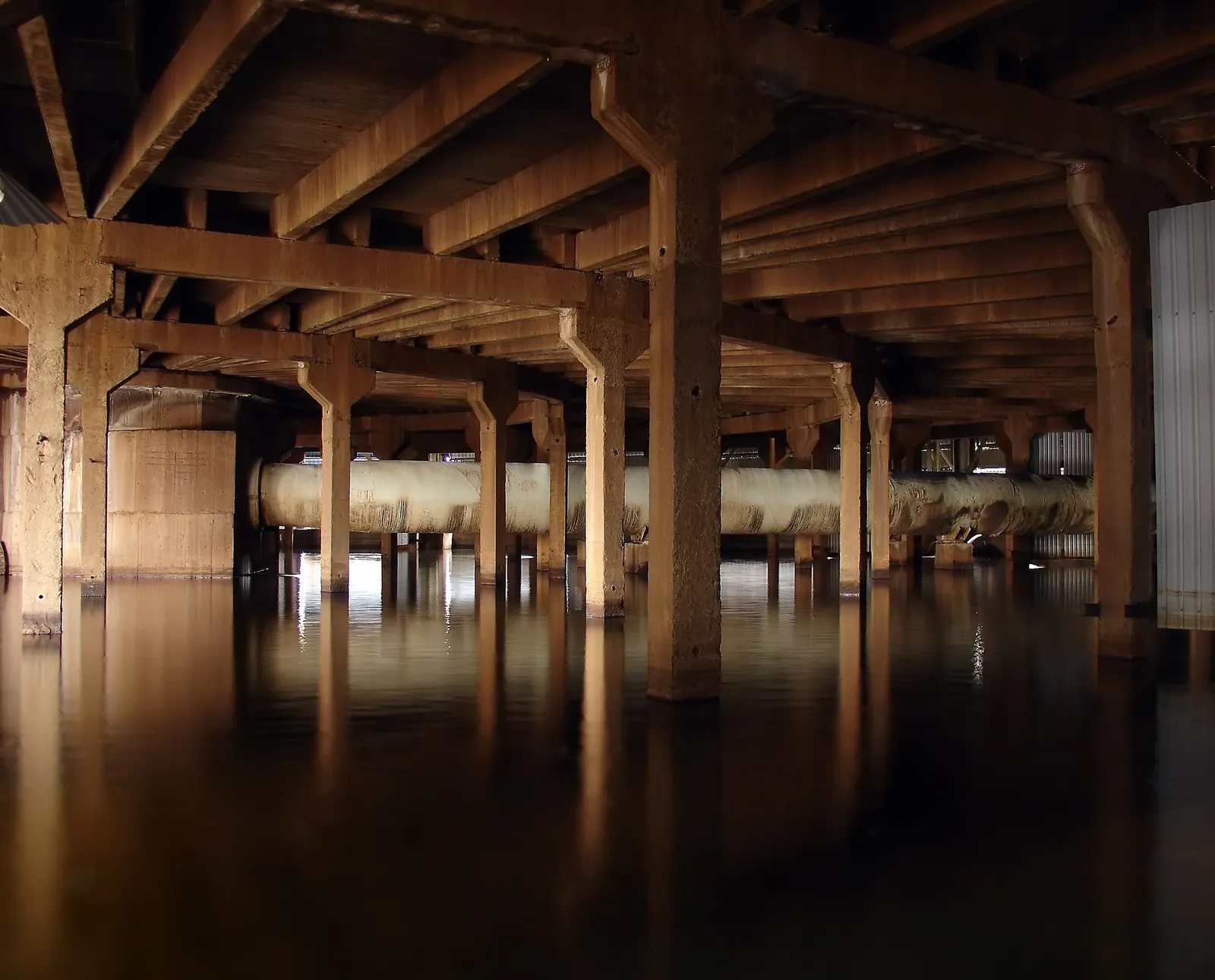
A damp or flooded crawl space compromises a home's structural framing, indoor air quality, and foundation over time. Water intrusion in this space often goes unnoticed for months because the area sits below living areas and outside routine sightlines. Recognizing the signs early, understanding the entry points, and addressing repair promptly limits structural and health-related consequences.
What Are The Signs Of Crawl Space Water Damage?
Crawl space water damage produces eight primary signs: musty odors, standing water, sagging floors, wood rot, mold growth, cracked foundation walls, and increased pest activity. These signs range from subtle olfactory cues to visible structural failures, and they typically appear in a predictable sequence as moisture exposure continues.
Musty or Earthy Odors
A musty or earthy odor is usually the first noticeable sign of crawl space water damage. This smell results from mold and mildew colonizing damp wood, insulation, and soil beneath the home. The odor travels upward through flooring seams, HVAC ductwork, and gaps around plumbing penetrations, often becoming noticeable in living spaces before any visible damage appears in the crawl space itself. A persistent musty smell that returns after cleaning indicates an active moisture source rather than a one-time event.
Standing Water or Puddles
Standing water or puddles in a crawl space confirm active water intrusion. Water can accumulate from groundwater seepage, plumbing leaks, or surface runoff entering through foundation openings. Even shallow pooling, less than an inch deep, sustains humidity levels that promote mold growth and wood decay across the entire crawl space. Standing water that appears after rainfall but drains within a day points toward a drainage issue, while water present regardless of weather conditions suggests a plumbing leak or high water table.
Sagging, Warped, or Uneven Floors
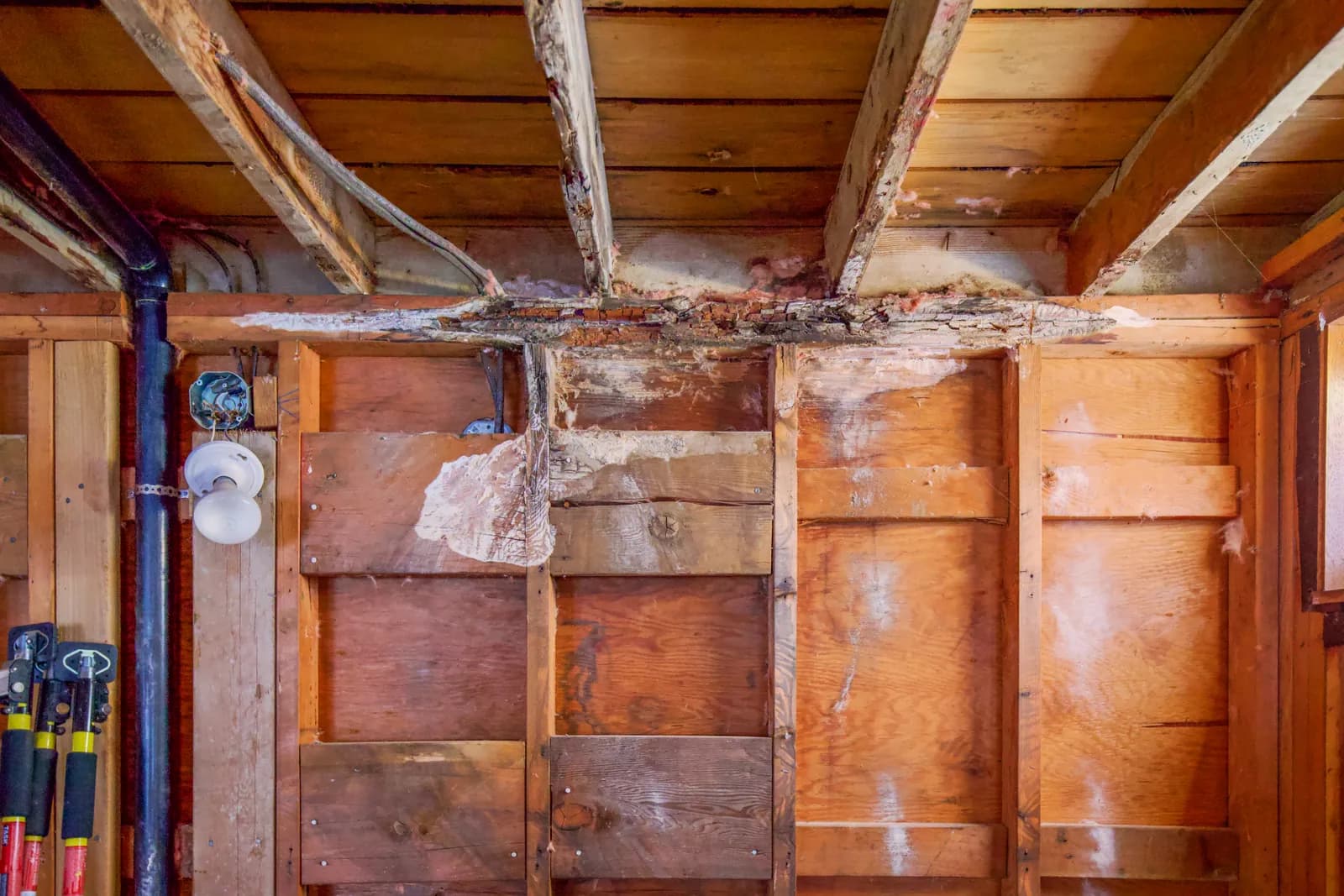
Sagging, warped, or uneven floors above a crawl space develop when prolonged moisture weakens the floor joists and subfloor material. Wood absorbs water and loses structural rigidity, causing floors to flex, dip, or feel spongy underfoot. This symptom typically appears months or years after initial water exposure, once the wood has absorbed enough moisture to lose load-bearing capacity. Homeowners often notice this sign through doors that stick, floors that bounce when walked on, or visible dips near exterior walls.
Wood Rot and Soft, Spongy Framing
Wood rot and soft, spongy framing indicate advanced fungal decay in the crawl space's structural wood members. Two primary types affect crawl spaces: brown rot, which breaks down cellulose and causes wood to crack into cube-shaped pieces, and white rot, which breaks down lignin and leaves wood fibrous and stringy. Both types require sustained moisture content above 20% to develop, and both compromise the load-bearing capacity of joists, sill plates, and support posts. A screwdriver or awl that penetrates framing wood with minimal pressure indicates active rot requiring structural evaluation.
Visible Mold Growth
Visible mold growth appears as black, white, or greenish patches on crawl space framing, insulation, subfloor, or exposed soil. Mold colonizes organic material once humidity remains above 60% for an extended period, a condition common in unventilated or poorly sealed crawl spaces. Mold spores generated in the crawl space migrate into the home's living areas through the stack effect, a natural airflow pattern that draws crawl space air upward through floor gaps and duct leaks. This migration connects crawl space moisture problems directly to indoor air quality concerns for occupants.
Cracked or Discolored Foundation Walls
Cracked or discolored foundation walls signal water intrusion at the point where soil meets the crawl space perimeter. Horizontal or stair-step cracks often indicate hydrostatic pressure pushing against the foundation from saturated soil outside. Discoloration, including white mineral deposits called efflorescence, forms when water moves through concrete or masonry and leaves dissolved minerals behind as it evaporates. These wall conditions frequently mark the specific entry point responsible for the moisture found elsewhere in the crawl space.
Increased Pest Activity
Increased pest activity in or near the crawl space often accompanies sustained moisture problems. Termites, carpenter ants, and wood-boring beetles target water-damaged wood because decayed fibers are easier to consume than sound lumber. Cockroaches, silverfish, and rodents are drawn to the humidity and organic debris that collects in a damp crawl space. Pest activity alone does not confirm water damage, but its presence alongside any of the signs above raises the likelihood of an active moisture source.
What Causes Water Damage in Crawl Spaces?
Crawl space water damage results from six primary causes: poor grading, foundation cracks, plumbing leaks, clogged gutters, high water table pressure, and HVAC condensation. These causes fall into two categories: water entering from outside the foundation and water generated from sources inside the crawl space.
Poor Grading and Drainage Around the Foundation
Poor grading and drainage around the foundation is the most common cause of crawl space water damage. Proper grading directs surface water away from the home at a slope of at least 6 inches of drop over the first 10 feet from the foundation. When soil slopes toward the house instead, rainwater and irrigation runoff collect against the foundation wall and seep through joints, cracks, or porous masonry into the crawl space. Landscaping changes, soil settling, and mulch buildup against the foundation commonly disrupt grading over time, even when a home was correctly graded during construction.
Foundation Cracks and Gaps
Foundation cracks and gaps allow groundwater and surface runoff to enter the crawl space directly. Concrete and concrete block foundations develop cracks from soil settlement, hydrostatic pressure, and normal curing shrinkage. Gaps also form around utility penetrations, such as pipes and electrical conduits, where the surrounding sealant deteriorates. Cracks wider than 1/8 inch or that continue to widen indicate active structural movement and typically require professional evaluation before water intrusion can be permanently addressed.
Plumbing Leaks
Plumbing leaks from supply lines, drain pipes, or water heater connections routed through the crawl space introduce water directly into the enclosed area. A slow leak at a pipe joint can release water for weeks before producing a visible puddle, since the water often absorbs into soil or insulation before pooling. Because crawl space plumbing runs are rarely inspected during routine home maintenance, leaks in this location frequently reach an advanced stage before detection.
Clogged Gutters and Downspouts
Clogged gutters and downspouts cause rainwater to overflow along the foundation instead of discharging away from the home. A downspout that terminates within 3 feet of the foundation, or one blocked by leaves and debris, concentrates large volumes of roof runoff at a single point along the crawl space perimeter. This localized saturation increases hydrostatic pressure against the adjacent foundation wall and accelerates water entry through nearby cracks or seams.
High Water Table and Hydrostatic Pressure
A high water table and resulting hydrostatic pressure force groundwater through foundation walls and floors even without visible cracks. Hydrostatic pressure increases as the water table rises during periods of heavy rainfall or seasonal snowmelt, pushing water through the microscopic pores present in poured concrete and concrete block. Homes built in areas with clay-heavy soil or a naturally shallow water table experience this pressure-driven seepage more frequently, since clay soil drains slowly and retains water near the foundation longer than sandy or well-draining soil.
HVAC Condensation and High Humidity
HVAC condensation and high ambient humidity introduce moisture into a crawl space without any breach in the foundation. Ductwork and air handlers located in the crawl space produce condensation when cool surfaces meet warm, humid air, particularly in regions with high outdoor humidity. Uninsulated cold-water pipes produce the same condensation effect. In an unvented or poorly ventilated crawl space, this moisture has no way to escape and accumulates in the soil, insulation, and wood framing over time, contributing to the same mold and rot outcomes caused by direct water intrusion.
What Crawl Space Water Damage Repair Includes
Crawl space water damage repair combines structural drying, material removal, and moisture verification to eliminate both existing damage and its underlying source. Contractors extract standing water from the crawl space using pumps, then run industrial dehumidifiers and air movers to bring wood framing back to a safe moisture range, confirmed with handheld moisture meter readings before the space is closed.
Insulation and building materials that have absorbed water past the point of salvage are removed and replaced, since saturated fiberglass and cellulose batts lose their insulating value and keep moisture trapped against the framing. Once the crawl space is dry, technicians apply antimicrobial treatment to exposed wood surfaces to stop mold growth from taking hold.
Structural drying is followed by repairs targeting the water source itself. Foundation cracks get sealed with hydraulic cement or epoxy injection, damaged or leaking plumbing lines are repaired or replumbed, and grading corrections reroute surface water away from the foundation.
Crawl space repair scopes commonly add a vapor barrier across the floor and walls, and where a high water table drives repeat flooding, a sump pump system to manage ongoing groundwater intrusion. Pairing source correction with structural drying keeps the crawl space from slipping back into the same water category classification and needing repeat repair.
How Much Does Crawl Space Water Damage Repair Cost?
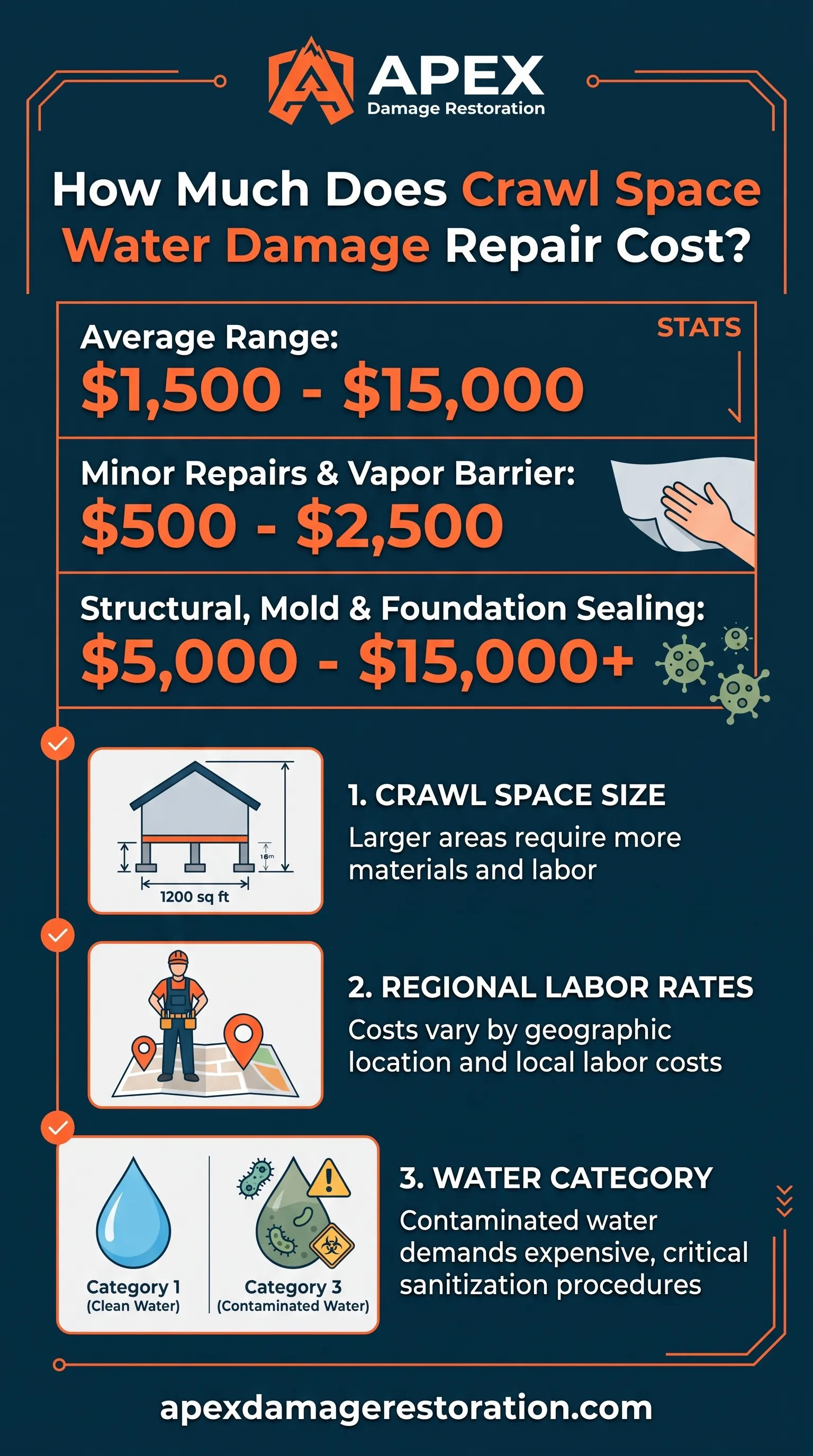
Crawl space water damage repair costs between $1,500 and $15,000 on average, with total price driven by damage extent and repair scope. Minor repairs, vapor barrier installation, and moisture control average $500 to $2,500. Repairs involving structural wood replacement, mold remediation, and foundation crack sealing average $5,000 to $15,000 or more. These ranges are industry estimates; actual crawl space repair pricing depends on crawl space size, regional labor rates, and water category classification, since Category 3 (contaminated) water requires more extensive remediation than clean Category 1 water.
How Long Does Crawl Space Water Damage Repair Take?
Crawl space water damage repair typically takes 3 to 10 days, from initial water extraction through final source correction. Water extraction and structural drying require 2 to 5 days, using industrial dehumidifiers and air movers, with duration depending on saturation extent and crawl space ventilation. Source repairs, foundation crack sealing, vapor barrier installation, or plumbing fixes typically add 1 to 5 additional days. Crawl space projects involving significant wood replacement or extensive mold remediation can extend the total timeline beyond two weeks.
DIY vs. Professional Crawl Space Water Damage Repair
DIY crawl space water damage repair is appropriate only for minor, early-stage moisture issues, while professional repair is necessary for standing water, structural damage, or mold growth. Homeowners can reasonably handle small grading corrections, gutter cleaning, and basic vapor barrier installation without professional help. Standing water removal, structural drying to safe moisture content levels, wood rot assessment, and mold remediation require professional-grade dehumidification equipment and moisture meters that most homeowners don't own. Attempting these repairs without proper equipment risks incomplete drying, which allows mold to return even after visible cleanup.
Will Insurance Cover Crawl Space Water Damage?
Homeowners insurance covers crawl space water damage when the cause is sudden and accidental, such as a burst pipe, for example, but typically excludes damage from gradual seepage, flooding, or long-term neglect.
A standard policy generally covers water damage from a plumbing failure that occurs without warning, since this qualifies as a sudden discharge event. Crawl space damage caused by poor grading, gradual foundation seepage, or high groundwater levels is typically classified as a maintenance issue or flood damage, both excluded from standard homeowners policies. Flood-related crawl space damage requires a separate flood insurance policy through the National Flood Insurance Program or a private flood carrier for coverage to apply.
Get Crawl Space Water Damage Repair Today
Crawl space water damage worsens the longer it goes unaddressed, spreading from isolated moisture into structural wood decay, mold contamination, and foundation deterioration. A professional water damage inspection identifies the specific entry point and water category involved, allowing for a repair plan that resolves both the visible damage and its underlying cause.
Need Emergency Restoration Help Today?
Call Apex Damage Restoration now for fast priority dispatch across Aurora, CO, a written estimate before work begins, and direct insurance claims assistance.