
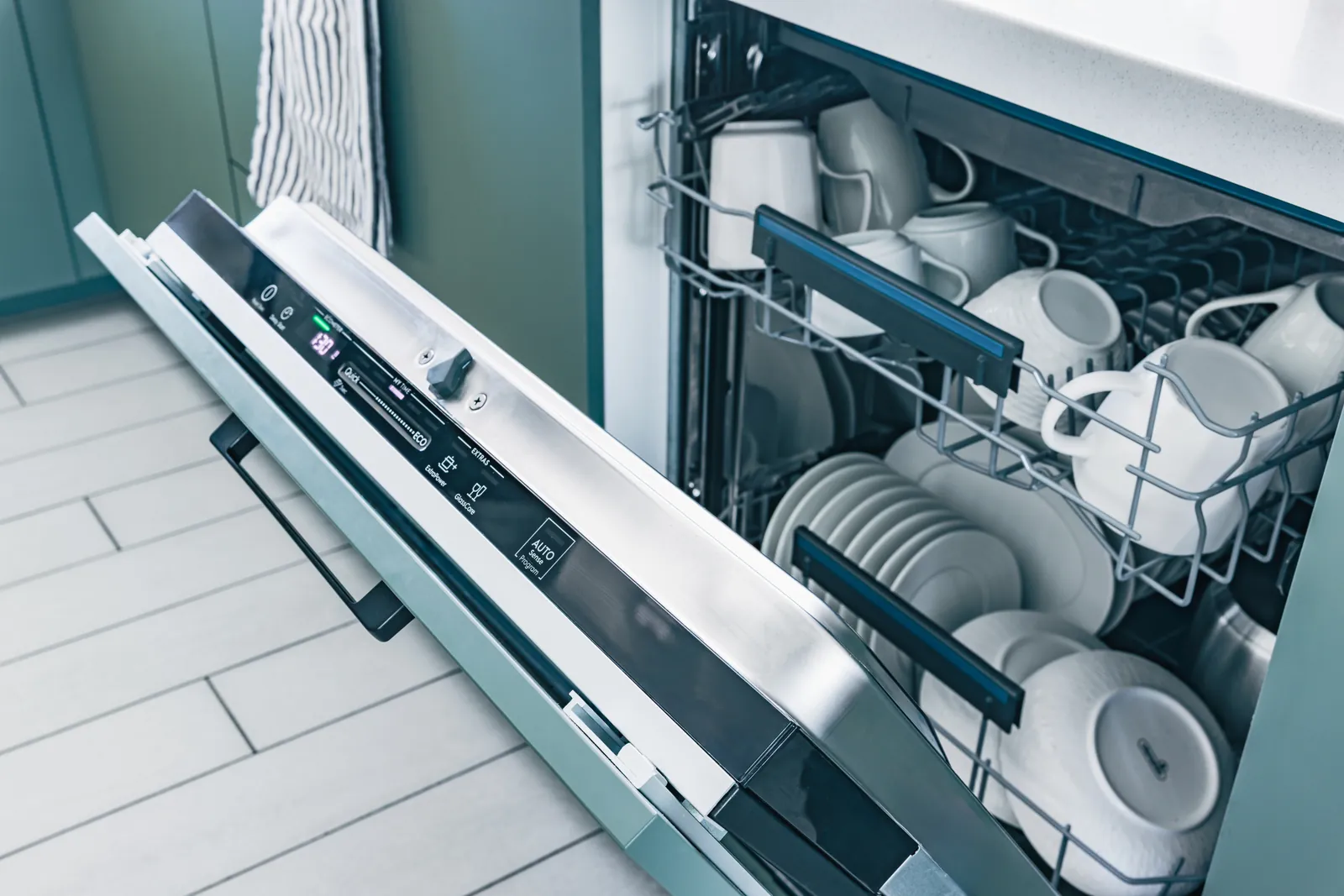
A leaking dishwasher can stem from a worn door seal, a loose supply line, a failed drain hose, or a stuck float switch, and left unaddressed, it can saturate subfloors and cabinetry within hours. This guide walks through the mechanical causes behind a dishwasher leak, the signs that a leak has already caused water damage, whether homeowners insurance covers the loss, and the steps to take once water has reached your kitchen floor or cabinets.
Why Is Your Dishwasher Leaking?
A dishwasher leaks when a component that normally seals or directs water fails, allowing water to escape the tub, door, or connected hoses during a wash cycle. The most common failure points are the door seal, the water supply line, the drain hose and pump seal, the float switch, the tub itself, and detergent-related overfilling. Narrowing down the source starts with observing when the leak occurs: before the cycle starts points to the supply line, during the wash points to the door seal or float switch, and during drain points to the pump seal or drain hose. Some causes are minor and fixable in minutes, while others signal a component nearing the end of its service life and likely to leak again.
Door Seal and Gasket Failure
A worn or cracked door gasket allows water to escape from the front of the dishwasher during a wash cycle. The gasket is a rubber seal that runs around the door frame, and it hardens, cracks, or compresses over time with repeated heat exposure. A warped door or a misaligned latch prevents the gasket from forming a complete seal, even when the gasket itself remains intact. Water visible at the base of the door, or pooling just outside the unit while it runs, indicates a door seal problem rather than an internal leak.
Water Supply Line and Inlet Valve Issues
A loose fitting on the water supply line or a faulty inlet valve causes leaks that appear before the wash cycle begins. The supply line connects the dishwasher to the household water shutoff valve, and a loosened compression fitting at either end allows water to drip continuously, independent of whether the appliance is running. A failing inlet valve can stick partially open, letting water enter the tub and overflow even when the dishwasher is off. Leaks traced to this area typically appear underneath the unit near the front, close to where the supply line enters the cabinet.
Drain Hose and Pump Seal Problems
A cracked or disconnected drain hose, or a worn pump seal, causes leaks that appear mid-cycle or during the drain phase. The drain hose carries wastewater from the tub to the garbage disposal or drain line, and a split or loose connection lets water escape before it clears the appliance. The pump seal, located where the drain pump shaft passes through the pump housing, degrades with age and allows water to seep out during the pump's operation. Both issues typically produce water pooling directly underneath the dishwasher rather than at the door.
Float Switch Malfunction
A stuck float switch causes the tub to overfill, sending excess water past the point the appliance is designed to hold. The float switch is a small mechanical sensor that rises with the water level and signals the water inlet valve to stop filling once the tub reaches capacity. Debris or mineral buildup can jam the float in a lowered position, so the valve keeps admitting water well beyond the normal fill level. This produces a leak that looks identical to a door seal or tub failure but originates from continuous water intake rather than a physical crack or worn seal.
Cracked or Damaged Tub
A hairline crack in the dishwasher tub causes a leak that persists regardless of the wash cycle, detergent type, or load size. Tub cracks typically develop from age-related wear, thermal stress from repeated heating and cooling, or physical impact from a dropped utensil or dish. Because the tub holds water throughout the entire cycle, a crack produces a slow, consistent leak rather than one tied to a specific phase such as filling or draining. A cracked tub generally requires appliance replacement rather than a component repair.
Detergent Type and Overfilling
Using regular dish soap instead of dishwasher-specific detergent causes oversudsing, which forces suds and water out through the door seal or vents. Dish soap is formulated to create foam, and that foam has nowhere to go inside a sealed dishwasher tub, so it pushes past the gasket during the wash cycle. Overloading the racks can also block the spray arm or interfere with the door's seal against the tub, producing a similar effect. This type of leak looks mechanical but resolves once the correct detergent and load size are used, without any part replacement.
Signs Your Dishwasher Leak Has Caused Water Damage
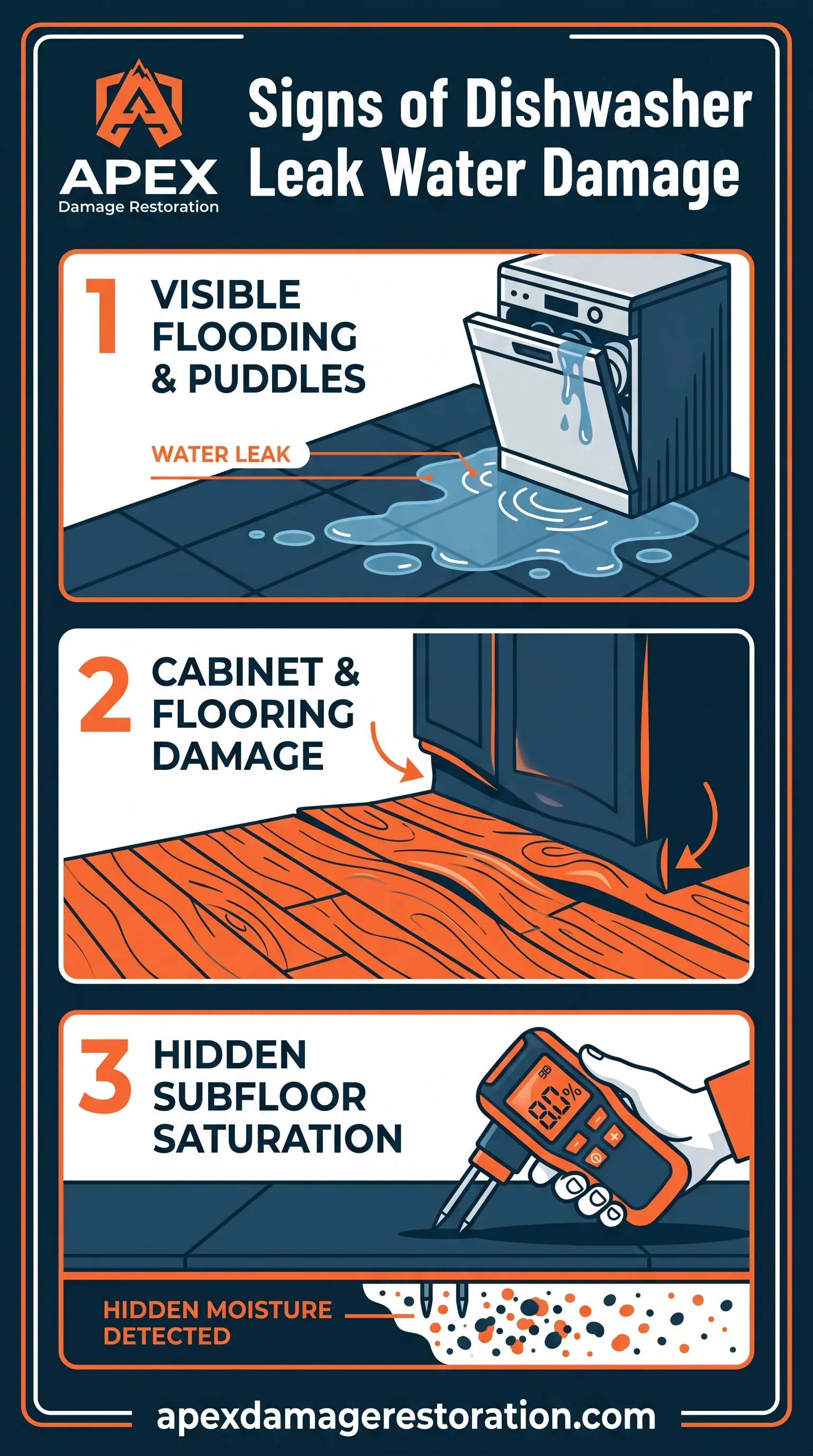
A dishwasher leak has caused water damage when water has moved beyond the immediate area of the appliance into the surrounding floor, cabinetry, or subfloor. Recognizing how far water has traveled determines both the urgency of the response and the scope of restoration required. Damage typically progresses from visible pooling on the kitchen floor to absorption into nearby cabinets and flooring, and in more severe cases, into the subfloor beneath the unit.
Visible Flooding and Standing Water
Standing water on the kitchen floor around the dishwasher indicates an active or recent leak that has already exceeded the appliance's footprint. Water spreading beyond the immediate area of the unit, particularly toward adjacent cabinets or into a connected room, signals a leak significant enough to require immediate attention. Shutting off the water supply valve and unplugging the dishwasher stops the source before addressing the standing water itself.
Damage to Cabinets and Flooring
Discoloration on cabinet toe-kicks and warped flooring near the dishwasher indicate that leaked water has been absorbed into surrounding materials rather than remaining on the surface. Swelling in baseboards adjacent to the unit and a musty odor in the kitchen both indicate that a moisture point has been present long enough to begin affecting wood and other porous materials. This level of damage typically requires material removal and drying rather than simple surface cleanup.
When the Leak Reaches the Subfloor
A dishwasher leak reaches the subfloor when water travels beneath the flooring material and saturates the wood or concrete base underneath. Subfloor saturation is difficult to detect visually because the damage occurs beneath the visible floor surface, and it typically requires a moisture meter to confirm. Hidden moisture at this level creates conditions for mold growth and can soften structural wood components if it remains untreated, making early professional assessment important once a leak is suspected to have reached this stage.
Does Homeowners Insurance Cover Dishwasher Water Damage?
Homeowners insurance covers dishwasher water damage when the leak is sudden and accidental, but it typically excludes damage caused by a leak that developed gradually over time. Most standard homeowners policies distinguish between an unexpected event, such as a supply line rupturing, and a slow, ongoing leak that a homeowner could reasonably have discovered and repaired sooner. This distinction determines whether a claim is approved or denied, making it the central factor in any dishwasher-related water damage claim.
Sudden Leaks vs. Long-Term Neglect
A sudden and accidental discharge, such as a supply line bursting or an inlet valve failing outright, generally qualifies for coverage under a standard homeowners policy. A gradual leak, such as a door seal that has been dripping for weeks or months before detection, generally falls under the long-term neglect exclusion that most policies contain. Insurance adjusters inspect the affected area for signs of prolonged moisture exposure, such as extensive mold growth or deteriorated materials, to determine which category a claim falls into. Documenting when a leak was first noticed, along with photos of the damage and any appliance maintenance records, supports a claim in either scenario.
Can You Fix a Leaking Dishwasher Yourself?
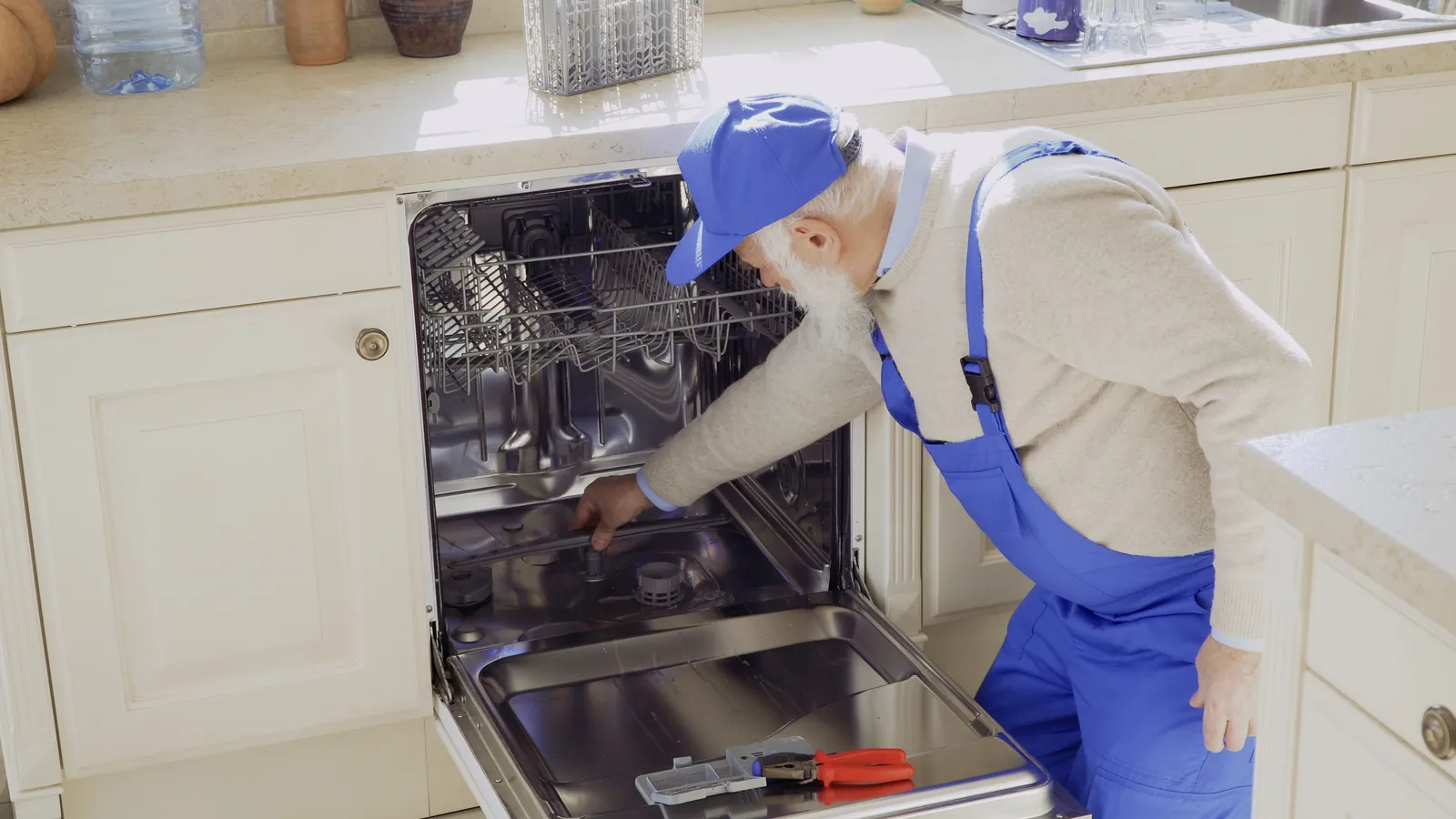
Some dishwasher leaks can be fixed without professional help, including tightening a loose supply line fitting, replacing a worn door gasket, and clearing debris from a stuck float switch. These repairs address the mechanical cause of the leak directly and typically cost less than a service call when the homeowner has basic tool familiarity. A leaking dishwasher should be inspected by a plumber or appliance technician instead when the cause is a cracked tub, a failed pump seal, or a leak whose source cannot be identified after basic checks. DIY plumbing repair, however, does not address water that has already entered the flooring, cabinetry, or subfloor: fixing the appliance stops the source, but it does not dry or repair the surrounding structure once moisture has been absorbed.
What to Do If Your Dishwasher Has Caused Water Damage?

Responding quickly to a dishwasher leak limits how far water spreads into flooring, cabinetry, and the subfloor. Take the following steps in order:
- 1Shut off the water supply valve and unplug the dishwasher to stop additional water from entering the space.
- 2Remove standing water from the floor using towels or a wet vacuum, then move any nearby rugs or removable items away from the affected area.
- 3Detect hidden moisture with a moisture meter to identify how far water has traveled into flooring, cabinetry, or the subfloor, since damage is often more extensive than what is visible on the surface.
- 4Set up professional drying equipment, including air movers and dehumidifiers, to remove moisture from affected materials faster than passive air drying and reduce the risk of secondary damage such as warping.
- 5Schedule professional water damage restoration promptly, since mold can begin developing within 24 to 48 hours of water exposure, and delaying treatment increases both structural damage and mold risk.
- 6Call a restoration company when water has reached cabinetry, flooring beyond the immediate footprint of the appliance, or the subfloor, since these situations require equipment and moisture assessment beyond typical household cleanup.
How to Prevent Future Dishwasher Leaks?
Regular maintenance catches most leak causes before they produce standing water or structural damage:
- Inspect the door gasket routinely for cracks or hardening to catch wear before it produces a leak.
- Use dishwasher-specific detergent, rather than regular dish soap, to prevent the oversudsing that forces water past the door seal.
- Replace the water supply line on a regular interval, rather than waiting for visible wear, to reduce the risk of a sudden fitting failure.
- Check the drain hose periodically for kinks, cracks, or loose connections to catch drain-side leaks before they cause standing water.
Need Emergency Restoration Help Today?
Call Apex Damage Restoration now for fast priority dispatch across Aurora, CO, a written estimate before work begins, and direct insurance claims assistance.