
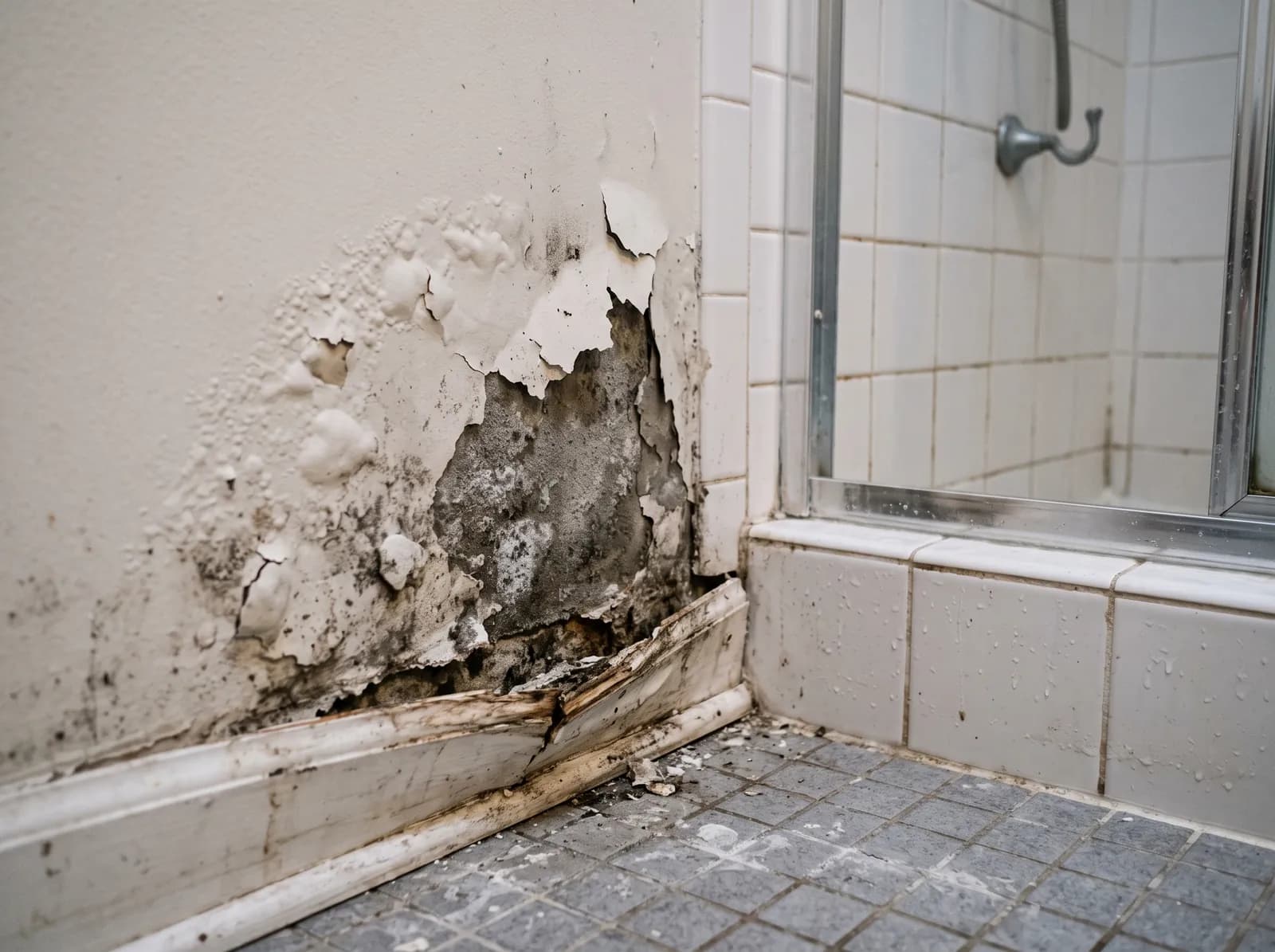
A shower leak causes water damage when water escapes the shower system and reaches materials not designed to stay wet, such as drywall, subfloor, and framing. The leak can originate inside the plumbing behind the wall or at the enclosure itself, and each source produces a different damage pattern and repair path. This guide explains what causes shower leak water damage, how to address the leak at its source, and what professional repair and restoration involve once damage has occurred.
What Is Shower Leak Water Damage?
Shower leak water damage is the deterioration of walls, flooring, subfloor, and surrounding structural materials caused by water escaping a shower system. The water source can be a hidden leak inside the wall cavity, such as a failed supply line or drain connection, or a surface-level leak where water bypasses the shower enclosure through gaps, worn seals, or damaged grout.
Hidden leaks are the more damaging category because they release water directly into the wall cavity and subfloor, where it can spread before any visible sign appears. A hidden leak behind a shower wall can saturate framing and drywall for weeks before staining or softness becomes noticeable. Surface-level leaks tend to affect the flooring and baseboards nearest the shower first, since the water travels along the floor rather than inside the wall.
Water intrusion from either source leads to the same underlying risk: prolonged moisture exposure weakens structural materials and creates conditions for mold growth. The longer water remains in contact with drywall, wood framing, or subfloor, the greater the extent of structural damage and the higher the eventual repair cost.
What Causes Water Damage From a Leaking Shower?
Shower leak water damage stems from four primary sources: a failed shower head or arm connection, damaged supply or drain plumbing behind the wall, a cracked or failing shower pan, and worn grout or caulk at the shower's seams. Each source affects a different part of the shower system and requires a different repair approach.
Leaking shower head or arm
A leaking shower head or arm occurs when the threaded connection between the shower arm and the wall-mounted pipe loosens, or the internal washer degrades. Water seeps at the connection point and runs down the interior wall behind the shower surround, since the leak originates inside the wall rather than on the visible tile surface. This type of leak is typically slow, which allows it to continue undetected until staining appears on an adjacent wall or ceiling.
Damaged supply or drain pipes behind the wall
Damaged supply or drain pipes release water directly into the wall cavity whenever a pipe joint fails, a pipe corrodes, or a connection loosens from age or water pressure. Supply-line leaks occur under constant water pressure and can release water continuously, while drain-line leaks occur only during shower use. Both leak types saturate the wall cavity and subfloor before any surface indication develops, making them the most damage-intensive cause on this list.
A cracked or failing shower pan
A cracked or failing shower pan allows water to pass through the pan liner and reach the subfloor beneath the shower base. The shower pan sits below the visible tile or acrylic surface and relies on a waterproofing membrane to contain water; once that membrane or the pan itself cracks, water bypasses the drain and soaks into the subfloor with every shower use. Pan failures are difficult to detect early because the damage develops beneath the shower floor, out of view.
Worn grout and caulk
Worn grout and caulk create gaps at tile joints and enclosure seams that allow water to pass through the shower's waterproofing layer instead of draining away. Grout naturally cracks and erodes over time from water exposure and cleaning, while caulk loses its seal as it dries out or separates from the tile edge. Water that passes through these gaps travels behind the tile and into the wall or floor assembly, producing damage similar to a plumbing leak even though the shower's internal pipes remain intact.
How Much Does Shower Leak Water Damage Restoration Cost?
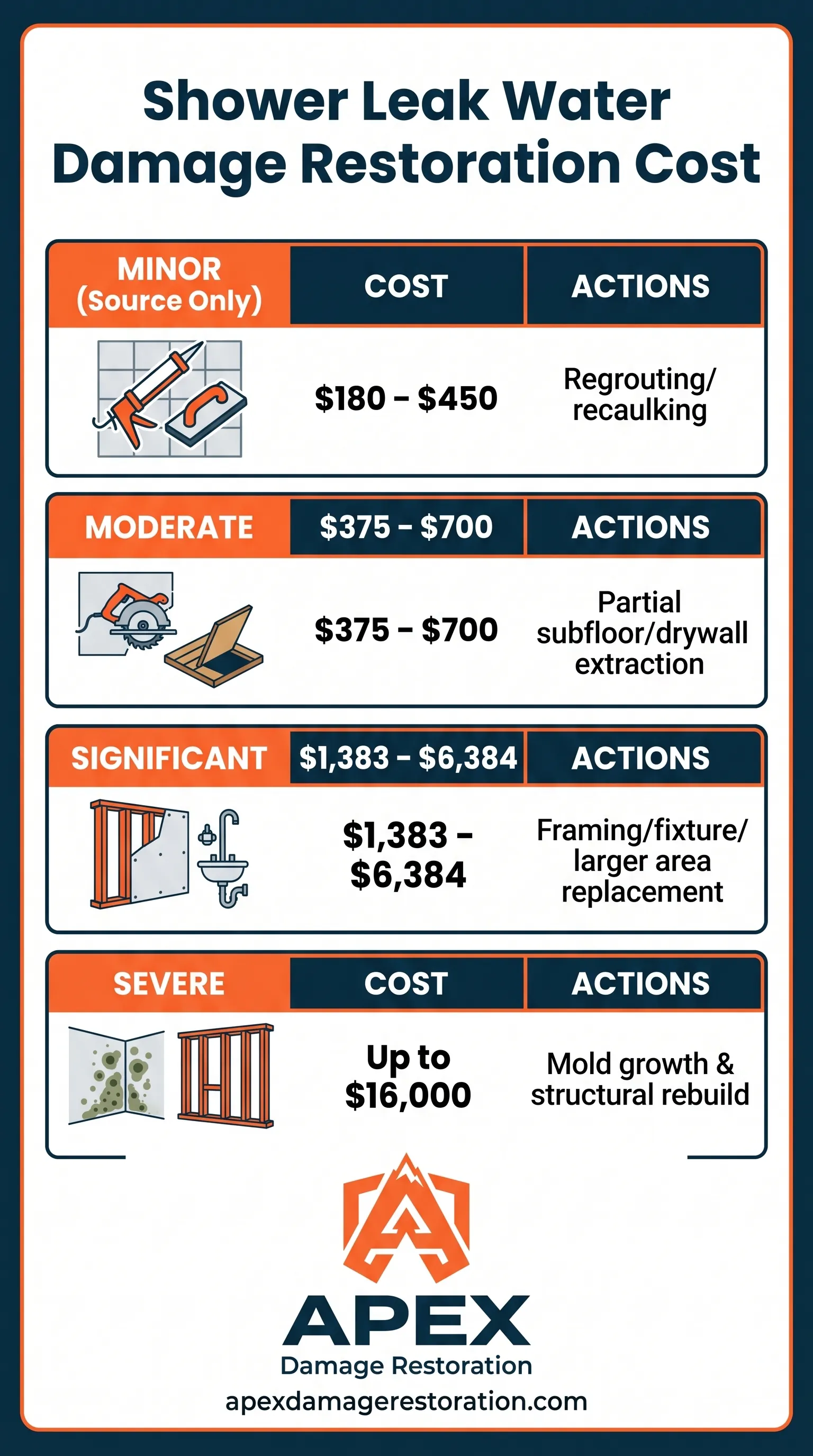
Repairing shower leak water damage costs $150 to $6,400 on average, depending on whether the leak is limited to grout and caulk or has spread into the wall cavity, subfloor, or framing. Severe cases involving mold or structural rebuild can exceed $16,000.
The total cost depends on three factors: how far the water traveled before extraction began, whether the source was a surface seal or an in-wall plumbing failure, and whether mold remediation is required. The following ranges reflect typical shower leak scenarios by severity.
| Severity | Scope of Damage | Typical Cost |
|---|---|---|
| Minor (source only) | Regrouting or recaulking a shower enclosure with no water intrusion beyond the tile surface | $180 to $450 |
| Moderate | Clean-water leak affecting a limited area of drywall or subfloor, requiring extraction and partial rebuild | $375 to $700 for a typical 100-square-foot bathroom, plus material replacement |
| Significant | Leak reaching framing or a larger floor area, including drywall, subfloor, and fixture replacement | $1,383 to $6,384 |
| Severe | Extended, undetected leak with mold growth and structural rebuild | Up to $16,000, with mold remediation adding $15 to $30 per square foot |
Professional water extraction and drying is typically priced between $3 and $7.50 per square foot, while rebuilding damaged drywall, flooring, and trim adds roughly $20 to $37 per square foot. A leak repaired at the source before water reaches the subfloor or framing stays closer to the low end of this range; a leak left undetected for weeks moves toward the high end as saturation spreads and mold remediation becomes necessary.
How to Fix a Leaking Shower Before It Causes More Damage?
Fixing a leaking shower before it causes more damage starts with identifying whether the leak originates at the shower head or inside the wall, since each requires a different repair method. Addressing the source of the leak limits the damage to what has already occurred and prevents continued water intrusion into the wall cavity or subfloor.
Fixing a leaking shower head
To fix a leaking shower head, shut off the water supply, remove the shower head from the arm, and inspect the threading for wear or debris. Wrap the shower arm's threading with plumber's tape and reattach the shower head by hand before tightening it with a wrench to avoid over-tightening. If the leak continues after resealing the threading, the shower arm's internal washer or the arm itself may need replacement, which restores a tight seal at the connection point.
Repairing a leak inside the shower wall or valve
Repairing a leak inside the shower wall or valve requires accessing the plumbing behind an access panel or through the wall on the opposite side of the shower. This repair involves shutting off the main water supply, removing the damaged pipe section or valve cartridge, and replacing it with a new fitting sealed to the existing plumbing. Because this repair requires cutting into a wall or working directly on pressurized supply lines, a licensed plumber should perform it unless the homeowner has direct experience with in-wall plumbing repair.
How to Stop Water From Leaking Out of the Shower Enclosure
Water leaking out of the shower enclosure stops once the enclosure's seals, caulk, and drainage path are restored to an intact, water-tight condition. Unlike a plumbing leak, enclosure leaks occur at the surface, where the shower door, curtain, or tile perimeter fails to contain water within the shower area.
Effective measures include:
- Door sweep replacement: A worn or missing door sweep allows water to escape at the base of a glass shower door; replacing it restores the seal along the door's bottom edge.
- Silicone caulk resealing: Applying fresh silicone caulk along the tile-to-tub or tile-to-floor joint closes gaps where water previously passed through to the subfloor.
- Shower curtain liner adjustment: A liner that hangs outside the tub or shower base directs water onto the floor instead of into the drain; positioning the liner inside the tub or base corrects this.
- Threshold and curb height: A low or damaged shower curb allows water to flow over the edge during normal use; repairing or raising the curb keeps water contained within the shower footprint.
- Grout resealing: Cracked grout between tiles allows water to seep behind the tile surface; regrouting the affected joints restores the waterproofing layer.
These measures address the shower enclosure directly and do not require altering the shower's internal plumbing.
Shower Leak Water Damage Repair and Restoration
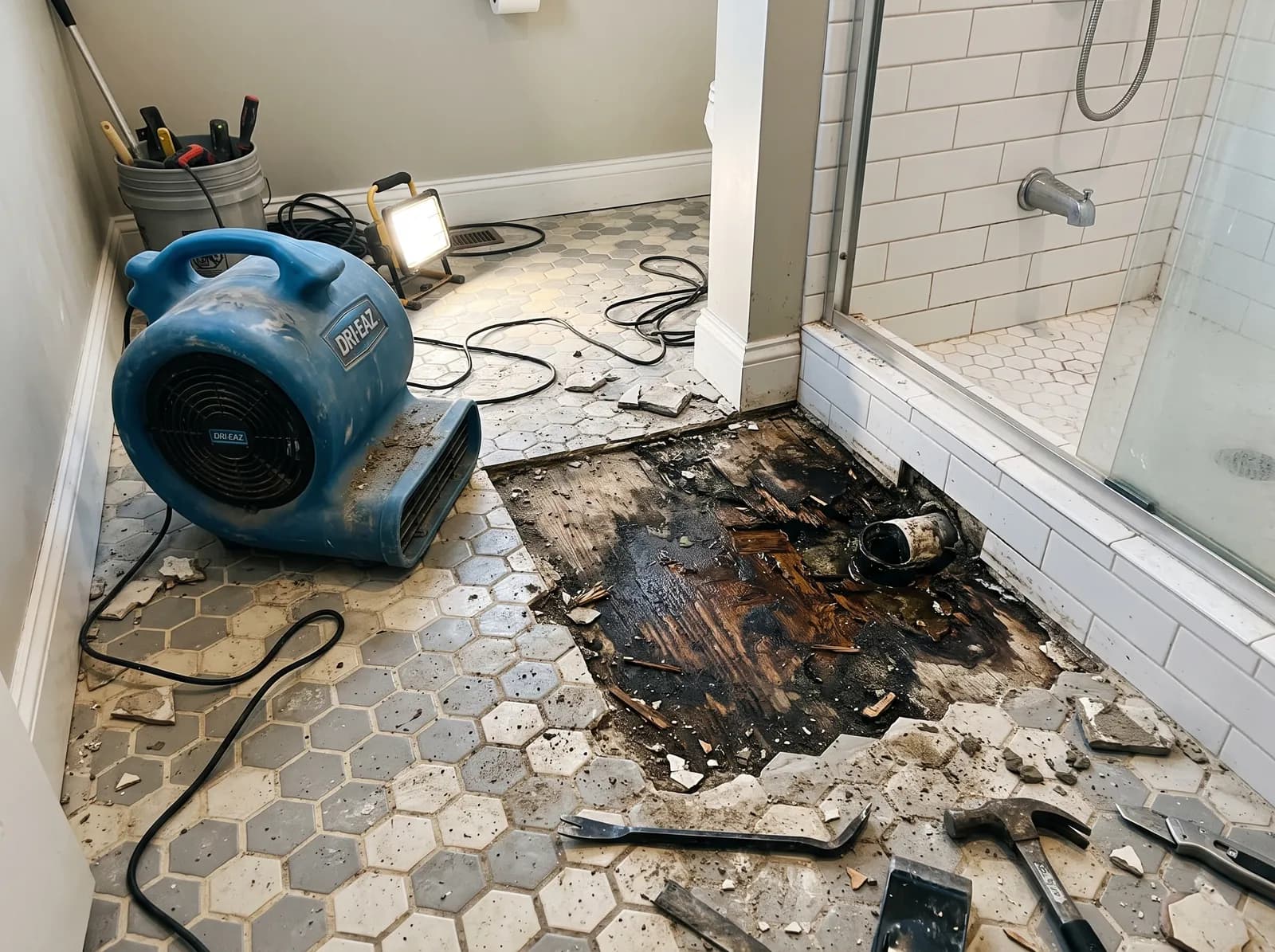
Shower leak water damage repair and restoration involves removing standing water and moisture, treating any mold growth, and rebuilding the water-damaged walls, flooring, and fixtures. This process addresses the damage that has already occurred, in contrast to the source repairs described above, which stop further water intrusion.
Water extraction and drying
Water extraction and drying remove standing water and residual moisture from affected materials using pumps, wet vacuums, and industrial air movers. Technicians use a moisture meter to measure moisture content in drywall, subfloor, and framing, confirming when each material has returned to a dry standard before rebuilding begins. Materials that remain wet after extraction continue to support mold growth and further weaken structurally, so drying is completed before any repair work starts.
Mold prevention and treatment
Mold prevention and treatment address microbial growth that develops when materials remain wet for an extended period, typically within 24 to 48 hours of water exposure. Treatment includes applying antimicrobial solutions to affected surfaces and removing porous materials, such as drywall or insulation, that have absorbed enough moisture to support mold colonization. Dehumidification during the drying phase reduces ambient humidity and limits the conditions mold needs to spread to unaffected areas.
Repairing walls, flooring, and fixtures
Repairing walls, flooring, and fixtures replaces materials damaged beyond drying, such as saturated drywall, warped subfloor, and compromised tile. This stage includes removing and replacing damaged drywall sections, repairing or replacing subfloor panels that have lost structural integrity, and reinstalling tile, grout, and shower fixtures to restore the bathroom to its pre-leak condition. The scope of this repair depends directly on how long the leak went undetected and how far the water traveled before extraction began.
Does Homeowners Insurance Cover Water Damage From a Leaking Shower?
Homeowners insurance typically covers water damage from a leaking shower when the damage results from a sudden and accidental event, such as a pipe that bursts without warning. Insurance policies generally exclude damage caused by gradual leaks, such as a shower pan or grout failure that released water slowly over weeks or months, because insurers classify this as preventable wear and tear rather than a sudden loss.
The distinction between sudden and gradual damage determines coverage eligibility. An adjuster inspecting a claim looks for evidence of how long the leak was active, since long-term moisture staining, mold growth, or material deterioration indicates a gradual leak rather than a sudden failure. Homeowners pursuing a claim should document the damage with photographs, retain any plumber's assessment of the leak's cause, and report the claim promptly, since delayed reporting can itself support a gradual-damage determination.
Policy exclusions vary by insurer and by policy type, so confirming coverage details directly with the insurance provider before beginning repairs is necessary to understand what the specific policy covers.
Need Emergency Restoration Help Today?
Call Apex Damage Restoration now for fast priority dispatch across Aurora, CO, a written estimate before work begins, and direct insurance claims assistance.