
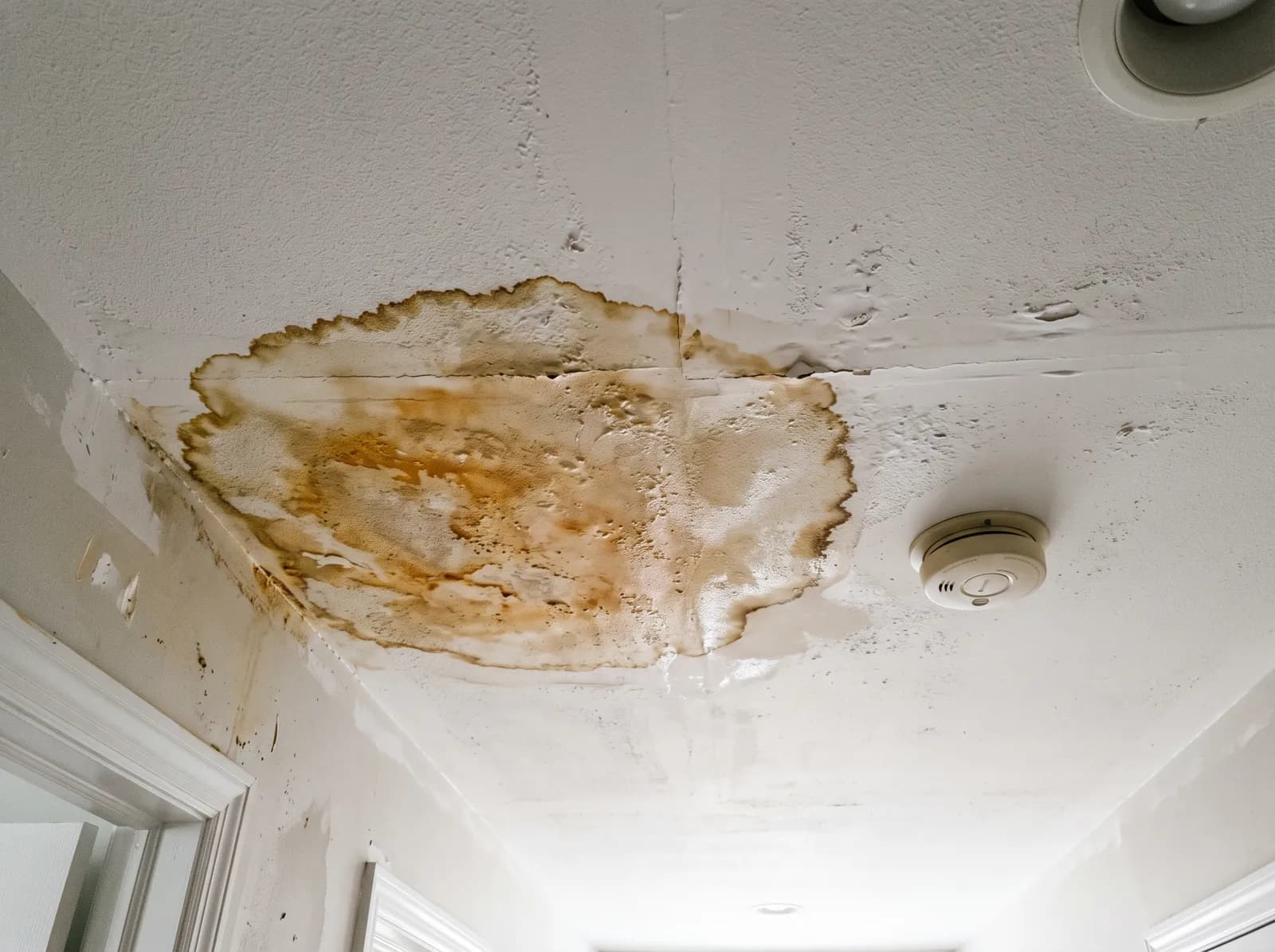
A shower pan leak sends water beneath the visible shower surface into the subfloor, framing, and rooms below, often for weeks before a homeowner notices any symptom. Because the failure point sits hidden under tile or acrylic, the damage typically progresses further than a surface-level leak before it becomes visible as a ceiling stain, soft floor, or musty odor. This guide covers why shower pans fail, how to recognize a leak, the water damage it causes when left unaddressed, how repairs are performed, and when homeowners insurance applies to the resulting damage.
What Are The Common Causes of a Leaking Shower Pan?
Shower pans leak due to four primary failure points: a cracked or punctured liner, a deteriorated wax ring or drain seal, improper installation, and general age-related wear.
Cracked or Punctured Pan Liner
A cracked or punctured pan liner allows water to pass directly through the waterproofing membrane instead of draining away. Punctures commonly occur during installation, when fasteners or sharp mortar bed debris pierce the liner before the tile is set. Foundation settling can also stress and split an aged liner over time.
Deteriorated Wax Ring or Drain Seal
A deteriorated wax ring or drain seal breaks the connection between the shower pan and the drain pipe, letting water bypass the pipe entirely. Wax rings and rubber gaskets degrade with prolonged heat and moisture exposure. A gap at this seal sends water directly into the subfloor at the drain opening rather than through the intended drain path.
Improper Installation or Insufficient Slope
Improper installation or insufficient slope prevents water from draining fully toward the drain, leaving standing water that eventually finds a path through weak points in the pan. A pre-slope layer must direct water to the weep holes; a flat or reverse-sloped sub-base traps water against the liner instead. Missing or blocked weep holes compound this problem by preventing trapped water from reaching the drain at all.
Age and Wear of the Pan
Age and wear reduce a shower pan's waterproofing ability as materials break down through repeated moisture cycling. Fiberglass and acrylic pans can develop hairline stress cracks after years of temperature changes and structural flexing. Tile-and-mortar pans depend on a liner with a finite service life, and grout or caulk on the surface requires ongoing maintenance to prevent water from reaching that liner prematurely.
What Are The Signs You Have a Shower Pan Leak?
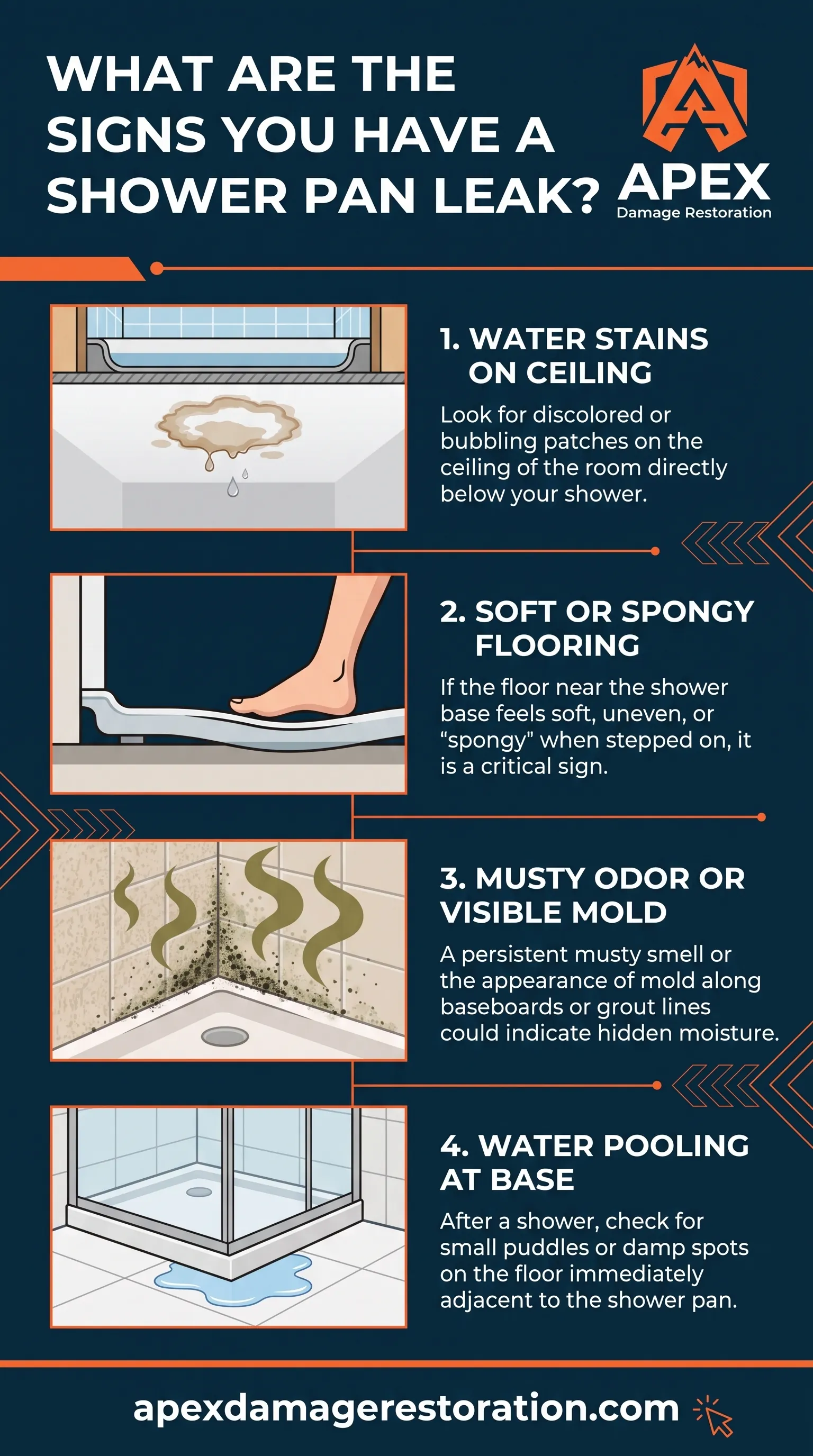
Four observable signs indicate a shower pan leak: ceiling stains below the bathroom, soft or spongy flooring, a musty odor or visible mold, and water pooling around the shower base.
Water Stains on the Ceiling Below the Bathroom
Water stains on the ceiling directly below a bathroom indicate that shower water has penetrated the subfloor and dripped through the structure to the level below. These stains typically appear as brown or yellow discoloration and often expand in size after each shower use. Ceiling stains confined to the area beneath the shower, rather than spread across the whole bathroom footprint, point specifically to the shower pan rather than a supply line or toilet leak.
Soft or Spongy Bathroom Flooring
Soft or spongy flooring near the shower indicates that water has saturated the subfloor material, weakening its structural integrity. Tile floors may develop loose or cracked grout lines as the substrate shifts underneath. Vinyl or laminate floors near a leaking pan can bubble, warp, or feel noticeably different underfoot compared with the rest of the room.
Musty Odor or Visible Mold
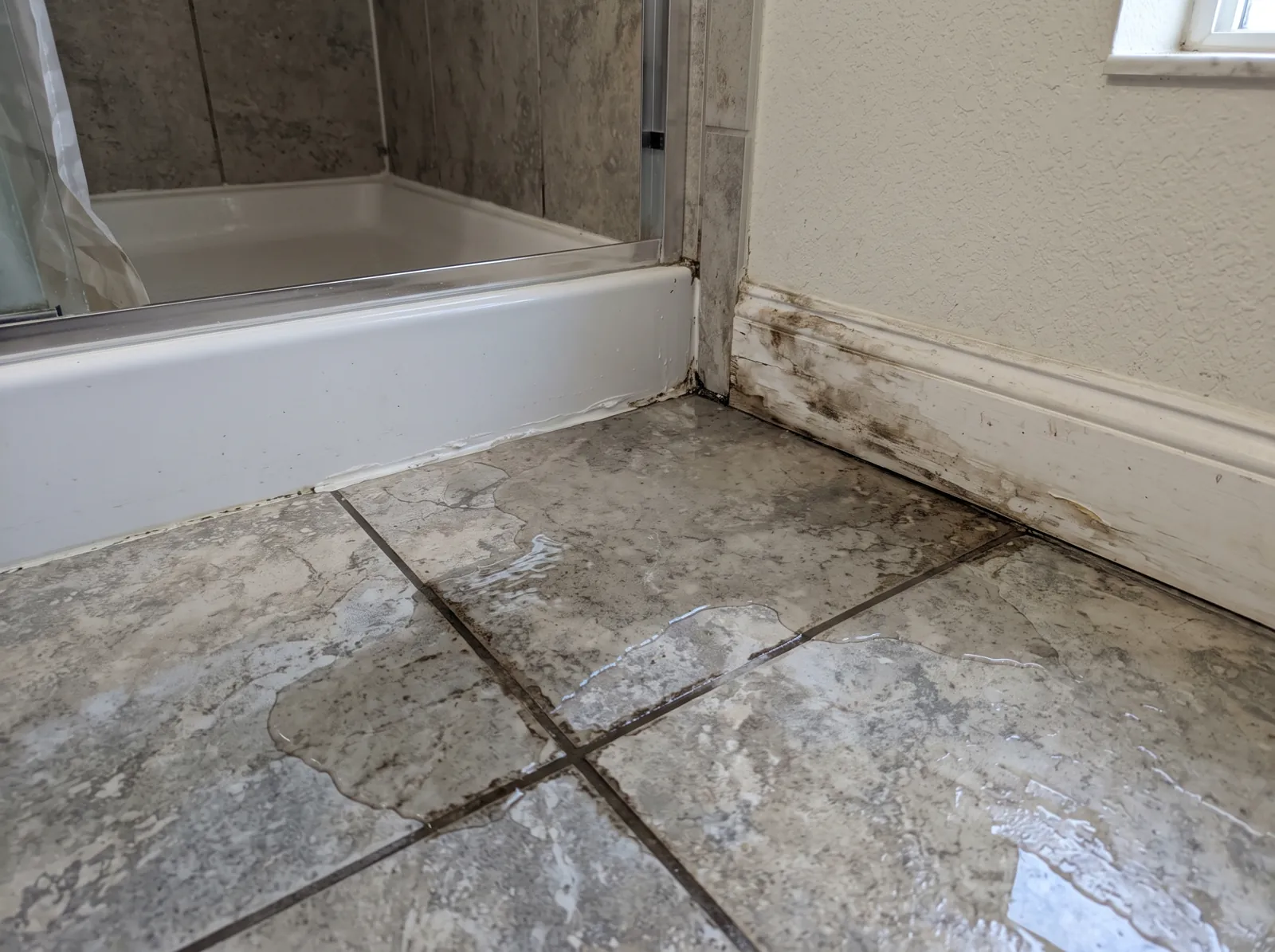
A musty odor or visible mold near the shower area signals that trapped moisture has supported microbial growth within the wall or floor cavity. Mold typically appears as dark spotting along baseboards, grout lines, or the base of the shower enclosure. An odor without visible mold still indicates active moisture inside a wall or floor cavity, since mold growth often begins before it becomes visible.
Water Pooling Around the Shower Base
Water pooling around the exterior base of the shower after use indicates that water is escaping past the pan rather than draining internally. This differs from water splashing outside the enclosure during use, since pooling from a pan leak persists or reappears at the base even when the shower has not been used recently, as trapped water slowly works its way out.
Water Damage Caused by a Leaking Shower Pan
A leaking shower pan causes three primary categories of water damage: subfloor and joist damage, ceiling and drywall damage in rooms below, and mold growth from prolonged moisture exposure.
Subfloor and Joist Damage
Prolonged shower pan leaks cause subfloor plywood to swell, delaminate, and rot, and can extend to the structural joists supporting the floor. Wood-based subfloor material absorbs water continuously when a leak goes unaddressed, losing its ability to hold fasteners and support weight. Once moisture reaches the joists, the damage shifts from a repair-and-replace flooring issue to a structural repair involving load-bearing framing.
Ceiling and Drywall Damage in Rooms Below
A shower pan leak on an upper floor causes ceiling drywall in the room below to stain, sag, and eventually fail as it absorbs water traveling down through the subfloor. Drywall loses structural rigidity when saturated and can collapse under its own weight if the leak continues undetected. Light fixtures embedded in an affected ceiling introduce an additional electrical hazard when water tracks toward wiring.
Mold Growth from Prolonged Moisture
Prolonged moisture from a shower pan leak creates conditions for mold colonies to establish within wall cavities, subfloor material, and insulation. Mold requires sustained moisture and organic material to grow, both of which are present in a leaking shower assembly. Mold growth hidden inside a wall or floor cavity can expand for weeks before surface signs, such as odor or visible spotting, become noticeable.
How to Fix a Leaking Shower Pan?
Fixing a leaking shower pan requires confirming the leak source, choosing between a patch repair and full pan replacement, deciding between DIY work and professional installation, and budgeting for the scope of the repair.
How to Confirm the Leak (Flood Test)
A flood test confirms a shower pan leak by plugging the drain, filling the pan with water to a marked level, and monitoring for water loss over 24 hours. A drop in water level during the test indicates the pan liner or drain seal is failing, since surface grout and caulk do not affect this test once the drain is sealed. A dye test, which adds food coloring to the water before observing for colored seepage at the ceiling or adjacent walls, helps pinpoint the exact leak location once a flood test confirms a leak is present.
Patch Repair vs. Full Pan Replacement
A patch repair addresses a localized crack or seal failure without removing the entire shower assembly, while full pan replacement removes and rebuilds the pan liner, sub-base, and finished surface. Patch repairs suit small, isolated liner punctures or a failed wax ring where the surrounding structure remains sound. Full replacement becomes necessary when the liner has multiple failure points, the sub-base slope is incorrect, or existing water damage has already compromised the subfloor beneath the pan.
DIY Repair vs. Hiring a Professional
DIY repair suits a straightforward wax ring replacement or minor caulk resealing, while a professional handles liner replacement, slope correction, and any repair involving subfloor or structural damage. Wax ring and caulk work require basic tools and do not involve waterproofing layers hidden beneath tile. Liner replacement requires removing tile and mortar, correctly re-sloping the sub-base, and verifying the new membrane with a flood test before the surface is rebuilt, work that carries a high risk of recurring leaks if a seal or slope is set incorrectly.
Average Cost to Repair a Shower Pan Leak
Shower pan leak repair costs vary based on the failure type, whether the pan requires full replacement, and the extent of any subfloor or structural damage discovered during the repair. A wax ring or caulk repair typically costs less than a liner replacement, since liner work requires removing and rebuilding the tile surface. Repairs that uncover subfloor rot, joist damage, or mold require additional remediation work beyond the shower pan itself, which increases the total project cost. A contractor can provide an accurate estimate after inspecting the extent of damage.
Are Shower Pan Leaks Covered by Homeowners Insurance?
Homeowners insurance typically covers shower pan leak damage when the leak is sudden and accidental, but excludes damage caused by gradual leaks or lack of maintenance. Insurers distinguish between an unexpected pan failure, such as a liner puncture from an installation defect, and long-term deterioration that a homeowner reasonably should have identified and repaired earlier.
Sudden and Accidental Leaks vs. Gradual/Maintenance-Related Leaks
A sudden and accidental leak occurs unexpectedly and causes damage within a short timeframe, while a gradual leak develops slowly over weeks or months due to wear, deterioration, or lack of maintenance. Insurance policies generally cover the former because the homeowner had no reasonable opportunity to prevent it. Gradual leaks are typically excluded because insurers classify long-term deterioration as a maintenance responsibility rather than a covered peril. An adjuster determines which category applies by evaluating the extent of existing damage, since advanced mold growth or rotted subfloor material often indicates a leak that persisted well before discovery.
What Documentation Insurers Require for a Claim
Insurers require documentation of the leak source, the date of discovery, and the extent of resulting damage to process a shower pan leak claim. This documentation typically includes photographs of the affected area, a written or photographic record from a plumber or restoration company identifying the cause, and an itemized estimate of repair costs. Homeowners also carry a mitigation duty under most policies, meaning they must take reasonable steps to stop the leak and limit further damage once it is discovered, rather than allowing it to continue while a claim is processed.
How To Prevent Future Shower Pan Leaks?
Preventing future shower pan leaks requires routine inspection and maintenance of the components most prone to wear.
- Re-grouting schedule: Inspect grout and caulk lines every 12 months and reseal them at the first sign of cracking.
- Annual inspection: Check the shower base for soft flooring, loose tile, or discoloration once a year, even without visible symptoms.
- Moisture monitoring: Use a moisture meter near the shower base if a musty odor appears without a clear source.
- Prompt repair: Address a failed wax ring or minor crack immediately, since early repairs cost less than damage-related restoration work.
When to Call a Water Damage Restoration Company?
A water damage restoration company should be called when a shower pan leak has caused visible mold, saturated subfloor material, or damage extending into a ceiling or adjacent room. Restoration professionals use moisture meters to identify the full extent of water intrusion hidden within walls and flooring, beyond what is visible on the surface. Contacting a restoration company before or alongside an insurance claim also helps establish documented proof of damage extent and cause, which supports the claims process described above.
Need Emergency Restoration Help Today?
Call Apex Damage Restoration now for fast priority dispatch across Aurora, CO, a written estimate before work begins, and direct insurance claims assistance.