
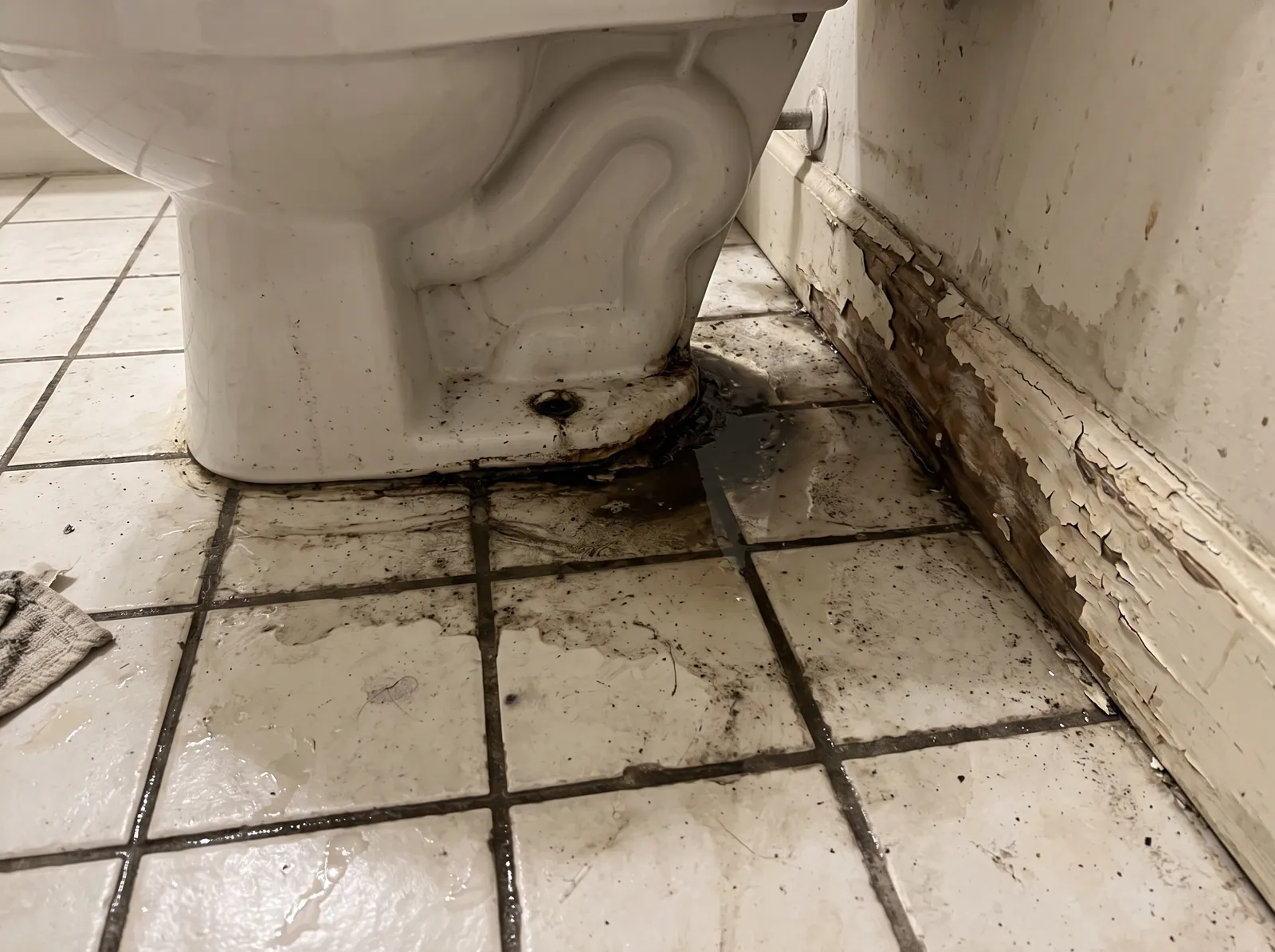
A leaking or overflowing toilet sends water beyond the visible floor area into subflooring, baseboards, and the ceiling of the room below. The damage extends past what a mop can address because water travels through grout lines, expansion gaps, and porous building materials before a homeowner notices it. Toilet-related water intrusion ranges from a slow supply line drip to a full bowl overflow that floods a bathroom in minutes, and the source determines both the contamination level and the urgency of the response.
What Is Toilet Leak and Overflow Water Damage?
Toilet leak and overflow water damage is the structural and material harm that occurs when water escapes a toilet's tank, bowl, or connections and contacts flooring, walls, or ceilings it was not designed to reach. A leak describes a slow, often continuous release from a seal, valve, or supply connection. An overflow describes a rapid volume of water exiting the bowl, typically from a clog or a stuck fill valve, that exceeds the floor's ability to contain it.
Subfloor material, drywall, and baseboards absorb water on contact, and this absorption continues after the visible surface appears dry. A second-floor bathroom overflow can soak through the subfloor and saturate the ceiling drywall of the room directly below within an hour, which extends the damage footprint beyond the bathroom itself.
What Causes a Toilet to Leak or Overflow
Toilet leaks and overflows originate from six common points of failure: a clogged drain line, a malfunctioning fill valve or float, a cracked tank or bowl, a failed wax ring seal, a compromised supply line, or a sewer line backup. Each cause produces a different water volume, contamination level, and failure pattern.
Clogged Drain Line
A clogged drain line is the most frequent cause of toilet overflow. Excess toilet paper, wipes, or a foreign object lodges in the trapway or the branch drain line and blocks water from leaving the bowl during a flush. A partial clog slows drainage without overflow, while a full blockage forces incoming flush water back up and over the rim. Tree root intrusion further down the branch line can produce the same overflow pattern even when nothing is visibly stuck in the bowl.
Fill Valve or Float Failure
A fill valve or float failure allows the tank to overfill and discharge water through the overflow tube faster than it can drain into the bowl. Older toilets use a float ball connected to a fill valve arm, while newer models use a float cup that rides along the fill valve stem. Either mechanism can stick in the open position, and a fill valve that fails to shut off produces continuous running that eventually overflows the tank or, in some designs, floods through a cracked tank seam. This failure type releases clean supply water, which places it in the Category 1 water classification.
Cracked Tank or Bowl
A cracked tank or bowl leaks water through porcelain that has fractured from age-related fatigue, impact damage, or freeze exposure in an unheated space. A hairline crack produces a slow, continuous leak that pools at the base or drips from the tank seam. A larger fracture from impact or a hard freeze can fail suddenly and release the full tank volume at once.
Wax Ring Seal Failure
A wax ring seal failure leaks water at the floor around the base of the toilet rather than from the bowl or tank. The wax ring seals the connection between the toilet base and the drain flange, and it degrades with age or breaks when the toilet base loosens and rocks against the floor. A toilet that wobbles when pushed at the seat indicates a likely wax ring failure, since a secure base does not move under moderate pressure. This leak type saturates the subfloor directly beneath the toilet before it becomes visible on the surrounding floor.
Supply Line Failure
A supply line failure releases water from the flexible line connecting the shutoff valve to the toilet tank. Braided supply lines degrade internally with age even when the exterior appears intact, and compression fittings at either end can loosen or corrode. A supply line failure is usually Category 1 water, but a full line rupture releases water under municipal supply pressure and can flood a bathroom within minutes, making it one of the faster-developing leak sources despite its clean-water classification.
Sewer Line Backup
A sewer line backup is the highest-severity cause of toilet overflow because it forces wastewater from the main line back through the toilet rather than clean or lightly used water. This cause falls under Category 3 water and carries contamination risk that the other five causes do not share.
How to Tell What Type of Water You're Dealing With?
The water's source determines its contamination level before any cleanup begins. Water from the tank is Category 1 (clean) water, since it comes directly from the home's supply line and has not contacted waste. Water that overflows from the bowl due to a clog is Category 2 (grey) water, since it has contacted the trapway and carries a moderate contamination risk. Water from a sewer line backup or water containing visible waste is Category 3 (black) water, which requires professional handling regardless of volume.
- Clear water from the tank or a supply line: Category 1
- Bowl water from a clog, without visible waste: Category 2
- Sewer backup or water containing waste: Category 3
What to Do in the First Hour of a Toilet Leak?
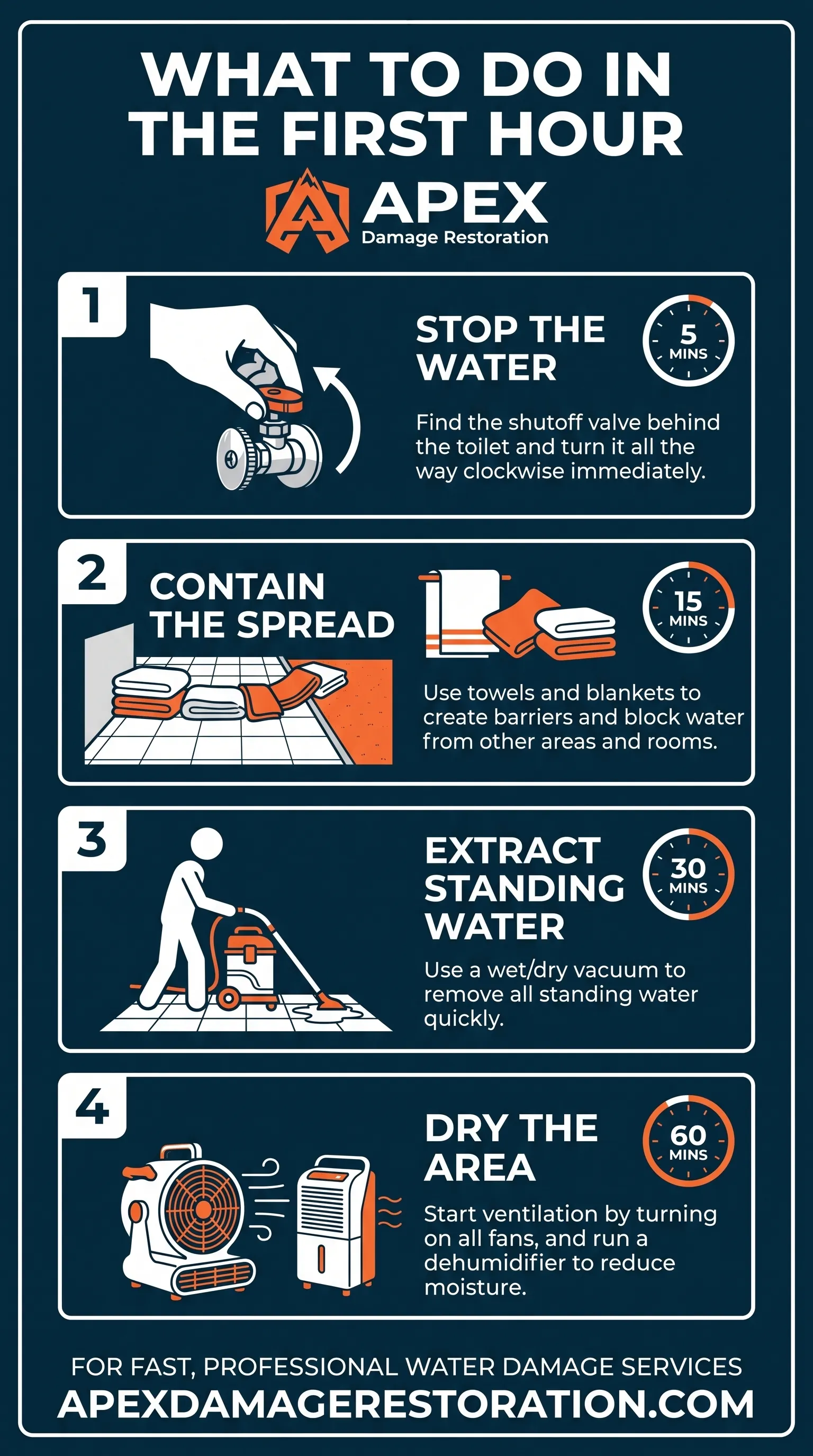
The first hour after a toilet leak or overflow determines whether the damage stays contained to the bathroom floor or spreads into the subfloor, walls, and the ceiling below. Three actions in sequence limit the damage: stop the water source, contain the spread, and extract standing water before it soaks deeper into building materials.
Stop the Water Source
Locate the shutoff valve on the wall or floor behind the toilet and turn it clockwise to stop the water supply. If the valve is corroded or will not turn, reach into the tank and lift the float to stop water from entering, or press the flapper down to prevent it from opening further. Do not flush the toilet again once an overflow has started, since a second flush adds volume to water that is already exceeding the floor's capacity.
Contain the Spread
Lay towels or absorbent barriers around the base of the toilet and across the threshold of the bathroom door to slow water from reaching hallway flooring or an adjacent room. Switch off power to any outlets or fixtures within the affected area at the breaker panel before standing water reaches them, since water and live electrical components create a shock hazard.
Extract Standing Water and Remove Saturated Materials
Remove standing water with a wet/dry vacuum or towels, working from the center of the affected area outward. Discard saturated porous items such as bath mats, cardboard, and paper products, since these materials hold moisture and support mold growth even after the floor surface dries. Remove baseboards that have visibly swollen or separated from the wall, as trapped water behind an intact baseboard continues to feed moisture into the wall cavity.
Drying the Area and Preventing Mold Growth
Mold growth can begin within 24 to 48 hours on wet drywall, subfloor, and baseboard material, which makes drying speed the primary factor in preventing it. Position fans to circulate air across the wet surface and run a dehumidifier in the room to pull moisture from the air, since surface airflow alone does not remove humidity that re-saturates drying materials. Check the ceiling of the room directly below an upper-floor bathroom for staining, sagging, or soft spots, since water can migrate through the subfloor and reach a lower ceiling before it becomes visible in the bathroom itself.
A floor that appears dry to the touch can still hold moisture in the subfloor beneath it, since finished flooring and underlayment slow visible drying without stopping moisture retention underneath. Replacing a degraded wax ring or an aging fill valve before it fails reduces the likelihood of a repeat leak from the same failure point.
When to Call a Professional Restoration Company
Call a professional restoration company when the water source is Category 3, when water has reached the ceiling of the room below, when standing water sat for longer than an hour, or when the subfloor feels soft underfoot. A softened subfloor indicates that water has penetrated past the surface layer and requires moisture mapping equipment to assess the full extent of saturation, which is outside the scope of a DIY response.
Professional involvement is also appropriate when an immunocompromised, pregnant, or very young household member has been exposed to Category 2 or Category 3 water, since these groups face elevated health risk from contaminated water exposure. If the damage will be filed as an insurance claim, a professional restoration company documents the moisture readings and affected materials in a format insurers require for claim approval.
Apex Damage Restoration provides 24/7 response for toilet leak and overflow water damage in the Aurora, CO area, with IICRC-trained technicians who handle moisture mapping, extraction, and insurance coordination from the first call.
Does Insurance Cover Toilet Leak or Overflow Damage?
Homeowners insurance generally covers toilet leak or overflow damage when the event is sudden and accidental, such as a supply line rupture or an unexpected overflow, but typically excludes damage from a leak that developed gradually over weeks or months without repair. Renters insurance typically covers a tenant's contents and additional living expenses during repairs but does not cover the structure itself, since structural coverage falls under the landlord's or property owner's policy. A sewer line backup usually requires a separate endorsement added to a standard policy, since base homeowners and renters policies commonly exclude backup damage without it.
The distinction between a sudden overflow and a gradual wax-ring seepage leak directly affects whether a claim is approved, since insurers evaluate the onset speed of the damage.
Frequently Asked Questions
Need Emergency Restoration Help Today?
Call Apex Damage Restoration now for fast priority dispatch across Aurora, CO, a written estimate before work begins, and direct insurance claims assistance.