
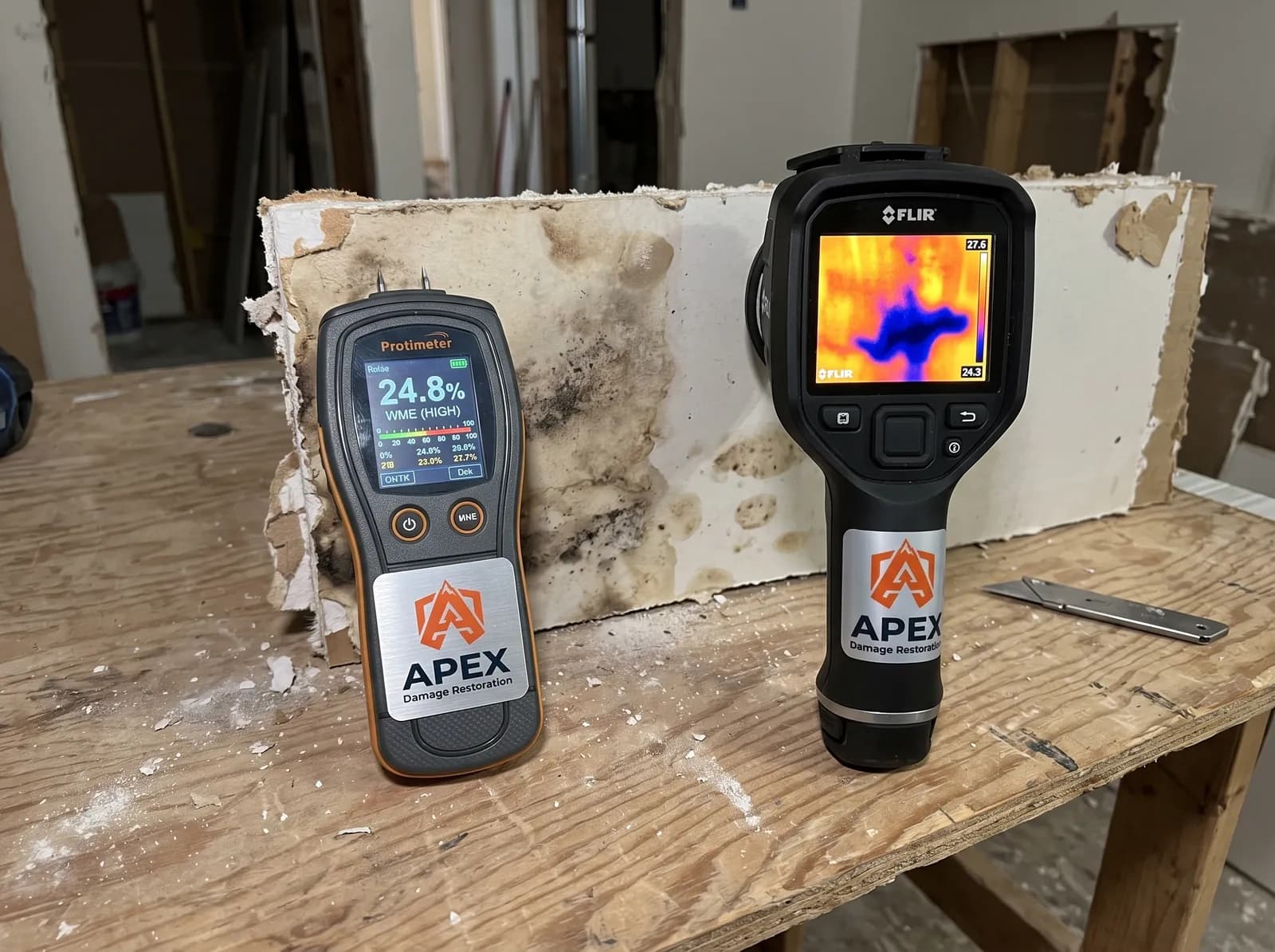
Water damage restoration equipment refers to the commercial-grade tools and machinery that professional restoration crews use to extract standing water, dry structural materials, and prevent secondary damage such as mold growth and structural decay after a water intrusion event. This equipment spans extraction, drying, air movement, moisture monitoring, and air quality categories, each addressing a distinct stage of the restoration process. The sections below explain what this equipment does, how it works, and how it differs from consumer-grade alternatives.
What Equipment & Tools Do Restoration Professionals Use?
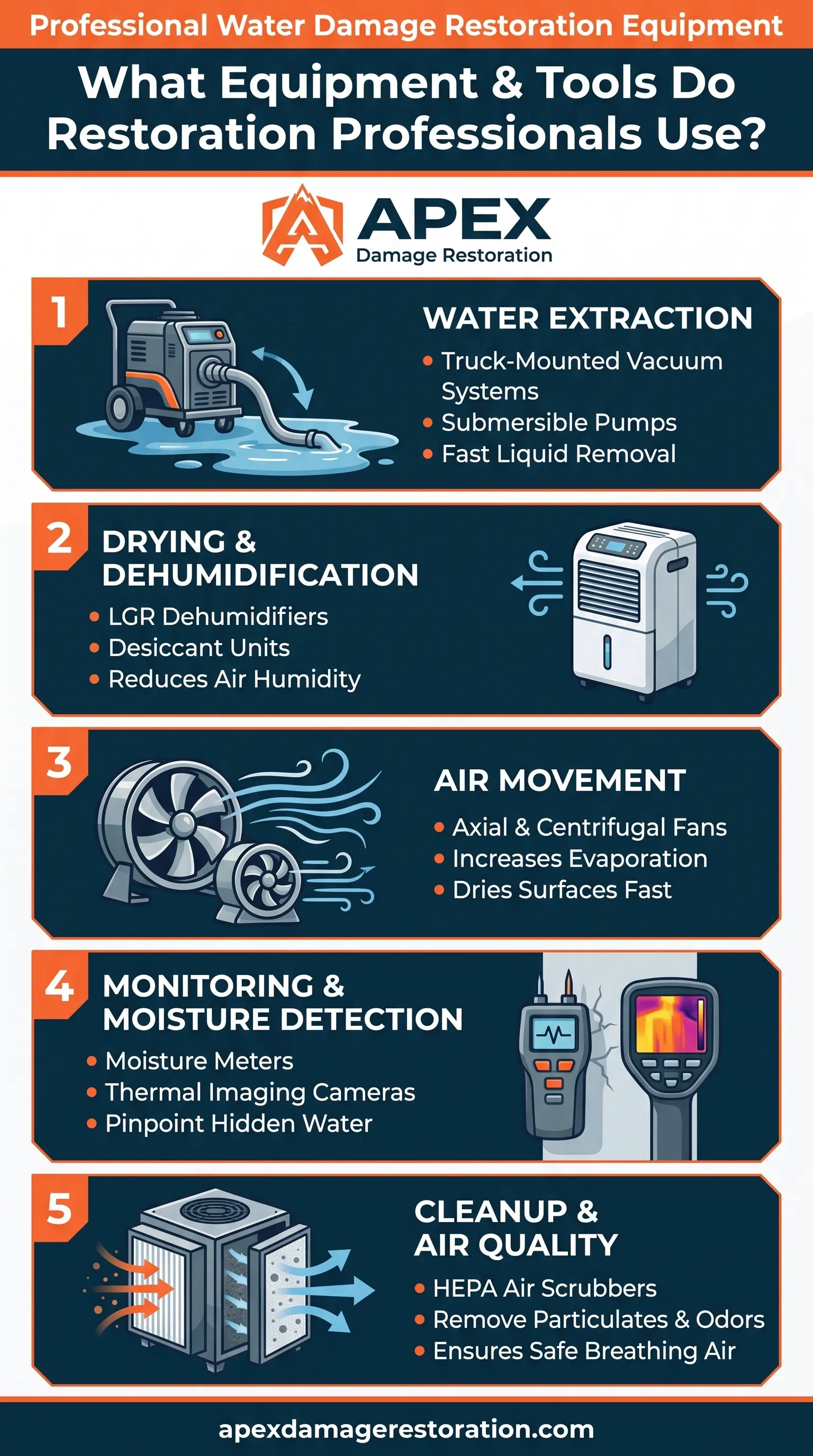
Restoration professionals use five main equipment categories: extraction equipment, dehumidification equipment, air movers, moisture-monitoring instruments, and air quality equipment. Each category performs a distinct function in the drying process, and IICRC S500 standards for water damage restoration guide how technicians select and deploy this equipment based on the water category and the affected materials.
Commercial-grade equipment differs from consumer-grade equipment in output capacity, run time, and precision. A truck-mounted extractor removes water at a volume no wet vac can match, and a low-grade refrigerant (LGR) dehumidifier pulls moisture from the air at a rate several times higher than a residential unit. Restoration technicians combine multiple equipment types on a single job, since extraction, drying, and monitoring occur in sequence and often overlap on the same jobsite.
Water Extraction Equipment
Water extraction equipment removes standing water and saturated surface moisture from a structure before the drying phase begins. Extraction reduces the volume of water in a space, which shortens the time required for dehumidification and air movement in later stages.
Truck-Mounted Extractors
A truck-mounted extractor is a high-capacity vacuum system, powered by a diesel or gas engine in the service vehicle, that removes large volumes of standing water through hoses connected to wands or weighted extraction tools. Truck-mounted units generate significantly more suction power than portable extractors, which makes them suited to whole-room or whole-floor water removal after a pipe burst, flooding event, or major appliance leak. The engine-driven design allows continuous operation without relying on the structure's electrical system, which matters when water damage has affected wiring or outlets.
Portable and Submersible Pumps
A portable extractor is a smaller, self-contained unit that technicians carry into spaces a truck-mounted system cannot reach, such as basements, crawl spaces, and upper floors. A submersible pump removes water deeper than a few inches, including flooded basements or crawl spaces where standing water exceeds the depth range of a standard wet vac. Technicians select a submersible pump over a portable extractor when water depth exceeds several inches, since submersible pumps move higher volumes of water at that depth.
Drying and Dehumidification Equipment
Drying and dehumidification equipment removes moisture from the air and from building materials after extraction, reducing relative humidity and reversing the grain depression that occurs when wood and drywall absorb water. This equipment runs continuously over multiple days to bring a structure back to its normal moisture content.
LGR (Low-Grade Refrigerant) Dehumidifiers
An LGR dehumidifier is a refrigerant-based unit that cools incoming air below its dew point to condense and remove moisture, then reheats and releases the drier air back into the space. LGR dehumidifiers operate effectively across a wider temperature and humidity range than standard refrigerant dehumidifiers, which allows them to continue extracting moisture even as ambient humidity drops during the drying process. Restoration crews use LGR units as the primary dehumidification method in most residential and commercial water damage jobs because of this extended effective range.
Desiccant Dehumidifiers
A desiccant dehumidifier removes moisture by passing air through a rotating wheel coated with a hygroscopic material that absorbs water vapor, rather than by condensing it through refrigeration. Desiccant units perform more effectively than LGR dehumidifiers in low-temperature environments, since their moisture-removal capacity does not depend on refrigerant cycling. Restoration crews deploy desiccant dehumidifiers in unheated spaces such as garages, crawl spaces, and cold-climate job sites during winter months.
Air Movement Equipment
Air movement equipment circulates air across wet surfaces to accelerate evaporation, working in tandem with dehumidifiers that then remove the resulting moisture from the air. Without adequate airflow, evaporated moisture stays trapped near the wet surface and slows the drying rate.
Axial Air Movers
An axial air mover is a high-velocity fan that pushes a directed, cone-shaped stream of air across a single surface area, such as a wall or floor section. Technicians position axial air movers at an angle across wet surfaces to maximize the surface area exposed to moving air, which increases the evaporation rate at that section.
Centrifugal (Low-Profile) Air Movers
A centrifugal air mover, also called a low-profile or "snail" air mover, draws air in through an intake and forces it out in a wide, flat pattern suited to confined or low-clearance spaces such as under cabinets and behind baseboards. Centrifugal air movers generate higher static pressure than axial models, which allows them to push air through restricted gaps and wall cavities where an axial unit's directed airflow cannot reach.
Monitoring and Moisture Detection Equipment
Monitoring and moisture detection equipment measures moisture levels in air and building materials throughout the restoration process, allowing technicians to verify that drying is progressing and to confirm when a structure has reached its target dry standard. This equipment also identifies hidden moisture inside walls, floors, and ceilings that visual inspection alone cannot detect.
Moisture Meters and Hygrometers
A moisture meter measures the moisture content of a specific material, such as drywall, wood framing, or subflooring, by contact-pin or pinless sensor readings. A hygrometer measures relative humidity and temperature in the surrounding air, which technicians use to calculate the grain depression driving the drying process. Restoration crews record moisture meter and hygrometer readings daily during active drying to track progress against the material's pre-loss moisture baseline.
Thermal Imaging Cameras
A thermal imaging camera detects temperature differences across a surface, which technicians use to identify moisture patterns hidden behind walls, under flooring, or above ceilings without cutting into the material. Wet materials typically show a distinct temperature signature compared to dry surrounding areas, since evaporating moisture cools the surface. Thermal imaging works alongside methods described in how to find a water leak in a home, since both processes rely on identifying moisture that is not visible on the surface.
Cleanup and Air Quality Equipment
Cleanup and air quality equipment addresses airborne contaminants and microbial risk that remain after extraction and drying are complete, protecting occupants from mold spores, dust, and odor during and after the restoration process.
Air Scrubbers and HEPA Filtration
An air scrubber is a portable filtration unit that draws air through a series of filters, including a HEPA filter capable of capturing particles as small as 0.3 microns, before releasing filtered air back into the space. Restoration crews run air scrubbers during demolition and drying phases to remove mold spores, dust, and other airborne particulates generated by the water damage and the restoration work itself.
Antimicrobial Application Tools
Antimicrobial application tools, including pump sprayers and electrostatic sprayers, apply biocide treatments to surfaces affected by water intrusion to inhibit mold and bacterial growth. Technicians apply antimicrobial treatments after extraction and before the drying phase concludes, targeting materials exposed to Category 2 or Category 3 water under IICRC classification.
Why Professional Equipment Outperforms DIY Rentals?
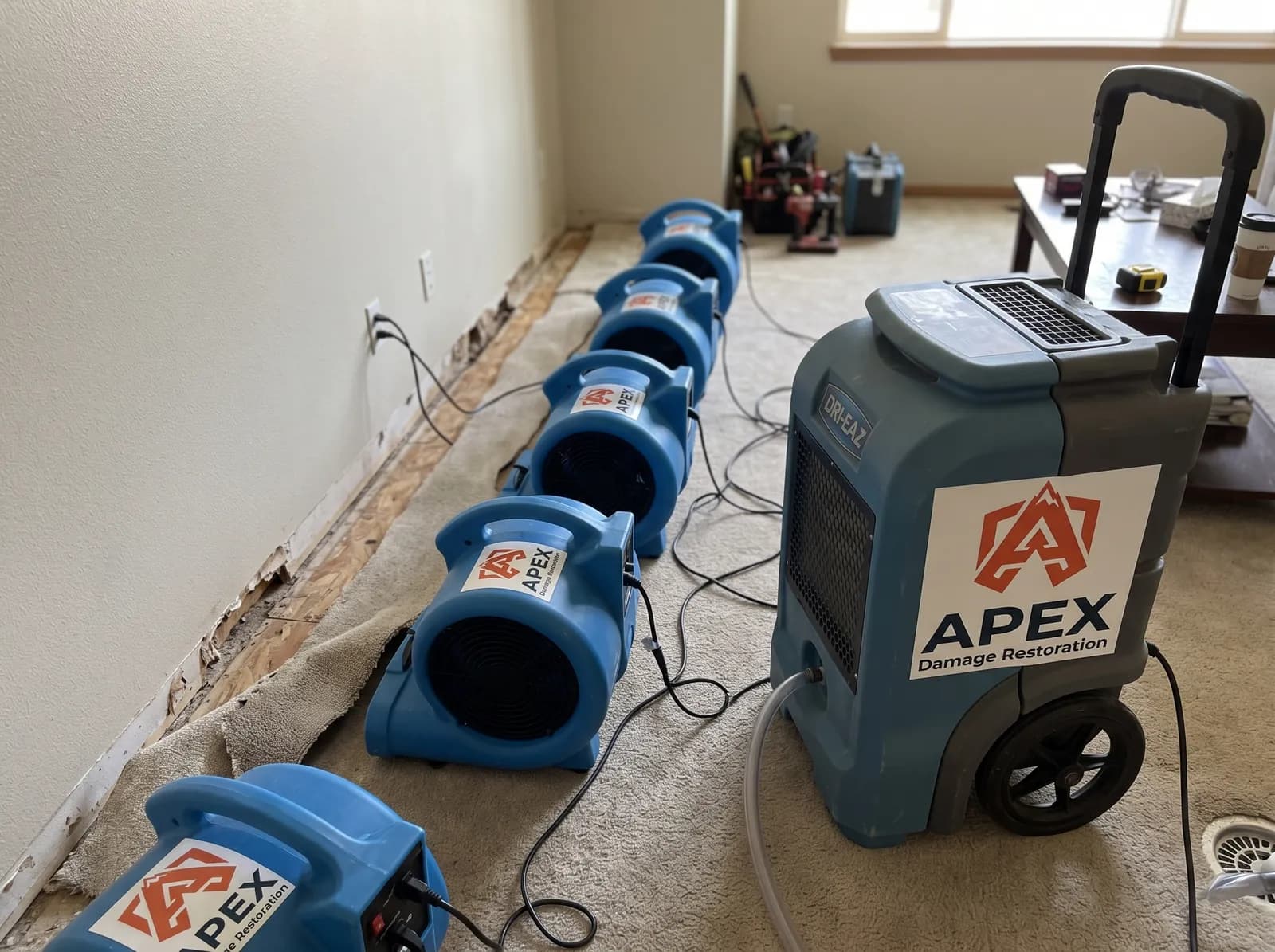
Professional equipment outperforms DIY rental equipment in extraction volume, drying capacity, and moisture verification accuracy. A rental dehumidifier, typically a residential-grade unit, removes a fraction of the moisture per day that an LGR dehumidifier removes, which extends drying time from days into weeks for a homeowner using rented equipment.
Rental equipment also lacks the calibrated moisture meters and hygrometers that restoration professionals use to confirm a structure has reached its dry standard. A homeowner without this equipment cannot verify that materials have dried to a safe moisture content, which creates a risk of trapped moisture and delayed mold growth behind walls or under flooring. Insurance carriers generally require documented moisture readings as part of a claim, and rental equipment does not generate the data logs that professional-grade monitoring equipment produces automatically.
How Equipment Needs Scale for Flood-Level Water Damage?
Equipment needs scale up substantially for flood-level water damage compared to a contained leak or pipe burst, since floodwater affects a larger area, penetrates more materials, and often requires a full flood cut. A flood cut removes drywall to a set height above the waterline, which increases the surface area requiring air movers and dehumidification equipment.
Large-loss flood restoration typically requires multiple extraction units operating simultaneously, whole-structure drying with dehumidifiers placed in every affected room, and a higher ratio of air movers to square footage than a single-room water damage event. Restoration companies mobilize additional truck-mounted extractors and portable pumps for flood response, since the volume of standing water in a flood scenario exceeds what a single extraction unit can process within an effective timeframe.
How Restoration Equipment Is Used in the Restoration Process?
Restoration equipment is deployed in a sequential order that follows the stages of the water damage restoration process: inspection, extraction, drying, monitoring, and cleanup. Technicians first inspect the affected area using moisture meters and thermal imaging cameras to determine the extent of water intrusion before deploying any extraction equipment.
Extraction equipment removes standing water first, followed by the placement of air movers and dehumidifiers to begin the structural drying phase. Monitoring equipment tracks moisture levels throughout drying, and cleanup equipment, including air scrubbers and antimicrobial application tools, addresses air quality once materials approach their target dry standard. This sequence connects directly to broader restoration planning, including the cost of water damage restoration and water damage restoration mistakes to avoid during each equipment-driven phase.
Need Emergency Restoration Help Today?
Call Apex Damage Restoration now for fast priority dispatch across Aurora, CO, a written estimate before work begins, and direct insurance claims assistance.