
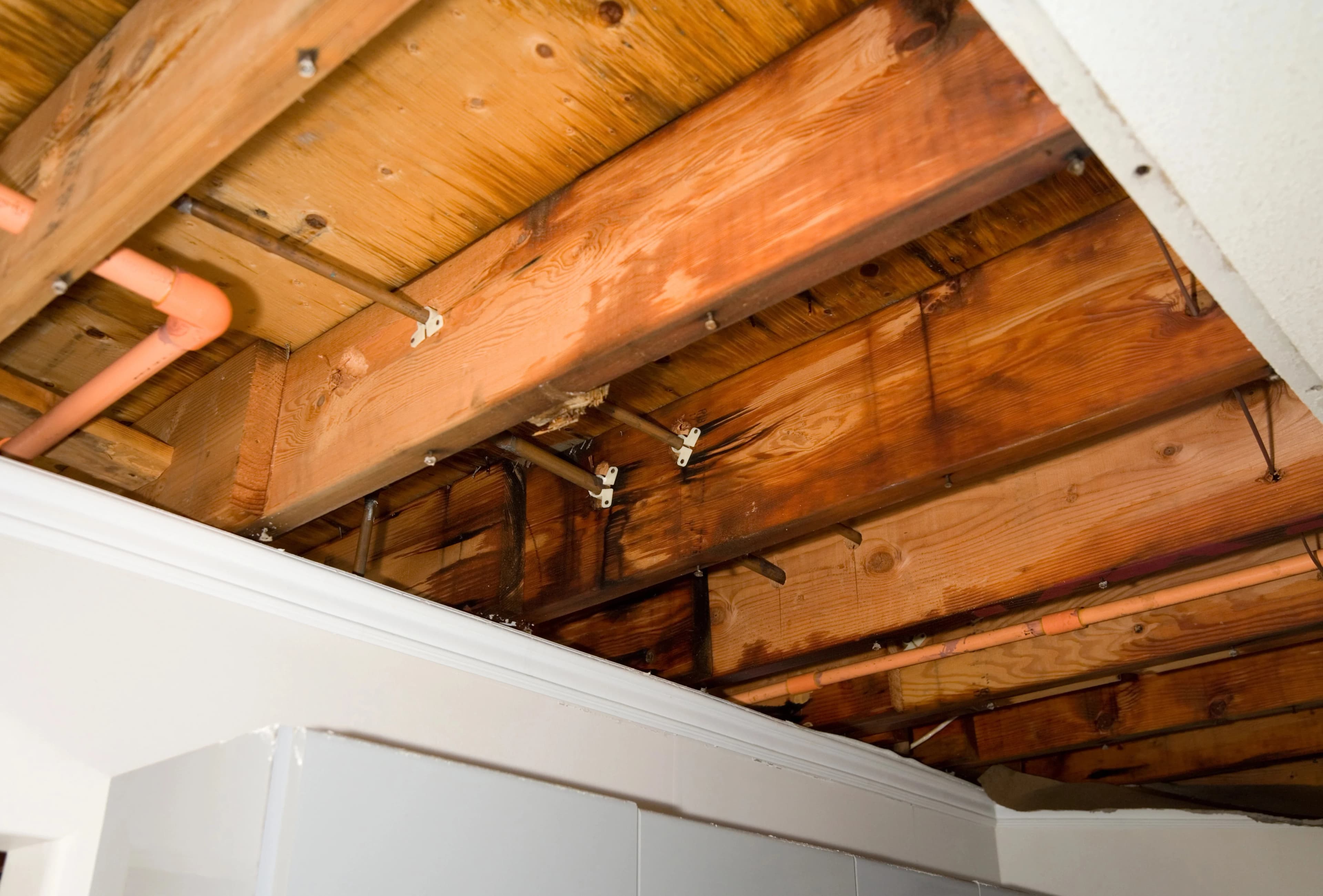
Water damage in a home shows itself through visual, physical, and sensory cues that range from an active, undetected leak to structural deterioration from long-term moisture exposure. Recognizing these signs early, whether in a specific room or hidden inside a wall, determines how quickly a homeowner can address the source and limit further damage.
How to Tell If You Have a Water Leak?
A water leak reveals itself through sound, water bill changes, and visible moisture around plumbing fixtures, walls, or ceilings. Dripping or running water sounds inside walls or under floors indicate a supply line leak, even without visible water. An unexplained rise in a water bill, absent a change in household usage, points to a leak that has not surfaced visibly yet.
A water meter test confirms an active leak without opening walls or floors. Turn off every water-using appliance and fixture, then read the water meter. Wait two hours without using water, and read the meter again. A meter reading that changes during this period confirms water is moving through the system.
Additional leak indicators include damp spots on walls or ceilings near plumbing lines, a musty smell in enclosed spaces, mold growth near sinks or supply valves, and reduced water pressure at a specific fixture. Low pressure at one faucet, while other fixtures perform normally, suggests a leak between the main line and that fixture.
What Water Damage Looks Like in a House?
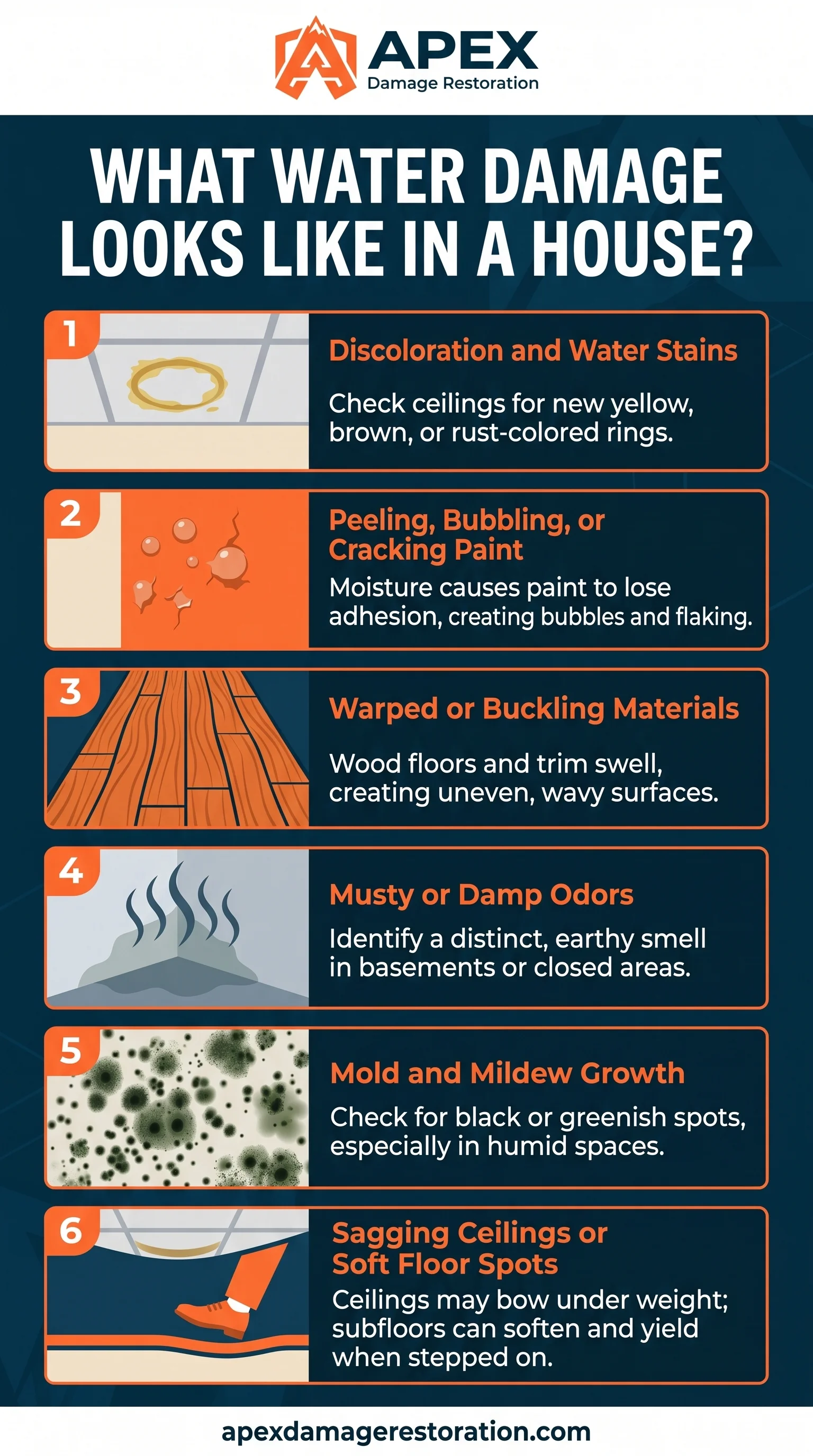
Water damage in a house appears as discoloration, material warping, structural softening, and biological growth across walls, ceilings, and floors. These indicators develop after water has been present long enough to affect building materials, distinguishing damage from an active but undetected leak.
Discoloration and Water Stains
Water stains appear as yellow, brown, or copper-colored patches on ceilings, walls, or floors. A ring-shaped stain with a darker outer edge indicates repeated wetting and drying cycles at that location. Stain color and pattern also help determine how long water has been present, covered separately under damage timeline.
Peeling, Bubbling, or Cracking Paint
Water trapped behind a painted surface causes the paint to bubble, peel, or crack as moisture breaks the bond between paint and substrate. Bubbling paint on a ceiling typically indicates moisture accumulating above the surface, such as from a roof or plumbing leak in the space directly above.
Warped or Buckling Materials
Wood flooring cups, crowns, or separates at the seams when it absorbs water, since wood expands unevenly as it takes on moisture. Laminate flooring buckles or lifts at the edges under similar conditions. Drywall bows or bulges outward when saturated, losing its flat, rigid profile.
Musty or Damp Odors
A persistent musty odor signals moisture retention in an enclosed space, even without a visible source. The smell results from microbial activity as mold and mildew colonize damp materials such as drywall, insulation, or subflooring. A damp, stagnant smell without the musty quality often indicates standing or slow-draining water rather than established mold growth.
Mold and Mildew Growth
Mold appears as black, green, or white spotting on walls, ceilings, grout lines, or window frames in areas exposed to moisture. Mold requires sustained dampness to establish, so visible growth confirms that water exposure has persisted for an extended period rather than a brief, isolated event.
Sagging Ceilings or Soft Floor Spots
A sagging ceiling indicates water has saturated the drywall or insulation above, adding weight and breaking down the material's structural integrity. A soft or spongy floor spot indicates subfloor deterioration from prolonged moisture exposure beneath the surface flooring. Both conditions represent advanced water damage and warrant prompt inspection.
Signs of Water Damage by Location in Your Home
Water damage produces different visible signs depending on whether it occurs in walls, the basement, or beneath flooring, since each location has distinct materials and moisture exposure patterns.
Signs of Water Damage in Walls
Water damage in walls appears first as staining along baseboards, since water traveling down a wall cavity collects at the floor line. Wallpaper peeling or bubbling near a wall's base or seams indicates moisture behind the surface. Drywall discoloration near windows or along plumbing lines points to water entering from an exterior gap or an interior supply line.
Signs of Water Damage in the Basement
Basement water damage often appears as efflorescence, a white, chalky mineral deposit that forms on concrete or masonry as water evaporates and leaves salts behind. Foundation cracks with visible seepage indicate active water entry through the structure. A musty basement smell, standing water after rainfall, damp carpet or flooring, and condensation on exposed pipes are additional basement-specific indicators.
Signs of Water Damage Under the Floor
Water damage beneath a floor produces a spongy or springy feel when walked on, indicating subfloor material has absorbed moisture and lost rigidity. Tile flooring may lift or crack at the grout lines as the substrate shifts. Squeaking or unevenness in specific floorboards, along with discoloration where the floor meets the wall, indicates moisture affecting the subfloor from below.
How to Spot Hidden Water Damage?
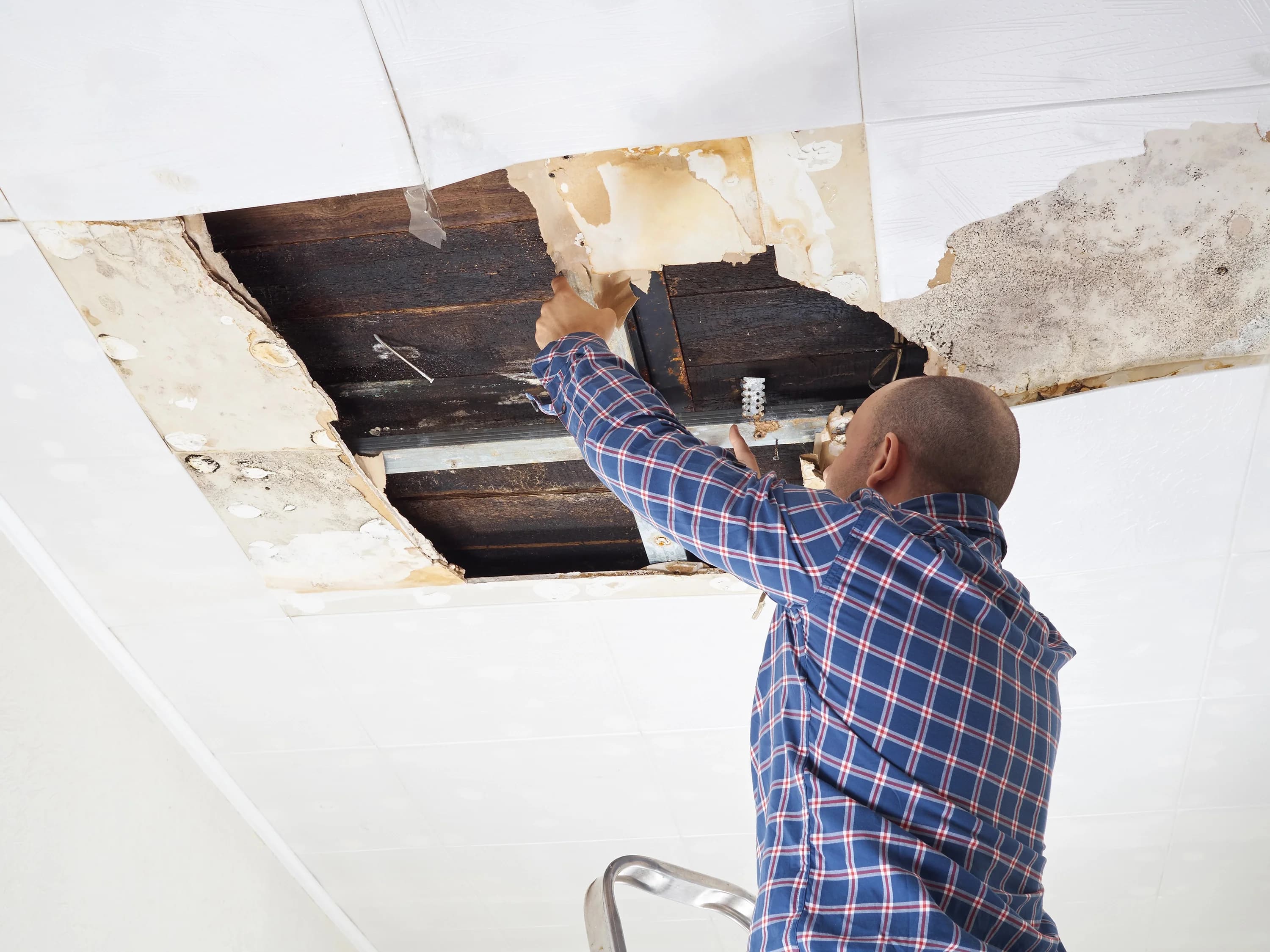
Hidden water damage is identified using moisture meters, thermal imaging cameras, and secondary indicators such as odor and humidity when no visible staining or warping is present. A moisture meter measures water content within a material by pressing probes against or near a surface, detecting elevated moisture behind drywall, under flooring, or inside wall cavities before visible signs develop.
A thermal imaging camera identifies temperature variations across a surface, since wet areas typically read cooler than surrounding dry material. This method locates moisture without opening walls or removing flooring.
A musty odor with no identifiable source is a common indicator of hidden water damage, since the smell originates from microbial growth inside an enclosed cavity. Unexplained allergy or respiratory symptoms among household occupants can also correlate with concealed mold growth. Peeling paint inside a closet or other enclosed space, and humidity readings above 60% in a room without an obvious moisture source, both warrant further investigation for hidden damage.
How to Tell If Water Damage Is New or Old?
Water damage age is determined by stain color, edge texture, and the presence or absence of established mold colonies. A fresh water stain appears darker and often has a slightly wet or glossy look, while an old stain dries to a lighter yellow or brown tone as the water fully evaporates.
Stain edges also indicate age: a soft, still-damp edge points to recent water exposure, while a crusted or flaking edge indicates the area has dried and gone through at least one drying cycle. Established mold colonies, visible as widespread or textured growth rather than isolated spotting, indicate water exposure lasting several days or longer, since mold requires 24 to 48 hours of sustained moisture to begin colonizing a surface.
Structural softening or wood rot serves as an additional aging indicator, since these conditions develop only after extended, repeated, or long-term moisture exposure rather than a single recent event. Layered staining, where multiple overlapping stain rings appear on the same surface, indicates repeated water events over time rather than one isolated incident.
What Causes Water Damage in a Home?
Water damage in a home most often results from burst or leaking pipes, roof leaks, and appliance failures. A burst pipe releases water suddenly and in large volume, often from freezing temperatures, corrosion, or excessive water pressure. A roof leak allows water to enter through damaged shingles, flashing, or venting, frequently affecting ceilings and upper-floor walls first.
Appliance failures, including washing machines, water heaters, and dishwashers, cause water damage through supply line ruptures, worn seals, or overflow. Poor drainage or improper grading around a home's foundation directs water toward the structure instead of away from it, contributing to basement and foundation-level damage. Foundation cracks allow groundwater to seep into a basement, particularly during periods of heavy rainfall.
HVAC condensation issues, such as a clogged condensate drain line, can release water into walls or ceilings near the unit. Severe weather events, including flooding and wind-driven rain, and clogged gutters that direct overflow toward the foundation or roofline, represent additional common causes.
What to Do When You Notice Signs of Water Damage?
Shut off the water source first when signs of water damage indicate an active leak, using the fixture's shutoff valve or the home's main water valve if the source is unclear. Document the damage with photographs and written notes before beginning any cleanup, since this record supports an insurance claim.
Dry affected areas as soon as possible using fans, dehumidifiers, or open ventilation, since mold can begin developing within 24 to 48 hours of sustained moisture exposure. Contact a professional water damage restoration company for assessment and remediation, particularly when damage affects structural materials, spans a large area, or includes visible mold growth. Avoid attempting DIY mold remediation on areas larger than approximately 10 square feet, since larger infestations require containment and specialized equipment to prevent spread to unaffected areas of the home.
Need Emergency Restoration Help Today?
Call Apex Damage Restoration now for fast priority dispatch across Aurora, CO, a written estimate before work begins, and direct insurance claims assistance.