
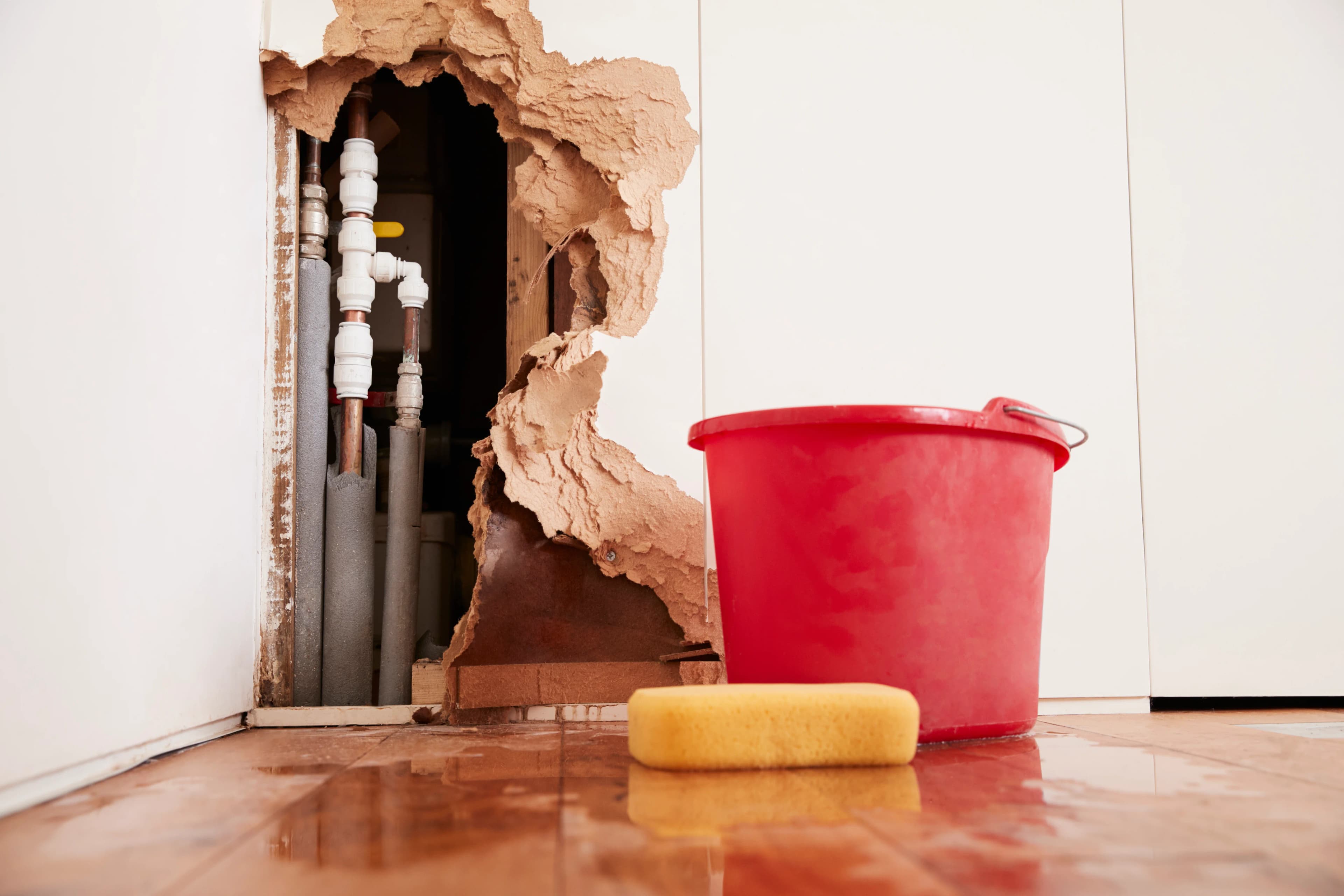
Water damage can develop in any room of a home, from plumbing fixtures to structural components exposed to weather. Identifying the areas most prone to water intrusion allows homeowners to inspect proactively and address moisture problems before they cause structural or health-related harm.
Why Water Damage Can Happen in Any Area of Your Home?
Water damage occurs in any part of a home because water sources exist throughout the property, including supply lines, appliances, roofing systems, and climate-control equipment. A burst pipe releases pressurized water suddenly, while a slow leak from a supply line fitting can release moisture gradually over weeks or months without producing an obvious sign.
Several conditions create water damage risk across a home:
- Burst pipes: Frozen, corroded, or physically damaged pipes rupture under water pressure and release large volumes of water in a short period.
- Flooding: Storm surge, heavy rainfall, or overflowing water bodies introduce external water into a structure through foundations, windows, or doors.
- Appliance leaks: Washing machines, dishwashers, refrigerators, and water heaters leak from failed hoses, seals, or internal components.
- Roof leaks: Damaged shingles, deteriorated flashing, or clogged gutters allow rainwater to penetrate the roof deck and attic space.
- Supply line failures: Aging or improperly installed supply lines crack or disconnect at fittings, releasing water behind walls or under fixtures.
- HVAC condensation leaks: Heating and cooling systems produce condensate that leaks when drain lines clog or condensate pans corrode.
Water damage differs by speed of onset. A sudden event, such as a burst pipe or storm-related flood, produces immediate and visible water accumulation. A slow leak, such as a failing P-trap or a cracked supply line fitting, releases water incrementally and often remains hidden until staining, odor, or structural softening appears. Plumbing age increases failure risk because pipe materials, seals, and fittings degrade over decades of use, and older systems are more likely to develop the corrosion and joint failures that lead to leaks.
What Are the Most Common Areas to Find Water Damage?
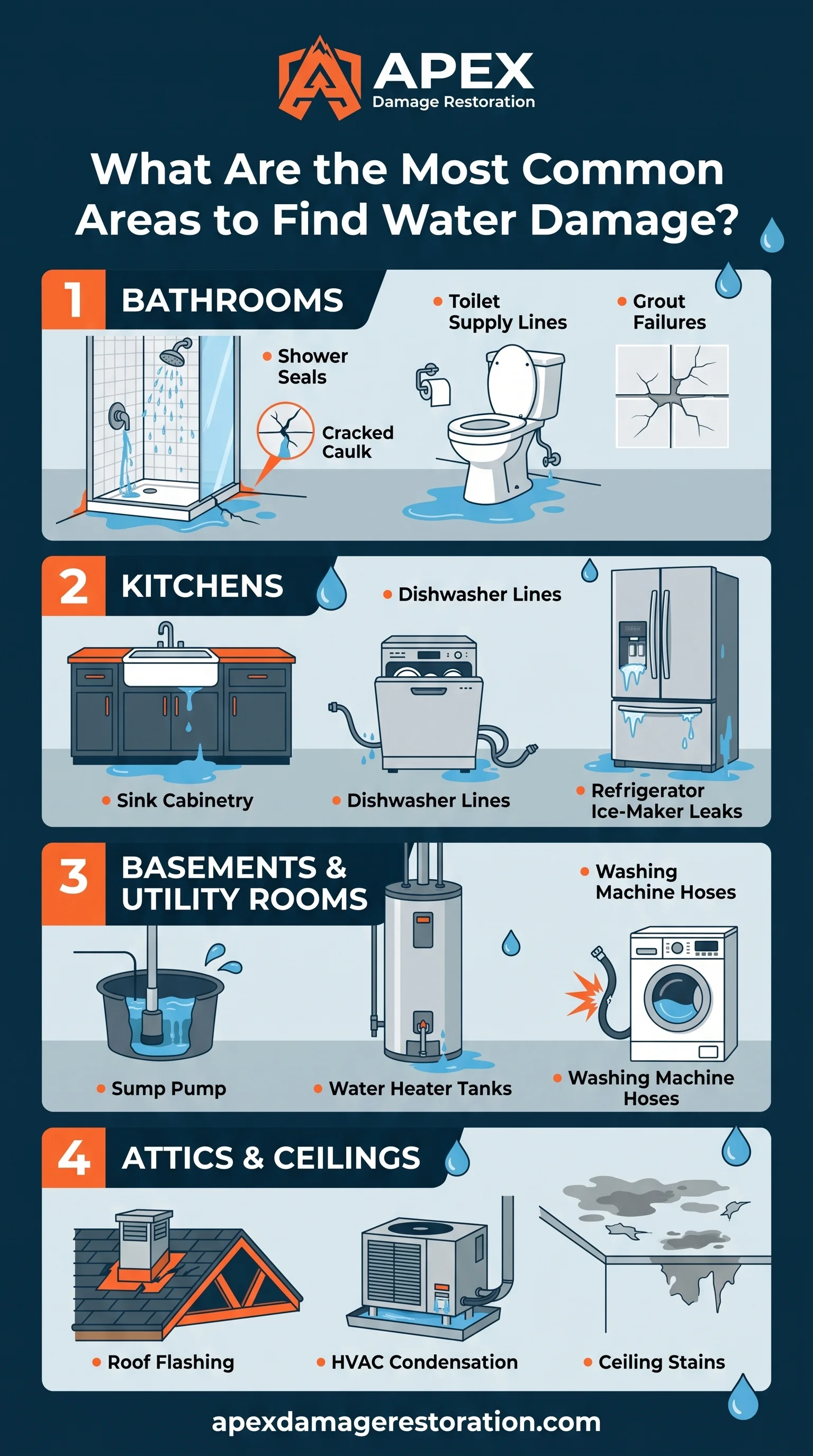
Certain zones of a home carry higher water damage risk because they contain plumbing fixtures, water-using appliances, or structural elements exposed to weather. These zones include bathrooms, kitchens, basements and utility rooms, and attics and ceilings, each of which combines water sources with construction materials susceptible to moisture damage.
Bathrooms
Bathrooms rank among the most water-damage-prone rooms because they combine multiple plumbing connections with continuous moisture exposure. Tub and shower seals deteriorate over time, allowing water to seep behind wall surfaces during each use. Toilet supply lines and shutoff valves corrode or loosen at their connections, producing slow leaks at the base of the toilet or along the wall.
Sink P-traps develop cracks or loose slip-joint connections that drip onto the cabinet floor beneath the sink. Grout and caulk failure around tile joints and fixture edges allows water to migrate into the subfloor and wall cavity rather than draining away. An exhaust fan that is undersized, malfunctioning, or absent allows humidity to persist after showers, increasing moisture absorption into drywall and subfloor materials near the tub or shower enclosure.
Kitchens
Kitchens develop water damage primarily around appliances and under-sink plumbing connections. Dishwasher supply and drain lines leak at hose connections or from cracked internal components, releasing water onto the cabinet floor. Sink cabinet leaks originate from the drain assembly, supply lines, or garbage disposal seals, and often go unnoticed because the cabinet interior is rarely inspected.
Refrigerator ice-maker lines, typically thin plastic or copper tubing routed behind the unit, crack or disconnect and release water gradually onto the flooring. Garbage disposal seals wear down with age, allowing water to leak from the disposal unit into the cabinet below. Under-sink cabinetry made from particleboard or MDF absorbs moisture quickly once a leak begins, causing swelling and structural weakening before a leak becomes visible outside the cabinet.
Basements and Utility Rooms
Basements and utility rooms concentrate several high-volume water sources in one area. Water heater tank failure occurs when internal corrosion breaches the tank wall, releasing the full tank volume onto the floor. Sump pump malfunction, caused by power loss, mechanical failure, or an undersized pump, allows groundwater to accumulate rather than being discharged away from the foundation.
Foundation seepage develops through hairline cracks or porous concrete when hydrostatic pressure from surrounding soil pushes groundwater into the basement. Washing machine hose failure releases pressurized water from the supply lines connected to the machine, often while the homeowner is away from the property. Floor drain backups occur when a drain line clogs or a municipal sewer backs up, forcing water back into the basement through the floor drain. Groundwater intrusion increases after heavy rainfall or snowmelt, when saturated soil raises hydrostatic pressure against basement walls and floors.
Attics and Ceilings
Attics and ceilings develop water damage from roof-related failures and condensation sources above the living space. Roof flashing failure occurs when the metal or rubber flashing around chimneys, vents, and roof valleys separates or corrodes, allowing rainwater to enter along the roof deck. Shingle damage from wind, hail, or age creates gaps that let water penetrate the underlying roof structure.
HVAC units installed in the attic produce condensation that leaks when drain lines clog or condensate pans crack, saturating insulation and ceiling materials below. Insulation saturation reduces thermal performance and retains moisture against the ceiling drywall, extending the time the material stays wet. Slow ceiling stains, appearing as yellow or brown discoloration, typically indicate an ongoing leak rather than a single past event. Attic ventilation issues, including blocked soffit or ridge vents, trap humidity and condensation inside the attic space even without an active roof leak.
How to Find Water Damage Throughout Your House?
Finding water damage throughout a house requires a combination of visual inspection, moisture-detection tools, and attention to indirect indicators such as utility bills. A visual inspection covers walls, ceilings, flooring, and areas around fixtures for staining, discoloration, warping, or bubbling paint.
Moisture meters measure the water content of building materials, including drywall, wood framing, and subfloor, and detect elevated moisture levels before visible signs appear. Checking behind appliances, including refrigerators, washing machines, and dishwashers, identifies leaks at supply and drain connections that remain hidden during normal use. Inspecting under sinks in kitchens and bathrooms reveals leaks at P-traps, supply lines, and disposal seals before cabinet materials sustain significant damage.
Water stains on ceilings, walls, or flooring indicate a past or ongoing leak and warrant tracing to the source rather than surface repair alone. A utility bill spike, particularly in water usage without a corresponding change in household water use, suggests an active leak within the plumbing system. Professional water damage detection uses moisture meters, infrared thermal imaging, and hygrometers to locate moisture within wall cavities and other areas inaccessible to visual inspection, while DIY detection relies on visible signs, odor, and handheld moisture meters that cannot assess conditions behind finished surfaces.
What to Do When You Find Water Damage?
Shutting off the water source, either at the fixture's shutoff valve or the home's main water supply, stops additional water from entering the affected area. Documenting the damage with photographs and written notes before cleanup begins supports an insurance claim by establishing the extent and location of the damage.
Contacting a restoration professional allows for moisture assessment, water extraction, and structural drying using equipment not typically available to homeowners. Preventing further spread involves moving unaffected items away from the wet area and increasing ventilation to slow moisture migration into adjoining materials until professional drying begins.
FAQs About Identifying Water Damage
Get a Professional Water Damage Inspection
A professional water damage inspection identifies moisture sources and structural damage that are not visible during a standard walkthrough. Inspectors use moisture meters, thermal imaging, and hygrometers to assess walls, flooring, ceilings, and areas around plumbing fixtures and appliances.
Response times for inspection requests generally range from same-day to within 24 to 48 hours, depending on the provider and the urgency of the situation. Inspections are available across most residential service areas, covering single-family homes, condominiums, and multi-unit properties. After the inspection, the provider typically delivers a written assessment outlining affected areas, moisture readings, and recommended next steps for repair or restoration.
Need Emergency Restoration Help Today?
Call Apex Damage Restoration now for fast priority dispatch across Aurora, CO, a written estimate before work begins, and direct insurance claims assistance.