
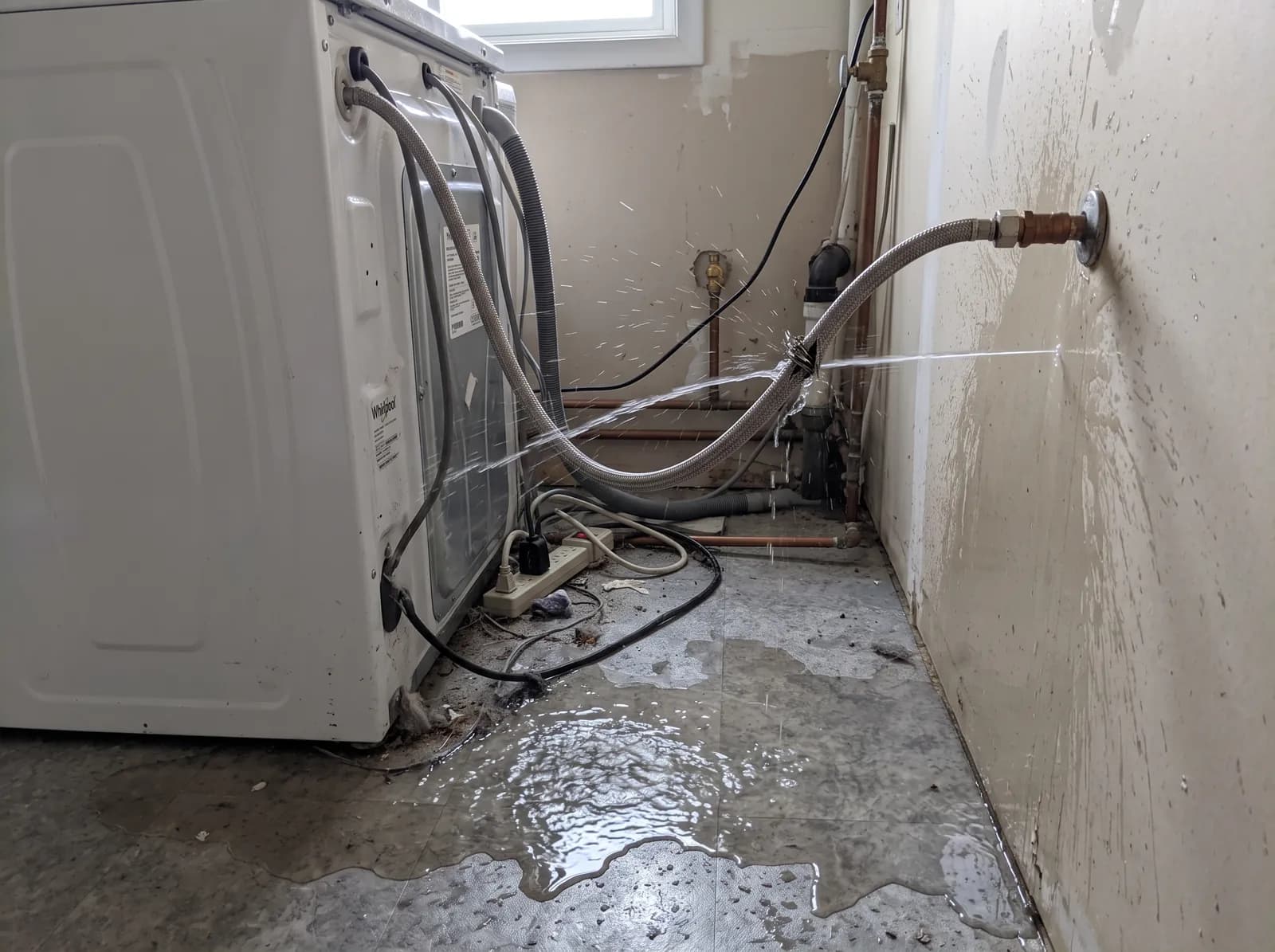
Appliance leak water damage occurs when a washing machine, dishwasher, water heater, refrigerator, or connected supply line releases water into a home, either suddenly through a hose or valve failure or gradually through a worn seal or connection. This category differs from storm-driven flooding or plumbing-pipe bursts because the source sits inside the home and often stays hidden behind or beneath the appliance itself. Some appliance leaks flood a room within minutes. Others release small amounts of water for weeks before the damage becomes visible.
What Causes Appliance Leak Water Damage
Appliance leak water damage results from either a sudden component failure or a gradual breakdown in a seal, hose, or connection. A sudden failure, such as a burst washing machine hose, releases a large volume of water in minutes. A gradual failure, such as a slow dishwasher door seal leak, releases smaller amounts of water over days or weeks. Gradual leaks frequently go unnoticed until flooring warps, odors develop, or a water bill increases.
- Washing Machine Hose Failures: Rubber supply hoses degrade with age and lose flexibility, which increases the risk of cracking or splitting under water pressure. Loose hose connections at the wall valve or appliance inlet allow water to seep out during each fill cycle. Overfilling or overflow during a wash cycle can also send water past the tub and onto the floor.
- Dishwasher Supply Line Leaks: A worn door seal allows water to escape during the wash and rinse cycles. A loose or corroded supply line connection at the shutoff valve leaks continuously once the fitting fails. A clogged or disconnected drain hose can force water back into the unit and out onto the surrounding flooring.
- Water Heater Tank Failures: Internal tank corrosion weakens the tank wall over time and eventually allows water to escape through a pinhole or crack. Age-related failure becomes more likely as a tank approaches the end of its service life. A malfunctioning pressure relief valve can also release water intermittently or fail to reseat after a pressure event.
- Refrigerator and Ice Maker Line Leaks: The water line connecting a refrigerator to the home's plumbing sits behind the unit, where a slow leak often goes undetected due to limited visibility and airflow in that space. A loose compression fitting or a cracked plastic line are the most common failure points.
- Burst or Corroded Supply Lines: Any plumbing connection feeding an appliance can fail from material degradation, corrosion, or physical damage to the line. Braided steel lines resist bursting better than plastic lines but can still fail at the connection point.
Signs of Appliance Leak Water Damage in Your Home
Appliance leak water damage produces several detectable signs of water damage around the affected appliance. Warped or cupped flooring near a washing machine, dishwasher, or refrigerator indicates prolonged moisture exposure beneath the surface. Musty odors near an appliance point to trapped moisture or early microbial growth in the surrounding materials. Discoloration on walls, cabinetry, or ceilings below an appliance signals water migration through drywall or subfloor layers. An unexplained increase in a water bill suggests an active leak even when no standing water is visible. Soft or spongy flooring underfoot indicates subfloor saturation that requires structural drying.
What Does Appliance Leak Water Damage Restoration Include?
Appliance leak water damage restoration includes inspection and moisture detection to locate the source and extent of water intrusion, water extraction to remove standing water from flooring and cavities, structural drying to remove moisture from subfloor, drywall, and framing, sanitization to address contamination and limit microbial growth, and repair of affected materials such as flooring, drywall, and cabinetry. The scope of work depends on the water category involved and how far moisture has traveled beyond the appliance's original location.
How Does Appliance Leak Water Damage Restoration Work?
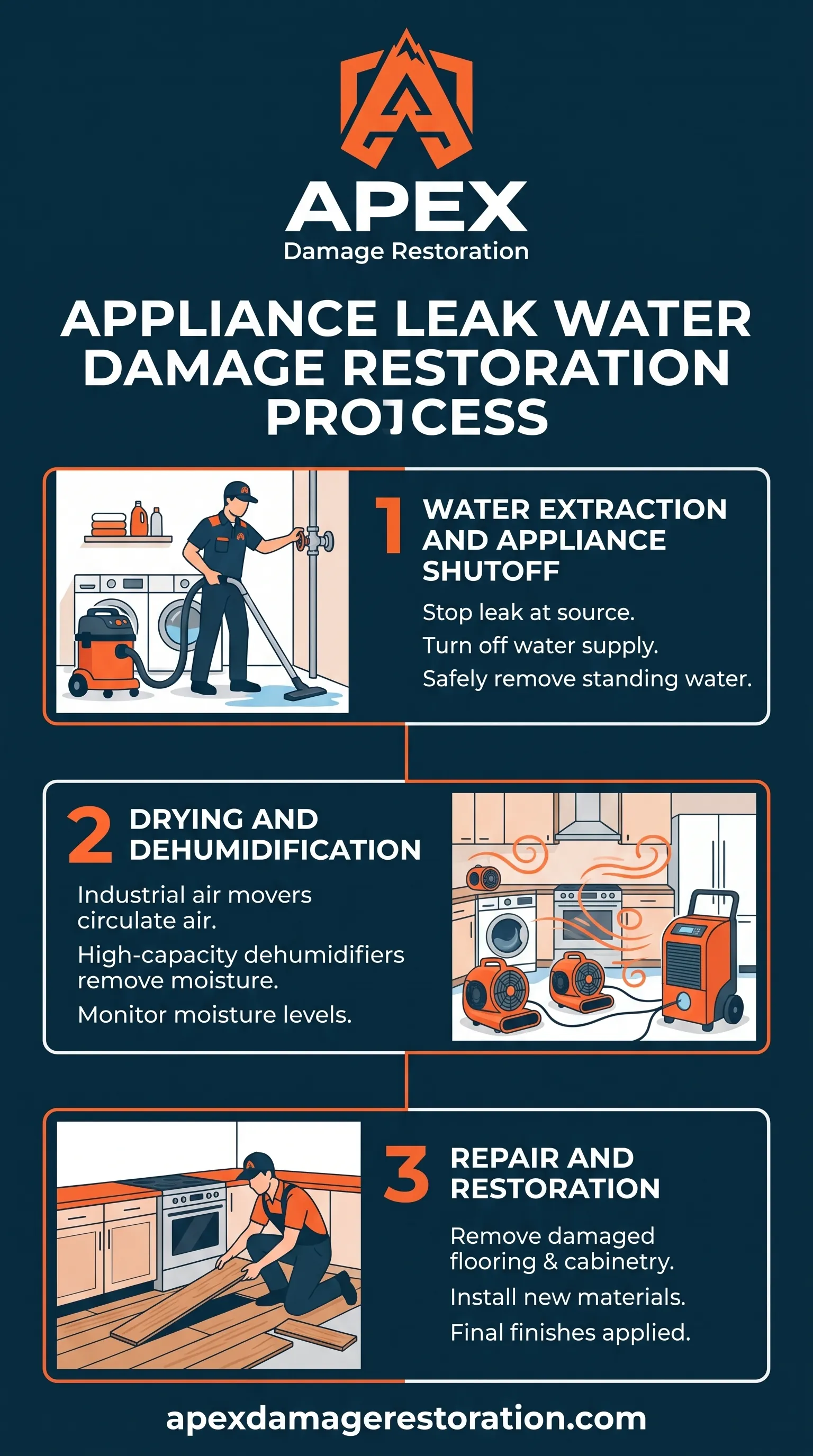
Appliance leak restoration follows a sequence that addresses the active water source first, removes moisture before it spreads further, and repairs materials only after the structure reaches a verified dry standard.
Water Extraction and Appliance Shutoff
Restoration begins with locating and shutting off the water source feeding the appliance, which stops additional water from entering the affected area. Technicians then remove standing water using a pump or vacuum extraction equipment suited to the volume and location of the leak. Electrical appliances near standing water require a safety assessment before extraction begins, since energized components in contact with water create a shock hazard.
Drying and Dehumidification
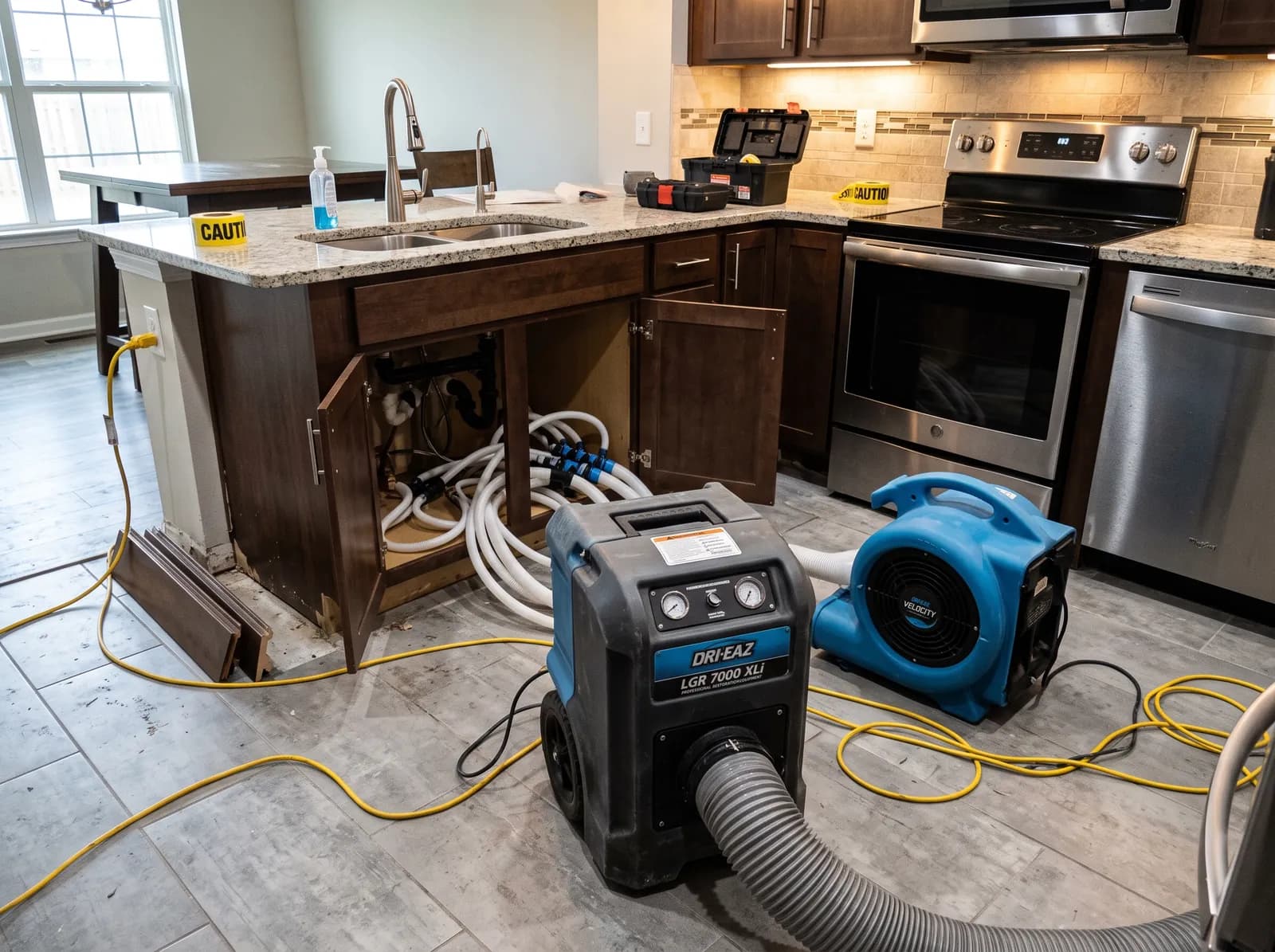
Structural drying relies on industrial air movers to accelerate surface evaporation and dehumidifiers to remove the resulting moisture from the air. Technicians use moisture meters to monitor drying progress in flooring, subfloor, and wall cavities over multiple days. Moisture trapped beneath flooring or inside wall cavities can remain undetected without meter readings, which allows microbial growth to develop even after visible surfaces appear dry.
Repair and Restoration of Affected Areas
Repair work begins once moisture readings confirm the structure has reached a dry standard. Flooring replacement addresses materials that absorbed water beyond a salvageable point, including sections of hardwood flooring that cupped or delaminated. Drywall repair replaces sections that absorbed water and softened or lost structural integrity. Cabinetry restoration addresses swelling or delamination along the base and toe-kick areas closest to the appliance. Repainting follows material replacement to match the surrounding finish.
Appliance Leak Water Damage by Area of the Home
The same appliance leak produces different consequences depending on the room, flooring type, and ventilation of the affected area.
Kitchen Appliance Leaks
Kitchen appliance leaks from dishwashers and refrigerators concentrate water exposure on cabinetry and the subfloor beneath cabinet bases. Proximity to electrical outlets near countertop appliances requires a safety check before extraction begins in this area.
Laundry Room Leaks
Laundry room leaks from washing machines often go undetected longer because the appliance sits in a closet or utility area with limited daily visibility. Drywall and flooring in these confined spaces absorb water for an extended period before the leak becomes apparent.
Basement and Utility Room Leaks
Water heater leaks in a basement or utility room spread across concrete slab flooring, which slows visible pooling but allows water to reach a wider area. Basements carry a higher mold risk than above-grade rooms because of reduced ventilation and naturally elevated humidity.
Bathroom Appliance Leaks
Bathroom appliance leaks, such as those from a connected washing machine or water heater closet, expose tile and grout to prolonged moisture. Existing humidity in a bathroom compounds the leak's effect and can extend the time needed to reach a verified dry standard.
Risks of Untreated Appliance Leaks
An untreated appliance leak allows moisture to spread beyond its source and increases both health risk and repair cost. Mold growth can begin within 24 to 48 hours of water exposure on organic materials such as drywall, wood framing, and carpet padding. Continued moisture exposure weakens wood framing and subfloor material, which reduces structural support over time. Repair costs increase the longer a leak goes untreated, since delayed action allows water to reach a wider area and affect additional materials that would not otherwise require replacement.
How Much Does Appliance Leak Water Damage Repair Cost?
Appliance leak water damage repair cost depends primarily on the extent of water spread, the materials affected, and whether mold remediation is required. A leak confined to a small area under one appliance costs less to remediate than a leak that traveled into adjoining rooms or beneath multiple flooring sections. Materials such as hardwood flooring and drywall typically cost more to replace than materials that dry successfully without removal. Labor and equipment costs rise when a job requires extended drying time or additional antimicrobial treatment. A licensed restoration provider can provide an accurate estimate after an on-site inspection.
How Long Does Appliance Leak Cleanup Take?
Appliance leak cleanup typically takes 3 to 5 days to complete the drying phase under standard conditions. Subfloor saturation extends this timeline because wood and engineered flooring materials release moisture more slowly than exposed drywall or framing. A job that requires mold remediation adds additional time for containment, treatment, and clearance testing before repairs can begin.
Appliance Leak vs. Other Water Damage Causes
Appliance leak water damage differs from burst pipe, flooding, and roof leak damage in both source location and development speed. A burst pipe or flood event typically releases a larger volume of water over a shorter period, which creates immediate and widespread damage. An appliance leak more often develops gradually and stays confined to the area immediately surrounding the unit until the leak worsens or goes unaddressed. Appliance leaks also differ from sewage backup damage in water category, since most appliance leaks originate from a clean water supply line rather than a contaminated wastewater source.
Does Insurance Cover Appliance Leak Water Damage?
Homeowners insurance typically covers appliance leak water damage when the leak results from a sudden and accidental discharge, such as a burst hose or a failed supply line. Insurance policies typically exclude damage that results from a gradual leak the homeowner could have identified and repaired through routine maintenance. The distinction between sudden and gradual water damage determines coverage eligibility in most policies, though exact terms vary by insurer and policy language. This information provides general guidance and does not replace a review of an individual policy or advice from a licensed insurance professional.
Get Help With Appliance Leak Water Damage Today
An appliance leak left untreated for 24 to 48 hours creates conditions for mold growth, which raises both the health risk and the eventual repair cost. Apex Damage Restoration provides water damage restoration services in Aurora, CO, and nearby communities of the Denver Metro Area, with response teams available to address active appliance leaks before damage spreads to additional rooms or materials.
Need Emergency Restoration Help Today?
Call Apex Damage Restoration now for fast priority dispatch across Aurora, CO, a written estimate before work begins, and direct insurance claims assistance.